Lyon combines some of the most interesting aspects of France in a single destination. Roman theatres, Renaissance streets, historic silk workshops, outstanding food and bold contemporary architecture all coexist within a surprisingly compact city centre. During my three-day visit, I explored both the UNESCO-listed historic districts and the city’s modern waterfront developments. This itinerary includes museums, local food, hidden traboules and some of the experiences that made Lyon one of the most interesting city breaks I have taken in France.
Table of Contents
Why Visit Lyon: Roman History, Local Food and Contemporary Architecture
Lyon combines some of the most fascinating aspects of France in a single destination. The city is home to impressive Roman remains, a UNESCO-listed historic centre, neighbourhoods shaped by the silk industry and one of the country’s most celebrated food scenes.
Alongside its historic heritage, Lyon offers innovative museums and striking contemporary architecture that blend surprisingly well with centuries-old buildings. Even with only a weekend available, it is possible to experience many of the city’s most important attractions.
To save money during your visit, I highly recommend purchasing the Lyon City Card. It includes unlimited public transport, admission to numerous museums and attractions, several guided tours organised by the tourist office and a river cruise on the Saône. During my trip, it proved excellent value for money and allowed me to visit far more attractions than I would have otherwise.
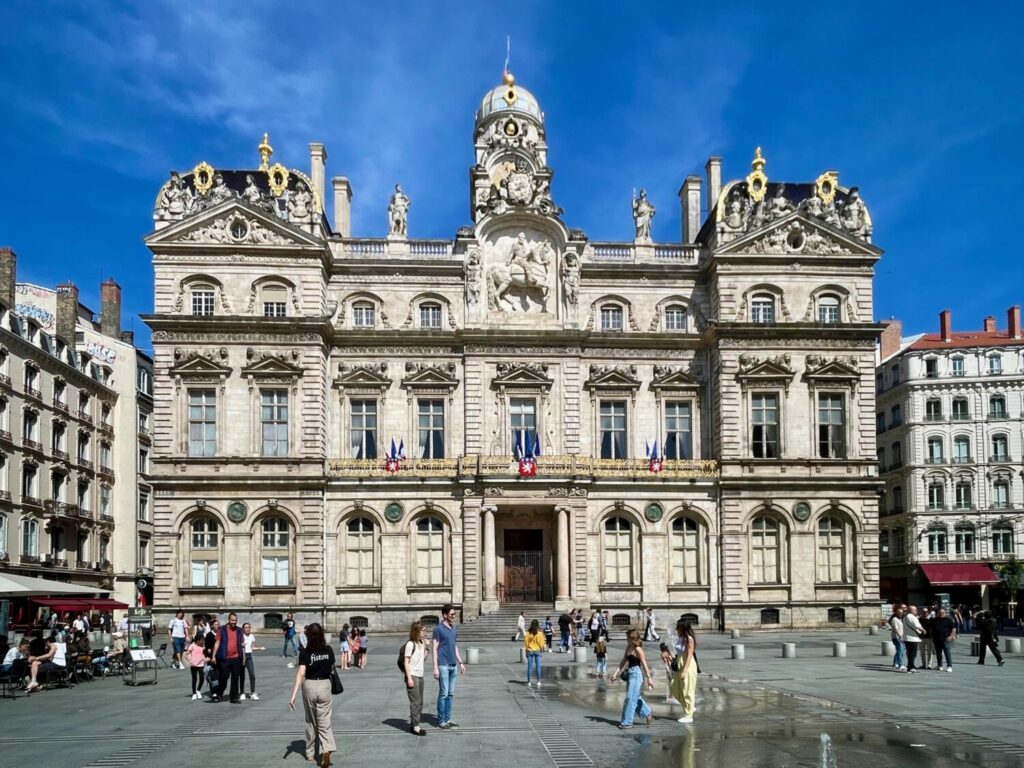
Day 1: Lyon City Centre, Contemporary Art and a Traditional Bouchon Dinner
I travelled from Turin to Lyon by FlixBus, expecting to have most of the afternoon available for sightseeing. Unfortunately, a delay of around thirty minutes meant I had to abandon my original plan of visiting the Lyon-Corbas Aviation Museum before its last admission of the day.
After arriving at Gerland bus station, I headed into the city centre to collect my Lyon City Card from the tourist office in Place Bellecour. The card quickly proved its value, covering public transport, museums, guided tours and even a river cruise. Over the course of three days, I used it far more than I had originally expected.
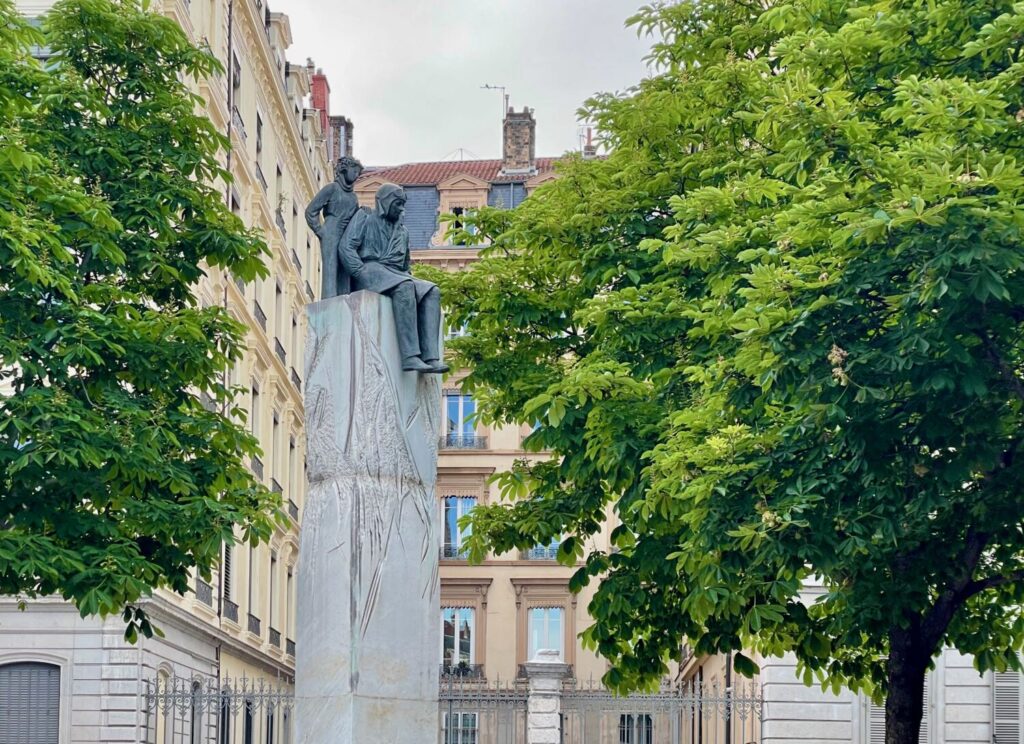
My first stop was the statue of Antoine de Saint-Exupéry and the Little Prince, located a short walk from Place Bellecour. The writer and aviator is one of Lyon’s most famous figures, although surprisingly there is no museum dedicated to him in the city.
From there, I walked along Rue Victor Hugo, a lively pedestrian street lined with cafés and shops, before checking into my hotel. With the rest of the afternoon still available, I headed to macLYON, the city’s Museum of Contemporary Art, which offered more flexible opening hours than the aviation museum I had originally planned to visit.
macLYON Museum of Contemporary Art
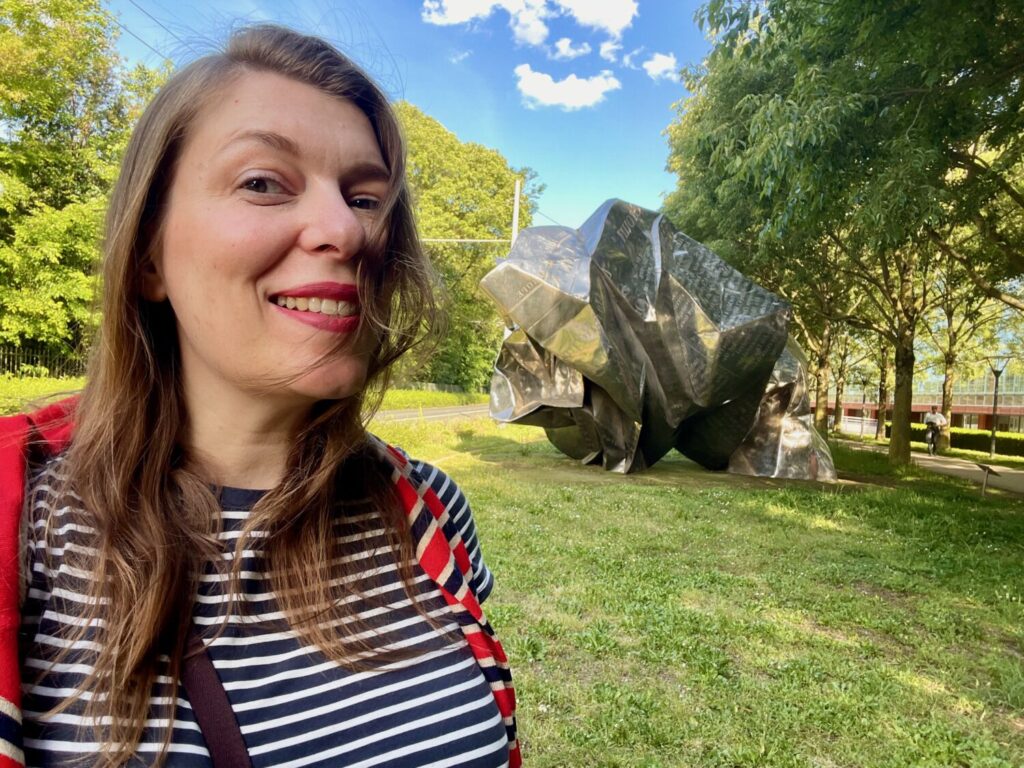
Located next to Parc de la Tête d’Or, one of Lyon’s largest green spaces, macLYON Museum of Contemporary Art can be reached in around thirty minutes from the city centre by tram and bus. Unlike many traditional art museums, it does not display a permanent collection. Instead, its galleries are regularly transformed by temporary exhibitions, making every visit different.
During my visit, the museum was hosting a retrospective dedicated to Lyon-born artist Jean-Claude Guillaumon. The exhibition brought together photographs, paintings and drawings spanning his entire career, offering an interesting overview of how he explored different artistic media and identities over time.
I was less engaged by the video installations from the Lemaître Collection, which felt rather slow and contemplative. On the other hand, I particularly enjoyed Giulia Andreani‘s large monochromatic paintings exploring themes of power, memory and the way people are represented – or sometimes forgotten – in history.
Dinner at a Traditional Lyon Bouchon
To start my stay in Lyon properly, I decided to have dinner in a bouchon, the traditional type of restaurant for which the city is famous. I chose Le Comptoir Charlemagne in the Perrache district, just a short walk from my hotel and popular with local residents.
It is not one of the restaurants highlighted by the tourist office, but I would happily recommend it if you are staying in the area. The atmosphere was relaxed and unpretentious, making it a good introduction to Lyon’s food culture.
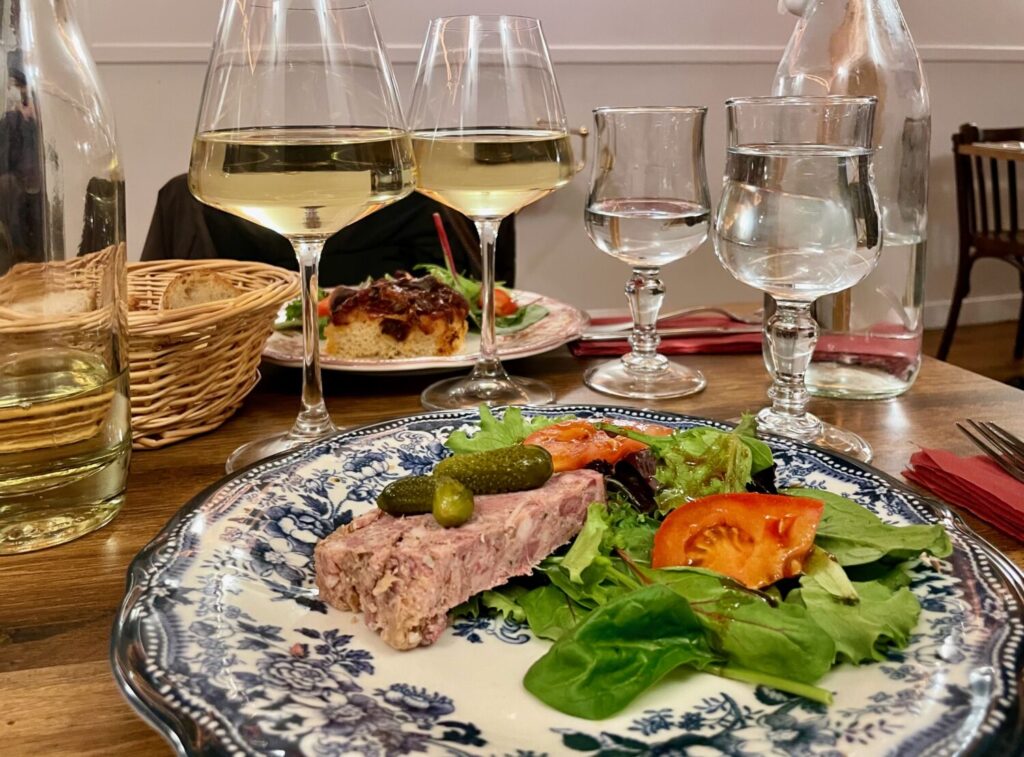
For my first dinner in the city, I ordered several classic Lyonnais dishes, including cervelle de canut, a creamy cheese spread flavoured with herbs, beignets de courgettes, a meat terrine and a pissaladière topped with anchovies. It was an excellent introduction to the rich culinary traditions that have earned Lyon its reputation as France’s gastronomic capital.
Day 2: Les Halles, Roman Lyon, Croix-Rousse and a Saône River Cruise
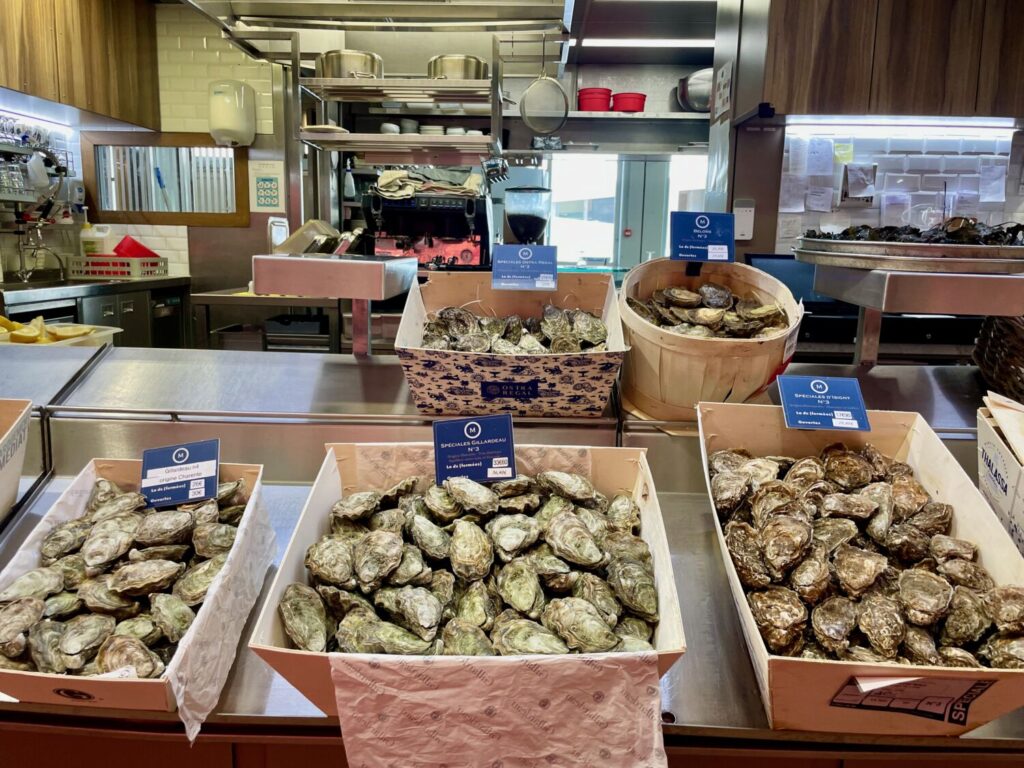
My second day in Lyon began at Les Halles Paul Bocuse, the city’s most famous covered market. I expected something busy and chaotic. Instead, I found an elegant and beautifully organised food hall filled with high-quality local products.
You can simply wander through the market, discover Lyon’s culinary specialities and stop for a quick lunch. Several restaurants and oyster bars are located inside. If you want to learn more about local food traditions, I recommend joining a guided tasting tour. It is a great way to discover regional cheeses, wines and other specialities.
After visiting Les Halles, I headed to Fourvière Hill. The Basilica of Notre-Dame de Fourvière dominates Lyon’s skyline and offers spectacular views across the city. Its richly decorated interior is impressive, although during my visit it was so crowded that I found it difficult to fully appreciate.
The easiest way to reach Fourvière is by funicular, which is included in the Lyon City Card. Most visitors take the F1 line directly to the Basilica. This is also the busiest route and queues can be very long, especially at weekends.
My advice is to do the opposite. Take the quieter F2 line towards Saint-Just and get off at Minimes – Théâtres Romains. Visit the Lugdunum Museum and the Roman theatres first, then continue on foot to the Basilica of Notre-Dame de Fourvière. The two attractions are only a few minutes apart and, during my visit, there was no queue at all for the F2 line.
Museum of Lugdunum and the Roman Theatres
The Museum of Lugdunum houses some of the most important artefacts from Roman Lyon. Among them are several truly unique artefacts. The most famous is the Claudian Tablet, a bronze inscription recording a speech by Emperor Claudius in support of granting political rights to the elites of Roman Gaul.
The museum also displays mosaics, statues, inscriptions and objects recovered from the ancient city. Despite all the De Bello Gallico translations I had to study at school, it was only here that I discovered Roman Gaul was not a single territory. Instead, it was divided into three major provinces, with Lugdunum, modern-day Lyon, serving as their administrative capital.
What impressed me most, however, was the architecture rather than the collection itself. The Museum of Lugdunum is built almost entirely inside Fourvière Hill. Its concrete structure remains largely hidden from view, while the exhibition route follows a spiral layout from top to bottom. Even today, the building feels surprisingly modern.
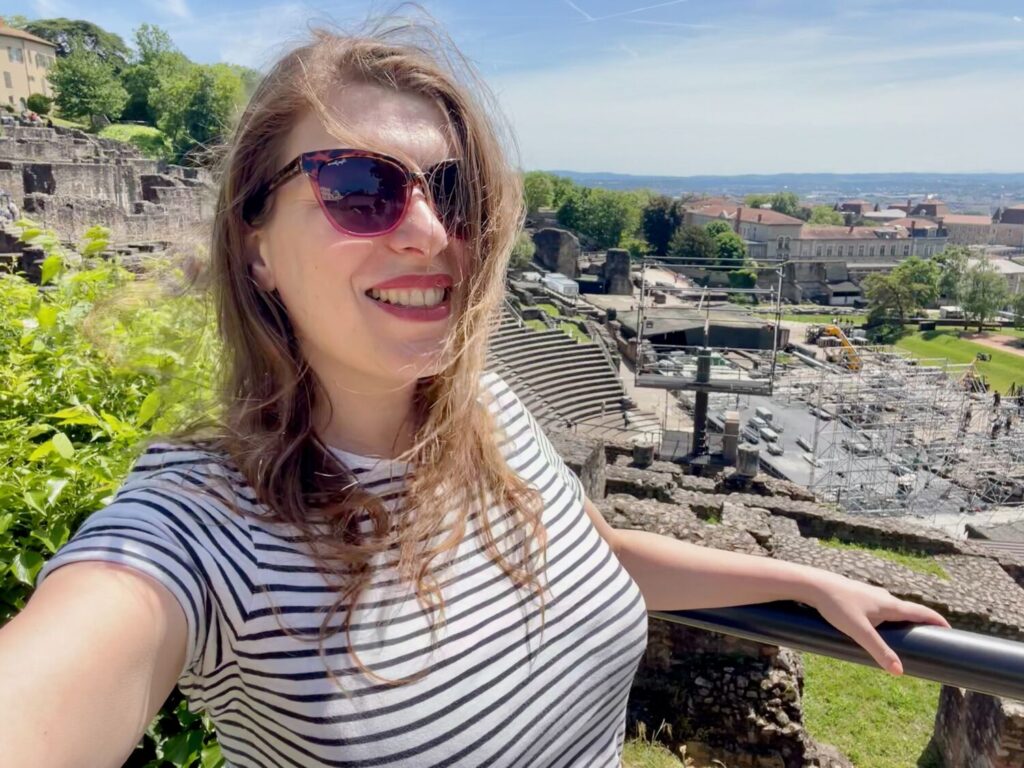
Just outside the museum are the Roman Theatres of Fourvière. Today they form an open archaeological park where visitors can walk freely among the ancient stone terraces. The theatres are still used for performances and cultural events during the summer, making them one of the most atmospheric Roman sites in Lyon.
Guided Tour of the Traboules and Silk Heritage of Croix-Rousse
In the early afternoon, I joined a guided tour organised by the tourist office and included in the Lyon City Card. The tour explored Croix-Rousse, the district that served as the centre of Lyon’s silk industry for centuries.
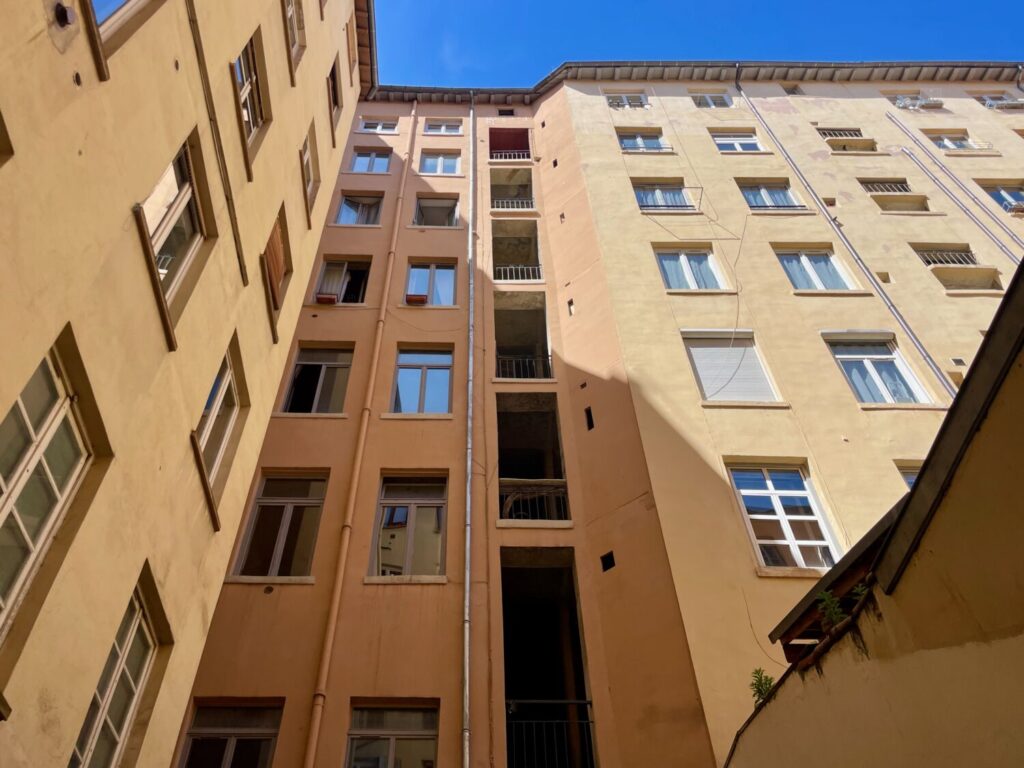
This was home to the canuts, the master silk weavers who helped build Lyon’s wealth. Their houses still stand today. Most have unusually high ceilings because they had to accommodate the enormous Jacquard looms used to weave complex patterns. These revolutionary machines used punched cards to programme weaving patterns, long before the invention of modern computers.
One of the highlights of the tour was discovering the traboules. These passageways connect different streets through courtyards, staircases and buildings. From the outside, they often look like ordinary entrances. In reality, they formed a network that allowed silk workers to move fabrics between workshops and homes while protecting them from the weather. Some traboules are public, while others remain part of private buildings.
The tour ended at the Musée Soieries Brochier. Here I watched a demonstration of traditional silk printing techniques. Craftsmen still use methods such as block printing, screen printing and velvet finishing to create fabrics for luxury brands, including Hermès.
Lyon’s textile heritage did not disappear with the decline of the silk industry. Today, many local companies produce advanced materials such as optical fibres and carbon fibre. The technology has changed, but the city’s manufacturing expertise remains very much alive.
Saône River Cruise
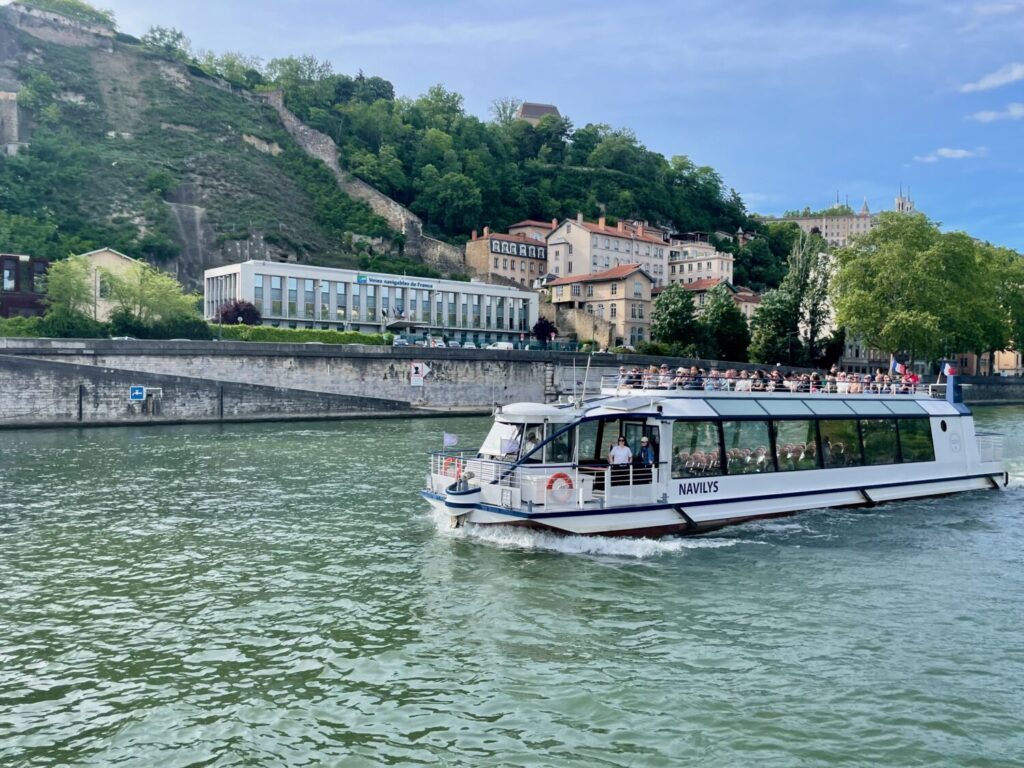
After the guided tour of Croix-Rousse, I joined a cruise on the Saône River, which was also included in the Lyon City Card. The cruise featured live commentary in both French and English about the city’s history and the landmarks lining the riverbanks. Seeing Lyon from the water offers a completely different perspective.
The most interesting part of the cruise was learning about the Confluence district, one of the largest urban regeneration projects in France. This modern neighbourhood is home to innovative architecture and sustainable public spaces. Among the most striking buildings are the Cube Orange and the Cube Vert, both designed by the architectural practice Jakob + MacFarlane. Their distinctive shapes make them impossible to miss from the river.
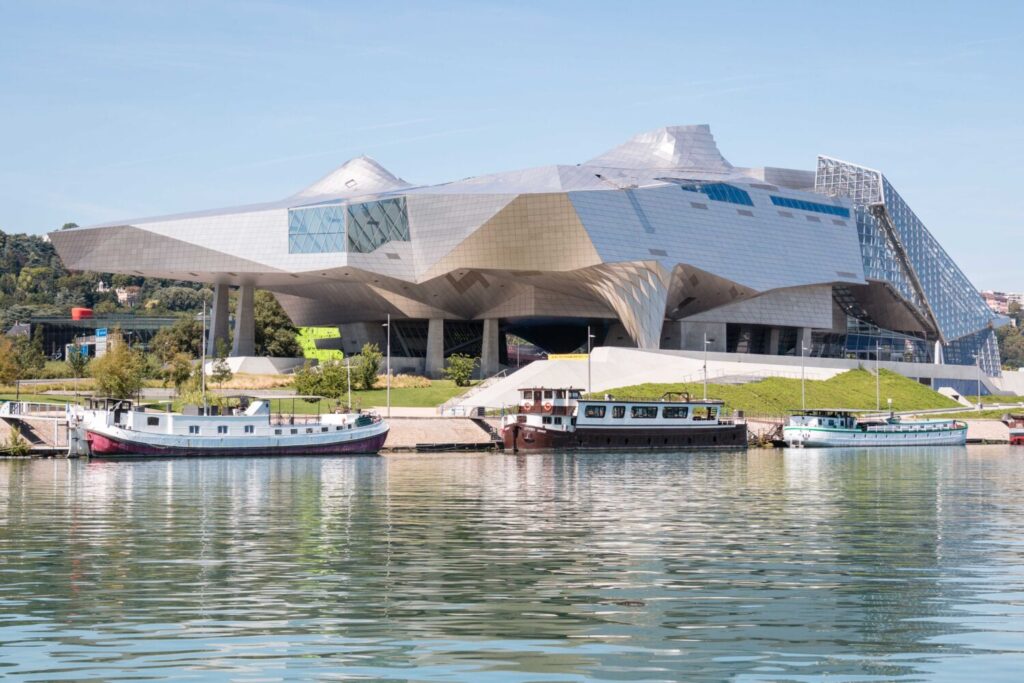
Another highlight is the Musée des Confluences. The guide described it as a cloud suspended between sky and water, although from the boat it looked more like a giant spaceship landed at the meeting point of the Rhône and Saône rivers. With the hills of Lyon in the background, it is even more impressive than it appears from street level.
One detail I found particularly interesting was the number of boats permanently moored along the river. Many began life as cargo barges transporting goods before the arrival of the railways. Today they serve as hotels, restaurants, bars and even floating nightclubs.
The cruise made me curious to explore the modern side of Lyon in greater depth. It also convinced me to visit the Musée des Confluences the following morning, even though it had not originally been part of my itinerary.
Evening in the Confluence District
After a day spent exploring Roman ruins, silk heritage and hidden traboules, I dedicated the evening to the modern side of Lyon. I had dinner at Hanoi Cà Phê, a restaurant serving fusion cuisine and Vietnamese draft beer inside the Confluence shopping centre.
The meal reminded me of my recent trip to Vietnam, but the real highlight was the location. The terrace overlooks the canal and offers excellent views of the contemporary architecture that defines this part of the city. One curious drawback is that the shopping centre toilets close before the restaurants and bars. Late in the evening, finding facilities can therefore be surprisingly difficult.
Even if you do not stop for dinner, I recommend taking an evening walk through the Confluence district. Former industrial areas have been transformed into public spaces, canals and striking modern buildings. It is probably the best place in Lyon to see how the city continues to reinvent itself.
Day 3: Musée des Confluences and Departure
On my final morning in Lyon, I visited the Musée des Confluences, one of the city’s most famous museums. After seeing the building from the Saône during the river cruise the previous day, I was curious to explore it from the inside as well.
Before my visit, I expected a museum focused mainly on nature and the geography of the meeting point between the Rhône and Saône rivers. Instead, the idea of “confluence” is interpreted in a much broader and more symbolic way. Science, anthropology, natural history, world cultures and the future all come together under one roof. That is what makes the museum so interesting.
Unfortunately, shortly after my visit, I had to return to the bus station and catch my FlixBus back to Turin. My time at the museum was limited, but it was enough to convince me that it deserves far longer than a quick visit.
Where to Stay in Lyon
During my stay in Lyon, I chose Hotel Charlemagne by HappyCulture, a modern four-star hotel in the Perrache district. The location is slightly outside the historic centre, but it is close to Lyon-Perrache railway station and well connected by tram and metro.
What I appreciated most was its proximity to the Confluence district. I could reach the area in around ten minutes on foot, making it easy to explore its contemporary architecture and waterfront promenades. If you prefer to stay closer to the historic centre, Hôtel de l’Abbaye Lyon is another elegant and well-located option.
More Things to Do in Lyon
Although three days are enough to see many of Lyon’s main attractions, I left with a long list of places I would like to visit on a future trip with my son.
The Ampère Museum, dedicated to electricity and the discoveries of André-Marie Ampère, is high on my list. I would also like to visit Mini World Lyon, one of the largest animated miniature museums in Europe, and the Lyon-Corbas Aviation Museum, which I unfortunately missed on my first day because of the delayed FlixBus.
All these attractions are included in the Lyon City Card, another reason why I found it such good value. You can find a full breakdown of what is included, together with my cost comparison, in my detailed Lyon City Card review.
Lyon turned out to be a far more varied destination than I expected before arriving. Roman ruins, silk heritage, innovative museums and contemporary architecture all coexist within the same city. There is easily enough to fill a long weekend, and probably enough for an entire week. I am certain I will return one day to continue exploring everything Lyon has to offer.
