
Abanotubani is a district in the heart of Tbilisi’s Old Town, known above all for its brick domes, beneath which lie the ancient underground baths that draw on the hot sulphur springs with curative properties from which Tbilisi takes its name. Alexandre Dumas and Aleksandr Pushkin bathed in these waters centuries ago, but you can still treat yourself to the same rejuvenating experience today after a day spent exploring the city. In this article, you’ll discover how to experience the sulphur baths for yourself, what to bring, how to choose between public baths and private rooms. Also, I’ll share my visit to Bathhouse No. 5, the only bathhouse in Tbilisi still entirely authentic and untouched by tourism.
PLAN YOUR TRIP TO GEORGIA
Stay online everywhere in Georgia with Holafly eSIM and enjoy unlimited data, fast internet, no roaming: perfect for using Google Maps and sharing your trip as you go.
Travel worry-free with Heymondo travel insurance, so you can enjoy every moment of your Georgian adventure without stress.
Table of Contents
What to Know About the Sulphur Baths of Abanotubani in Tbilisi
Abanotubani is Tbilisi’s historic thermal baths district. It takes its name from the sulphur springs bubbling up from the ground at temperatures between 37 and 42 degrees. These natural springs have fed the district’s baths for over fifteen hundred years, and visiting them is still one of the most authentic things you can do in Georgia. The bathing halls themselves sit beneath the brick domes scattered across the district, dug into the earth to hold in the heat.
History of Abanotubani: The Origins of Tbilisi’s Sulphur Baths
Georgian tradition credits these springs with Tbilisi’s very existence. The city’s name actually comes from the old Georgian word tbili, meaning “warm”. According to legend, King Vakhtang Gorgasali was out hunting a pheasant when his falcon dived after its prey and landed in a hot spring. The king was so struck by the water that he decided to found a city on the spot.
Abanotubani has also earned its place in travel writing over the centuries. Aleksandr Pushkin bathed here in 1829 and declared he’d never come across anything more luxurious. Alexandre Dumas was just as taken with the experience, writing about the sulphur baths enthusiastically in his own travels.
For generations, these baths were the beating heart of Tbilisi’s social life. People came not just to wash, but to meet, gossip, strike deals and while away their free time. The baths brought together people from every walk of life, in a way few other places in the city could.
That social role has faded somewhat today, but the place itself hasn’t lost any of its charm. The sulphur water still flows, and the brick domes still rise from the ground exactly as they did centuries ago. It’s easy to see why this cluster of buildings has become one of the most photographed corners of Tbilisi.

Architecture of the Sulphur Baths in Abanotubani
Walk through Abanotubani and the brick domes are impossible to miss, rising straight out of the ground. The bathing halls lie below street level, with the domes acting as vents for the steam given off by the hot water.
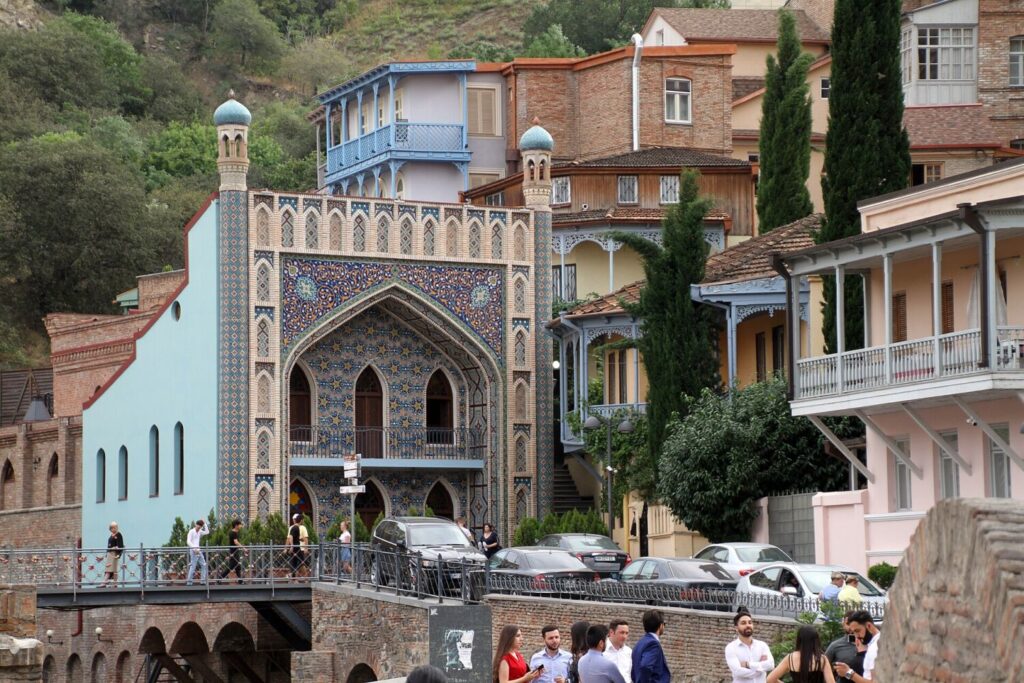
The most photographed of the lot is the Orbeliani Bath, better known as Chreli Abano. Its facade, covered in Persian-style blue mosaics, has become one of the defining images of the Georgian capital, and you’ve probably already spotted it in photos of Tbilisi. The other bathhouses are far more understated, but they’ve been offering the same treatments for hundreds of years, from sulphur-water showers to traditional kisa massages.
Inside, most are small and no-frills, with either a shower hall or a modest pool, or private rooms with stone- or tile-lined tubs fed straight from the hot springs. The whole atmosphere is simple and unpolished, thick with steam and the smell of sulphur, a world away from anything you’d call a modern spa.
Benefits of the Sulphur Waters at Abanotubani
Unlike some of the thermal establishments I’ve visited elsewhere in Europe, Tbilisi’s sulphur baths aren’t regarded as a medical therapy here, just part of local bathing tradition. That said, the sulphur water is traditionally credited with real benefits for skin, muscles and joints.
These days, most people visit less for the therapeutic side of things and more for the atmosphere, or simply to unwind after a day pounding the streets of Tbilisi. Whatever the science behind it, the heat certainly helps loosen up sore muscles, and sulphur itself has natural antibacterial properties.
Given the water runs between 37 and 42 degrees, it’s worth checking with a doctor first if you have any health concerns before booking your session at Abanotubani.
How to Experience Abanotubani’s Sulphur Baths: Public Baths vs Private Rooms
There are two very different ways to do this, and it’s worth knowing what sets them apart before you arrive. Most establishments in Tbilisi offer both: public baths, shared with other bathers, and private rooms, just for you and whoever you’re travelling with.
Private rooms are what most tourists book, but they’re not actually the traditional Georgian way of doing things. What they do offer is more peace and quiet, and depending on the bathhouse, a setting that can range from simple to genuinely lavish. Each private room comes with its own tub or pool of sulphur water and a shower to use beforehand, and some throw in a relaxation area, sauna or steam room too.
Public baths, on the other hand, feel far more traditional, since it’s mostly Georgians who use them. It’s a properly distinctive experience, but fewer and fewer bathhouses still keep their communal halls running, simply because tourists almost always ask for a private room instead.
Prices follow the same pattern, cheaper for public baths, pricier for private rooms, and vary further depending on how upmarket the establishment is. Either way, a session typically runs to one or two hours and always ends with that unmistakable sulphur smell clinging to your skin.
Public Sulphur Baths in Abanotubani: The Most Authentic and Local Experience
Public baths are cheap, communal and about as authentic as it gets. Entry is usually next to nothing, from 6 GEL (around €2), and that covers just the changing room and a shared bathing hall with people of your own sex. Bathhouse No. 5 doesn’t even have tubs in the women’s section, only showers.
If you embarrass easily, or wouldn’t feel at ease undressed among strangers, public baths probably aren’t for you, but they’re the single most authentic way to experience this. This is genuinely how locals in Tbilisi bathe, and stepping into one gives you a real, unfiltered glimpse of everyday life.
One thing worth flagging: photography is completely off-limits inside. So while you’re sharing the experience with strangers, the memory stays entirely yours.
Private Rooms at the Sulphur Baths: Comfort and Privacy in Tbilisi’s Thermal District
Private rooms are what most visitors end up booking. You get a self-contained room by the hour, with your own pool and total privacy, whether you’re there as a couple, with friends or as a family. Prices shift depending on the venue and whether you add treatments on top.
Because it’s just you, swimwear is entirely optional and mixed groups are never an issue. Rooms themselves range wildly depending on where you go, from plain and functional to genuinely opulent, think marble, mosaic walls and ornate archways.
Essentially, a private room gives you a more comfortable, polished take on Abanotubani’s sulphur baths, rather than the far more spartan original experience. Even bathhouses that used to be strictly public now tend to offer private rooms too, kept well separate from the public areas.
Photography is fine here, though don’t expect your shots to come out quite as crisp as the ones you’ve seen online, the steam has other ideas. Expect private rooms to start from around 150 GEL (about €50) an hour.
Traditional Kisa Massage in Abanotubani
Plenty of visitors add on the kisa, a traditional treatment involving a vigorous scrub with a rough mitt to remove dead skin. It’s usually followed by a relaxing soap massage.
It might sound a lot like the classic hammam scrub you’d find in Morocco, but this is one of the oldest rituals in Georgian bathing culture, passed down through generations. It comes at an extra cost on top of your entry ticket, starting from around 15 GEL (about €5) at the more affordable spots.
Best Sulphur Baths of Abanotubani in Tbilisi
What makes Abanotubani so distinctive is the open sulphur stream running right through it. Dozens of red brick domes line its banks, each one hiding a bathhouse’s tubs and pools beneath.
All the bathhouses sit within a stone’s throw of each other, yet each has its own character, services and prices. It’s worth comparing your options before booking, depending on the kind of experience you’re after. Most private rooms comfortably fit two to four people, with the price set per room rather than per head, though extra treatments are charged individually.
The district is also home to the Abanotubani Boutique Hotel, a beautiful, well-appointed place to stay if you want to soak up the atmosphere just steps from the baths themselves.
Chreli Abano (Orbeliani Baths): Tbilisi’s Most Famous Sulphur Bath
Covered in blue and turquoise Persian-style mosaics, Chreli Abano is the most photographed bathhouse in Tbilisi, hands down. Its two decorative minarets make it unmistakable, and it’s become one of the defining images of the city.
The interiors match the grandeur outside, with some private rooms finished in mosaics and ornate details. Its popularity means the best slots fill up fast, especially at weekends, so book a private room a few days ahead if you can.
Chreli Abano
2 Abano Street, Tbilisi
Bathhouse No. 5: The Historic Bath Still Frequented by Locals
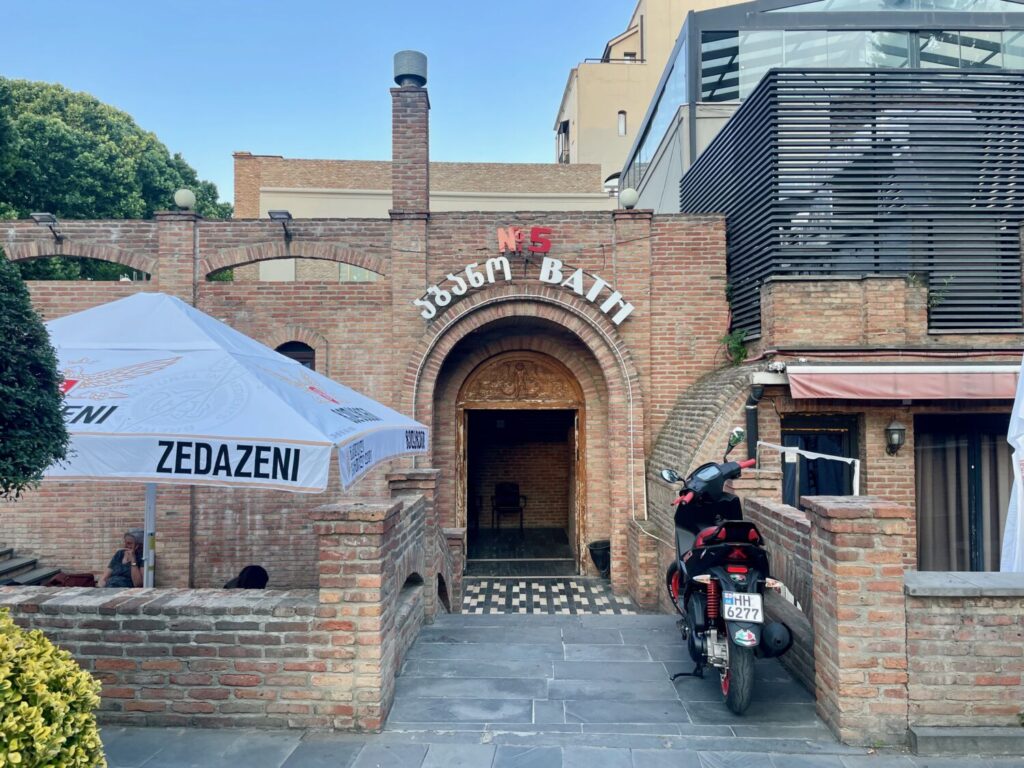
Of all the historic bathhouses in Abanotubani, Bathhouse No. 5 is hard to beat for value. It’s a no-frills sort of place, but locals still come here despite the tourist crowds now filling the rest of the district.
The shared tubs and showers get you closer to genuine Georgian bathing than almost anywhere else. On the women’s side, there’s no tub at all, just showers. Private rooms are also available if you’d rather not go fully public.
Bathhouse No. 5
3 Gorgasali Street, Tbilisi, Georgia
Gulo’s Thermal Spa: A Peaceful Retreat in the Heart of Abanotubani
Gulo’s Thermal Spa has a noticeably calmer feel than the district’s bigger names. Its smaller scale and lighter footfall make it a solid pick if you want to escape the crowds. The private rooms are simple but comfortable, some finished with elegant marble, and the whole place still has that authentic sulphur-bath charm.
Gulo’s Thermal Spa
Ioseb Grishashvili Street, Tbilisi
Royal Bath: Tbilisi’s Most Elegant Sulphur Bath
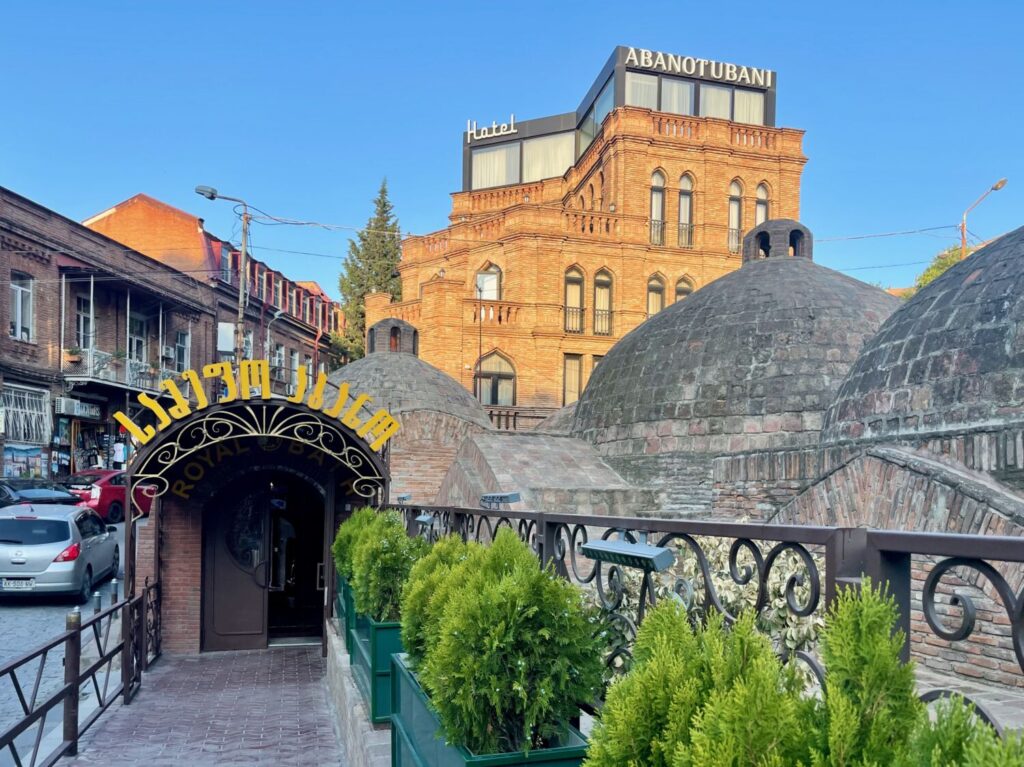
Royal Bath takes a more modern spin on the tradition, with comforts and services you wouldn’t have found here a century ago. According to local lore, this was once King Erekle I’s favourite spot to relax.
The private rooms here are generously sized, and some come with a sauna or relaxation area, which explains the higher price tag compared to other bathhouses. It feels more like a proper spa day out, even if the sulphur water itself is still very much the star of the show.
Royal Bath
1 Ioseb Grishashvili St, Tbilisi
King Erekle’s Bath: The Historic Sulphur Bath Between Tradition and Elegance
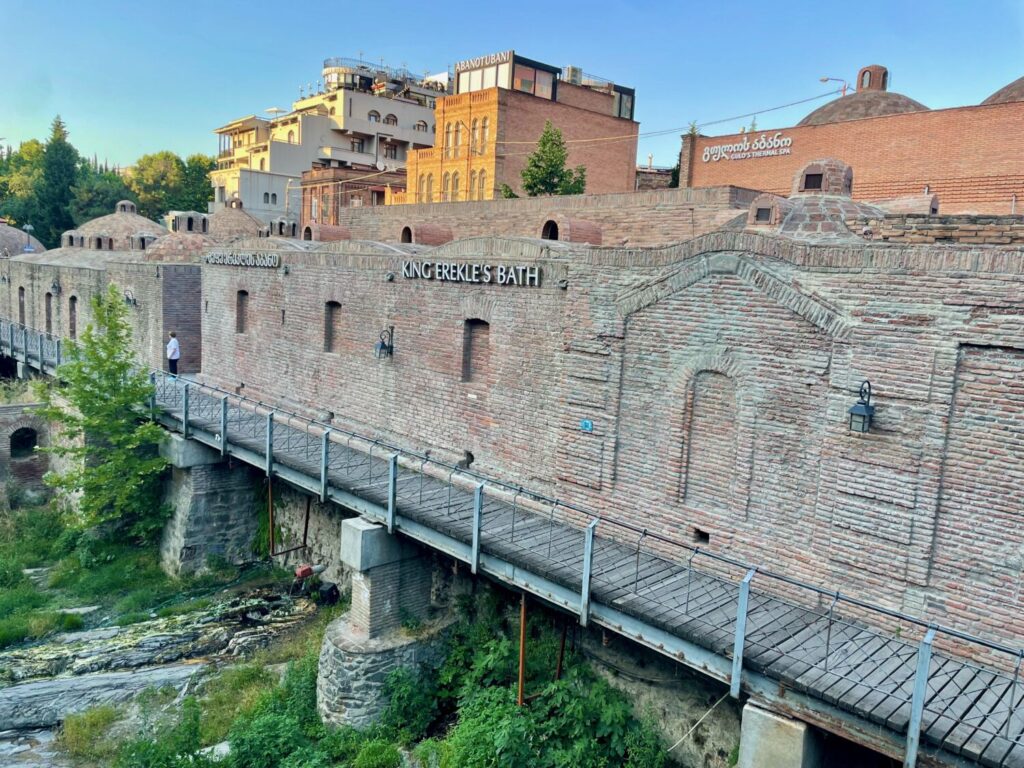
Locals and tourists alike rate King Erekle’s Bath highly. It offers the traditional sulphur soak and kisa treatments you’d expect, and is actually run by the same company behind Chreli Abano. Private rooms book out fast on evenings and weekends, so plan a little ahead if you want one.
King Erekle’s Sulfur Bath
2 Abano Street, Tbilisi
Bohema Sulfur Bath: A Pleasant and Peaceful Thermal Experience
Bohema Bath flies under the radar compared to its neighbours, and that’s part of the appeal if you’re after something quieter. It’s smaller and less known than the district’s historic bathhouses, but it keeps the same sulphur-water tradition alive. Google lists it as LGBTQ+ friendly, though I couldn’t dig up much more information beyond that.
Bohema Sulfur Bath
11 Ioseb Grishashvili St, Tbilisi
My Experience at Bathhouse No. 5: Living Tbilisi’s Sulphur Baths Like a Local
During my road trip in Georgia, I made a point of trying Bathhouse No. 5, keen to experience the sulphur baths the way Georgians actually do. Truly public bathhouses like this one are getting rarer by the year, so I wanted to try it while it’s still around. Most of Abanotubani’s bathhouses have already swapped their communal tubs for private rooms, chasing the tourist trade.
I won’t pretend the public bath experience isn’t spartan, because it is. In the women’s section at Bathhouse No. 5, there’s no hot tub at all, just communal showers shared with local women. That intensity, plus the smell of sulphur, is really the whole point. The changing rooms are cramped and basic, with wet, slippery floors and barely any room to move.
You stash your things in a metal locker before heading into the shower hall, where boiling sulphur water pours out of plain plastic pipes, and you wash with whatever soap you’ve brought along. The bathhouse sits inside one of the district’s domes, and for all its no-frills showers, the mosaic ceiling overhead is genuinely beautiful.
Entry cost me just 6 GEL when I visited, under €2. This isn’t a spa in any Western sense. It’s simply a place people come for the water itself. It actually reminded me a little of the thermal fountains in Sofia, Bulgaria. For 15 GEL (about €5), cash only, the attendants will scrub you down with a rough mitt or salt, another genuinely, unmistakably local experience.
I’d genuinely recommend trying the public baths at Bathhouse No. 5, if you want to see a side of Abanotubani that has nothing to do with the tourist trail outside. For me, it felt like stepping into a ritual that’s slowly disappearing from the city.
Practical Information for Visiting the Sulphur Baths of Abanotubani in Tbilisi
Before you book your session at Abanotubani, here’s everything worth knowing beforehand, from the best time to visit and the etiquette expected in shared halls, to what to pack and how to book both public baths and private rooms.
Best Time to Visit Abanotubani’s Sulphur Baths
Abanotubani’s sulphur baths are open all year and lovely in any season, but winter is really when they shine. Stepping out of the cold and straight into steaming water is a feeling like no other. Mornings are the quietest time to go, while late afternoons and weekends get busy fast.
Many bathhouses open early, around 8:00 or 9:00 am, and stay open well into the evening, making them a great bookend to a day exploring the Old Town. I went in the late afternoon myself, having booked the day before. If you plan to do the same, just double-check the opening hours of nearby restaurants, as they usually close earlier than the baths.
How to Book Abanotubani Sulphur Baths in Tbilisi
Technically, you can just walk into a public bath and pay at the counter, no booking required. That said, there’s no guarantee you’ll get in, whereas for private rooms, especially at popular spots like Chreli Abano, booking ahead is worth it.
Some bathhouses take bookings over the phone or through social media, though you can just as easily book in person the day before. You’ll pay per entry for public baths, or per hour per room for private ones, straight at reception.
If there’s one thing I’d flag from my own experience, it’s to book the kisa scrub and massage ahead of time, availability fills up fast.
Georgian Etiquette and Rules to Know for the Baths
Before you book anything at Abanotubani, know this: full nudity is standard in the public baths, and the halls are strictly split by gender. Nobody will bat an eyelid, it’s completely normal here.
You’re welcome to wear swimwear in the public baths if you’d rather, though you’ll likely be the only one doing so. If communal nudity isn’t your thing, book a private room instead, where the choice is entirely yours.
A shower before getting into any shared tub is non-negotiable. And don’t let the smell put you off, sulphur is exactly what makes Abanotubani’s springs what they are.
Finally, if you’re visiting the public baths with friends, keep your voices down. People come here to relax, Georgians and visitors alike, and loud chatter is never welcome, in a bathhouse or anywhere else.
What to Bring to Abanotubani’s Sulphur Baths
A few things worth packing to get the most out of your visit to Abanotubani:
- Flip-flops or pool sliders: floors in the rooms and changing areas are wet and hot, so proper grip underfoot is essential.
- A towel: some places include one, others charge extra. I’ve got into the habit of always carrying a lightweight microfibre towel, since it’s never quite clear in advance whether one’s provided or rentable.
- Swimwear: optional in private rooms, not worn in public baths. Just in case, I always pack a cheap swimsuit rather than risk a nicer one, since some thermal waters can stain fabric.
- Hairbrush, shampoo, conditioner and shower gel: don’t count on these being provided. I stick to my own products anyway, unless a bathhouse has its own speciality range worth trying.
- A bottle of water: the heat dehydrates you fast, so keep one within reach.
Turn up empty-handed and most bathhouses will rent you a towel and flip-flops for a few lari, but since booking ahead is recommended anyway, it’s easier to just bring everything yourself.
Safety and Hygiene at the Sulphur Baths of Abanotubani
Private rooms have their tubs drained and refilled between guests, and the constant flow of fresh sulphur water keeps things clean throughout. Sulphur itself is naturally antibacterial, one of the reasons these springs have been so prized since ancient times.
Stick to well-known, reputable establishments, like the ones covered in this guide, and you shouldn’t run into any issues. As with any very hot bath, the main risk if you’re otherwise healthy is overheating, easily avoided by staying hydrated and taking the odd break.
The sulphur baths of Abanotubani are, without question, one of Tbilisi’s most authentic experiences. Whether you go for an elegant private room at a luxury bathhouse or the spartan charm of Bathhouse No. 5, each visit tells its own story about the city. The hot, sulphur-scented water, the brick domes and centuries-old rituals still weave together history and daily life in this corner of Tbilisi. It is an experience worth planning ahead for: book your session, pack what you need, and allow enough time to enjoy the experience.
