
Georgia surprised me more than any country I have visited in recent years. I expected mountains, monasteries and wine. Instead, I discovered a country where every day revolved around unforgettable food, from steaming khinkali to rich regional cheeses and freshly baked bread. Combined with abandoned Soviet sanatoriums, ancient cave cities, dramatic mountain landscapes and remarkable hospitality, it became one of the most memorable road trips I have ever experienced.
PLAN YOUR TRIP TO GEORGIA
Stay online everywhere in Georgia with Holafly eSIM and enjoy unlimited data, fast internet, no roaming: perfect for using Google Maps and sharing your trip as you go.
Travel worry-free with Heymondo travel insurance, so you can enjoy every moment of your Georgian adventure without stress.
Table of Contents
Why Georgia Deserves a Spot on Your Map
Georgia sits at the crossroads of Europe and Asia, small in size but dense with history. UNESCO World Heritage sites sit alongside a reputation for warm hospitality that felt genuine everywhere we went. The Caucasus Mountains and the Black Sea coastline sit within easy reach of one another.
The country reportedly produces over 250 varieties of cheese, though locals often quote smaller, more conservative numbers too. Either way, cheese appears at nearly every meal. Ancient cave cities such as Vardzia stretch across 19 levels with roughly 6,000 rooms carved into rock.
Mount Shkhara, Georgia’s highest peak, rises to 5,193 metres in the Caucasus range. Many historians also consider Georgia the birthplace of wine, with archaeological evidence stretching back thousands of years. Musically, the country left its mark far beyond Earth. The polyphonic song Chakrulo travelled aboard NASA’s Voyager Golden Record in 1977, chosen to represent human culture to the universe.
In 2023, the European Union granted Georgia candidate status, recognising years of reform. The decision reflects a country actively courting entrepreneurship and closer ties with Europe. None of this, however, prepared me for what driving there actually felt like.
Curious Things I Learned Travelling in Georgia
A few cultural quirks caught me by surprise during my road trip. Georgian hotels rarely offer twin rooms with single beds, as most guests travel as couples or families. Travelling with a female friend, as I did, occasionally prompted curious questions. Our car rental agent even asked whether we were a couple, explaining that while men often travel together, two women travelling as friends is still less common.
Most Georgians speak only Georgian and, in some cases, Russian. Outside the main tourist areas, English is virtually non-existent. During our trip, I tried communicating in English, French, Italian, Spanish and even Hungarian, without receiving the slightest sign of understanding. The only response was my travelling companion laughing at my increasingly desperate attempts. Eventually, I simply accepted that not every conversation was meant to happen.
If you plan to visit Orthodox churches and monasteries, modest clothing is essential. Women should cover their shoulders and knees, while many monasteries also expect a headscarf, although these are often available to borrow at the entrance. One thing I had not anticipated was just how many historic centres are paved with cobblestones. Comfortable, sturdy shoes quickly became one of the most valuable things I packed.
Outside the main cities, however, renting a car proved almost indispensable. Many of the places that made this journey unforgettable, from abandoned Soviet sanatoriums to remote monasteries and cave cities, are difficult or even impossible to reach by public transport. I rented my car through Discover Cars, and having that flexibility completely changed the experience.
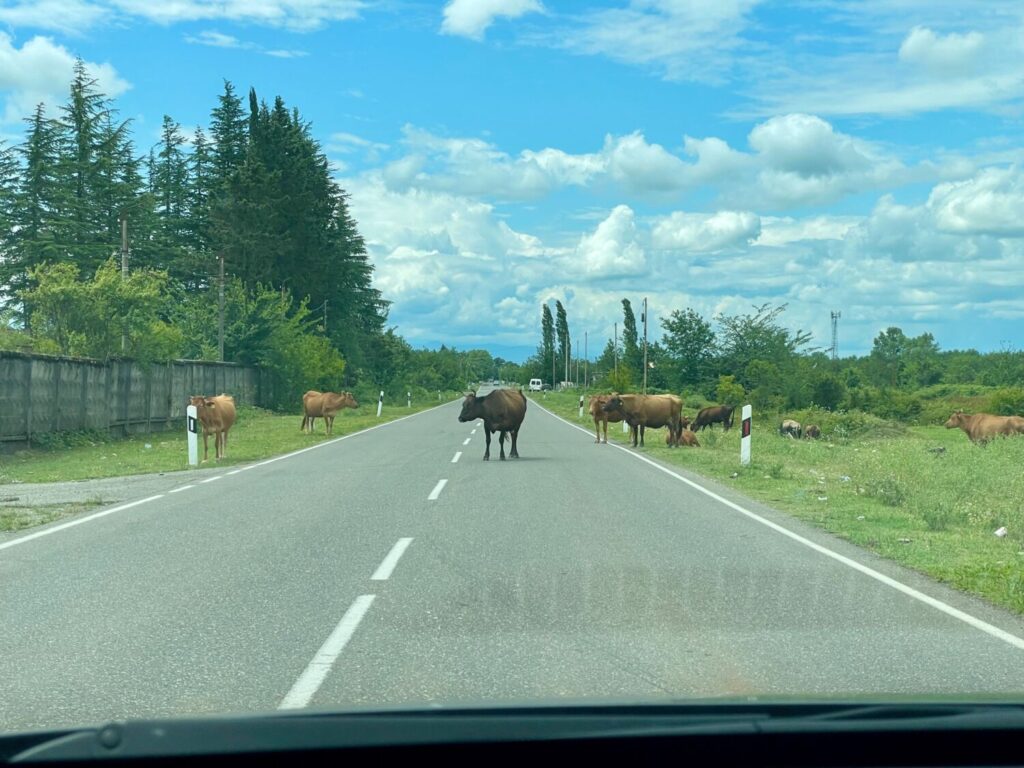
Driving in Georgia, though, requires confidence. Local drivers often communicate by briefly flashing their hazard lights, usually to let another vehicle pass or to signal that they are giving way. The roads bring their own surprises too. Cows regularly wander onto main roads without warning, especially outside larger towns.
Roadworks are frequent, making Google Maps surprisingly unreliable, while road signs can easily direct you onto narrow dead-end lanes or roads that suddenly disappear into construction sites. After reversing several kilometres on my very first day, I quickly learned that driving in Georgia rewards experienced, adaptable drivers who can stay calm when things do not go to plan.
My Eight-Day Georgia Road Trip Itinerary
I planned this entire journey independently, booking the flights, hotels and rental car from Italy before setting off with my friend Marina. Over eight days, we drove across central and western Georgia, discovering ancient cave cities, abandoned Soviet sanatoriums, Black Sea resorts and some of the country’s best food. This is the exact route we followed, including the unexpected detours, practical lessons and memorable moments that shaped our trip.
Day One: A Weird Dictator’s Museum
My friend Marina and I landed in Tbilisi in the early afternoon, slightly nervous about the driving ahead. Eric, the rental agent, met us in a car park and spoke no language we shared. We had asked for a small SUV, thinking it would be better suited to Georgia’s mountain roads, but instead found ourselves with a large Nissan Versa saloon. Between gestures and a translation app, we eventually sorted the paperwork, collected the car and set off.
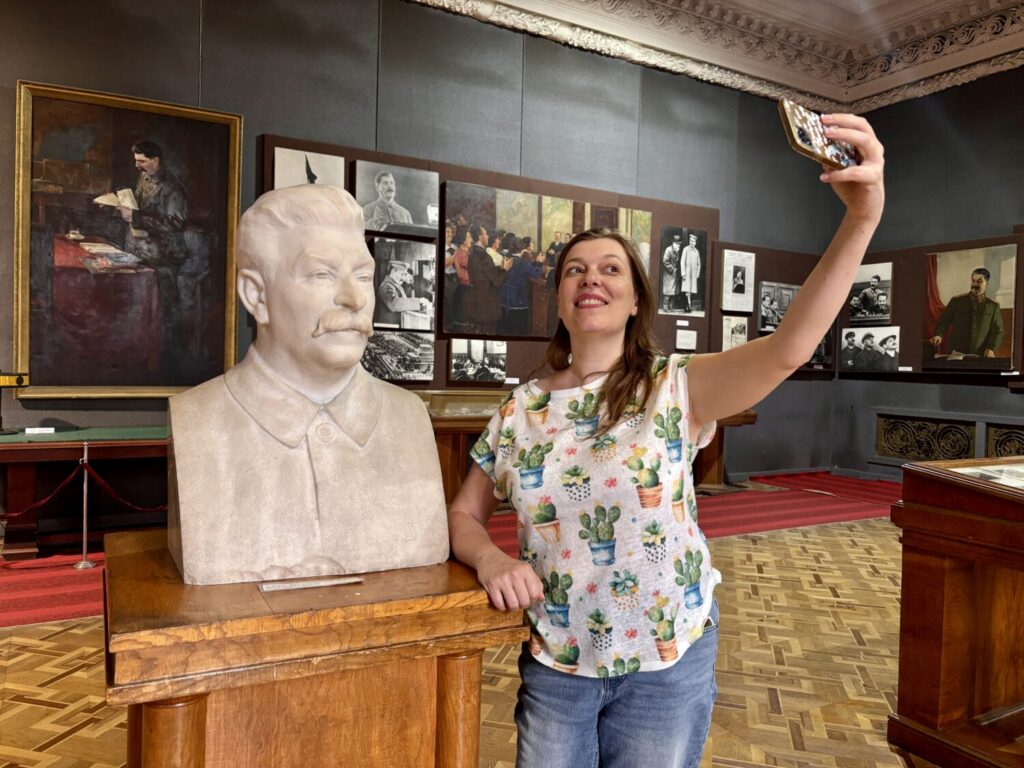
We reached Gori after roughly ninety minutes, a stop I had chosen because of my long-standing fascination with the history of the Iron Curtain and the former Soviet Union. The Stalin Museum there felt imposing and strangely celebratory. Captions appeared mostly in Georgian, with sparse English translation throughout the main halls. Only two final rooms, tucked near what looked like the toilets, offered a brief nod to political repression. Outside, his modest wooden birth house sat oddly enclosed within a far grander structure.
We continued towards Kutaisi, stopping for the night in nearby Tskaltubo. The Tskaltubo Epic Hotel and Spa welcomed us after a long day. A swim, a sauna and our first proper Georgian meal gave us a welcome introduction to the country’s hospitality and cuisine, leaving us eager for the adventures still to come.
Day Two: Hitchhiking to a Cave and Reversing Off a Cliff Road
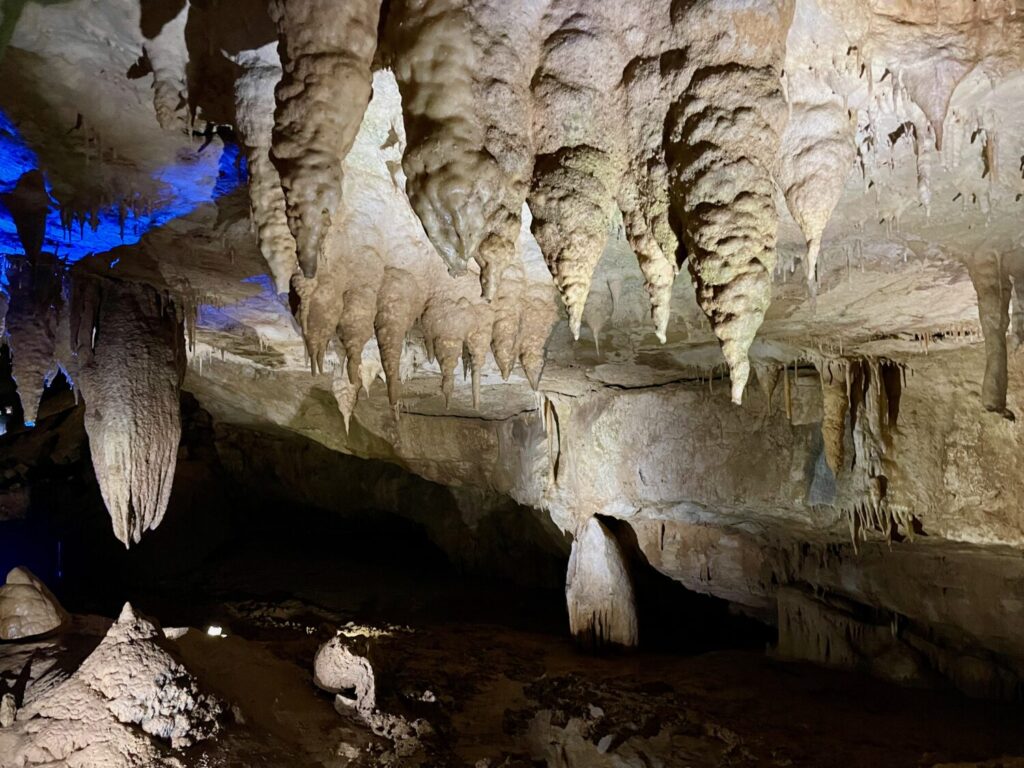
A boat gliding through a pitch-black underground river was one of the last things I expected to experience that day. It turned out to be the memorable finale of the three-hour guided tour through the Prometheus Caves in Tskaltubo. Without cash for parking and no shared language with staff, we abandoned the car and hitchhiked instead. A passing school bus picked us up and dropped us right at the entrance.
On the boat, we befriended a Belarusian couple who made their own country sound worth visiting. Afterwards, we drove towards Gelati Monastery, following signage that contradicted itself constantly. It led us into a narrow mountain lane blocked by a wall, forcing a slow, nervous reverse back downhill.
The monastery itself, mid-restoration and covered in scaffolding, still felt quietly powerful. A local worshipper explained that the churches honour Saint George, Saint Nicholas and the Virgin Mary. She mentioned that King David himself had planted the hillside vineyard centuries earlier, which explained the site’s positive energy.
Back in Kutaisi, a city forever linked to the myth of Medea and the Golden Fleece, we wandered the old town freely. Bagrati Cathedral offered free entry, though a woman near the door insisted rather firmly on a donation. Dinner at Gala Restaurant included a live demonstration on preparing khinkali, the traditional dumplings we would soon fall for completely.
Day Three: Crumbling Sanatoriums and a Disappointing Arrival in Batumi
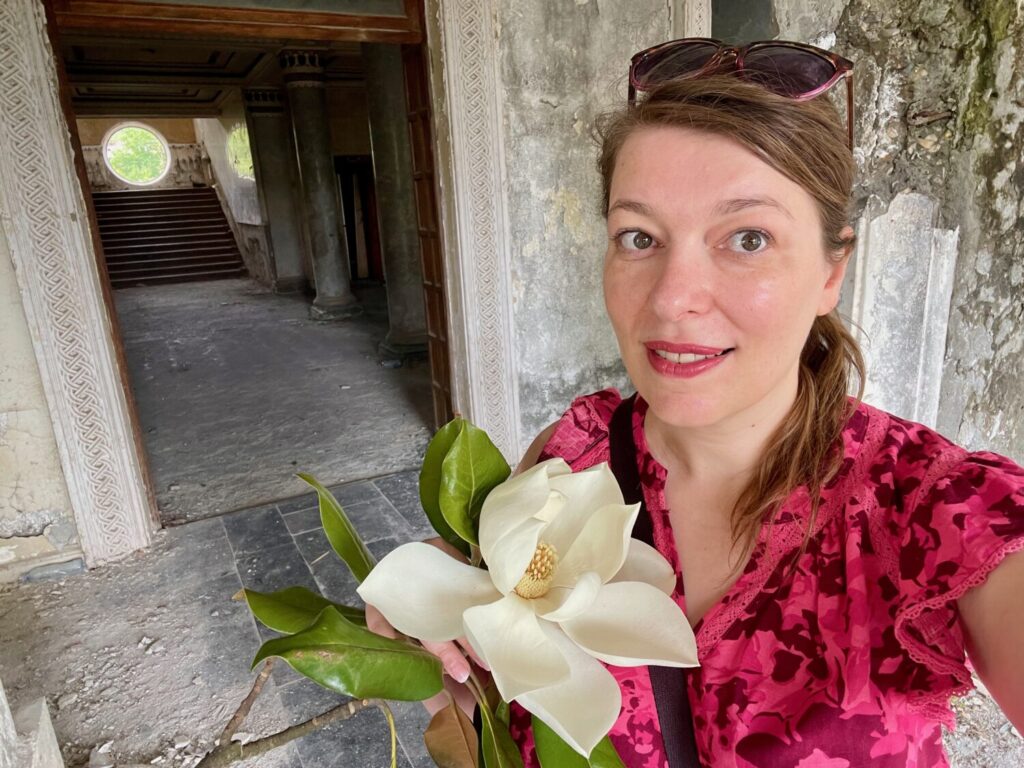
Crumbling staircases, broken windows and empty Soviet ballrooms were the last thing I expected to find in western Georgia. Tskaltubo’s abandoned sanatoriums delivered exactly that. At Imereti, the most striking of them, well-organised guards doubled as informal guides for a small tip.
The Metallurgist sanatorium told a different story entirely. Displaced families now live inside its crumbling halls, greeting visitors with understandable suspicion and requests for money. Since the rooms were occupied, we could not view the famous crystal chandelier up close, so we drove on towards the coast.
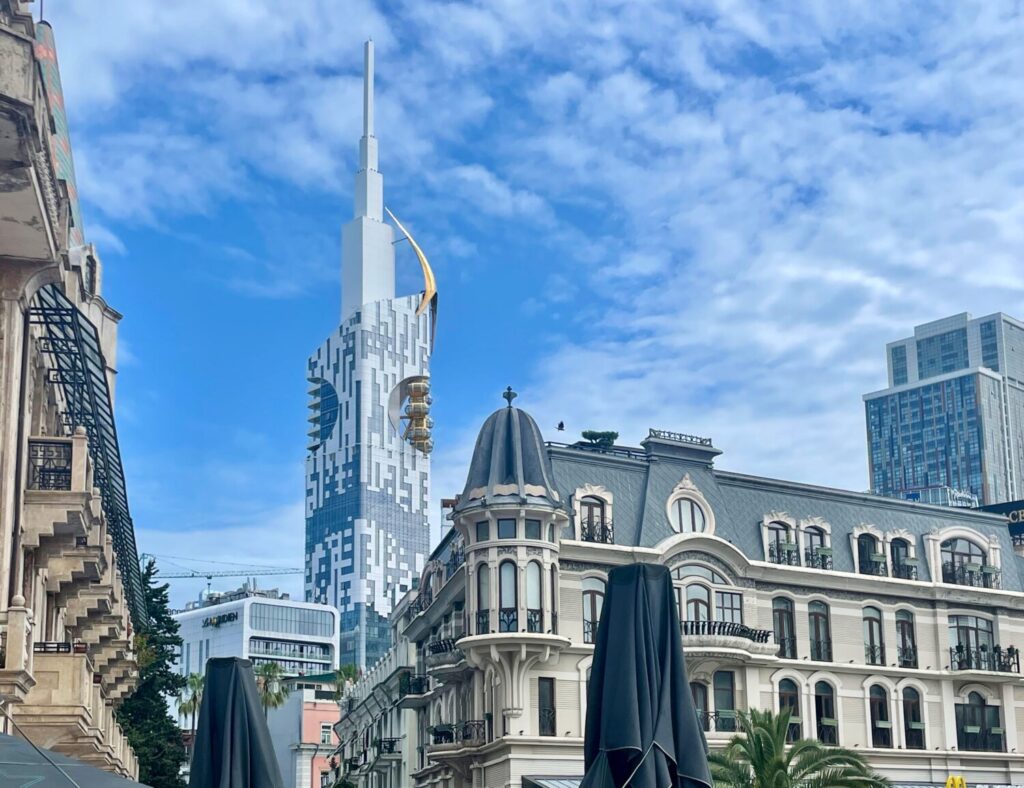
Three hours later, Batumi appeared on the Black Sea horizon. The New Wave Hotel, despite its four stars, disappointed us on every front imaginable. At first glance, Batumi felt like a Dubai still under construction, with modern high-rises rising beside unfinished developments. A subtle Turkish influence lingered too, thanks to the border being just a short drive away. However, the old town charmed us immediately with its pastel facades, elegant streets and quiet cafés.
Day Four: Ferris Wheels That Never Turn and the Best Meal of the Trip
Batumi Boulevard stretches for kilometres along the sea, past gardens, sculptures and dancing fountains. A dedicated cycling path runs alongside it, though large sections remain half-built. Skyscrapers rise unfinished in the background, cranes still working overhead.
I tried reaching the Ferris wheel built into the Batumi Tower, one of the city’s most recognisable landmarks, only to find it closed with no explanation available anywhere online. Nearby, the Alphabet Tower and the statue of Ali and Nino, Batumi’s two best-known landmarks, stand beside a genuinely chaotic tourist harbour, packed with noisy boat tours and persistent touts.
Piazza Europa and the old town’s narrow lanes offered a quieter contrast nearby. Elegant pastel buildings sit beside plainer Soviet apartment blocks, two eras colliding gently. That evening, dinner at Tavaduri became the best meal of the whole trip. We ate giant khinkali, taught by our neighbours to bite the top, drink the broth, and discard the tough pasta knot afterwards, finishing with a slice of honey cake called Medoki.
Day Five: A Cave City, a Hitchhiker and a Return to Chaos
Five hours of rough mountain driving convinced us to abandon plans for distant Vardzia. Georgia’s only proper motorway remains under construction, linking Tbilisi and Batumi only in patches. So we retraced our route instead, stopping wherever curiosity pulled us.
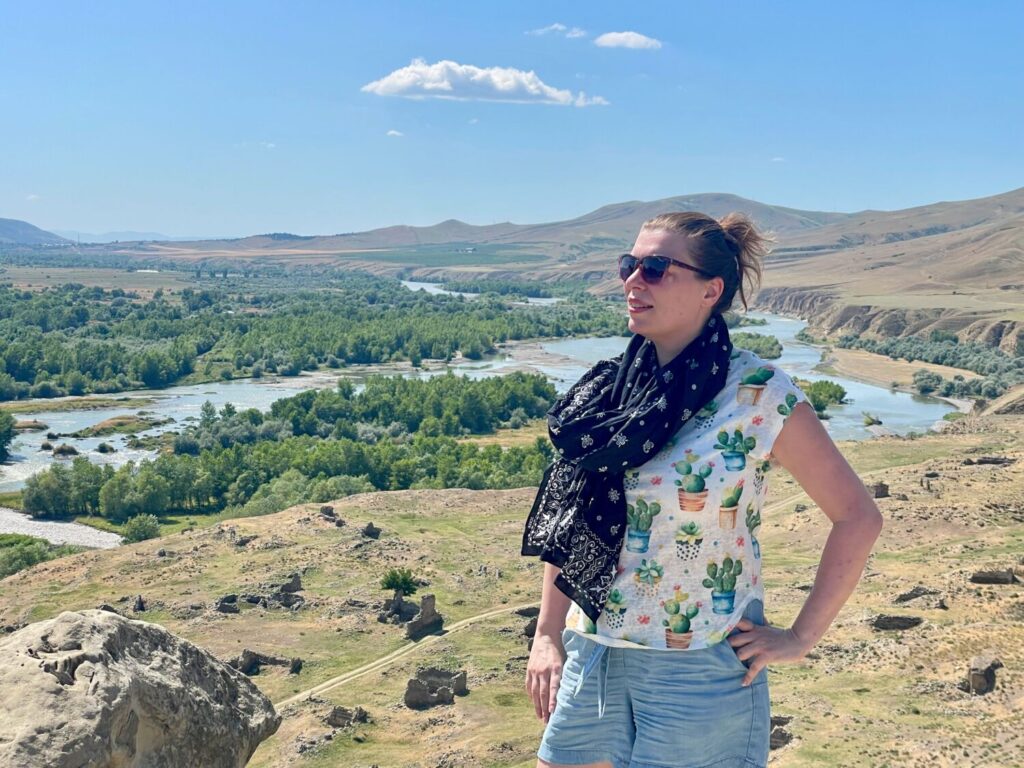
Uplistsikhe appeared first, a cave city carved directly into a hillside. Reaching it meant leaving the motorway onto a dusty track scattered with cows. A local guide helped us understand its past as a centre of pagan worship, long before Christianity arrived.
A Polish hitchhiker joined us briefly, volunteering somewhere across Georgia. He shared enthusiastic stories before leaving us near Gori, still smiling. We continued to Mtskheta, the ancient religious capital Georgians affectionately call their own version of the Vatican.
Svetitskhoveli Cathedral and Samtavro Convent both required covered shoulders and knees before entry. Despite ponies, carriages and an unmistakably touristy square, the town retained real weight. Chaotic evening traffic greeted us back in Tbilisi, though we eventually found parking near the 4 stars Sota Metekhi Hotel by Kura River. The place was nice, but its swimming pool turned out to be far smaller than the photos had suggested.
Day Six: Kittens, Closed Fortresses and a Very Local Bathhouse
We took the cable car up to Narikala, only to discover that the fortress itself was closed, with no sign explaining why. Hoping for better luck, we set off in search of the Botanical Garden, but the poor signage defeated us once again. By then, I had realised that tourist information in Georgia was often more of a suggestion than a certainty.
We eventually came across a small church dedicated to Bethlehem, home to its own colony of resident cats, including one friendly kitten that happily accepted plenty of cuddles, before reaching Tbilisi’s Old Town. Its streets alternate between beautifully restored buildings and quietly crumbling facades, while shisha bars and karaoke venues now fill many of the busiest areas. Thankfully, the quieter corners still retain their charm, with colourful murals adding character along the way.
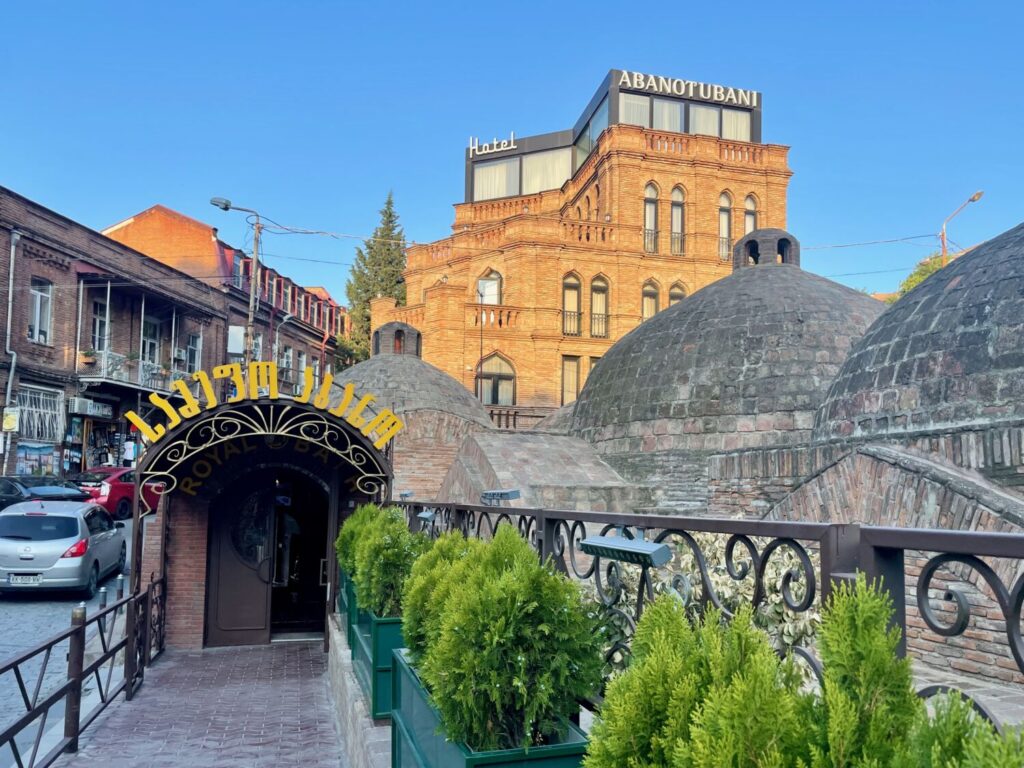
Late afternoon brought Tbilisi’s signature experience: an hour inside the sulphur baths of Abanotubani. The area near the river ranks among the city’s most touristy, full of touts steering visitors towards pricier options. We chose Bathhouse No. 5 instead, one of the last properly local spots. Inside, a domed ceiling covered in mosaic tiles sits above rows of plain showers. There is no pool here, only scalding sulphuric water pouring from plastic pipes. It felt like the most unexpectedly authentic hour of the entire trip.
Day Seven: Wooden Houses and the City’s Loudest Markets
A recreated mountain village sat almost within walking distance of central Tbilisi, at least on paper. Closed roads and confusing detours turned that short drive into over an hour. The Giorgi Chitaia Ethnographic Museum still rewarded the effort once we arrived.
Traditional houses from across Georgia stand here, filled with period furniture and tools. Advertised audio guides turned out not to exist, until a helpful Georgian visitor stepped in to translate. Inside each house, though, English-speaking guides offered genuinely detailed explanations.
The afternoon took us through Orbeliani Square market, the Dry Bridge market and the famously touristy Meidan Bazaar. Between antiques, spices and souvenirs, the noise and colour felt like Tbilisi distilled into a single afternoon. That evening, back at our hotel for the last time, nostalgia had already set in before we had even left.
Day Eight: A Six Euro Fine and the Worst Burger of the Trip
After breakfast, a smooth, fast road got us to the airport in just half an hour, defying every expectation Tbilisi traffic had set. Returning the car, we discovered we had picked up a traffic fine after making an illegal turn at one of Tbilisi’s bewildering junctions, where neither the road markings nor the signage made it remotely clear where we were supposed to go.
Expecting the worst, we braced ourselves for a painful bill. Instead, the fine came to the equivalent of about € 6. The only catch was that it could only be paid in cash, which, of course, we had already spent. One of us was effectively held hostage by the rental agent while the other dashed into the airport to find an exchange office. It was a suitably Georgian ending to the trip.
Lunch at the airport turned out to be the worst burger of the entire journey, from a surprisingly popular local Wendy’s. We boarded our flight home with mountain landscapes still fresh in our minds, a few packets of churchkhela tucked into our luggage, and khinkali-patterned socks that still make me smile whenever I wear them.

Final Impressions After a Road Trip in Georgia
I left Georgia with more questions than answers. It is not an easy destination, nor is it polished for tourists. Roadworks, confusing signs and unpredictable opening hours can all test your patience, especially if you choose to explore by car.
Yet those same imperfections are what made the journey so memorable. They led to unexpected conversations, hidden churches, abandoned Soviet buildings and some of the best food I have ever eaten. Rather than following a carefully curated tourist trail, I felt as though I was discovering the country one surprise at a time.
Would I recommend Georgia? Absolutely, but with realistic expectations. If you are looking for seamless organisation and perfectly developed tourist infrastructure, this may not be the right destination. If, however, you enjoy independent road trips, authentic experiences and destinations that still feel refreshingly genuine, Georgia will reward you at every turn.
I would happily drive those roads all over again, preferably with another plate of steaming khinkali waiting at the end of the day.
