
I do not usually travel with FlixBus or other long-distance coaches, but for my trip to Lyon I had booked everything too late to find reasonably priced trains. Driving also made little sense because I was staying in the city centre. Despite my doubts, I chose FlixBus because the price was significantly lower. Spoiler: it was not particularly comfortable, but I saved a lot of money and would probably make the same choice again in a similar situation.
Table of Contents
When travelling with FlixBus in Europe makes sense
Many young travellers and budget travellers choose long-distance coaches across Europe because they are far cheaper than trains or flights. For my trip to Lyon, the deciding factor was also the price, as I spent less than half the cost of the train. I would like to mention other positive aspects, but for me it was mainly about saving money. You can easily compare prices yourself using platforms such as Omio.
As for FlixBus routes, my journey was direct and without transfers, although the train offered the same advantage. For some destinations with limited rail or flight connections, coaches may still be worth considering to avoid multiple transfers. However, I have not personally encountered that situation during my travels in Europe.
For this trip, I ruled out driving because I wanted to avoid traffic, parking and additional costs. Even though Lyon turned out to be less congested than expected, I still would not have used a car because I relied on the Lyon City Card, which includes unlimited public transport.
Important things to know before booking FlixBus
The much lower price compared to trains and flights comes with several practical compromises that are worth knowing before departure, even if, like me, you do not expect too much comfort from long-distance coach travel in Europe.
FlixBus coach stations outside city centres: extra time and transport connections
One of the biggest disadvantages of travelling around Europe by coach is that bus stations are often located outside city centres. In Turin, for example, FlixBus stops are located near the Palace of Justice, in an area that is not extremely far from the centre but still requires public transport to reach conveniently. From my neighbourhood, which is about fifteen minutes on foot from the city centre, I still need two local buses and around forty minutes to reach the stop.
The situation in Lyon was similar, with the bus station located in the Gerland district. Reaching the city centre required at least thirty minutes and a change between metro and bus. The same applies to Milan, where FlixBus stops at Lampugnano, a rather inconvenient area outside the centre. Only in some smaller European cities, such as Norwich in the United Kingdom or Szeged in Hungary, have I found coach stations in more central locations.
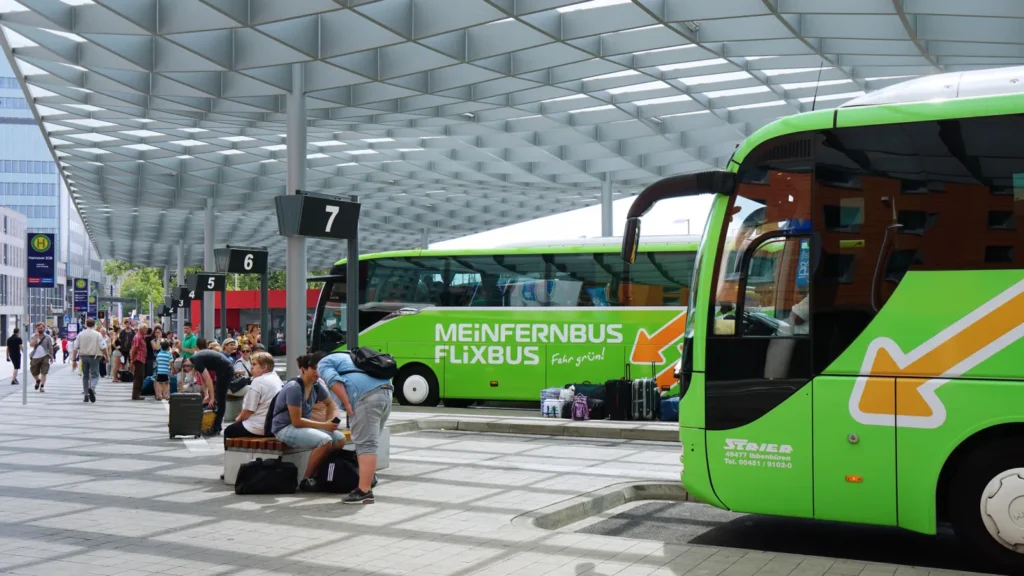
Unlike large railway stations, coach stations are also often very basic and not particularly comfortable. Turin’s bus station, for instance, is very small and lacks a proper waiting area. I could not find clear departure displays or reliable information about delays until another traveller suggested downloading the FlixBus app.
Outside, there were only a few covered benches and limited sheltered space. When it rains, as happened during my trip, the situation quickly becomes chaotic and uncomfortable. In Lyon, fortunately, I fortunately did not need to use the station facilities because my coach was already parked outside at the terminus, so I simply showed my ticket and boarded.
FlixBus delays, boarding and departure experience
Another important aspect concerns departures and boarding procedures. FlixBus coaches often arrive only a few minutes before departure and boarding happens very quickly. This means you need to wait directly at the stand, even in bad weather. Coaches also do not wait for late passengers.
As soon as the coach arrives, queues immediately form for ticket checks and luggage loading. On international routes, passports or identity documents may also be checked. Once the queue has cleared, the coach departs. All of this may happen entirely outdoors, in the rain, exactly as it happened to me.
If the coach is delayed, you still need to remain near the stand because delay notifications are often rather optimistic. This clearly highlights one of the main differences compared to train travel. FlixBus mainly focuses on competitive pricing, while comfort and overall organisation appear secondary.
Using the FlixBus app for tickets and delay updates
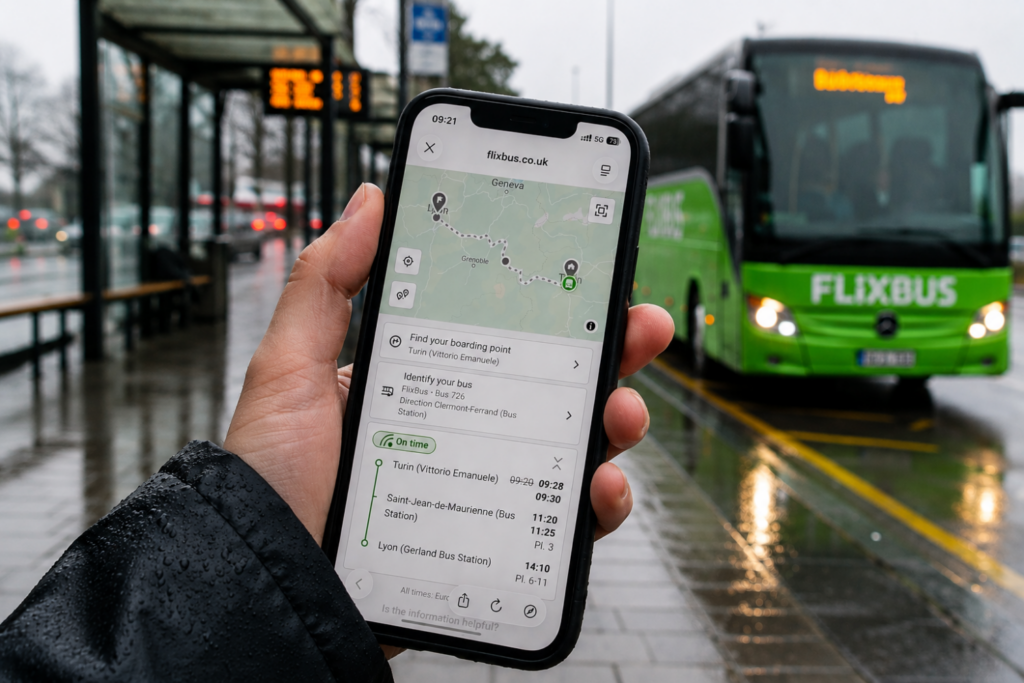
Since I almost never travel by coach, I had not downloaded the FlixBus app until another passenger suggested it so I could track my delayed coach. Besides checking schedules and delays in near real time, the app allows you to modify bookings, reserve seats, access your QR ticket and speed up boarding.
In my opinion, paying extra to reserve seats is largely unnecessary because the available selection is limited and relatively expensive. Having the ticket ready on the phone, however, is genuinely useful. Delay management within the app also is rather optimistic. My coach was initially expected at 9:20, then delayed to 9:28, then 9:30, while still being labelled “on time”.
What travelling with FlixBus in Europe is really like
Travelling around Europe by coach is probably not something I would choose again unless I found another exceptionally cheap fare. In the past I had occasionally used FlixBus for shorter journeys, such as between Turin and Milan when good offers were available, but never for a longer route.
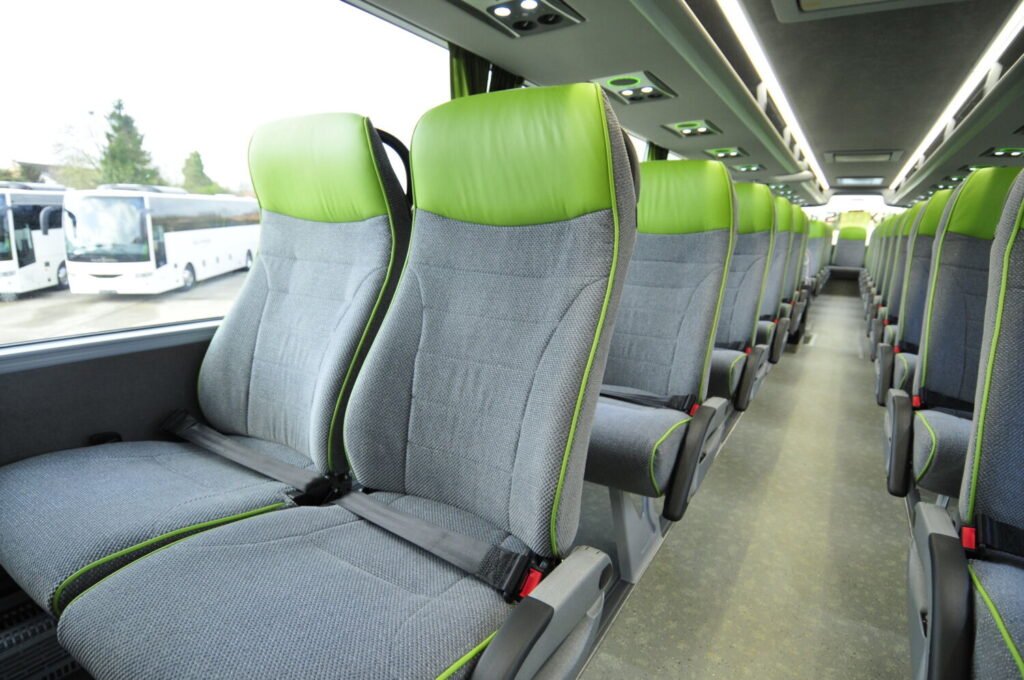
For my trip to Lyon, the coach itself was reasonably clean and fairly comfortable on both outbound and return journeys. However, the overall experience was not quite as advertised on the FlixBus website.
Toilets, stops and onboard comfort on FlixBus
One particularly uncomfortable aspect of travelling with FlixBus concerns toilets and scheduled stops, which seem to depend largely on the driver. FlixBus advertises onboard toilets, so I assumed they would always be available. During shorter two-hour journeys I had never needed them, but this time the trip lasted four and a half hours, making access far more important.
On the outbound journey, however, the driver announced that the toilet could not be used for “safety reasons” and that there would be an additional stop along the route. This added further delays because all passengers needed to queue for the only two toilets available at the service station.
After discovering that the onboard toilet was unavailable, I avoided drinking water for most of the journey, which was clearly unhealthy. The strangest part is that this did not appear to be an actual safety issue but rather a decision left to the driver, who was probably also responsible for cleaning the coach. On the return journey, the onboard toilet remained accessible for the entire trip, there were no additional stops and the coach arrived exactly on time.
FlixBus vs trains, flights and cars in Europe
Travelling by coach in Europe can make sense for medium-distance direct routes when the price difference compared to trains is substantial. It may also work well for destinations with limited direct rail or flight connections.
FlixBus is therefore a good option mainly for travellers who prioritise saving money, such as students or flexible travellers. Cheap fares are also easier to find for last-minute departures, exactly as happened in my case.
For my personal travel style, however, I still prefer trains, cars or flights whenever prices remain reasonable. Honestly, I struggle to find many reasons to choose FlixBus beyond the significant financial savings. Feel free to share your own experience with FlixBus in the comments. I would genuinely be interested to hear your opinion.
