
The Giorgi Chitaia Open Air Ethnographic Museum in Tbilisi lets you discover rural Georgia without travelling across the whole country. The museum brings together traditional houses from almost every Georgian region. Each building tells the story of a family and the area it came from, through original furnishings and the guides’ explanations. Reaching it isn’t entirely straightforward, but the visit rewards you with a splendid view over the Georgian capital.
PLAN YOUR TRIP TO GEORGIA
Stay online everywhere in Georgia with Holafly eSIM and enjoy unlimited data, fast internet, no roaming: perfect for using Google Maps and sharing your trip as you go.
Travel worry-free with Heymondo travel insurance, so you can enjoy every moment of your Georgian adventure without stress.
Table of Contents
Who Was Giorgi Chitaia: The Founder of Georgian Ethnography
The Open Air Ethnographic Museum in Tbilisi takes its name from Giorgi Chitaia, one of Georgia’s most important ethnographers. He is considered the founder of modern Georgian ethnography. For over sixty years, he travelled through villages, mountains and countryside across the country. He documented traditional houses, building techniques, tools, costumes and the ways of life of different local communities.
He believed many of these traditions would disappear as Georgia modernised. So he conceived an open-air museum that would preserve not just individual buildings, but the entire Georgian cultural landscape. The museum opened in Tbilisi in 1966 and welcomed visitors from 1976, following his vision of a miniature Georgia. Traditional architecture sits within a natural setting that closely resembles each building’s place of origin.
The result recalls the Skanzen in Szentendre, Hungary, and the Ulster Folk Museum in Northern Ireland. Both count among Europe’s most significant open-air ethnographic museums. In 1987, the museum officially took Giorgi Chitaia’s name, recognising his fundamental contribution to safeguarding Georgian cultural heritage.
The museum still ranks among the most important centres for preserving Georgia’s rural architecture. It lets visitors discover traditions that, as Chitaia himself wrote in 1975, were already rapidly disappearing from the country’s villages.
What to See at the Giorgi Chitaia Open Air Ethnographic Museum
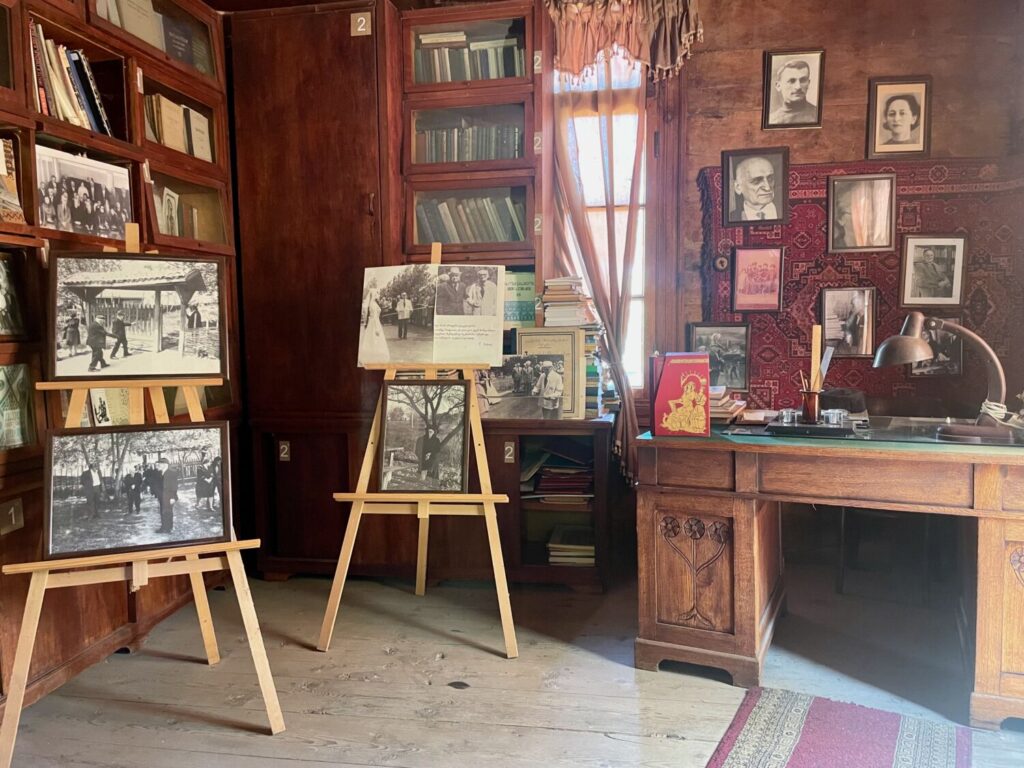
The Giorgi Chitaia Open Air Ethnographic Museum recreates a village, gathering houses from different Georgian regions. Builders reconstructed the houses outdoors, atop a hill just outside Tbilisi, within a large area surrounded by fruit trees. Walking along the paths, you can visit buildings spanning very different eras, from Tsarist times right through to the twentieth century.
The houses reflect very different ways of living and show how climate and terrain shaped Georgian domestic architecture. The house from the Samegrelo region in western Georgia, for instance, has a large central fireplace with bedrooms arranged around it, alongside an outdoor kitchen.
The house from Imereti takes a different approach: the kitchen shares the same room the whole family used for sleeping. Men and women occupied different sides of the room, while newly-weds had a bed hidden behind a curtain. This layout reminded me of rural houses I’d seen in the mountains of Ha Giang, in Vietnam.
The stories of the former owners, told inside the houses, make the visit even more interesting. One First World War officer became a photographer. Another emigrated to the United States and worked as a rider in Buffalo Bill’s travelling show. Unfortunately, restoration work closes some houses to visitors, and information panels stay scarce. You’ll learn much of this only by talking to the staff inside the houses.
Darbazi: The Traditional House of Eastern Georgia
The darbazi ranks among the oldest types of dwelling in eastern Georgia, common mainly in the Kartli and Kakheti regions. The whole house revolves around a large central room, covered by a pyramid-shaped wooden ceiling made of overlapping beams. The household hearth stood here, with an opening in the roof letting smoke out and natural light in.
Oda House: The Typical Wooden House of Western Georgia
The oda house, common mainly in the regions of Samegrelo and Guria, ranks among the most distinctive dwellings in western Georgia. Builders made it entirely from wood and raised it off the ground on stone or brick pillars, which protected the house from damp and improved ventilation. The wide verandas and open spaces look entirely different from other houses. They reflect a way of living adapted to the warm, humid climate of the Black Sea coast, quite unlike eastern Georgia.
Samzadi: The Outdoor Kitchen of Georgian Houses
The samzadi is the traditional outdoor kitchen you’ll find in Georgian dwellings. Builders in many regions placed it separately from the main house to keep smoke and cooking smells away from the living quarters. Seeing it, I immediately pictured the women of the family walking back and forth through freezing Georgian winters, just to prepare food.
Marani: The Georgian Wine Cellar With Qvevri Vessels
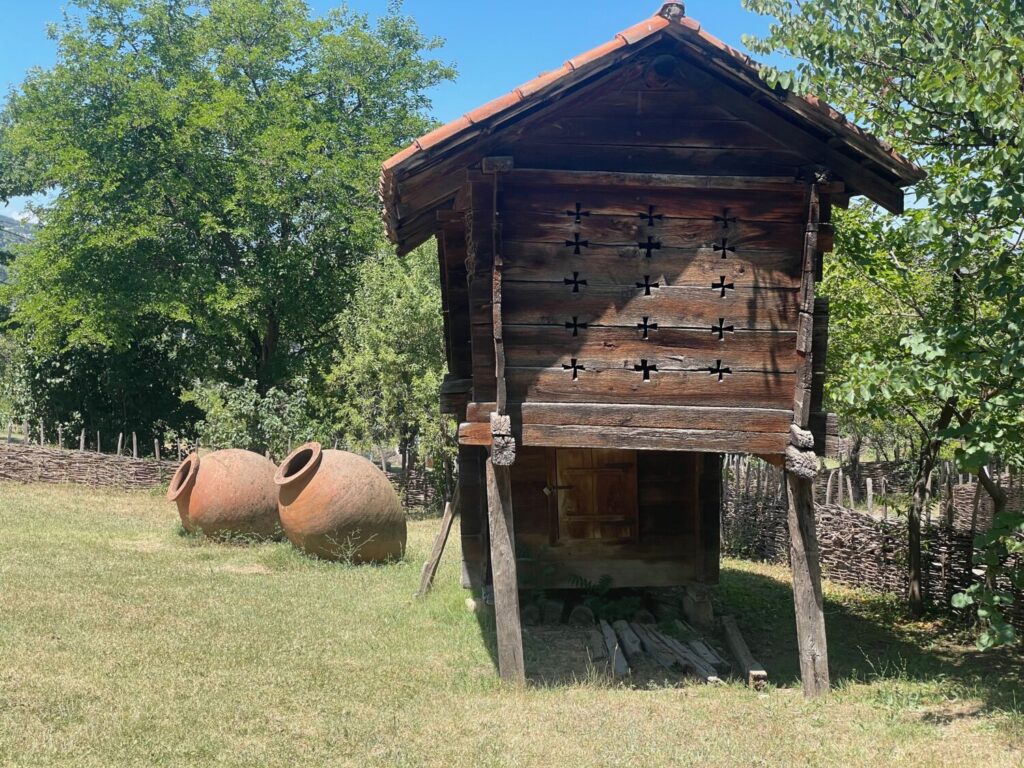
Near many of the houses at the Giorgi Chitaia Open Air Ethnographic Museum, you’ll spot a small building surrounded by large terracotta jars. This structure is called a marani, and it stored and produced wine. The large terracotta vessels themselves are called qvevri; winemakers still use them today to ferment and age wine following a method that UNESCO recognises as an Intangible Cultural Heritage of Humanity.
How Museum Staff Bring Georgia’s Rural History to Life
The Giorgi Chitaia Open Air Ethnographic Museum offers very little visitor information, aside from panels at the entrance of each house indicating its origin. During my visit, nobody at the ticket office spoke English, and I found neither leaflets nor the audio guides advertised at the entrance. It also wasn’t clear whether or when guided tours ran.
The situation changes once you step inside the houses, however. In some dwellings, museum staff who speak English and Russian share the history of the buildings with real enthusiasm. They talk about the families who lived there and the traditions of rural Georgia. Speaking with them directly and asking questions delivers one of the most rewarding parts of the visit, since it helps you understand the meaning of many exhibited objects and uncover details you’d rarely find on an information panel.
How to Plan Your Visit to the Giorgi Chitaia Open Air Museum
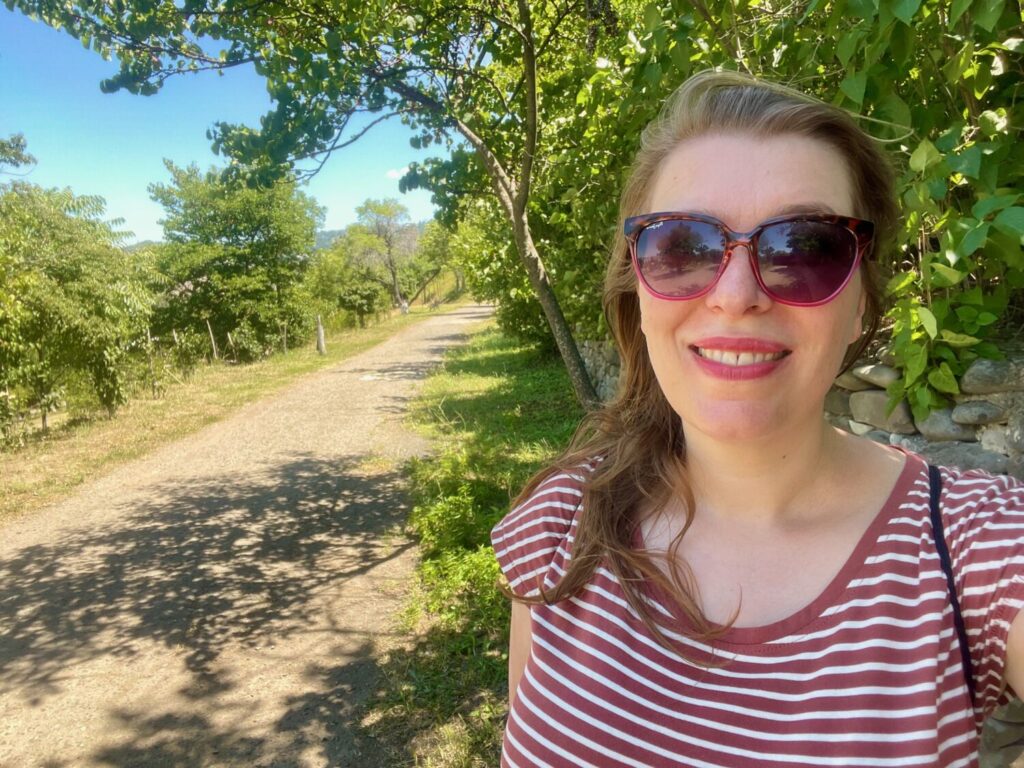
The houses aren’t especially numerous, but the Giorgi Chitaia Open Air Ethnographic Museum in Tbilisi covers a vast area, with houses fairly spread out from one another. I’d recommend setting aside at least two to three hours for the visit. The area recreates a small village, with houses immersed in greenery and connected by unpaved paths. You’ll need to walk a fair amount to see the whole site, so wear comfortable shoes.
In return, the climb to the top of the hill rewards you with a splendid view over Tbilisi. Bring a bottle of water, since the sun can turn intense on hotter days, and the museum offers no fountains or open cafés. It’s also meant to have a wine bar on site, but it stayed closed during my visit, and I couldn’t tell whether it would reopen. You can still refill your bottle at the sinks in the toilets, since tap water stays safe to drink throughout Georgia.
Ticket Prices and Opening Hours for the Giorgi Chitaia Ethnographic Museum
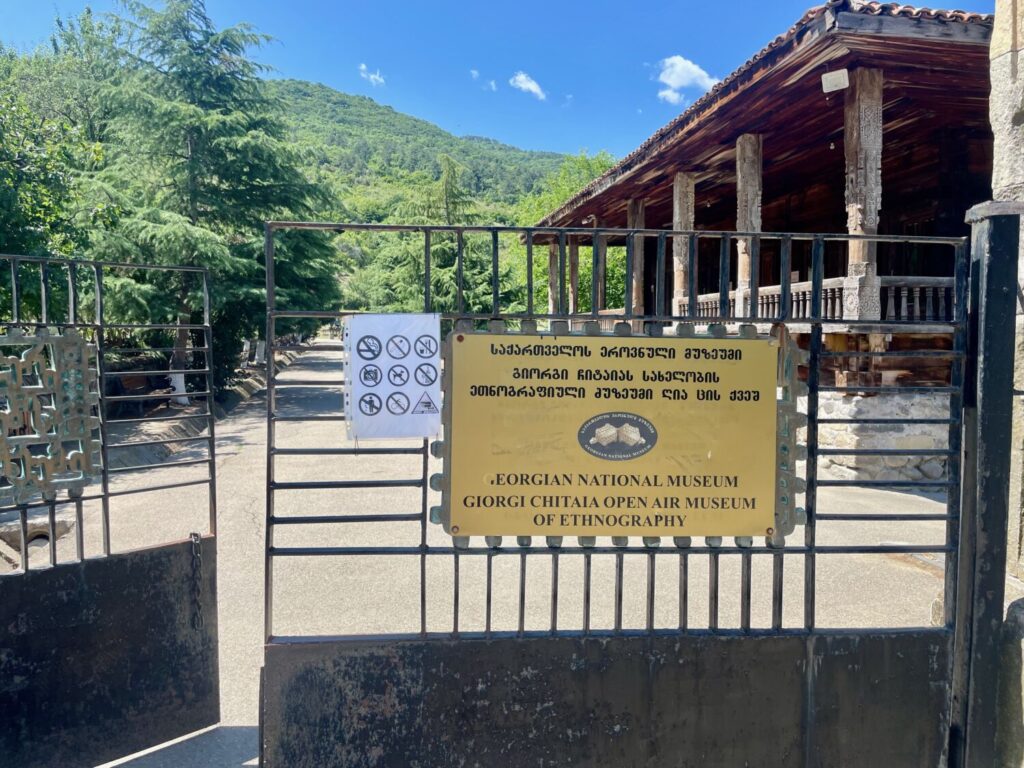
As I discovered during my road trip across Georgia, arranging a visit to any destination in the country ahead of time isn’t always easy. Finding up-to-date information about the Giorgi Chitaia Open Air Ethnographic Museum proves practically impossible, since the museum has no website of its own. You’ll find only a page, written in Georgian, on the portal listing Tbilisi’s museums, and it looks dated and far from intuitive.
During my visit, the entrance ticket cost 5 GEL (Georgian Lari) for adults, roughly €1.60 or $1.80. The museum opened every day. Since it lies outside the city centre and requires a dedicated trip, ask your hotel reception to call ahead the day before. This way, you can confirm the opening hours and get information directly from museum staff, in Georgian.
Giorgi Chitaia Open Air Ethnographic Museum Location and How to Get There From Tbilisi
The Giorgi Chitaia Open Air Ethnographic Museum sits on a hillside just outside Tbilisi, surrounded by greenery, with a splendid view over the city. Getting there wasn’t entirely straightforward, though, since considerable roadwork blocked the route out of Tbilisi during our visit. Google Maps struggled to find the correct route because of the construction work, and road signs stayed practically non-existent.
You can also reach it by bus, although the journey takes over an hour, and you’ll need to change from the city centre, provided Google Maps proves more reliable with public transport.
Tbilisi Open Air Ethnographic Museum (Google Maps link)
თბილისის ეთნოგრაფიული მუზეუმი
კუს ტბის ქუჩა, Tbilisi, Georgia
Why the Giorgi Chitaia Museum Is Worth Visiting in Tbilisi
The Giorgi Chitaia Open Air Ethnographic Museum offers an authentic glimpse into rural Georgian life. It’s awkward to reach, and planning a visit leaves plenty of room for the unexpected, but it’s absolutely worth visiting. Every house holds objects, stories and details that books and travel guides rarely mention.
Personally, I loved discovering how winemakers produced and stored wine, but also the personal stories of the owners. There was the soldier who became a photographer, and the emigrant to America who became a star of Buffalo Bill’s show.
At the Giorgi Chitaia Ethnographic Museum, you can also explore the differences in customs and architecture between Georgian regions, from Samegrelo to Imereti, getting to know the country beyond its most touristy destinations. Beyond the houses, you can also see the ancient boundary stones that once marked property or territorial borders, further details from Georgian rural life.
If history, traditional architecture and Georgian culture interest you, I’d recommend the Giorgi Chitaia Open Air Ethnographic Museum without hesitation. What makes the visit special isn’t just the houses, but the stories the museum staff tell, helping you imagine how Georgian families lived until just a few decades ago.
