
Located in the region of Shida Kartli, Uplistsikhe is one of Georgia’s most important archaeological sites and an unmissable stop for anyone wanting to discover the country’s ancient history. I visited this cave city during my road trip through Georgia, choosing it as an alternative to Vardzia because it was easier to reach. If you want to delve into Georgia’s history, walking through caves, tunnels and rooms carved out of stone feels like travelling more than three thousand years back in time.
PLAN YOUR TRIP TO GEORGIA
Stay online everywhere in Georgia with Holafly eSIM and enjoy unlimited data, fast internet, no roaming: perfect for using Google Maps and sharing your trip as you go.
Travel worry-free with Heymondo travel insurance, so you can enjoy every moment of your Georgian adventure without stress.
Table of Contents
What Uplistsikhe Is and Why It’s One of Georgia’s Oldest Cave Cities
Uplistsikhe is a city carved entirely out of rock, in the heart of the Shida Kartli region. In the past, it was an important political and religious centre for the area. The name means “fortress of the lord” and reflects its millennia-old history well. According to medieval Georgian literary tradition, the city was founded by Uplos, son of Mtskhetos and grandson of Kartlos, among the legendary ancestors of the Georgian people.
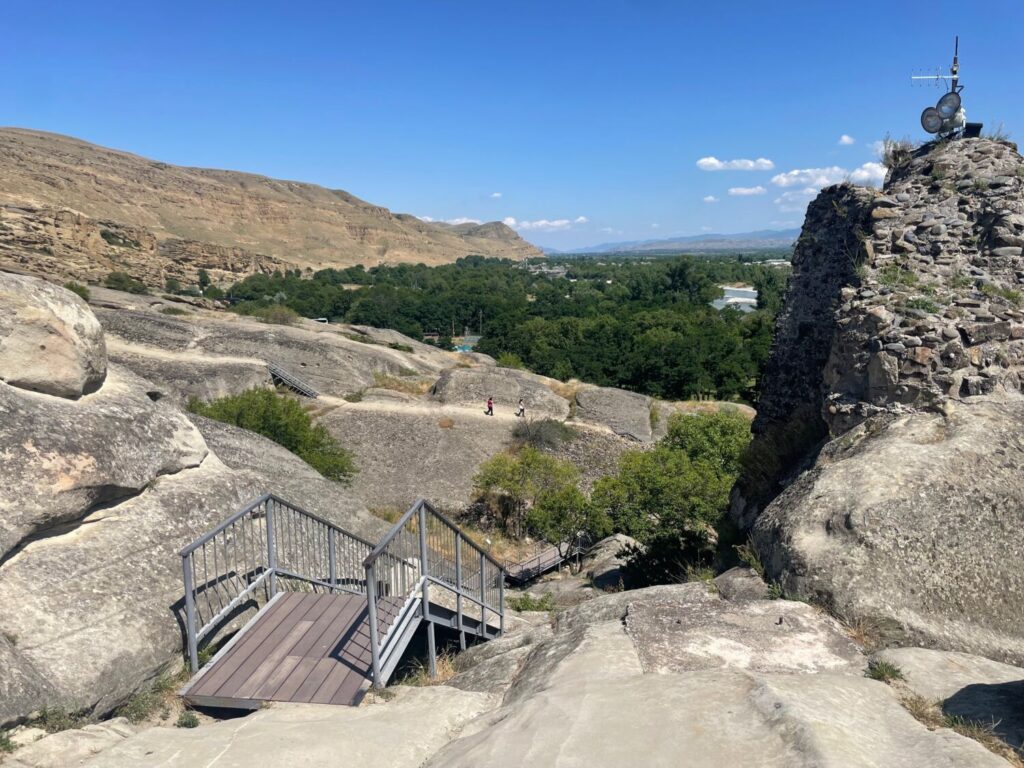
The city covers around eight hectares of rock, though only part of it is open to visitors today. At its peak, it was home to up to twenty thousand inhabitants, an impressive number for the era. The landscape is remarkable, since the structures are genuinely carved out of the living rock. If you have never seen a cave city before, this place will leave you speechless.
Uplistsikhe is not as well known as Vardzia, Georgia’s other famous cave city. Precisely for this reason, it is quieter and still feels authentic. With a guide, you can fully appreciate the fascinating history and unique architecture of the site. It would be hard to find, anywhere else in the Caucasus, a history so dense packed into so little space.
The History of Uplistsikhe: One of the Caucasus’s Oldest Cities
The origins of Uplistsikhe date back to the end of the second millennium BC. Between the sixth and first centuries BC, the city became an important political and religious centre of the Kingdom of Kartli. Here, people worshipped pagan deities linked to the sun, before the arrival of Christianity. Its pre-Christian past is still visible in the chambers carved into the rock.
With the spread of the Christian faith in the fourth century, Uplistsikhe lost importance. Other centres such as Mtskheta and, later, Tbilisi took over. The city was not, however, entirely abandoned. Ancient beliefs and Christianity coexisted for a time, in a balance rare for the period.
After the Arab conquest of Tbilisi, Uplistsikhe became Georgia’s leading stronghold once again. During this period, it grew to house twenty thousand inhabitants. It also became an important trading hub along the caravan routes of the region. When Tbilisi was recaptured in 1122, the decline of Uplistsikhe began rapidly.
The Mongol invasions of the thirteenth century sealed its final downfall. Much of the city’s structures were destroyed and the rest abandoned. An earthquake in 1920 caused further damage to the surviving remains. The city lay abandoned for centuries, until archaeological excavations in the twentieth century gradually brought it back to light.
Only in 2000 did the Georgian government, with support from the World Bank, launch a conservation programme. Since 2007, the cave complex has rightfully featured on UNESCO’s tentative World Heritage List. A significant recognition for a site that remains relatively little known.
What to See at Uplistsikhe Among Caves, Temples and Ancient Dwellings
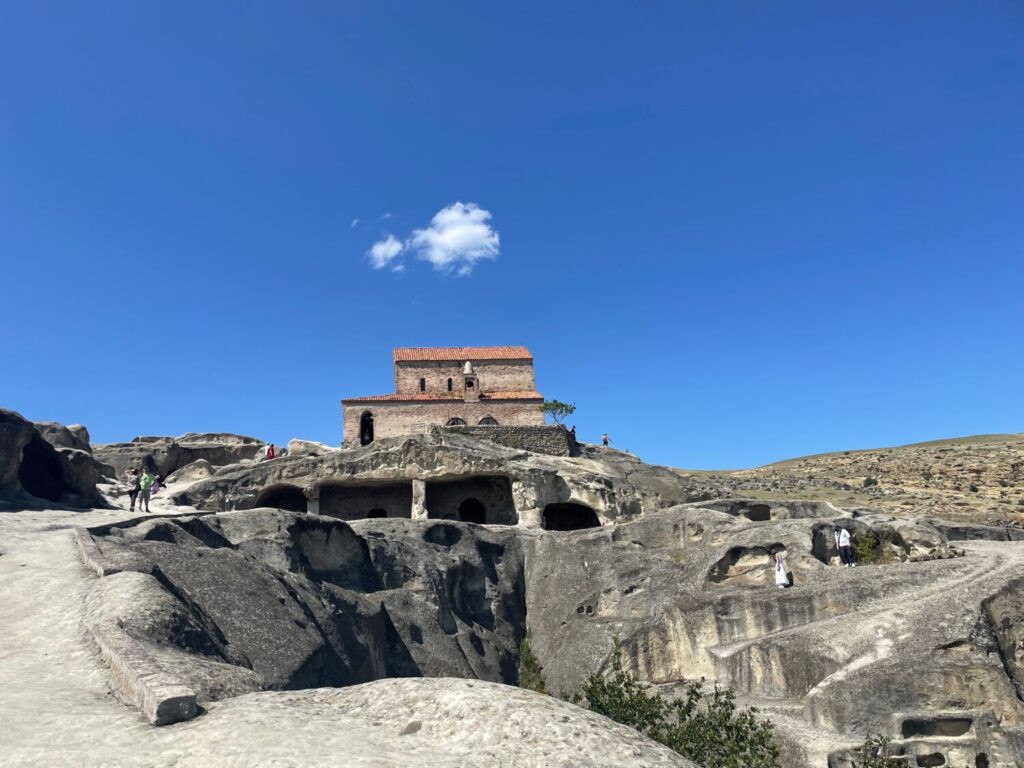
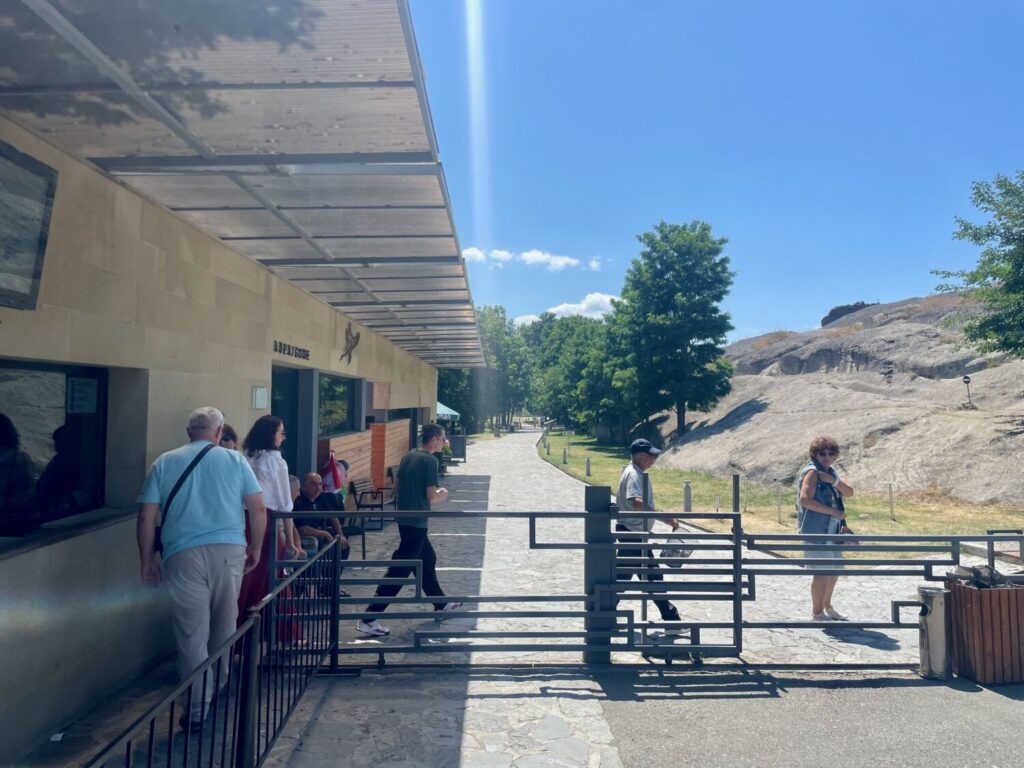
The visitor route winds through ancient dwellings and places of worship carved into the rock. Once inside the archaeological complex, you simply follow the wide dirt track leading from the ticket office, then the signs pointing towards the cave city. Uplistsikhe occupies the long, flat top of a hill, slightly sloping.
The site is divided into three sections: lower, central and upper, covering a total area of around eight hectares. The central section is the largest and includes some of the rock-carved structures. It is linked to the southern section by a tunnel. From the central path, further routes and staircases branch off, leading to the various structures of the city.
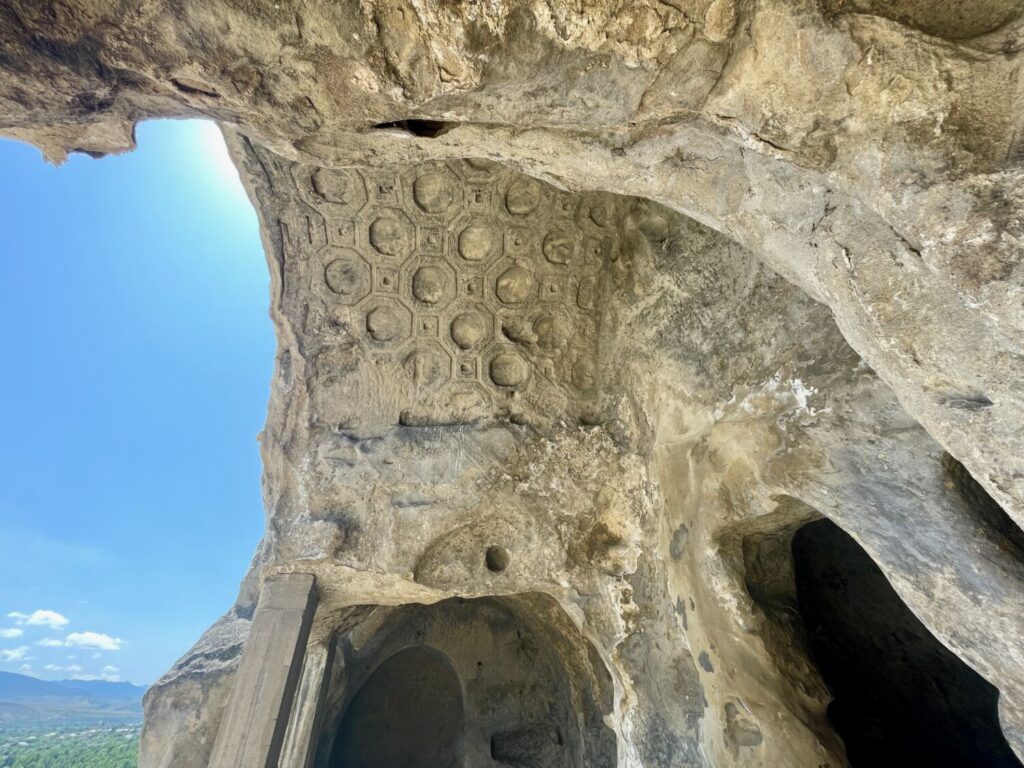
Thanks to the guide, I was able to notice many details that would otherwise have escaped me. For instance, the rock-cut rooms, which vary greatly in size, once served different purposes. Many contained sunken ovens, once used for baking bread. Most of the caves have no decoration, though some feature ceilings carved into the stone to resemble genuine coffered vaults.
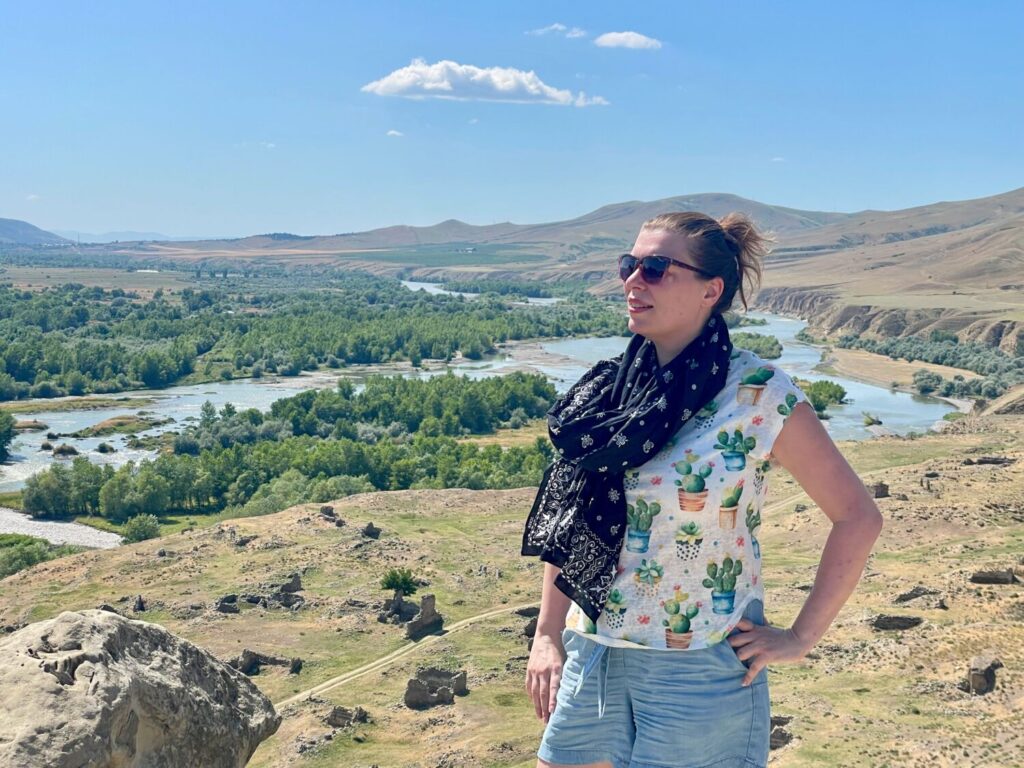
The information signs along the route are few, and the caves can look very similar at first glance. The view from the top, however, is spectacular, overlooking the river and the valley below. On the hilltop stands a small Christian basilica in stone and brick, built between the ninth and tenth centuries. It is still used by local worshippers today.
Once you have finished touring the cave city, I recommend stopping at the small museum near the ticket office. Here, various objects from different eras are displayed, unearthed during the archaeological excavations. These include jewellery, ceramics and sculptures. This is only a small portion of the finds, since most of the artefacts are held at the National Museum of Georgia in Tbilisi.
Practical Information for Visiting Uplistsikhe in Georgia
Uplistsikhe, like many attractions in Georgia, is not particularly well promoted. There is no official website with useful information for planning a visit. I personally found my way there using scattered information found online and by following Google Maps along a long, partly unpaved road. At one point, I almost doubted the site actually existed, before finally reaching the entrance.
Once inside the cave city, I recommend hiring a local guide. The cost is minimal and helps you understand exactly where you are and what you are looking at. Information is scarce even within the archaeological site itself. Without explanations, many caves can end up looking identical.
During the visit, wear comfortable clothing and sturdy trekking shoes, or at least trainers with a non-slip sole. To explore the cave city, you will need to walk along uphill paths and over potentially slippery stones. Despite this, you will spot influencers in flowing dresses and sandals, though I would not recommend following their example.
In summer, bring a hat to shield yourself from the scorching sun, since there is no shelter besides the rooms carved into the rock. I did not have one with me and had to improvise with a scarf to avoid sunstroke. As for water, there are no fountains along the route. You can, however, refill your bottle at the toilets near the ticket office, a less elegant solution but certainly more environmentally friendly than buying plastic bottles.
In front of the site’s entrance, you will find a few souvenir shops and restaurants that also sell bottled water. Prices at the restaurants are aimed at tourists, but the food is still fairly good.
Tickets and Opening Hours at Uplistsikhe
As there is no official website, the information below reflects what I found on site at the time of my visit. Uplistsikhe is open every day of the year, including public holidays. Opening hours vary by season: from 10am to 7pm in summer, with earlier closing during winter. To be safe, I recommend asking your hotel reception to check the updated opening hours before setting off.
The entrance ticket costs 15 GEL, around €5, for adults. Children under six enter free of charge. Given the complete absence of safety barriers or fixed paths, I would not recommend visiting Uplistsikhe with young children. Older children should be fine, as long as they stay close to you and don’t wander off on their own.
To learn more about the site’s history, you can hire a guide or rent an audio guide. At the time of my visit, a guide cost 45 GEL per group, around €14, regardless of group size. The audio guide cost 15 GEL, around €5. Given the modest cost, my travel companion and I chose to hire a guide, and it proved an excellent decision, since the information panels along the route are rather sparse.
When to Visit the Cave City of Uplistsikhe
The cave city is open to visitors all year round, though the site is very exposed to the elements. The best time to visit is definitely spring, when it is not yet too hot. I visited Uplistsikhe in June, with temperatures already quite high. There was no shaded spot to take shelter in, apart from inside the caves.
If you visit in high summer, I recommend going first thing in the morning or in the late afternoon. This way, you avoid the hottest hours and the risk of sunstroke. The archaeological site sits on the flat top of a hill and can become extremely windy. Bear in mind that on breezy days in Tbilisi or Gori, the wind at Uplistsikhe can be much stronger.
How Much Time You Need to Visit Uplistsikhe
Unlike Vardzia, Uplistsikhe has no clearly signposted, mandatory route. You can move around the site however you prefer, without a fixed itinerary. To explore the whole area at a relaxed pace, allow around two to three hours. Personally, I recommend taking your time, since every corner holds interesting details, especially if you enjoy photographing the views. The panorama from the top of the cave city is truly spectacular.
How to Get to Uplistsikhe from Tbilisi and Batumi
Uplistsikhe is around 90 kilometres from Tbilisi, roughly an hour and a half by car. The route passes through Gori, where you can stop at the Stalin Museum. We visited it on our way back from Batumi to Tbilisi, taking around four hours to cover 290 kilometres. The route follows the E60 motorway, passing through Kutaisi and Gori.
To check car rental prices in Georgia, I recommend DiscoverCars, the site I use most often when travelling. Without a car, you can take an intercity bus from Tbilisi to Gori and then a taxi for the final stretch. The most convenient option for those who do not drive remains joining an organised tour from Tbilisi.
Uplistsikhe Museum-Reserve (Google Maps link)
უფლისციხის მუზეუმ-ნაკრძალი
Uplistsikhe Complex Road, Georgia
Why Uplistsikhe Is Worth Visiting during a Trip to Georgia
Uplistsikhe undoubtedly deserves a place on your Georgia itinerary, thanks to its unique combination of ancient history, rock-cut architecture and stunning views over the Mtkvari river. Compared with Vardzia, better known but harder to reach, Uplistsikhe offers a more authentic and less touristy experience. If you are travelling by rental car, you can combine the visit with a stop in Gori, for the Stalin Museum, or in Mtskheta, considered Georgia’s answer to the Vatican, just as we did on our way back from Batumi.
If you love places that tell thousands of years of history, Uplistsikhe will surprise you. I arrived almost by chance, without knowing what to expect, and it turned out to be one of the stops I remember most fondly from my trip through Georgia.
