
During my trips to Budapest, I also ended up turning the search for Kolodko mini-statues into a real treasure hunt with my son. There are so many scattered across the city that finding them all during a single visit is almost impossible. Some are hidden in unexpected corners, while others appear right in front of you once you finally notice them. This guide focuses mainly on the mini-statues located in central Budapest and is simply the beginning of the hunt.
This article was originally written by Giulia Dal Pont for her former blog Travelling Sunglasses. It has been revised, updated, and expanded for Paola Everywhere.
Table of Contents
What Are Kolodko Mini Statues in Budapest: Hidden Gems in Plain Sight
If you love art and you are looking to discover Budapest hidden gems, they might be closer than you think. They could also be smaller than you expect: I’m talking about the mini statues of Budapest by Mihaly Kolodko. There are many more statues than I mention here. I’m still discovering them myself, and new ones are regularly added across the city.
Who’s Mihaly Kolodko, the Artist of the Mini-Statues
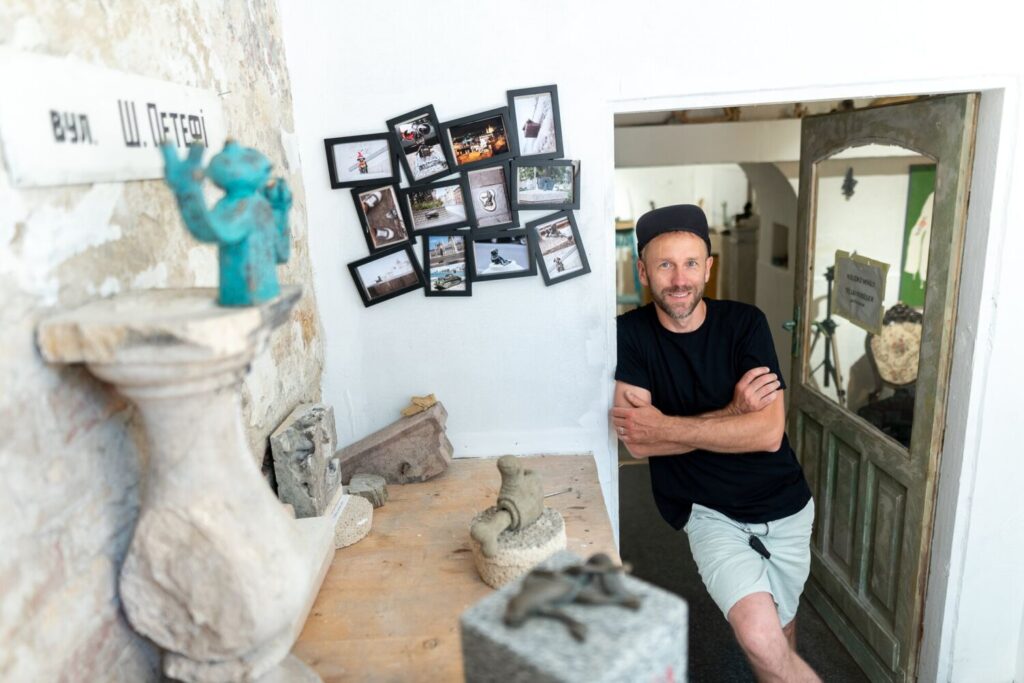
Artist Mihaly Kolodko (or, more correctly, Mykhailo Kolodko) placed these mini statues all over the city to commemorate important historical moments or people, while also entertaining the public. There are so many of them that locals often compete to discover the next mini-statue. We never know when a new one may suddenly appear.
Born in Uzhhorod, Ukraine, in 1978, he graduated in monumental sculpture but moved towards miniature art in 2010. He was inspired by the possibility of representing monumental ideas in a smaller format that was faster and more practical to create.
The small bronze statues are usually hand-sized, although some are bigger and others smaller. They hide in plain sight and are often difficult to spot, even when you know exactly where to look. This is what I love most about them: I feel like Indiana Jones exploring my own city in search of unique and meaningful treasures. Each mini-statue has its own meaning or story behind it.
Where to Find Budapest’s Kolodko Mini-Statues in Budapest
Many of Budapest’s Kolodko mini-statues are already marked on Google Maps, although some can still be surprisingly difficult to find. Part of the fun comes from searching for them while walking around the city, often noticing tiny details you would normally miss.
Mini-statue in Hungarian is miniszobor, and several statues appear on Google Maps using their Hungarian names rather than English ones. In this guide, I added links to the location within the name of each statue whenever they were already available online, making the search a little easier.
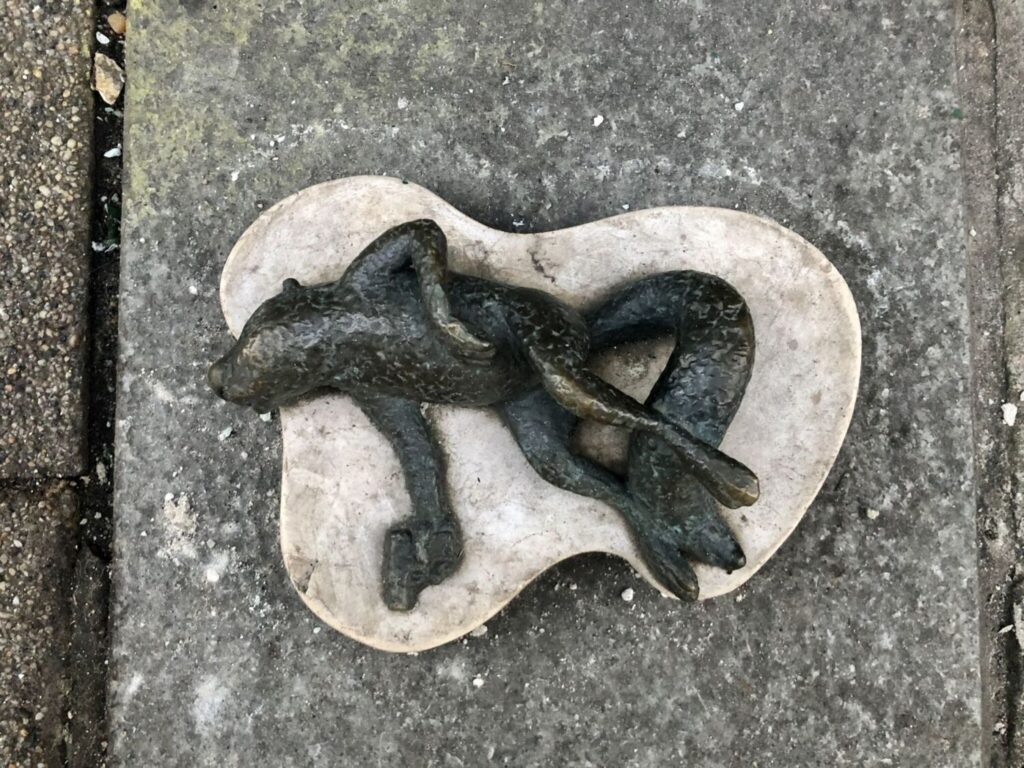
The Dead Squirrel Mini-Statue
The Dead Squirrel mini-statue by Kolodko is located at Szent István körút 5, at the corner with Falk Miksa utca, on the ground beside the green electricity service boxes. You can also find it by searching for Halott mókus in Hungarian.
When you are there, it is impossible not to notice the statue of Lieutenant Columbo and his dog on Falk Miksa utca, near Margaret Bridge on the Pest side of Budapest. Holding a cigar and scratching his head, the iconic TV detective was played by Peter Falk. Even though the connection to politician Miksa Falk has never been officially confirmed, the actor’s origins were certainly Hungarian.
Well, Columbo is about to start his next case. Behind him, on the left, there is a dead squirrel outlined in chalk, with a gun still clutched in its hand. What happened? Was it suicide or a homicide in disguise? Don’t worry: Columbo will solve the mystery for sure.
The 14-Carat Roadster Car Mini-Statue
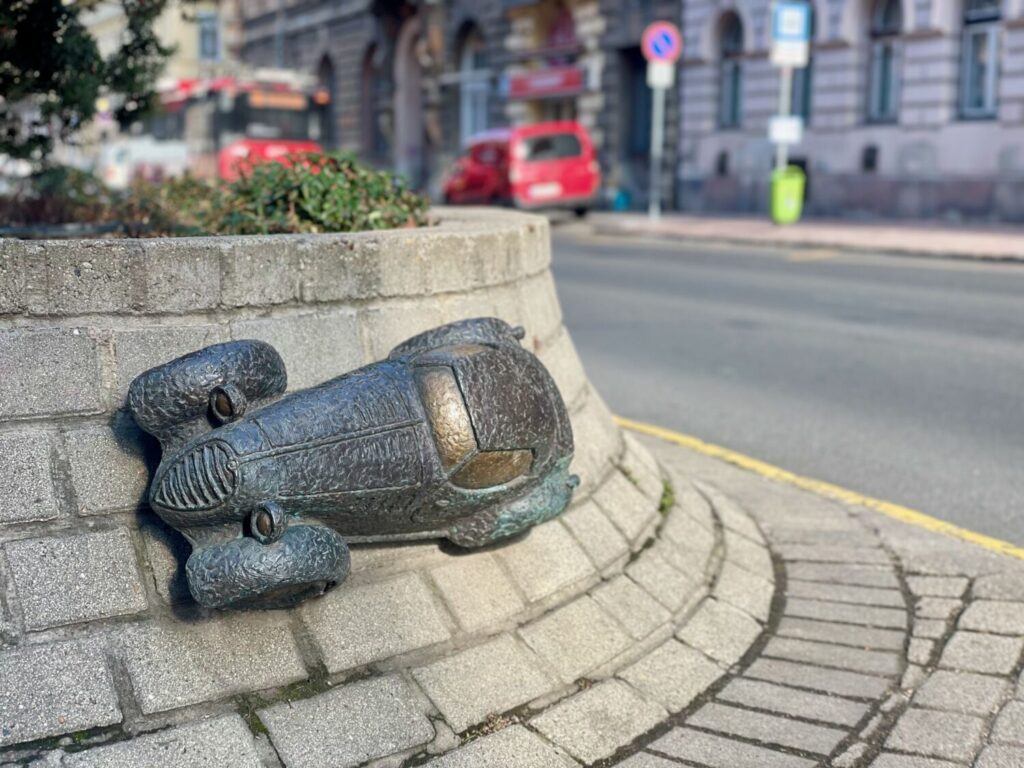
The 14-Carat Roadster Car mini-statue by Kolodko is located at Hevesi Sándor tér 4, on the side of Izabella utca. Stand with your back to the entrance of the Pesti Magyar Színház Theatre: the car is on the right side of the flower bed curb in front of you. You can also look for A tizennégy karátos autó in Hungarian.
If you like vintage cars, make sure you search for this tiny Alfa Romeo sports car. The 14-Carat Roadster is a character from the homonymous novel A tizennégy karátos autó by Jenő Rejtő: an Alfa Romeo supposedly made of fourteen-carat gold.
The Hungarian author became famous for his plays and novels thanks to his unique sense of humour within the pulp fiction genre. He died in 1943 as a forced labourer in Russia.
This mini-statue is another homage to Hungarian Jews and Budapest’s historic Jewish neighbourhood, the 7th district, together with the mini-statues dedicated to Hanna Szenes and Rezső Seress.
Pianist Rezső Seress Mini-Statue
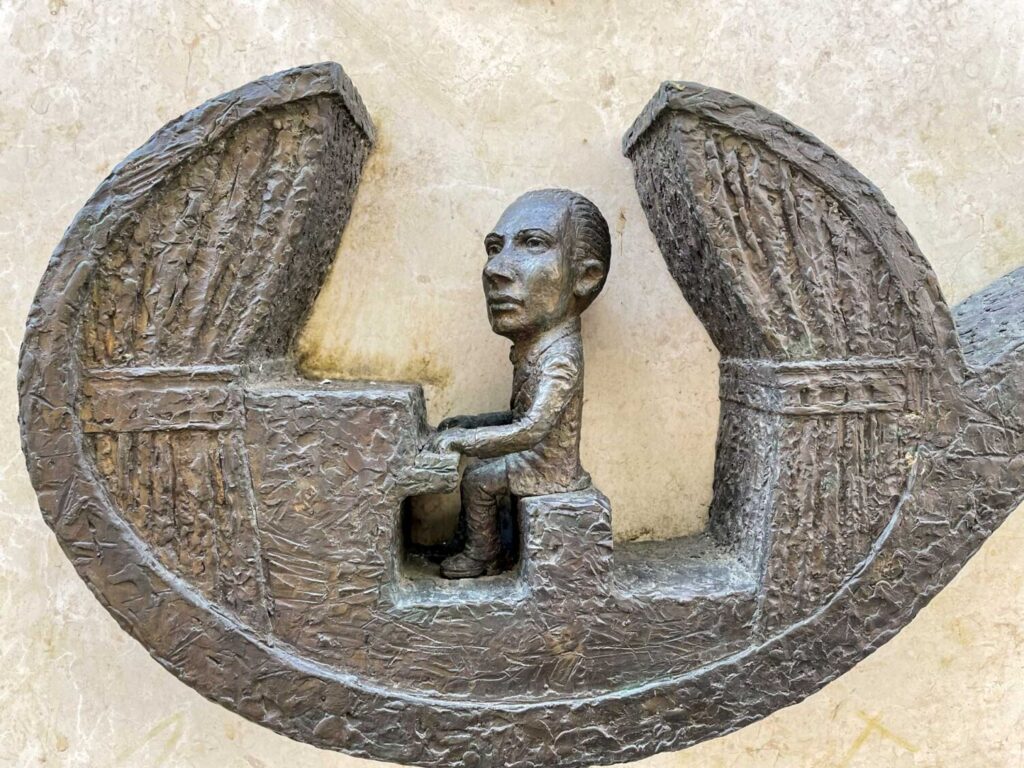
The Pianist Rezső Seress mini-statue by Kolodko is located between Akácfa utca 36 and 38, attached to the wall right next to the Kispipa restaurant. Let’s start by understanding this unusual sculpture. The pianist and composer Rezső Seress is placed inside a small pipe, representing the Kispipa bar and restaurant where he used to perform.
Seress was the composer of the famous Hungarian song often nicknamed the ‘suicide song’, Gloomy Sunday. Unfortunately, he was never able to collect significant royalties from the song, even after it became internationally popular thanks to Billie Holiday.
Paratrooper Hanna Szenes Mini-Statue
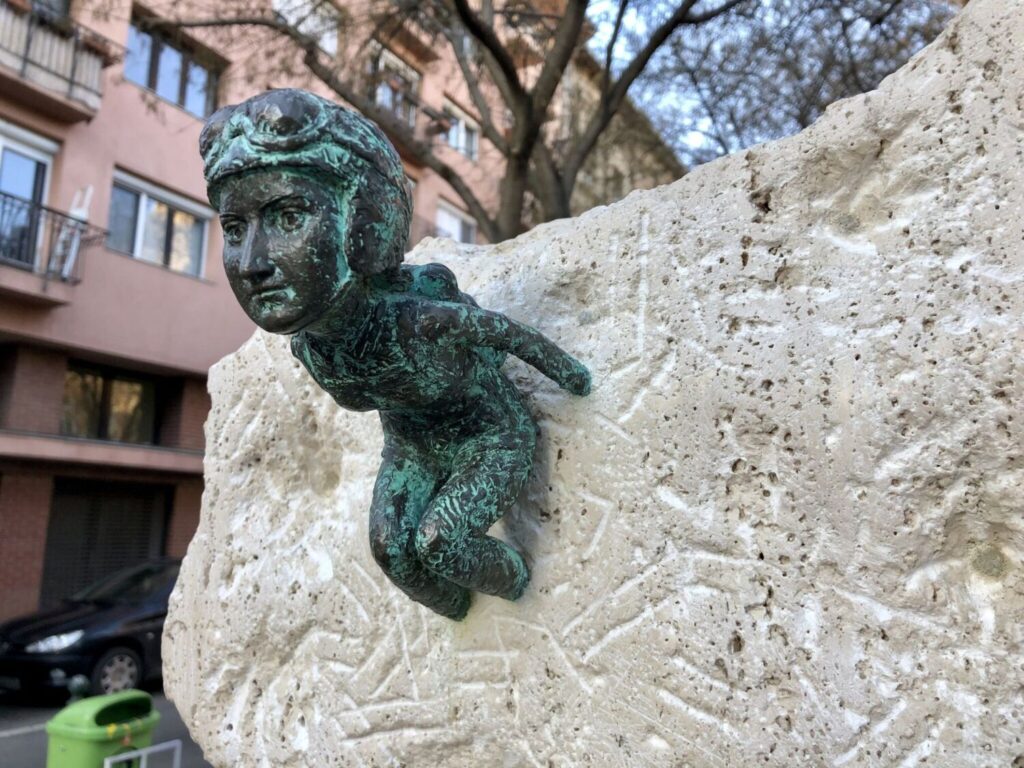
The Paratrooper Hanna Szenes mini-statue by Kolodko is located opposite Rózsa utca 36, at the entrance gate of Szenes Hanna Park, at eye level. Hanna Szenes, also known as Anikó Szenes, was a poet, paratrooper and Jewish war heroine. Born in Hungary in 1921 to an assimilated Jewish family, she emigrated to the British Mandate of Palestine in 1939 after anti-Jewish laws prevented her from entering university.
Horrified by the events of World War II, she joined the British Army as a military parachutist in 1943. In 1944, she was parachuted into Yugoslavia with the objective of assisting anti-Nazi forces and helping rescue Hungarian Jews. Since Germany had already occupied Hungary, the mission was officially called off.
Nonetheless, Szenes decided to continue and attempt to enter Hungary. Unfortunately, she was captured at the border, arrested, beaten and transferred to a prison in Budapest. She consistently refused to reveal valuable information about her mission and colleagues, even after her own mother was captured and used as leverage against her. Hanna Szenes was tried and executed on 7 November 1944 at the age of just 23.
In 2019, on International Women’s Day, the Hungarian organisation Hosszúlépés. Járunk? organised thematic tours to highlight one of Budapest’s cultural issues: out of around 1,200 statues in the city, only 35 represented women as heroines or role models. Cardboard statues were placed across Budapest to draw attention to the absence of female figures in public spaces.
On 8 March 2020, Kolodko unveiled the Hanna Szenes mini-statue at Szenes Hanna Park, creating his first heroine mini-statue. I love her focused gaze as she looks towards the sky while sitting on a Hungary-shaped white stone. This is definitely one of my favourite Budapest mini-statues.
Theodor Herzl and His Bicycle Mini-Statue
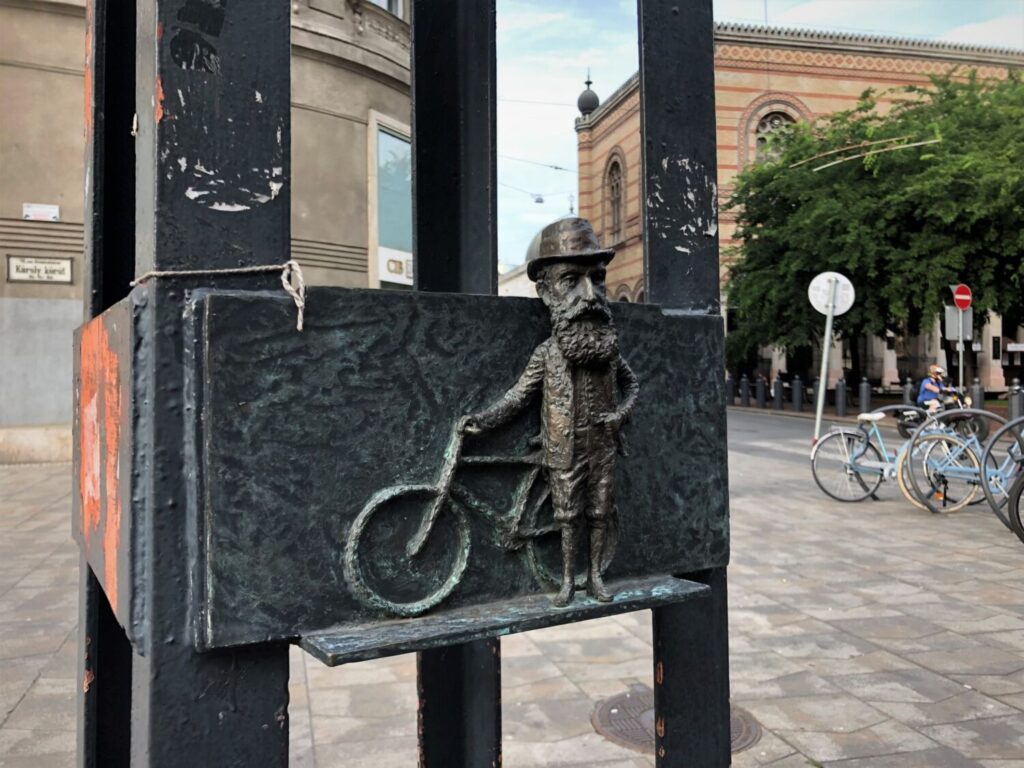
The Theodor Herzl mini-statue by Kolodko is located at Dohány utca 1, attached to a metal pole in front of the CIB Bank at chest height. Theodor Herzl, known in Hungarian as Herzl Tivadar (1860–1904), is widely known as the father of the State of Israel. He promoted the immigration of Jews to Palestine in an effort to create a Jewish state and founded the Zionist Organization.
The Austro-Hungarian Jewish journalist, writer, playwright and political activist was born on the site where the Jewish Museum now stands. Consequently, the mini-statue, inspired by a photograph of Herzl riding a bicycle, was placed near the iconic Dohány Street Synagogue.
The Diver Mini-Statue
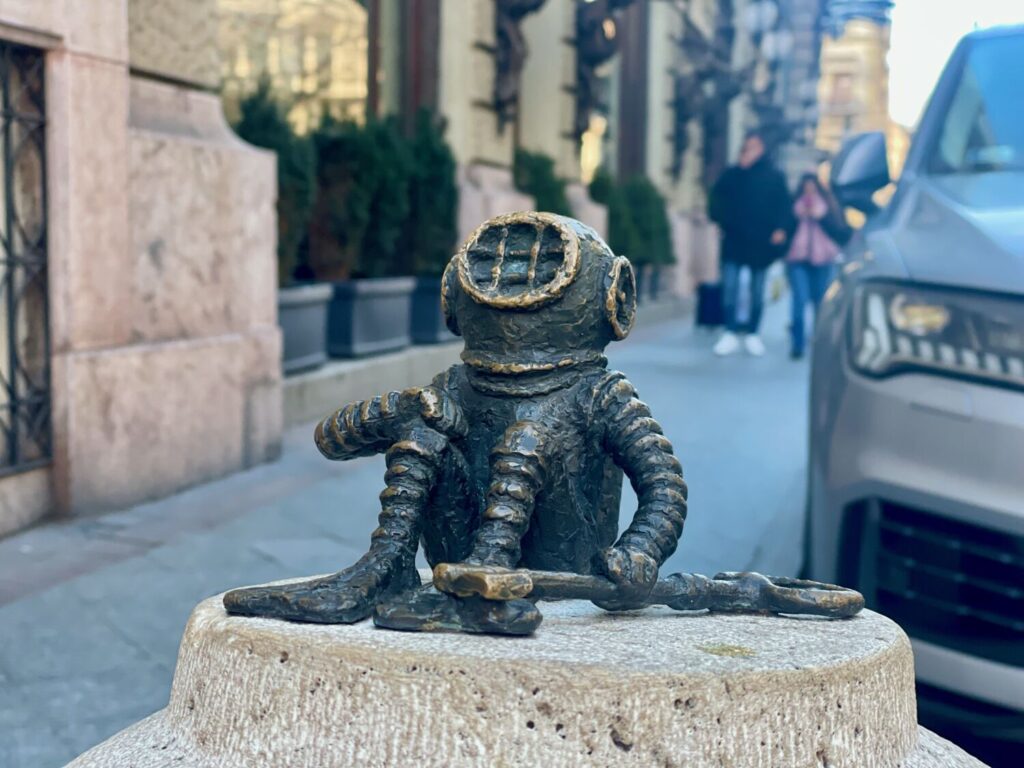
The Diver mini-statue by Kolodko is located at Dohány utca 72, at the corner with Osvát utca, on the side of the New York Café windows. You can also find it by searching for Búvár in Hungarian. He is a rather curious diver. Comfortably sitting on a stone hydrant, he wears old-style diving equipment with a copper helmet and holds a key in his hands.
This mini-statue is a homage to the nearby New York Café, a famous literary café since its opening in 1894. Often described as one of the world’s most beautiful cafés, it is one of Budapest’s best-known landmarks thanks to its magnificent frescoes and elegant atmosphere. The New York Café and the nearby Anantara New York Palace Budapest are perfect places to splurge during your stay in Budapest.
According to local legend, the café’s key was thrown into the Danube as a wish for success and never-ending opening hours. Perhaps it was Ferenc Molnár himself, the author of The Paul Street Boys, who threw it into the river. Apparently, this expert diver managed to recover the lost key from the depths of the Danube.
Noah’s Ark Mini-Statue
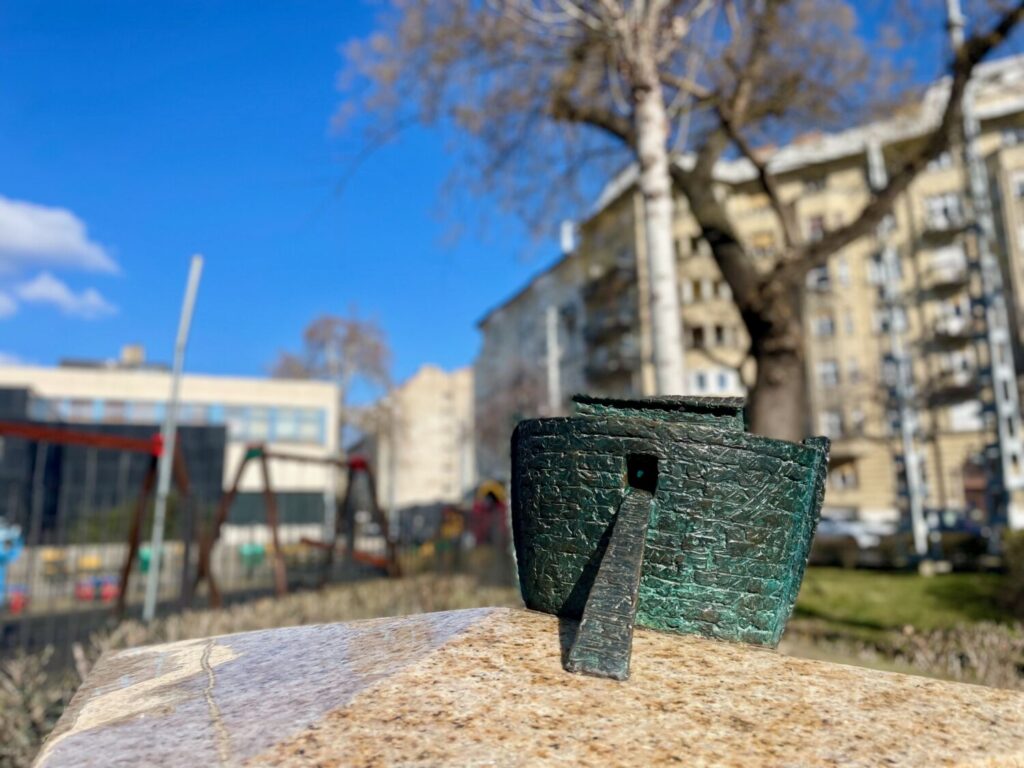
The Noah’s Ark mini-statue by Kolodko, in Hungarian Noé bárkája miniszobor, is located on Bethlen Gábor tér, a small square at the intersection of István utca and Bethlen Gábor utca. The ark mini-statue can be found along the István utca side of the square, on the left when arriving from the city centre, placed on a small stone border surrounding the grass near the playground.
Kolodko installed his Noah’s Ark mini-statue in August 2019 in this symbolic location between the synagogue on Bethlen Gábor tér and the main entrance of the University of Veterinary Medicine on István utca.
Emperor Franz Joseph on a Hammock Mini-Statue
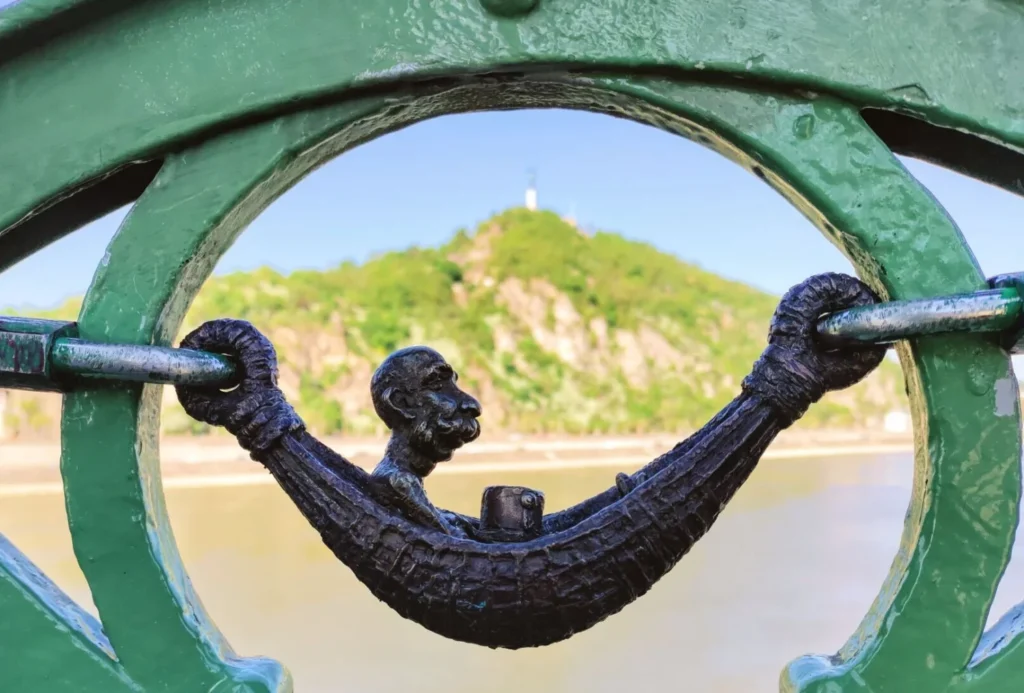
The Emperor Franz Joseph mini-statue by Kolodko is located on the northern side of Liberty Bridge, the side facing Gellért Hill and the Statue of Liberty. You can find it beside the first pylon, where the walking path widens towards the right.
Liberty Bridge is the elegant green metal bridge crossing the Danube south of Budapest city centre, connecting Fővám tér on the Pest side with Gellért tér on the Buda side. When the bridge was inaugurated in 1896, it was named Franz Joseph Bridge after the Emperor. Similarly, the nearby Elizabeth Bridge was named after his wife, Empress Sissi, and the two bridges originally looked remarkably similar.
Unfortunately, both bridges were destroyed on 18 January 1945 during World War II. When they were rebuilt in 1946 and 1964 respectively, they followed very different paths. Franz Joseph Bridge was reconstructed with its original design and renamed Liberty Bridge, while Elizabeth Bridge kept its original name but received a far more modern appearance. In a way, Emperor Franz Joseph and Empress Sissi no longer remain together in Budapest.
The mini-statue appeared on Liberty Bridge in May 2021 to commemorate the 125th anniversary of its inauguration in 1896. The statuette portrays Emperor Franz Joseph with his legendary moustache, arms crossed and military shako resting on his knees, while sitting on a hammock suspended from two padlocks.
Kermit the Frog Mini-Statue
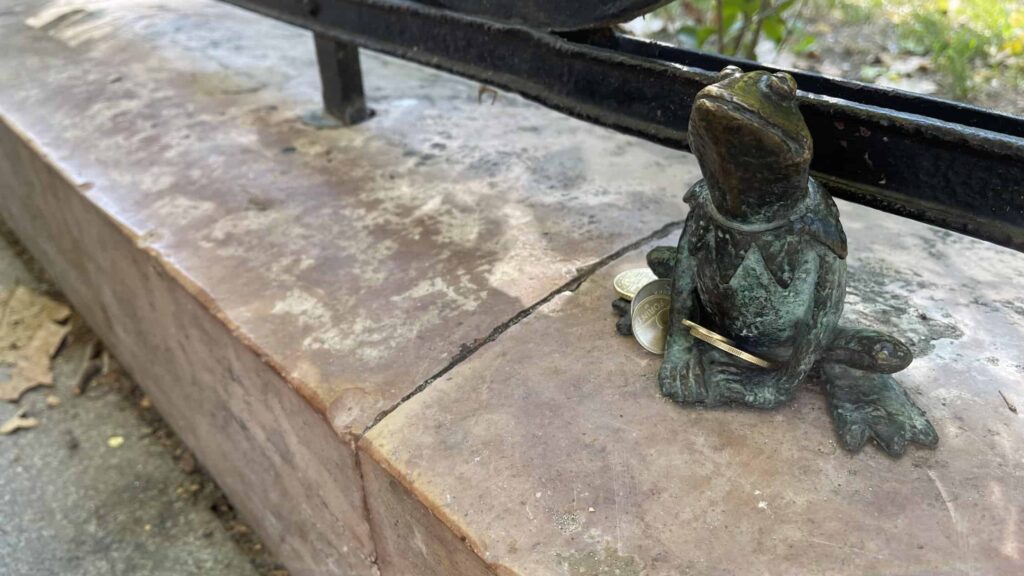
The Kermit the Frog mini-statue by Kolodko is located near Várkert Bazár, along the Danube promenade on the Buda side of Budapest. Like many of Kolodko’s works, it is quite small and easy to miss if you are not carefully looking around while walking.
The statue represents the famous green puppet created by Jim Henson, comfortably sitting and observing the city. At first glance, Kermit may seem slightly out of place among Budapest’s historical references and literary tributes. In reality, this playful mini-statue fits perfectly within Kolodko’s artistic style, which often combines humour, nostalgia and unexpected pop culture references.
Garfield Mini-Statue
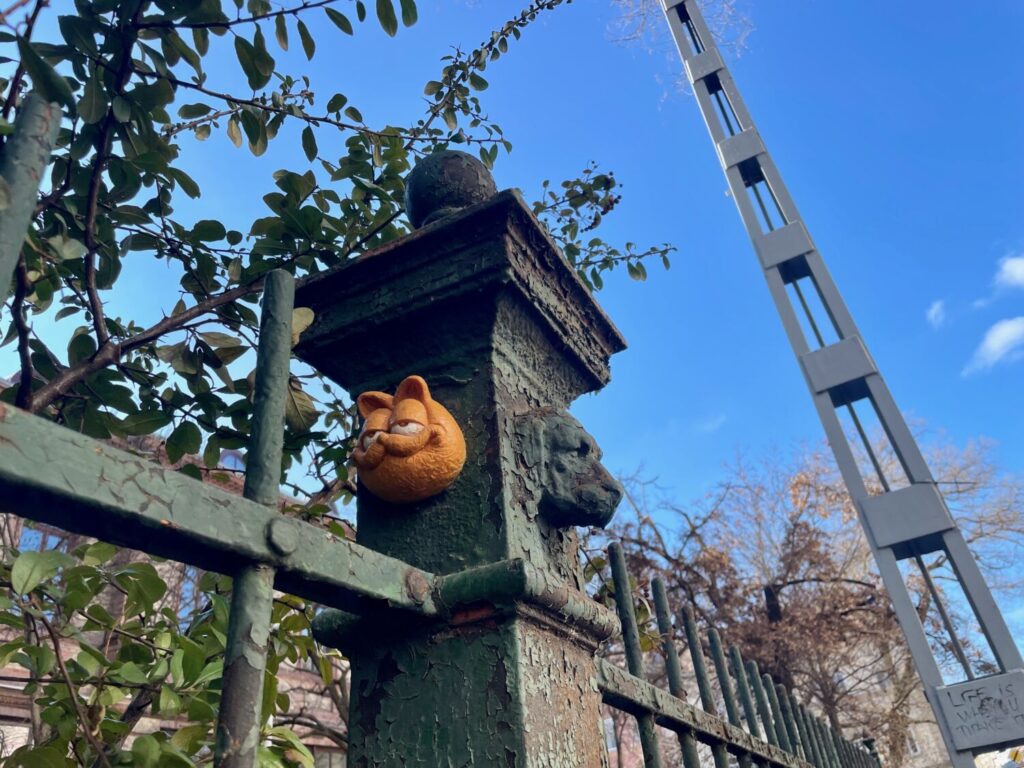
The Garfield mini-statue by Kolodko is one of the most amusing and unexpected mini-statues hidden around Budapest. Dedicated to the world-famous lazy orange cat created by Jim Davis, the sculpture adds another playful pop culture reference to Kolodko’s growing collection across the city.
Located in Dembinszky utca, unlike many other Kolodko mini-statues, Garfield is slightly larger and much easier to notice thanks to his bright orange colour. However, he is placed high on top of a gate pillar, making him a little harder to spot if you are not looking upwards while walking through the area. Spotting him hidden among the streets of Budapest still feels strangely satisfying, especially if you grew up reading the comic strips or watching the cartoons.
Why Hunting Kolodko Mini-Statues Is One of the Most Fun Things to Do in Budapest
Hunting Kolodko’s mini-statues around Budapest almost feels like a real-life treasure hunt and is one of the most unusual activities to do in the city with children or curious adults. Searching for these tiny sculptures encourages you to slow down, pay attention to details and explore parts of Budapest you might otherwise walk past without noticing.
Cute, funny and sometimes surprisingly meaningful, Kolodko’s mini-statues add an extra layer of personality to Budapest and briefly manage to take people’s attention away from their phones. Part of their charm also comes from the fact that the collection constantly changes, with new mini-statues occasionally appearing across the city.
Have you managed to find them all, or perhaps discovered even more during your trip to Budapest? Maybe one of them was even wearing a tiny winter scarf when you visited.
