In the popular imagination, flying on a private jet is synonymous with luxury and exclusivity. In reality, it’s mostly a question of efficiency, as I discovered working for Fly Free Airways. Online you’ll see influencers talking about private flights as a luxury to flaunt, but the most common use is actually by professionals and companies. CEOs and business owners with specific needs usually choose a private flight because they value time above all. With a private flight, you can leave in the morning, hold several meetings in different European cities during the day, and still be home for dinner, and that kind of efficiency costs a lot more than a Business Class ticket.
Table of Contents
Business Class or private jet: differences, pros and cons
People rarely choose a private jet just for cabin comfort; they choose it mainly to save time. You can book a private flight at very short notice, even just two or three hours ahead. You also skip the security queues at general aviation terminals and can arrive just half an hour before departure.
Despite these clear advantages, business jets aren’t always as spacious and comfortable as First Class on a scheduled airline, especially the smaller jets. Some have low ceilings, meaning you can’t walk around or stand comfortably as you could on a commercial aircraft. The toilet, too, is often very small and really only meant for emergencies.
For this reason, a private flight isn’t always the best solution. If comfort is all you’re after and you have no particular time constraints or need for privacy — the kind genuinely wealthy or famous people require — then Business or First Class on a scheduled flight can sometimes suit your needs even better.
How much does a private jet cost compared to a scheduled flight
Another myth worth busting is that a private flight costs only a little more than a Business Class ticket on a scheduled airline. This comparison only applies to empty legs, and they rarely offer as good value as online ads claim. To get a clearer picture of what a private flight actually costs, it helps to compare it with the main alternatives available on the same route.
| Type of flight | Indicative price (one way) |
|---|---|
| Low cost (Ryanair, Wizz Air, easyJet) | €30–180 |
| Economy Class (British Airways, ITA Airways) | €150–300 |
| Business Class (British Airways, ITA Airways) | €350–500 and up |
| Private jet (whole aircraft) | from €15,000–25,000 |
As you can see in the table, a low-cost ticket with Ryanair, Wizz Air or easyJet between Milan and London can cost anywhere from €30 to €180 one way, depending on the season and how far in advance you book.
With a scheduled carrier such as British Airways or ITA Airways, an Economy fare typically falls between €150 and €300. Business Class, meanwhile, ranges from around €350 to over €500 per leg, depending on availability, season and ticket flexibility.
A private flight on the same route, by contrast, can range anywhere from €15,000 to €25,000, as a rough guide. The price can vary considerably depending on availability, aircraft type, the season, and where the aircraft happens to be located at the time of booking. Even split between several passengers, the per-person cost on a private jet remains far higher than a Business Class ticket.
Anyone choosing a private flight isn’t paying for transport as such. They’re paying for a dedicated aircraft, the ability to set their own departure times, access to more convenient airports, no long waits, and maximum privacy.
How to calculate the price of a private flight
As you’ve seen, private flight prices can vary enormously, sometimes by tens of thousands of euros. That’s because there’s no fixed price for a private flight. Operators build every quote around the client’s specific request, so prices can vary widely even on the same route. Countless factors affect the price, and you often can’t know them in advance; you need to check them at the time.
The main variables that affect the cost of a private flight are:
- the type of aircraft
- the number of passengers
- the departure and arrival airports
- aircraft availability
- the time of year
- the requested schedule
- any repositioning costs
People often overlook this last point. If the aircraft is already at the departure airport, the cost is generally lower. If it needs a positioning flight first, the quote goes up. The number of passengers also affects the price. A larger group might mean stepping up to a bigger aircraft category with different costs altogether.
To give you a concrete example: at the time of writing, for the Milan–London route we’ve been discussing, one operator is quoting over €50,000 for a Gulfstream G280 — a nine-seat jet with a hostess and catering on board — a long way above the average rates for smaller jets.
Finally, bear in mind that prices are so dynamic they can rise or fall by several thousand euros from one day to the next. For all these reasons, two seemingly identical requests can come back with very different quotes.
Aircraft model and flight cost: turboprops and jets
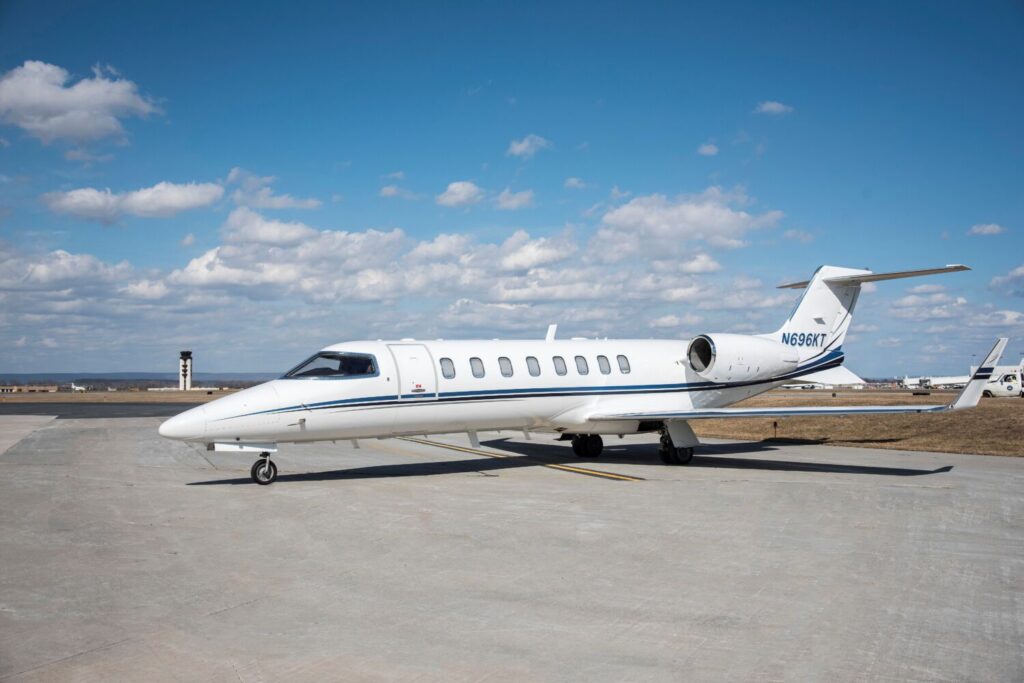
When you think of private flights, you probably picture the glossy jets you see photographed on Instagram by the influencer of the moment. Yet private aviation also includes turboprop aircraft like the King Air 100, ideal for short hops. Light jets such as the Citation Mustang or Beechjet 400 suit travel around Europe well.
The luxury jets you’re picturing are already the higher-end models. Midsize jets for medium-range flights include the Learjet 45 and Citation Excel. Private aviation also uses much larger aircraft: the Challenger 300 for longer routes, and the Challenger 604 or Falcon 7X for intercontinental flights.
The higher the category, the higher the cost of the flight, in rough proportion to the aircraft’s running costs. Choosing an aircraft isn’t about the prestige of the model. It depends on the distance, the number of passengers, the expected luggage, and the airports you use.
Choosing the airport: schedules and operations
One of the biggest strengths of private aviation is the ability to use a wide range of airports, choosing whichever one best suits the needs of the trip, and this affects cost too. If you’re not connecting with a scheduled or charter flight, you can depart from and arrive at smaller airports closer to the city centre, where boarding is much quicker.
From Paris, with a private aircraft, you can depart from Le Bourget, the general aviation airport that sits much closer to the centre than Charles de Gaulle or Orly, and which is also home to the Paris Air and Space Museum. The same goes for London, where you can land directly in the city centre at London City Airport — used by only a handful of scheduled flights, rather than at Gatwick, Luton or Stansted.
In practice, a business owner in Paris who needs to meet a client in London can save more than two hours of transfer time simply by choosing to depart from and arrive at more central airports than those served by scheduled flights. That said, the choice of airport also depends on the aircraft type and the requested schedule. Some small airports, for example, don’t handle night flights because they lack the right equipment.
Luxury tax, de-icing and other extra costs of a private flight
My job as an aviation broker exists precisely to help clients make the best choice and navigate the various proposals from operators, not least because the final price can still shift depending on costs that fall outside the original quote. During winter, the aircraft may need de-icing to remove ice or snow before departure. Weather conditions determine this mandatory safety procedure, and you only pay for it when crews actually carry it out.
The same applies to certain variable operating costs. Italy, for instance, applies a so-called “luxury tax” on private flights. Operators always calculate it separately, based on the actual number of passengers on board and the distance flown.
Empty legs: what they really are and how discounted private flights actually work
Finally, I want to bust a myth about flying privately on the cheap. Empty legs offer routes at a heavily discounted rate compared with a standard private flight, but they’re not always as good a deal as advertised. Empty leg flights exist to allow operators to recoup part of their running costs, and they depend entirely on the main client who books the one-way flight. A private return flight, in fact, costs far less than two separate one-way flights, because it spreads out the aircraft’s repositioning costs.
If a client books only the outbound leg, the aircraft has to reposition itself to get back to its home airport, and it flies back empty. That’s why the return leg is sold at a steep discount. What influencers online rarely make clear is that empty legs are repositioning flights tied to a booking made by someone else entirely. If the main client changes their schedule or destination, or cancels the flight, the operator can cancel your empty leg at short notice. The empty leg client gets a refund, but doesn’t fly.
Precisely because they’re so unreliable, some brokers prefer not to offer them to clients except in particular cases. As you’ve seen, people who fly privately don’t do it for the luxury itself, but for the ability to manage their time around their work commitments.
Why the real luxury of a private jet is time
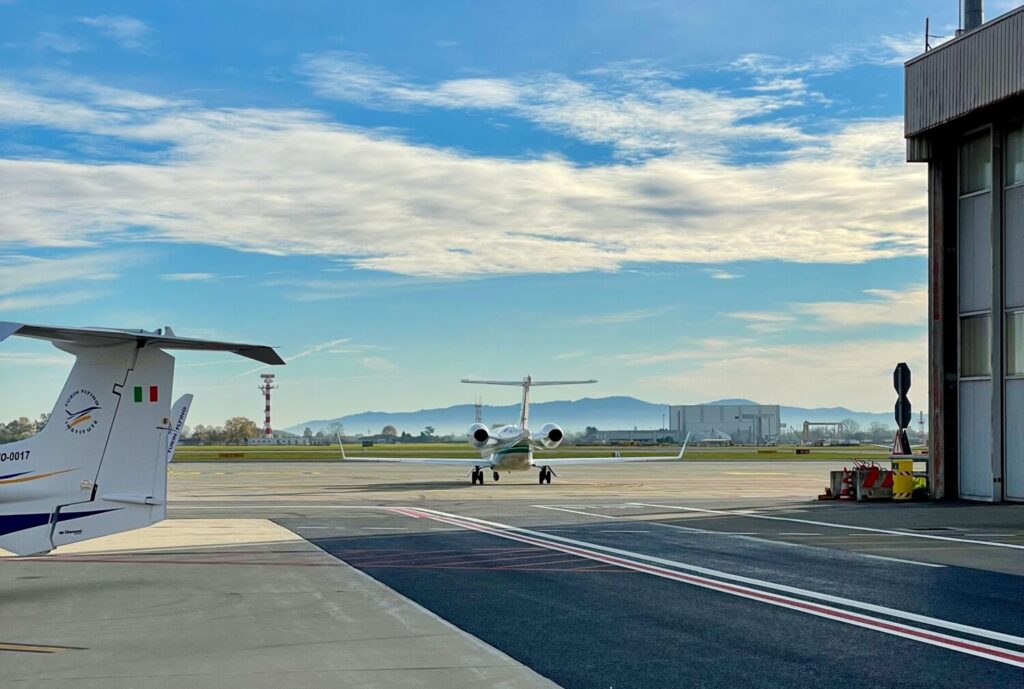
In the world of private aviation, there are no long queues at baggage security, no need to cross crowded terminals, and even passport control is quick, thanks to dedicated terminals. Generally, it’s enough to arrive at the private aviation terminal just half an hour before departure before heading straight to the aircraft. Disembarking is just as fast, with baggage handed over almost immediately. And if there are delays or last-minute changes, your flight simply waits for you.
For frequent business travellers, like CEOs and owners of large companies, this can mean recovering several hours in a single day. Flying privately still represents a major financial commitment, and it isn’t meant to replace scheduled flights. It simply serves people with very specific needs. Choosing your own departure times, using airports closer to your destination, avoiding long waits, and travelling with complete privacy. That’s the real added value of private aviation, not the luxury you show off in an Instagram photo.
