
Lyon is often called the gastronomic capital of France, a reputation that comes from centuries of culinary traditions rather than from a single chef or restaurant. The city’s food culture has been shaped by trade, migration and influences from different regions of France. Located between northern and southern France, Lyon has access to excellent local ingredients and a wide variety of culinary traditions. During my visit, I soon realised that discovering Lyon meant learning about its food as much as its history, architecture and museums. From traditional bouchons to the legacy of the Mères Lyonnaises and Chef Paul Bocuse, food remains one of the defining elements of the city.
Table of Contents
Lyonnaise Cuisine: Origins and Influences Behind France’s Gastronomic Capital
Lyonnaise cuisine developed at the crossroads of several regional culinary traditions. Lyon’s location between northern and southern France allowed ingredients, flavours and cooking techniques from different regions to meet and evolve.
Butter and cream arrived from northern regions such as Alsace and Lorraine, while Provence and the Mediterranean contributed olive oil, vegetables and lighter flavours. During the fifteenth century, Lyon also became an important trading centre where Italian merchants introduced spices imported from the East.
During the nineteenth century, the Mères Lyonnaises helped define Lyon’s culinary identity through their restaurants and recipes. In the twentieth century, Chef Paul Bocuse brought Lyonnaise cuisine to an international audience and reinforced the city’s reputation as France’s gastronomic capital.
The Mères Lyonnaises: The Women Behind Lyon’s Culinary Tradition
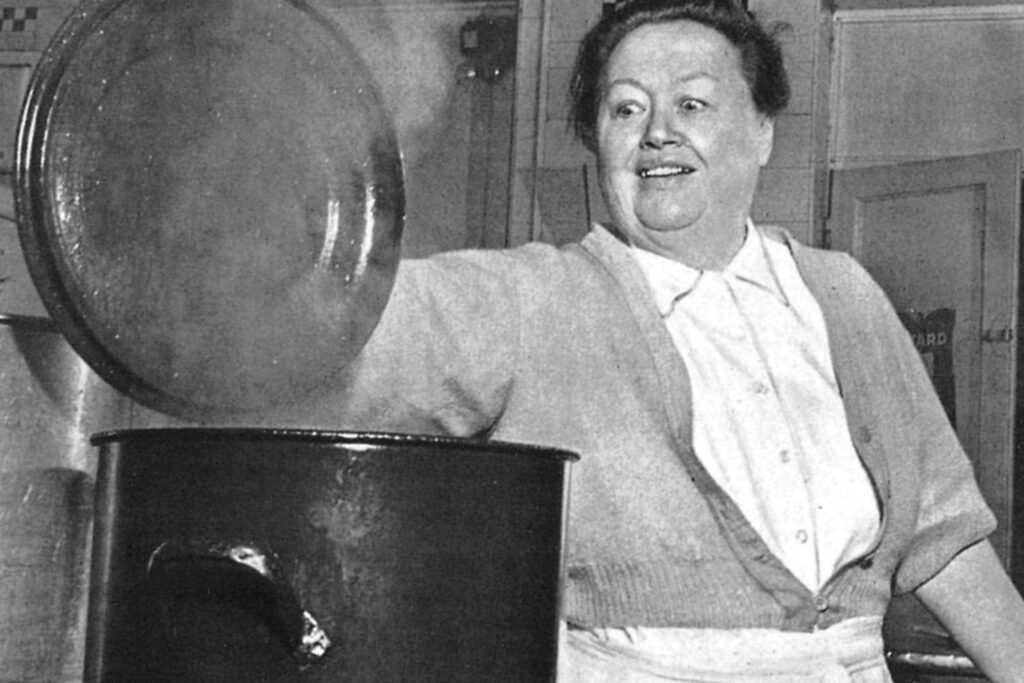
The Mères Lyonnaises, a title that translates as “Lyonnaise Mothers”, played a fundamental role in shaping Lyon’s culinary identity. During the nineteenth and early twentieth centuries, these talented female cooks transformed simple family recipes into a distinctive local cuisine.
Many mères had previously worked in wealthy households before opening their own restaurants, where they combined traditional techniques with high-quality regional ingredients. Their success helped establish Lyon as France’s gastronomic capital and influenced generations of chefs.
The most famous of them was Mère Brazier, often regarded as one of the pioneers of modern French cooking and a mentor to several future culinary stars. Today, the legacy of the Mères Lyonnaises lives on in Lyon’s traditional bouchons and in the city’s enduring reputation for exceptional food.
Chef Paul Bocuse and Lyon’s Culinary Heritage
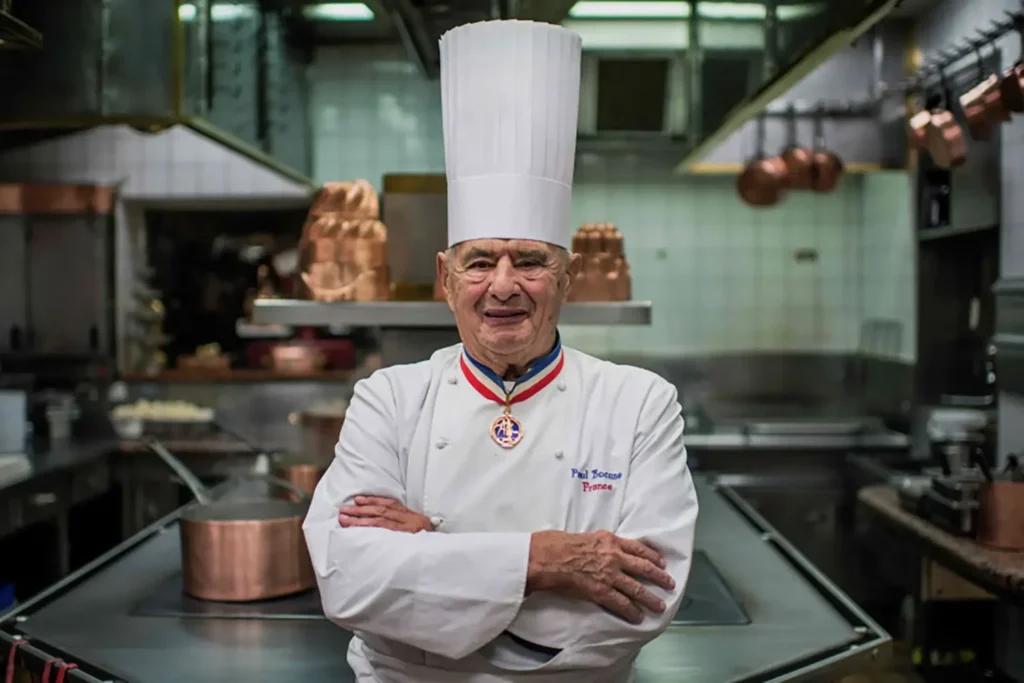
Chef Paul Bocuse is one of the most influential figures in the history of French gastronomy. Often called the “Pope of Gastronomy“, he helped bring Lyonnaise cuisine to an international audience and became an ambassador of modern French cooking.
Bocuse began his culinary training under several experienced Mères Lyonnaises, whose emphasis on high-quality ingredients and traditional recipes strongly influenced his approach to cooking. Although he became one of the leading figures of the nouvelle cuisine movement, he remained committed to simple, ingredient-driven cuisine.
He later took over the family restaurant, L’Auberge du Pont de Collonges, today knows as Restaurant Paul Bocuse, transforming it into one of the world’s most celebrated restaurants. The restaurant held three Michelin stars continuously from 1965 until 2020. His legacy lives on through the prestigious Bocuse d’Or competition and Lyon’s enduring reputation as one of the world’s great food capitals.
Where to Eat Traditional Lyonnaise Food
Food is everywhere in Lyon and, during my visit, I explored both traditional bouchons and the renowned Les Halles Paul Bocuse, discovering different sides of the city’s culinary culture. While the experiences are very different, both help explain why Lyon has earned its reputation as France’s gastronomic capital. If dining at Paul Bocuse’s legendary restaurant is on your wish list, be sure to book well in advance. Securing a table with only a few weeks’ notice is often impossible, and reservations may need to be made several months before your trip.
Bouchons: Traditional Lyonnaise Restaurants
Bouchons are among the best places to experience authentic Lyonnaise cuisine. These traditional restaurants originally served workers, merchants and silk weavers looking for generous portions of comforting local food.
Today, most bouchons remain relatively small and informal. Wooden furniture, closely spaced tables and historic décor create a warm atmosphere that feels very different from the elegance often associated with French fine dining.
Many bouchons are located in Vieux Lyon and the Presqu’île district, making them easy to include in a sightseeing itinerary. The focus remains on traditional recipes prepared with regional ingredients and served in a convivial setting.
To help visitors identify authentic establishments, the Lyon Chamber of Commerce and Industry and the OnlyLyon Tourist Office created the Bouchons Lyonnais label. While these certified bouchons are an excellent starting point, I would also recommend exploring beyond the most touristy areas and paying attention to where locals eat.
Les Halles Paul Bocuse: Lyon’s Famous Food Market
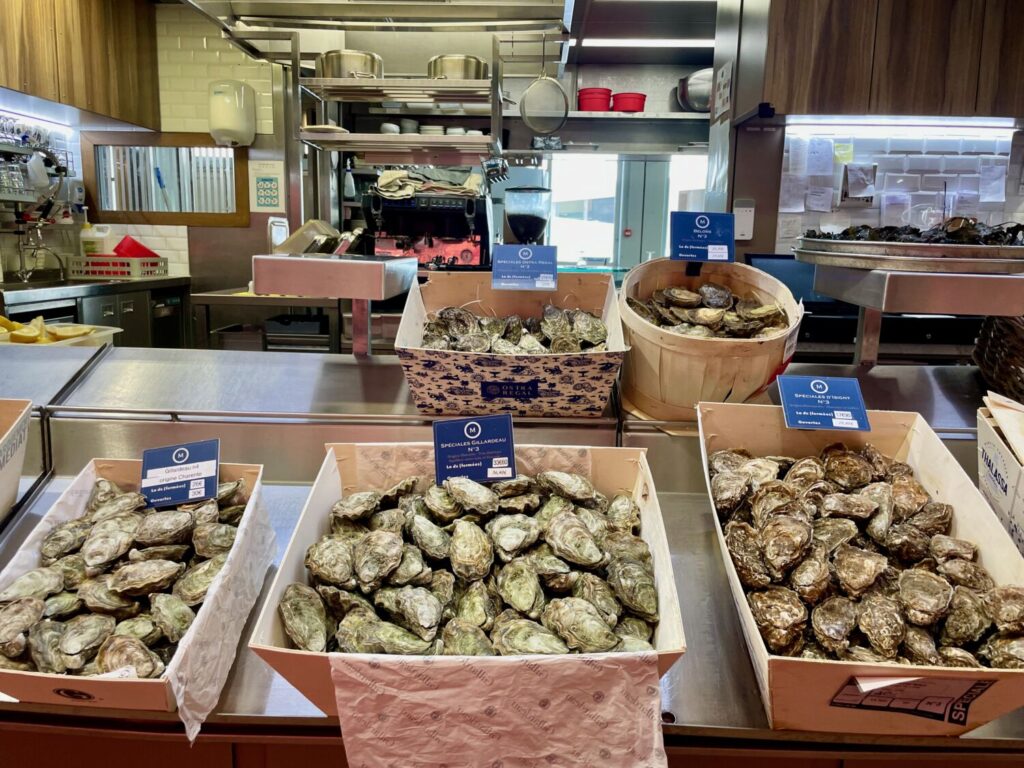
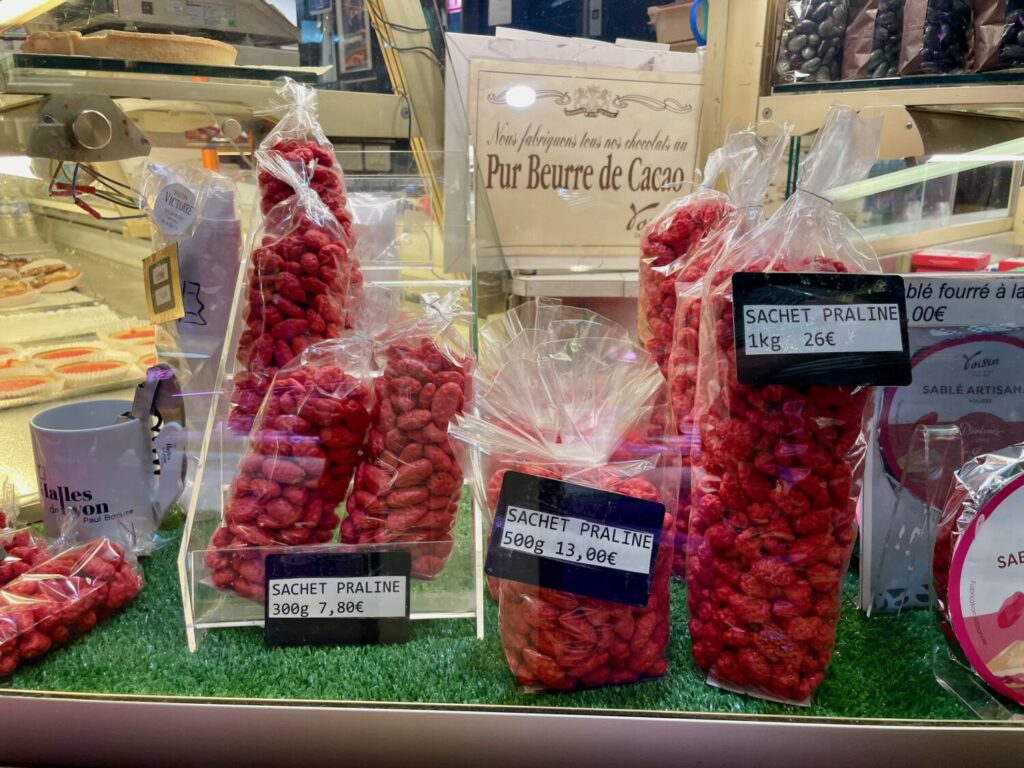
Les Halles Paul Bocuse is Lyon’s famous covered market and one of the best places to discover the region’s culinary traditions. Under one roof, visitors can browse stalls selling cheeses, charcuterie, pastries, seafood, wines and many other local specialities. The market is also an excellent place to admire Lyon’s iconic pink praline tarts, available in a variety of sizes alongside beautifully presented cakes and freshly baked pastries.
To gain a deeper understanding of Lyon’s food culture, I would recommend joining a guided food tour. Many tours combine tastings of local wines, cheeses and regional specialities with stories about the city’s culinary history. Even if you are not planning a full meal, Les Halles Paul Bocuse is well worth a visit for a glass of local wine and a chance to sample some of the finest products Lyon has to offer.
Traditional Lyonnaise Dishes to Try
Lyonnaise cuisine is famous for its local ingredients, traditional recipes and centuries-old food culture. During my visit, I tried several dishes commonly found in traditional bouchons. Some became instant favourites, while others surprised me for reasons I had not expected.
Classic Lyonnaise Dishes Served in Traditional Bouchons
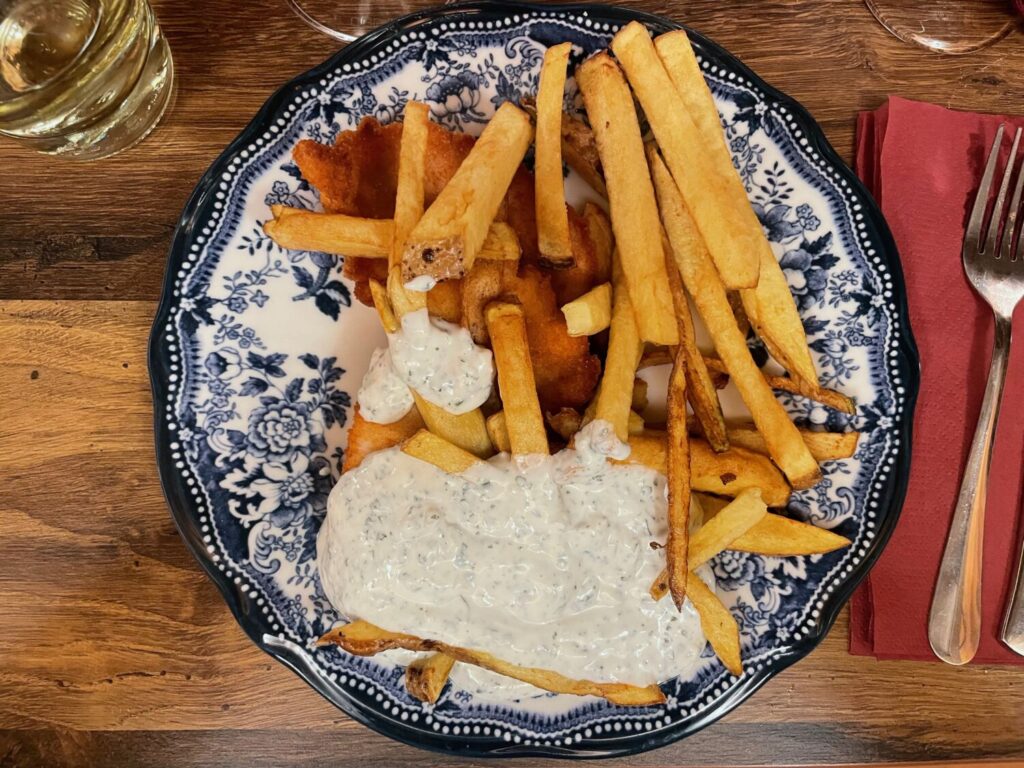
One of the dishes I was most curious about was cervelle de canut, a name that translates as “silk worker’s brain”. As someone from northern Italy, where brain dishes were traditionally part of local cuisine, I expected something quite different.
In reality, the dish contains no meat at all. It is a fresh cheese spread mixed with herbs, garlic, shallots and olive oil. Traditionally served with bread, I found it accompanying schnitzel and chips. While it was pleasant enough, I must admit I felt slightly disappointed after discovering it was essentially a flavoured fresh cheese rather than the unusual dish I had imagined.
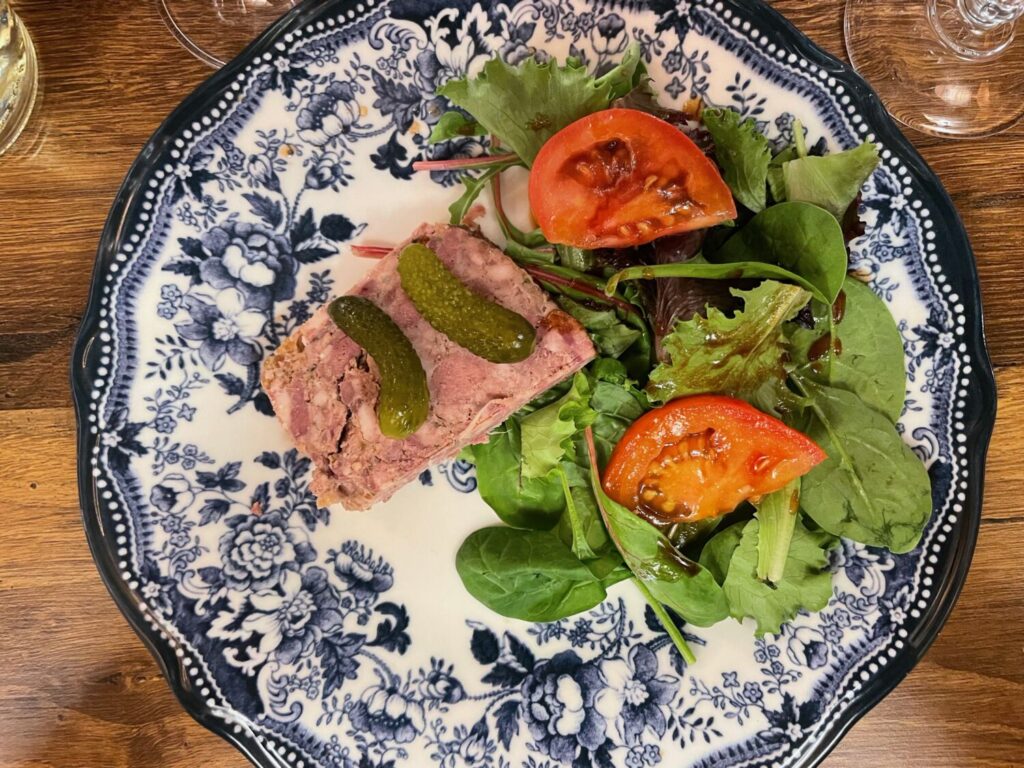
Another common starter is the traditional Lyonnaise meat terrine served with cornichons. Rustic meat terrines appear on menus throughout the city and are a classic example of the simple, traditional food associated with Lyon’s bouchons.
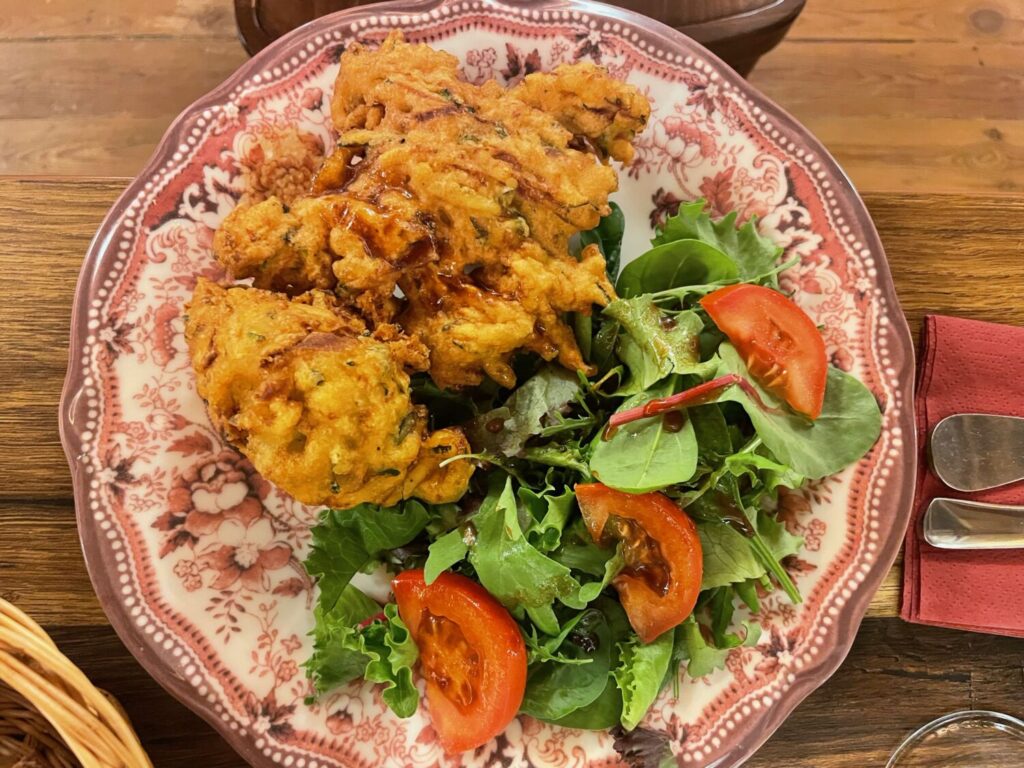
I also tried beignets de courgettes, golden courgette fritters served with salad. Their appearance immediately caught my attention, but the flavour was less memorable than I expected. Although they showcase the ingredient-focused approach of regional French cuisine, they were probably my least favourite dish of the trip.
A much more successful discovery was pissaladière aux anchois. This savoury onion tart is traditionally topped with caramelised onions and anchovies. Although originally associated with neighbouring Provence, it is commonly found in Lyon’s traditional restaurants and wine bars. Rich and flavourful, it was one of the dishes I enjoyed most.
Among the other specialities you may encounter in Lyon, saucisson brioché combines a cooked sausage with soft brioche pastry, creating a distinctive sweet-and-savoury contrast. More adventurous diners may want to try andouillette, a sausage made from pork intestines with a particularly strong aroma that tends to divide opinion.
Lyon’s Most Famous Dessert: Tarte aux Pralines
No introduction to Lyonnaise cuisine would be complete without mentioning tarte aux pralines. Made with cream and bright pink sugar-coated almonds known as pralines roses, this colourful dessert is one of Lyon’s culinary symbols. You can find it in bakeries throughout the city, where its striking pink filling immediately catches the eye.
The pink praline itself is also a popular local sweet. In addition to the famous tart, Lyon’s pralines are often sold in bags and decorative boxes, much like chocolates or sweets. They make a popular edible souvenir and can be found in bakeries, confectionery shops and at Les Halles Paul Bocuse.
Discovering Lyon Through Its Food
From traditional bouchons to prestigious restaurants and food markets, Lyon’s culinary culture is deeply woven into the city’s identity. Tasting these dishes helped me understand Lyon beyond its museums and historic streets. Some recipes surprised me, others left me unconvinced, but together they offered a memorable introduction to one of France’s most celebrated food traditions.
