
For almost half a century, Bulgaria lived under Communist rule, and the legacy of that period remains visible throughout Sofia today. If you want to understand this complex history, visiting monuments alone is not enough. While planning my trip, I chose to visit The Red Flat and join the Communist Tour to gain a deeper understanding of what life was like behind the Iron Curtain and how Bulgarians today remember that era, somewhere between nostalgia and controversy.
Table of Contents
Understanding Communist Sofia Today
Modern Sofia still bears the marks of nearly half a century of Communist rule. Yet this period remains deeply divisive. Some Bulgarians remember the Communist decades with nostalgia, while others associate them with repression and lack of freedom.
Younger generations born after 1989 often know little about this chapter of Bulgarian history. Political figures from the Communist era can still trigger strong reactions. For this reason, be aware that it is not a topic to discuss lightly with a Bulgarian family.
How Communists Took Power in Bulgaria
Under Tsar Boris III, Bulgaria entered the WWII alongside Nazi Germany, largely for territorial reasons rather than ideological conviction. During the war, the Communist opposition formed the Fatherland Front under the influence of Georgi Dimitrov and Moscow. You can learn more about the monarch at Regional History Museum.
In September 1944, the Soviet Union declared war on Bulgaria and around 250,000 Red Army soldiers entered the country. They were initially welcomed as liberators rather than occupiers. In the following years, the Communists gradually eliminated the opposition and established a one-party state.
Ironically, the system that emerged differed greatly from the classless society imagined by Karl Marx. Instead of workers democratically taking power, a centralised Communist Party controlled the state, following the Soviet model.
Georgi Dimitrov and Todor Zhivkov: The Faces of Communist Bulgaria
Soviet influence would shape Bulgaria for decades through two men who remain controversial today. Georgi Dimitrov became internationally famous after defending himself during the Reichstag Fire trial. Later, after returning from the Soviet Union, he led Communist Bulgaria. Following his death, his embalmed body was displayed in a mausoleum in central Sofia.
Todor Zhivkov ruled the country for more than three decades. Some Bulgarians associate his rule with rising living standards, while others remember censorship and political repression. After the fall of Communism in 1989, even members of his own party blamed him for many of the regime’s failures. Yet he remains a generally popular figure among many Bulgarians today.
Everyday Life in Communist Bulgaria: Stability and Control
For many Bulgarians, the early decades of Communist rule brought genuine improvements. Free education and healthcare became available to everyone, literacy rates increased and modern apartment blocks replaced poor rural housing. Compared with the conditions many families had left behind, these flats offered comforts such as central heating, running water and private bathrooms.
Looking at Western Europe during the same period, it is striking how many working-class families in Bulgaria enjoyed a better quality of life. Workers had secure jobs and many companies operated their own holiday resorts by the sea or in the mountains, allowing ordinary families to take affordable holidays.
Life, however, came with strict controls. The authorities promoted collective values and expected loyalty to the state in return for stability and security. The secret police relied on thousands of informants, and many people avoided discussing politics, even with friends. Religion was discouraged rather than banned outright, while censorship affected books, films and music.
Communist Nostalgia and Its Legacy in Bulgaria
When Soviet subsidies declined, Bulgaria’s centrally planned economy entered a long crisis. Factories struggled, shortages became common and the system eventually collapsed. The transition to capitalism proved painful. Hyperinflation in 1996 wiped out savings, unemployment increased and many Bulgarians left the country in search of work abroad.
Still, there is no single interpretation of Communism in Bulgaria. Family memories play a huge role. For many older Bulgarians, memories of secure jobs, affordable holidays and a predictable life contrast sharply with the difficulties that followed. This explains why nostalgia remains stronger here than in many other former Eastern Bloc countries.
Why The Red Flat and the Communist Tour Are the Best Way to Explore Communist Sofia
Sofia still preserves many traces of its Communist past, but understanding them is not always easy. I found that combining The Red Flat with the Communist Tour offered the perfect introduction to this complex period.
The Red Flat focuses on everyday life and allows you to experience how ordinary Bulgarians lived during the 1980s. The Communist Tour, on the other hand, provides the historical context behind the monuments, buildings and political figures that shaped the country.
Together, these two experiences explain not only what happened during Communist rule, but also why Bulgarians still have very different memories of that era.
The Red Flat Review: Stepping Inside Everyday Life in Communist Bulgaria
The Red Flat offers one of the most immersive experiences in Sofia for anyone interested in everyday life behind the Iron Curtain. Located in an apartment preserved almost exactly as it was in the 1980s, it allows you to step inside the home of a Bulgarian family and discover how people lived during the Communist era.
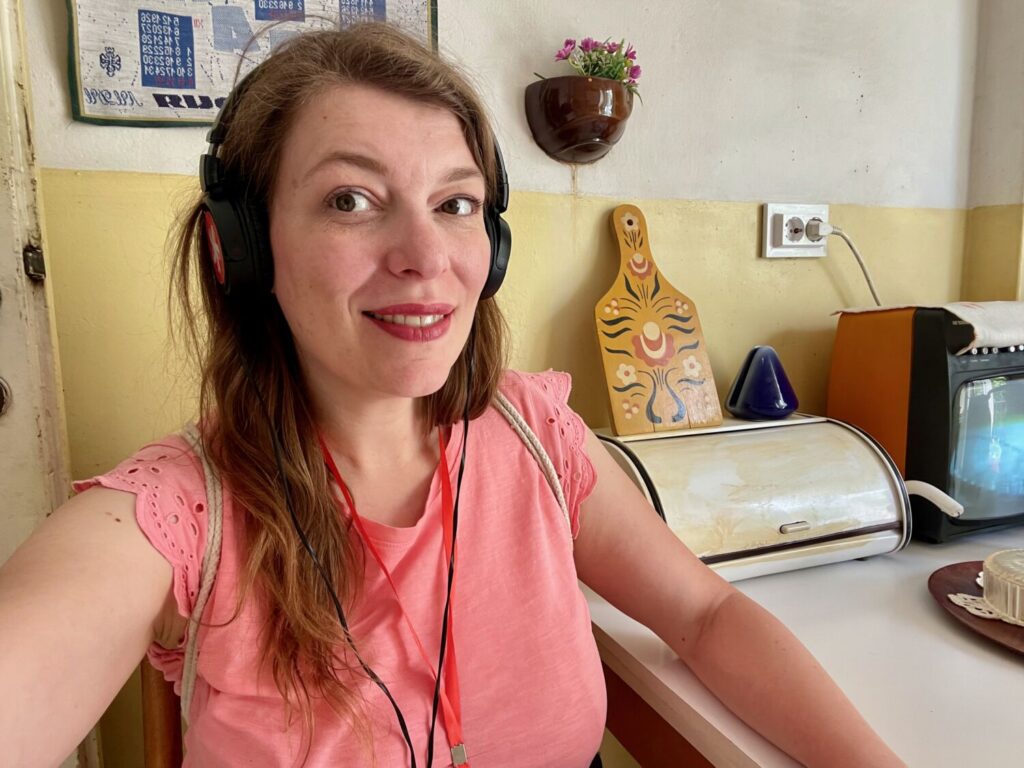
Visits are self-guided and usually take around ninety minutes. An excellent audio guide, available in several languages, uses the story of the fictional Petrov family – Elena, her son Boyan and her husband Plamen, an engineer working abroad – to explain everyday life in Communist Bulgaria.
Unlike a traditional museum, you can touch almost everything. You are free to open cupboards, browse books and records, making the experience feel surprisingly personal.
Rather than focusing on political leaders, the experience explores ordinary life. Housing shortages meant that several generations often lived together, while limited space forced families to use every room creatively.
Telephone lines were sometimes shared between neighbours through a duplex system and certain books were banned. Travelling abroad was heavily restricted and most Bulgarians could visit only other Communist countries. Trips to the West were reserved only for a privileged minority.
Schools promoted equality through uniforms and collective activities, unlike modern education, which tends to embrace diversity and individual differences. Sports were strongly encouraged, to prepare young men for compulsory military service and to demonstrate the superiority of the socialist system through international competition.
Communist Tour Review: Exploring Sofia’s Communist Past Through Architecture and History
The Communist Tour was one of the most intense experiences I had in Sofia. Lasting around three hours, it involves plenty of walking and covers an impressive amount of information. I found it essential for understanding Bulgaria’s recent history, architecture and urban planning that still shape the city today.
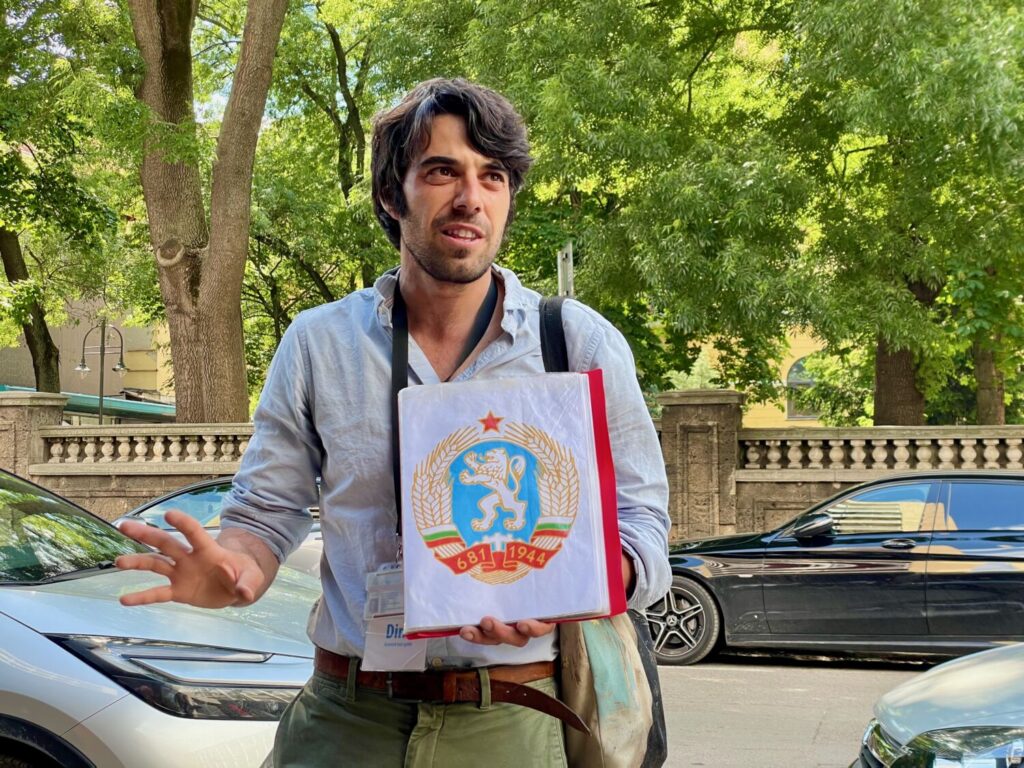
Rather than presenting Communism as entirely good or bad, our guide Dino explained why the topic remains controversial in Bulgaria. Through stories, monuments and everyday examples, you gain a better understanding of how Communist Bulgaria developed and why many Bulgarians still have conflicting feelings about that era.
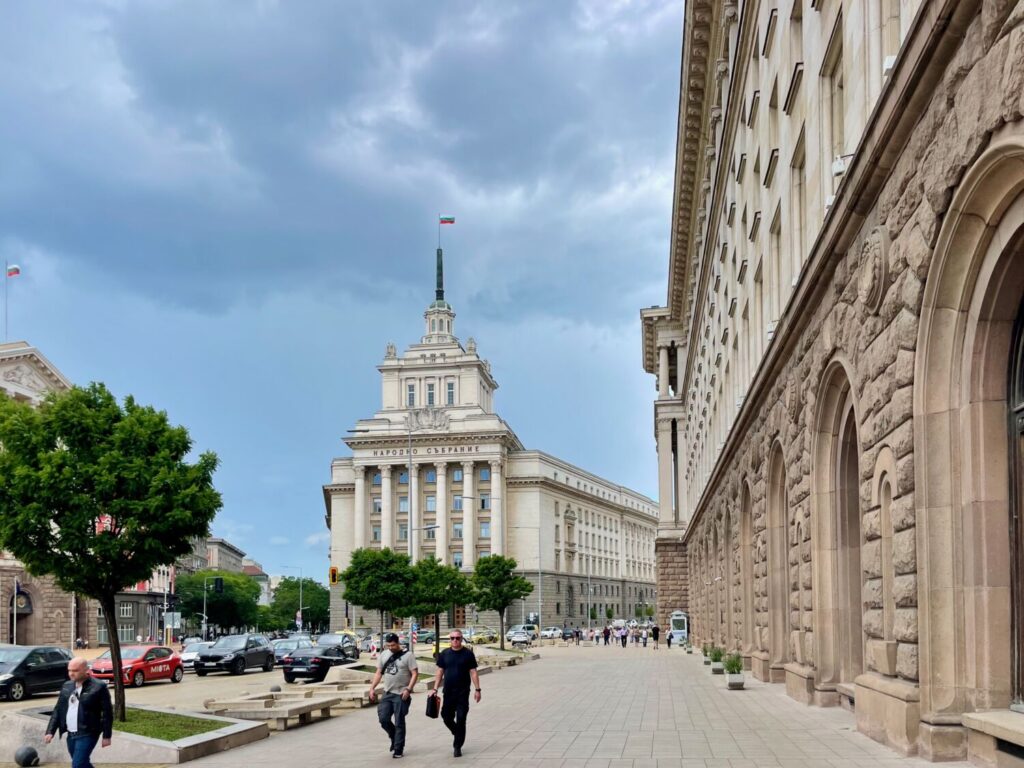
Among the most interesting stops was Independence Square, surrounded by buildings that once housed the Communist Party headquarters. The square originally featured a huge statue of Lenin. Removed after the fall of Communism, today you can see it in the Museum of Art from Socialist Period.
We also stopped where once stood Georgi Dimitrov’s Mausoleum. It was built in less than six months to display the embalmed body of the Communist leader. Following the collapse of the regime, the mausoleum was destroyed as a symbol of the old system. Curiously, it took several days and repeated explosions to bring it down, apparently because it had also been designed to serve as a bunker for the Communist leadership.
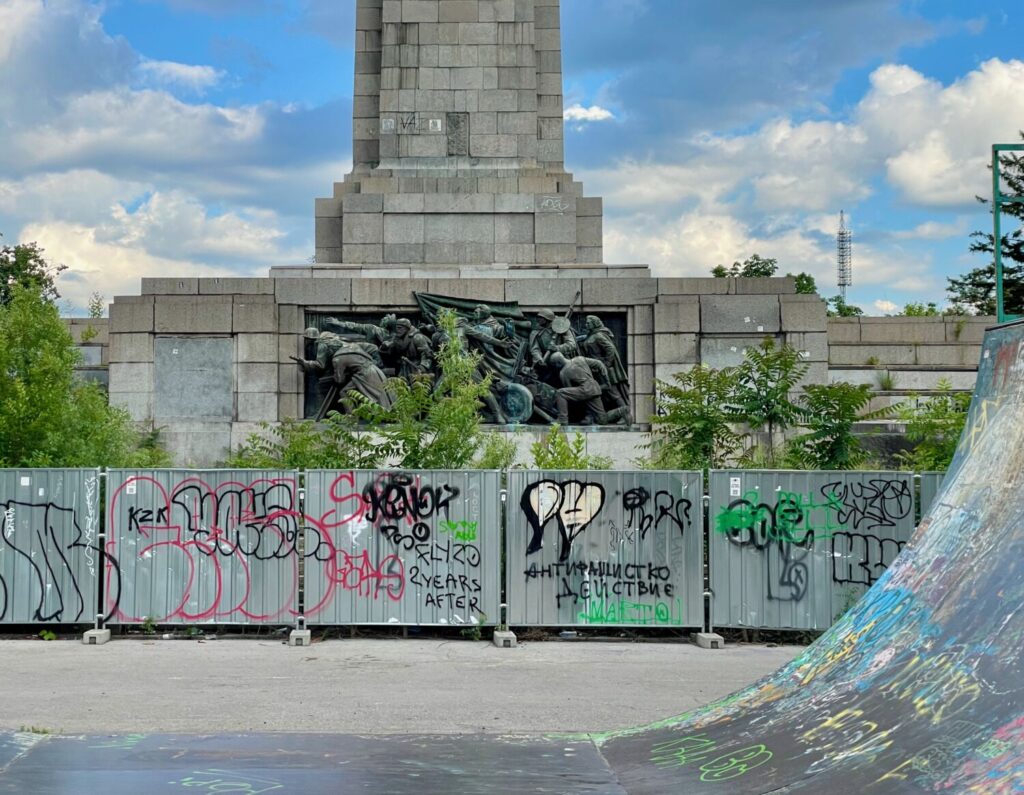
Another highlight was the Soviet Army Monument. Unveiled in 1954, it celebrated the arrival of the Red Army in Bulgaria. For decades, schoolchildren laid flowers at its base, but today the monument remains deeply controversial. Some Bulgarians see it as a symbol of liberation, while others view it as a reminder of Soviet occupation. Over the years, activists repeatedly transformed the statues with colourful graffiti, turning Soviet soldiers into superheroes or painting them in the colours of the Ukrainian flag, until surveillance cameras and barriers finally put an end to these interventions.
Practical Information for Visiting The Red Flat and Joining the Communist Tour
Both The Red Flat and the Communist Tour are among Sofia’s most popular cultural experiences, so I strongly recommend booking before your trip. During my visit in the low season, the Communist Tour attracted around twenty participants despite taking place on a weekday. Availability can become limited surprisingly quickly, especially during holidays and weekends.
How to Book the Communist Tour
You can book the Communist Tour on GetYourGuide before travelling to Sofia. It costs €18 per person, an excellent value considering that the guided walk lasts almost three hours and covers a huge amount of history.
Sofia does not offer as many guided tours as some other European capitals, and the experiences organised by 365 Association consistently receive excellent reviews. As a result, last-minute places are often limited.
If you are visiting during holidays, I recommend checking the availability calendar below as soon as possible.
How to Visit The Red Flat
The Red Flat is also very popular. I recommend reserving your time slot on the Red Flat Sofia website at least a week before travelling. Entry costs €9.20 and opening hours are daily from 10:30 am to 6 pm. Children up to 14 years old pay €4.60.
Because the apartment is relatively small, visitor numbers are limited and punctuality is important. If you miss your reserved slot, immediate entry cannot be guaranteed. In this case, you may need to wait for the next available opening.
You will collect your tickets at GIFTED Sofia, just a block from the Red Flat, next to the pedestrian area. Here you can find tourist information, free maps, guides and some of the most original souvenirs I found in Sofia.
About 365 Association
One of the reasons I chose 365 Association to explore Sofia’s history was that their work goes far beyond tourism. Alongside their excellent tours, they reinvest the profit into social initiatives.
Their Social Awareness Programme originally focused on helping disadvantaged children growing up in foster care explore career opportunities and meet inspiring professionals. They later worked with refugee communities to help newcomers feel more confident and connected to Sofia. Today, they focus on empowering high school students to imagine and create a greener, cleaner and more youth-friendly Sofia.
I was particularly happy to support an organisation whose values extend beyond tourism and emphasise education, community engagement and a better urban environment.
More Communist-Era Attractions in Sofia and Bulgaria
If you want to explore Bulgaria’s Communist past in greater depth, Sofia offers several other interesting sites. The Museum of Art from the Socialist Period displays statues, monuments and propaganda art removed from public spaces after 1989, including the huge Lenin statue that once stood in Independence Square.
Outside Sofia, the most famous landmark is undoubtedly the Buzludzha Monument. Perched on a mountain peak, this futuristic abandoned structure once hosted meetings of the Bulgarian Communist Party and has become one of the country’s most recognisable sights.
Not far from Plovdiv, Dimitrovgrad offers another fascinating glimpse into the Communist era. Founded in 1947 as a model Socialist city, it preserves monumental Stalinist architecture, broad boulevards and landscaped parks that earned it recognition as an open-air museum of the 1950s.
Communist Sofia is far more complex than Soviet monuments and striking architecture. Through The Red Flat and the Communist Tour, I discovered not only how people lived under the regime, but also why memories of that period remain so different today. Whether you are interested in Cold War history, architecture or simply want to understand modern Bulgaria better, these experiences offer one of the most fascinating ways to explore Sofia beyond its usual landmarks.
