The Musée des Confluences genuinely surprised me during my trip to Lyon. From the name and the descriptions I had read online, I expected a museum mainly focused on nature and the meeting point of the Rhône and Saône rivers. Instead, the idea of “confluence” here is much broader. The museum explores the intersection between science, history, anthropology, world cultures and the future. Even the architecture feels part of this concept, with flowing geometric forms of glass and metal reflected in the waters.
Table of Contents
What to See at Musée des Confluences: Dinosaurs, Space and Anthropology
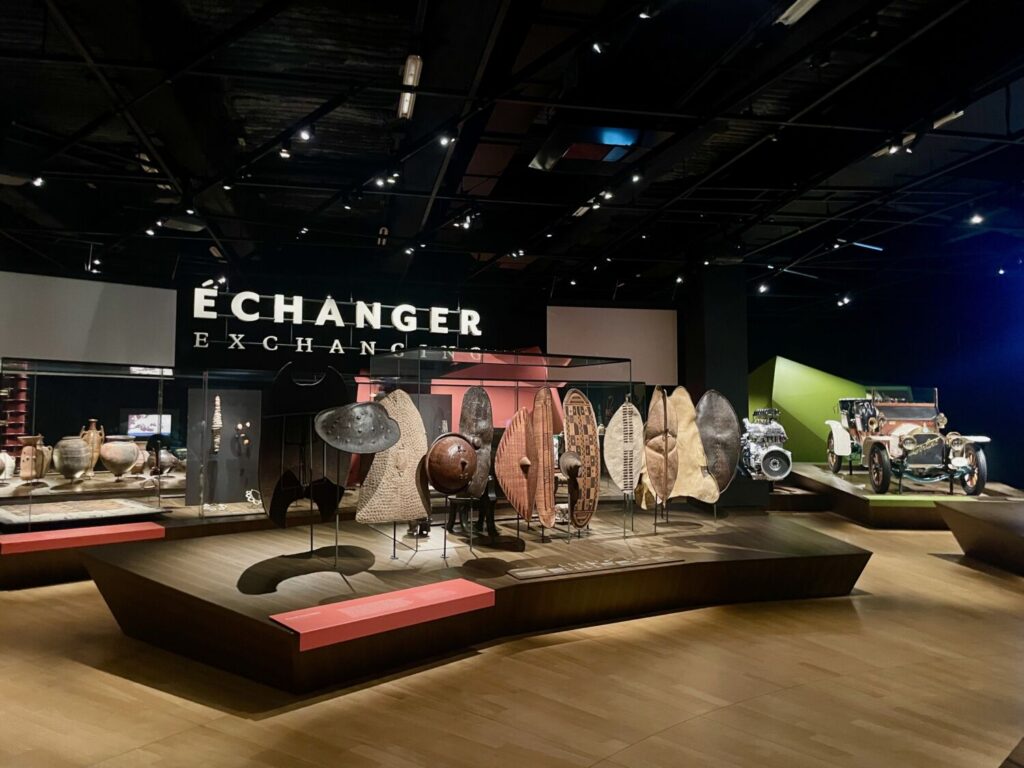
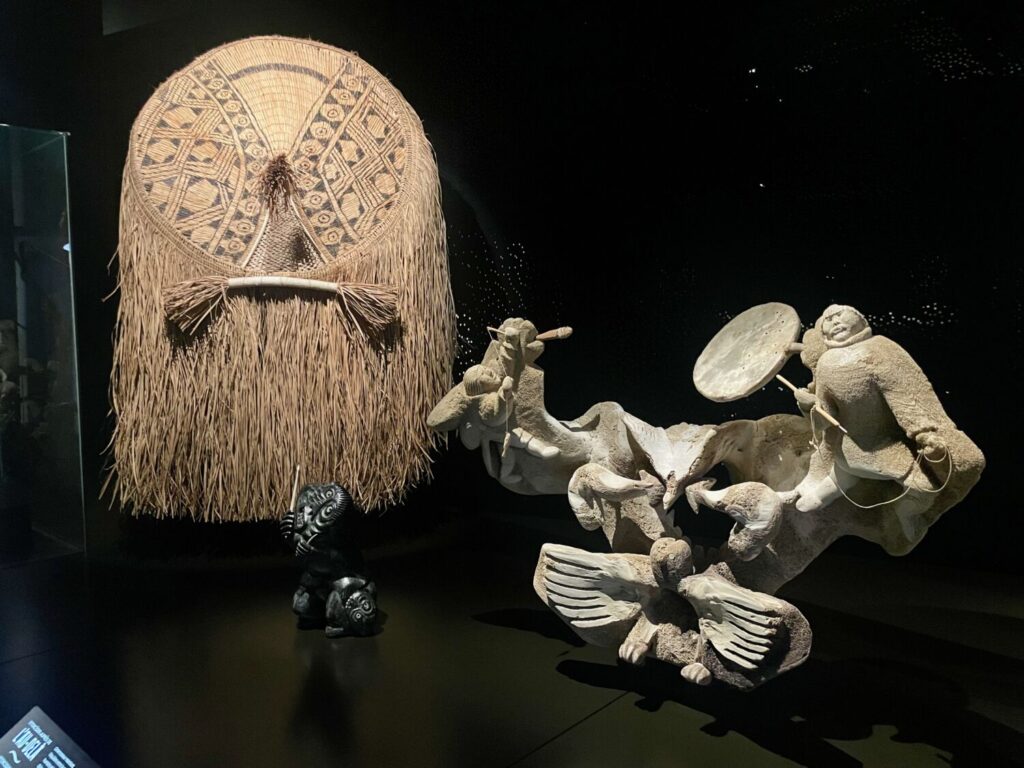
Rather than focusing on a single subject, the Musée des Confluences combines natural history, anthropology, archaeology, science and world cultures into one immersive experience. The museum tries to explore major questions about humanity, the origins of life, cultural diversity and the relationship between humans and the living world.
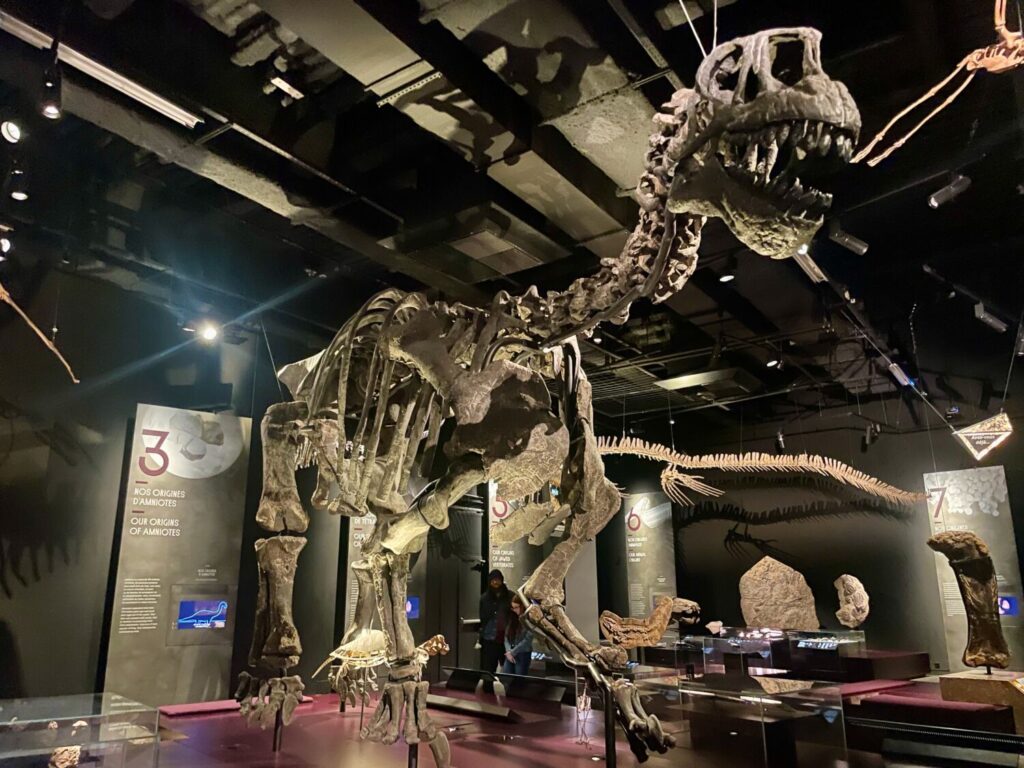
The four permanent exhibitions shift between different themes and historical periods. One moment you are looking at dinosaur skeletons and meteorites, while the next you find ancient artefacts, objects from distant cultures or exhibitions dedicated to space exploration.
Some sections feel almost like a natural history museum, while others become far more philosophical and reflective. At times, the museum feels closer to an immersive cultural experience than a traditional science museum.
During the visit, I often felt as though I was moving between completely different worlds. That is probably what makes the museum so interesting. Instead of separating subjects into rigid categories, everything flows together into a larger narrative about humanity and life on Earth.
Many of the collections originally belonged to former museums in Lyon, including the old Natural History Museum, the Musée Guimet and other historical collections gathered over decades. This variety explains why the museum feels so rich and eclectic compared to many traditional science museums.
The Futuristic Architecture of Musée des Confluences in Lyon
The architecture of the Musée des Confluences is one of the highlights of the entire visit. Designed by the Austrian studio Coop Himmelb(l)au, the building was conceived as a transition between the city and the confluence of the Rhône and Saône rivers.
The entire structure reflects the museum’s central idea of “confluence” as a meeting point between different elements. The building plays with contrasts between nature and the city, past and future, interior and exterior spaces.
From the outside, the museum almost seems to merge with its surroundings instead of separating itself from them, much like the waters of the Rhône and Saône continuing to mix after the confluence. The shape changes depending on the angle from which you observe it, with glass, metal and sharp geometric surfaces reflecting the changing light and the river below.
One detail I particularly liked is that part of the museum was designed as a public space rather than a completely closed building. You can walk through the monumental entrance hall and several public areas even without buying a ticket.
Visiting Musée des Confluences in Lyon With Children
Despite its enormous size, the Musée des Confluences is one of the most family-friendly museums I visited in France. The exhibitions constantly change between different subjects, and the immersive displays make the experience engaging even for children.
Giant dinosaur skeletons, mammoths and artefacts from cultures around the world immediately attract attention. Many spaces feel designed to spark curiosity rather than simply displaying objects inside glass cases.
The museum also organises educational workshops and activities for children. Most activities take place in French, although many parts of the museum remain enjoyable even without understanding every explanation panel in detail.
Even adults who are not usually interested in science museums will probably find something unexpected here because the museum never focuses on a single subject for too long. The museum never feels repetitive because every section looks completely different from the previous one.
Useful Tips for Visiting Musée des Confluences in Lyon
You should allow at least three hours to visit the museum properly, especially if you enjoy reading exhibition panels and spending time at the main installations. The museum is extremely large and spread across several levels. The permanent exhibition alone covers around 3,000 square metres, in addition to temporary exhibitions.
One particularly useful detail is that your ticket allows you to enter and leave the museum multiple times during the same day. You can therefore combine the visit with a walk around the Confluence district or a lunch break nearby before returning inside.
Because the museum is one of Lyon’s most popular attractions, visiting on a weekday is usually a better idea if you want to avoid crowds. During particularly busy periods, access to the exhibitions may occasionally be restricted for safety reasons.
Security checks are also carried out at the entrance. During my visit, there was even an airport-style metal detector in operation. This type of security procedure is quite common in major museums and public attractions across France, so there is no reason to be concerned. After the checks, you can leave coats and backpacks in the cloakroom on the lower level.
Tickets and Prices for Musée des Confluences in Lyon
If you plan to visit during school holidays or public holidays, I strongly recommend buying tickets online in advance because the museum is very popular. I arrived right at opening time and still found a queue, even though the Lyon City Card includes priority access.
Standard tickets cost €12, while admission is free for children under 18 and students up to 25 years old. For families, the overall cost remains fairly reasonable considering the size of the museum and the number of exhibitions included.
The museum is also included in the Lyon City Card, which I found genuinely useful during my stay in Lyon. If you plan to visit several attractions and use public transport frequently, the card can help you save quite a lot of money during your trip. You can read my detailed Lyon City Card review to see how it works and how much money I saved during my trip.
Opening Hours of Musée des Confluences in Lyon
The Musée des Confluences is open from Tuesday to Sunday, from 10:30 am to 6:30 pm. On the first Thursday of each month, the museum stays open until 10:00 pm.
If you happen to be in Lyon during one of these late openings, it can be one of the best times to visit the museum. From the museum terrace, you can watch the sunset over the meeting point of the Rhône and Saône rivers, with the reflections on the building constantly changing in the evening light.
How to Get to Musée des Confluences in Lyon
The museum is located at the southern end of Lyon’s Presqu’île, in the modern Confluence district between the Rhône and Saône rivers. The district itself is also worth exploring because of its contemporary architecture and pleasant riverside walkways.
You can easily reach the museum from the city centre using tram T1 or local buses. The building’s position contributes enormously to its visual impact, making it appear almost suspended above the water.
Musée des Confluences
86 Quai Perrache, 69002 Lyon
The Musée des Confluences is one of the most unusual places to visit in Lyon, not only because of its collections but also because of the way it blends science, architecture and world cultures into a single immersive experience. Between dinosaurs, space, anthropology and immersive installations, the museum constantly feels as though you are moving between completely different worlds.
