Brick Lane is one of London’s most layered neighbourhoods, where migration history, street art, vintage markets and some of the city’s best food come together. Long shaped by successive waves of migration, it remains one of East London’s most dynamic districts. Independent shops and curry houses now sit alongside signs of gentrification, as rising rents and tourism continue to reshape the area. That tension is part of what makes Brick Lane such an interesting place to explore.
PLAN YOUR TRIP TO LONDON
Prepare for your London adventure by securing the London All-Inclusive Pass, granting access to 80+ attractions, guided tours, and a Thames adventure with the Hop-On-Hop-Off Big Bus and Uber Boats by Thames Clippers.
Stay connected in the UK with a giffgaff free SIM or an Airalo eSim for data coverage throughout your London journey. And don’t forget to get Heymondo Travel Insurance, which covers any inconveniences during your trip!
Table of Contents
Why Visit Brick Lane London: One of East London’s Most Dynamic Neighbourhoods
Brick Lane is often associated with its Sunday market, where vintage fashion, records, books and antiques draw visitors from across London and beyond. Yet the area is far more than a market destination. Shaped by migration, creativity and constant reinvention, Brick Lane remains one of East London’s most distinctive neighbourhoods.
This is not just a place of curry houses, street art and vintage shops. It is also a neighbourhood shaped by gentrification, rising rents, tourism pressure and debates about authenticity, all of which have transformed its character over time. That tension between change and continuity is part of what makes Brick Lane so interesting to explore.
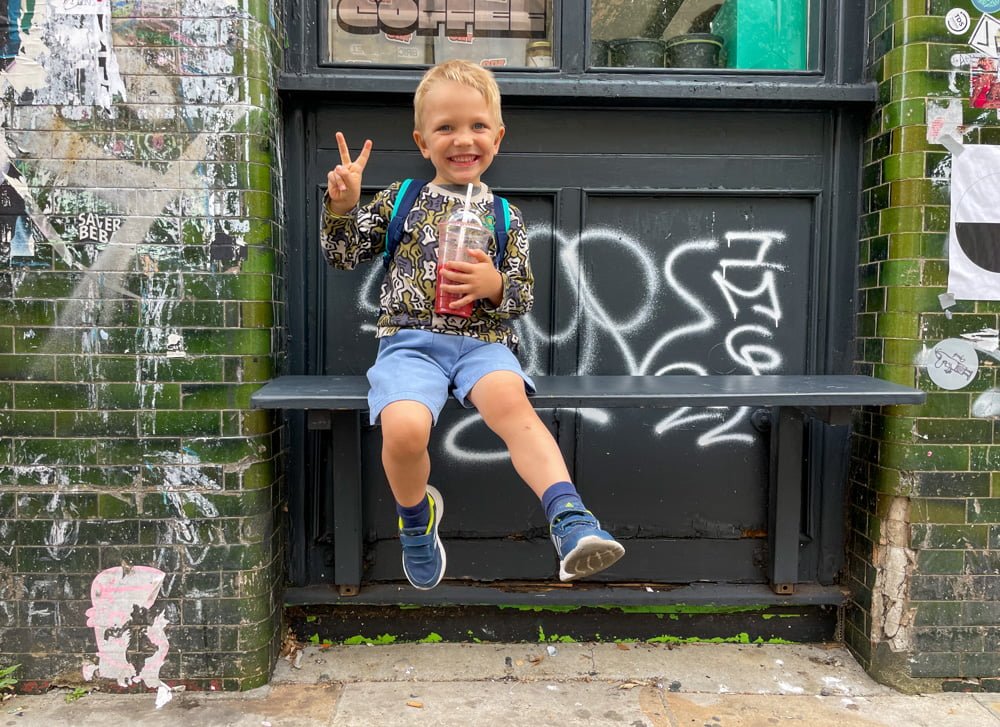
For visitors, this means far more than browsing market stalls. You come for Bengali food, bagels and street art, but also for a neighbourhood where cultures, histories and urban change remain visibly intertwined. During my last visit to London with my son, I arrived intending to sit down in a well-known curry house, but ended up sampling street food instead and simply enjoying the alternative atmosphere of this colourful corner of the capital.
Brick Lane vs Camden Market: Which London Market Is Better to Visit
Brick Lane and Camden Market are often compared, but to me they offer very different experiences. Camden has long been one of London’s most famous market areas, but I no longer go there when I visit the city. Over the years, I have found Camden Town increasingly crowded, commercialised and detached from the alternative character that once made it distinctive.
Brick Lane, despite its own gentrification, still feels more authentic. It remains tied to a living neighbourhood rather than functioning mainly as a visitor attraction. That difference is visible in the food, the street life and the mix of local businesses, markets and communities that still shape the area.
For me, Brick Lane is also far more interesting if you care about food. Between bagels, Bengali restaurants, street food stalls and the markets around Truman Brewery, there is far more to explore. If you want vintage shopping alone, Camden may still appeal. If you want a neighbourhood with stronger identity and much better food, I would choose Brick Lane.
The History of Brick Lane London and How the Neighbourhood Changed
Brick Lane has changed character many times over the centuries. What began as a rural lane associated with brickmaking later became home to successive immigrant communities, each leaving visible traces on the neighbourhood. Today, old brick facades stand alongside Bengali signs, street art and food from across the world. Few places in London reflect so clearly how migration, commerce and urban change have shaped the city over time.
Huguenot History in Brick Lane and the Story of Truman Brewery
In the eighteenth century, Brick Lane became home to French Protestant refugees, known as Huguenots, who had fled religious persecution. Many settled in this part of East London and helped turn the area into a centre for silk weaving, leaving a legacy still visible in some of the historic houses around Spitalfields.
Their presence also formed part of the wider commercial life of the neighbourhood, which included brewing. The Old Truman Brewery, founded in 1666 and still recognisable by its tall brick chimney, later became one of London’s most important breweries and remains one of Brick Lane’s defining landmarks.
Although beer is no longer produced here, the former brewery has been reinvented as a cultural and creative hub, home to markets, events and independent businesses. Brick Lane Vintage Market now occupies part of the complex, even if little immediately suggests its industrial past.
Jewish Heritage in Brick Lane and How It Shaped the Neighbourhood’s Food Culture
Before Brick Lane became identified with Banglatown, another wave of migration had already transformed the area. In the late nineteenth and early twentieth centuries, many Jewish immigrants fleeing persecution in Eastern Europe settled in the East End, and for a time Yiddish was widely spoken in the neighbourhood.
That legacy survives not only in local history, but also in Brick Lane’s food culture. It is most famously associated with Beigel Bake, known for traditional salt beef bagels with mustard and pickles, still one of the area’s defining foods. You may be tempted by smoked salmon and cream cheese, but I would argue the classic salt beef bagel is the one worth queuing for.
Brick Lane Banglatown: Bengali Culture, Curry Houses and Street Life
Brick Lane is perhaps best known today as Banglatown, shaped by migration from Bangladesh, much of it linked to families who arrived when the country was still East Pakistan. That heritage is visible in bilingual street signs in English and Bengali, independent businesses and, above all, the curry houses that made the area synonymous with London’s South Asian food culture.
Brick Lane was once also known as a place to buy saris and traditional South Asian textiles. Today, you are more likely to find shops specialising in contemporary Bangladeshi and Islamic fashion, alongside long-established restaurants, grocers and sweet shops that continue to reflect the area’s Bengali heritage.
Brick Lane’s Creative Scene, Street Art and Urban Transformation
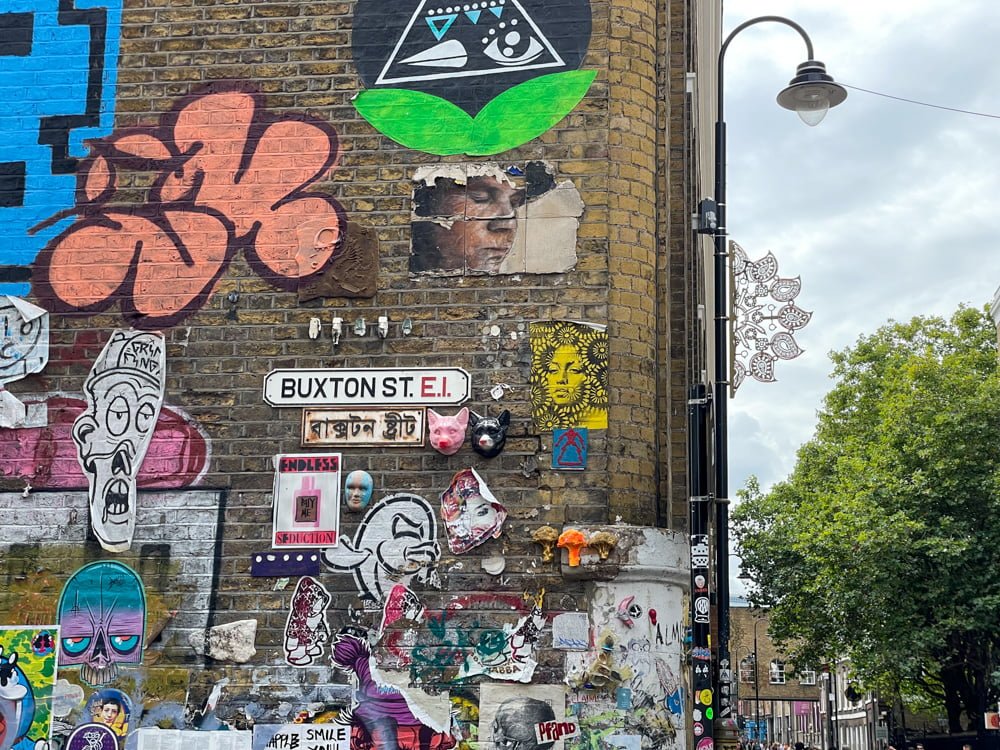
Brick Lane’s creative identity owes far more to artists, affordable former industrial spaces and the rise of nearby Shoreditch than to academic institutions. From the 1990s onwards, studios, galleries and creative businesses moved into the area, while the streets became known for ever-changing murals, paste-ups and graffiti.
Street art remains one of the most visible expressions of that transformation, but it is only part of a wider story shaped by creative industries, urban change and later gentrification. That mix is one of the reasons Brick Lane remains so interesting to explore on foot.
Best Places to Eat in Brick Lane London: Bagels, Curry and Street Food
Brick Lane’s multicultural history has made it one of the best places in London to eat, from traditional bagel shops to long-established curry houses and excellent street food. Prices are often more reasonable than in central London, and the variety of food packed into one neighbourhood is remarkable.
Part of the pleasure is simply following the aromas drifting through the street and seeing what catches your eye. Still, if you prefer to start with tried and tested places, I have included some of the restaurants and food spots most often recommended by Londoners, alongside a few I found particularly worth seeking out.
Where to Find the Best Bagels in Brick Lane London
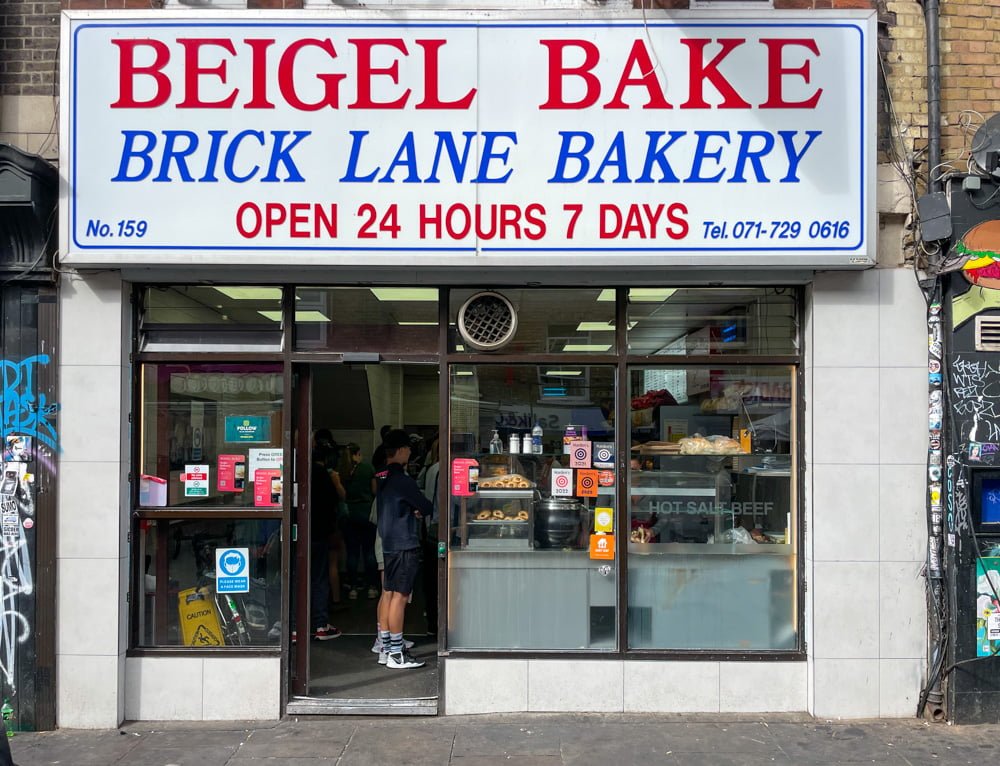
Brick Lane’s bagels are a lasting legacy of the area’s Jewish heritage, and Beigel Bake has served the local community for decades. Open 24 hours a day, seven days a week, this is the place to try the classic salt beef bagel with mustard and pickles, which, in my view, is exceptional and worth the trip alone. There is almost always a queue outside, but it moves quickly and is well worth the wait. If you only try one thing in Brick Lane, make it this.
Beigel Bake
159 Brick Lane, E1 6SB
Best Curry Houses and Bengali Restaurants in Brick Lane London
Brick Lane’s curry houses are part of a distinct British food tradition shaped by South Asian, and especially Bengali, influences. Many dishes associated with the British curry house developed through that history and are not simply identical of food found in India or Bangladesh. That is part of what makes eating here so interesting. Prices are often reasonable by London standards, and it is still possible to eat well for around £20. Many restaurants also offer strong vegetarian and vegan options.
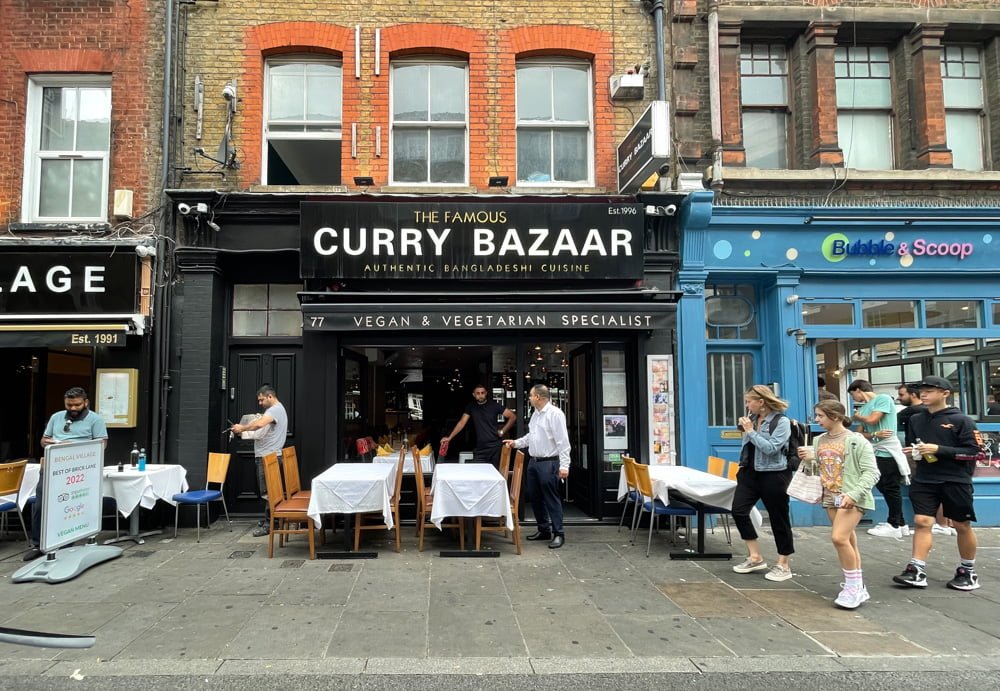
Open since 1996, The Famous Curry Bazaar is one of Brick Lane’s long-standing institutions and is often cited among the area’s best-known curry houses. For a more traditional family-run option, Bengal Village has built a strong reputation over many years and remains one of the area’s most respected restaurants. Often described as a Brick Lane classic, Aladin remains one of the area’s most famous curry houses. Its brightly lit, slightly kitsch interior divides opinion, but that is part of its charm.
The Famous Curry Bazaar
77 Brick Lane, E1 6QL
Bengal Village
75 Brick Lane, E1 6QL
Aladin Brick Lane
132 Brick Lane, E1 6RU
Best Street Food at Brick Lane Market and Upmarket
Street food is one of the main reasons I return to Brick Lane. Along the street and around Truman Brewery, food stalls and food trucks serve everything from fresh juices and noodles to fried chicken and bao. Part of the pleasure is simply wandering and choosing whatever looks irresistible.
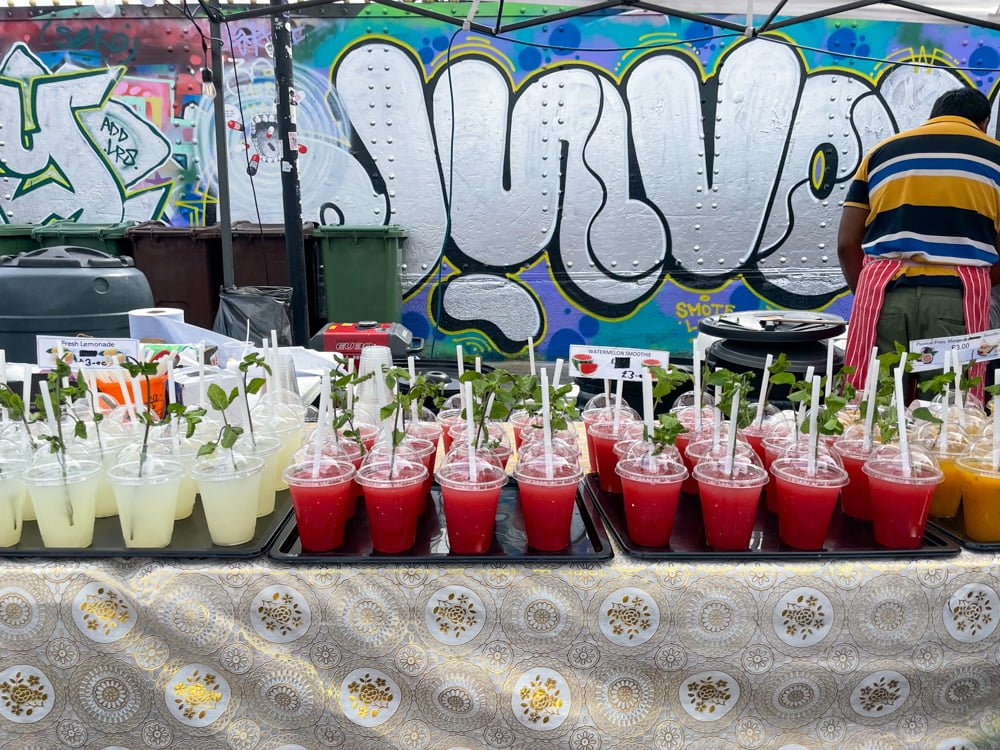
My son and I stopped at a colourful stall for freshly pressed fruit juice and lemonade, both served with fragrant mint, before continuing towards Upmarket, where much of Brick Lane’s best street food is concentrated.
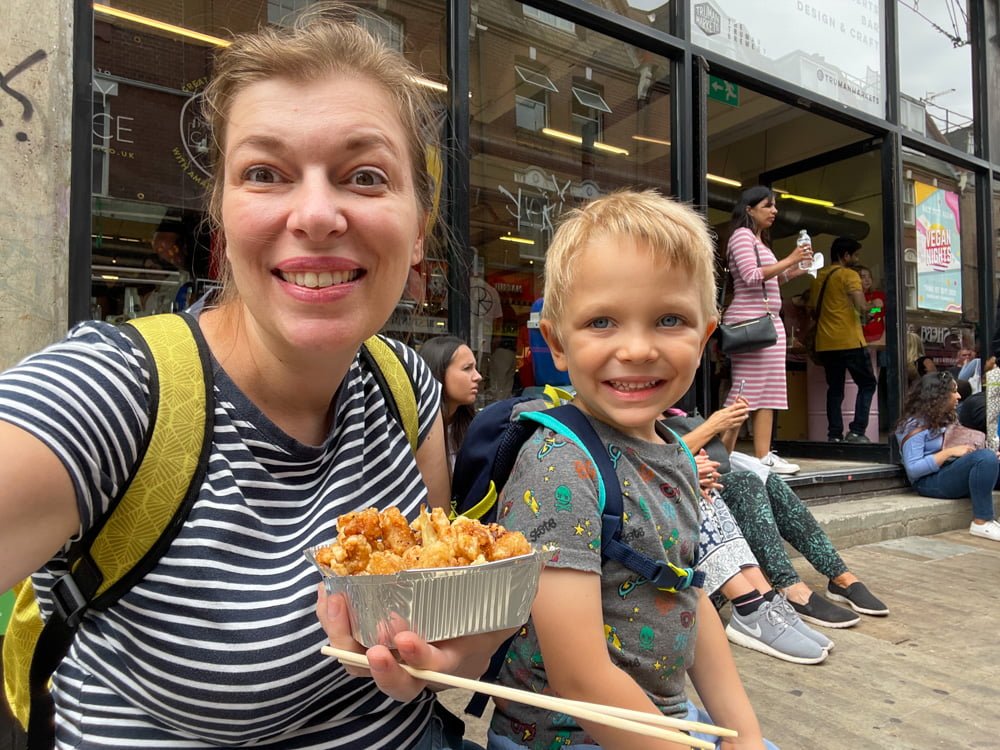
Upmarket, part of the market spaces around Truman Brewery, is one of the best places in Brick Lane to eat if you do not want a sit-down meal. Although it combines vintage stalls, independent traders and food vendors, a large section near the entrance is devoted to international street food, and nearly everything on display looks tempting.
We ended up eating freshly made sweet and sour fried chicken here, probably one of the best versions I have had anywhere. Portions were generous, prices were reasonable, and the variety was excellent. If you only have time for one street food stop in Brick Lane, I would make it this one (and Beigel Bake, of course).
Upmarket (Street Food Area)
91 Brick Lane, E1 6QL
Opening hours: Saturday 11:00 am to 5:30 pm, Sunday 10:00 am to 5:00 pm
Brick Lane Market and the Best Vintage Markets to Visit
Alongside food, Brick Lane’s markets are one of the neighbourhood’s main draws. Around Truman Brewery and the surrounding streets, you can browse vintage fashion, records, art, independent design and street food, often all within a short walk.
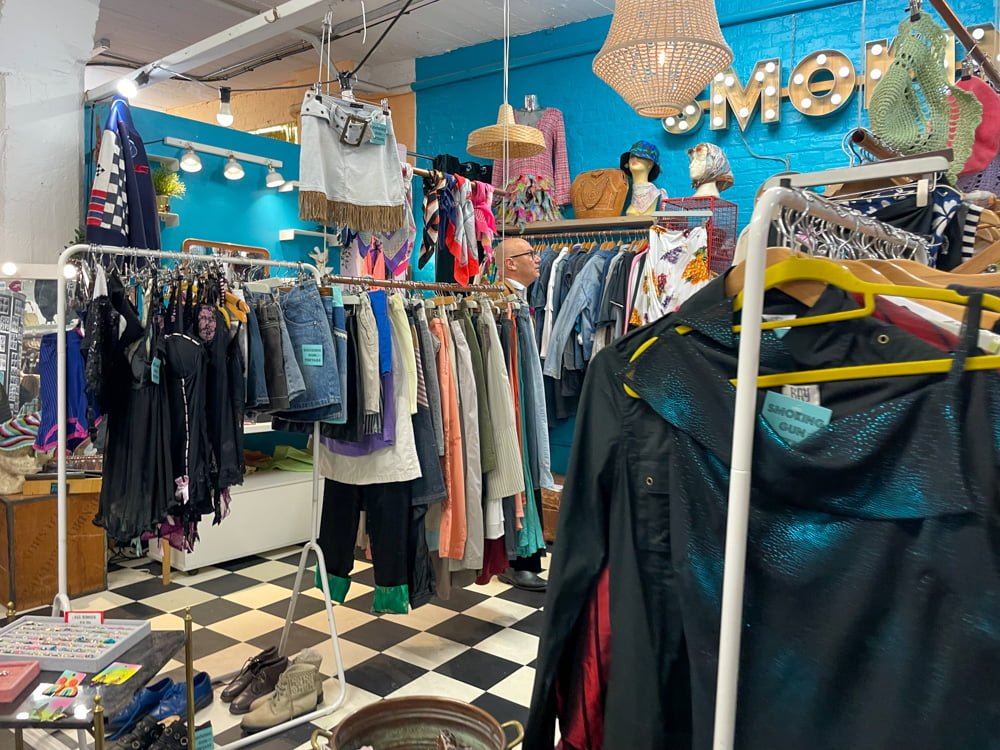
One thing worth knowing, though, is that Brick Lane is not where I would come looking for bargains. Much of the vintage feels curated, but also overpriced. I would come for the atmosphere and selection rather than expecting a traditional flea market or serious deals.
Upmarket remains one of the liveliest places to browse at weekends, combining vintage stalls, independent makers and a large indoor food market. Inside Truman Brewery, Brick Lane Vintage Market is the main destination for vintage clothing and accessories, while Backyard Market is worth visiting for independent art, prints and craft. A short walk away, Columbia Road Flower Market makes an excellent addition to a Sunday visit.
Upmarket
91 Brick Lane, E1 6QL
Opening hours: Saturday 11:00 am to 5:30 pm, Sunday 10:00 am to 5:00 pm
Brick Lane Vintage Market
85 Brick Lane, E1 6QL
Located within Truman Brewery
Backyard Market
146 Brick Lane, London E1 6QL
Opening hours: Saturday 11:00 am to 6:00 pm, Sunday 10:00 am to 5:00 pm
Columbia Road Flower Market
Columbia Road, E2 7RG
Opening hours: Sunday 8:00 am to 2:00 pm
Brick Lane Street Art, Banksy and Whitechapel Gallery
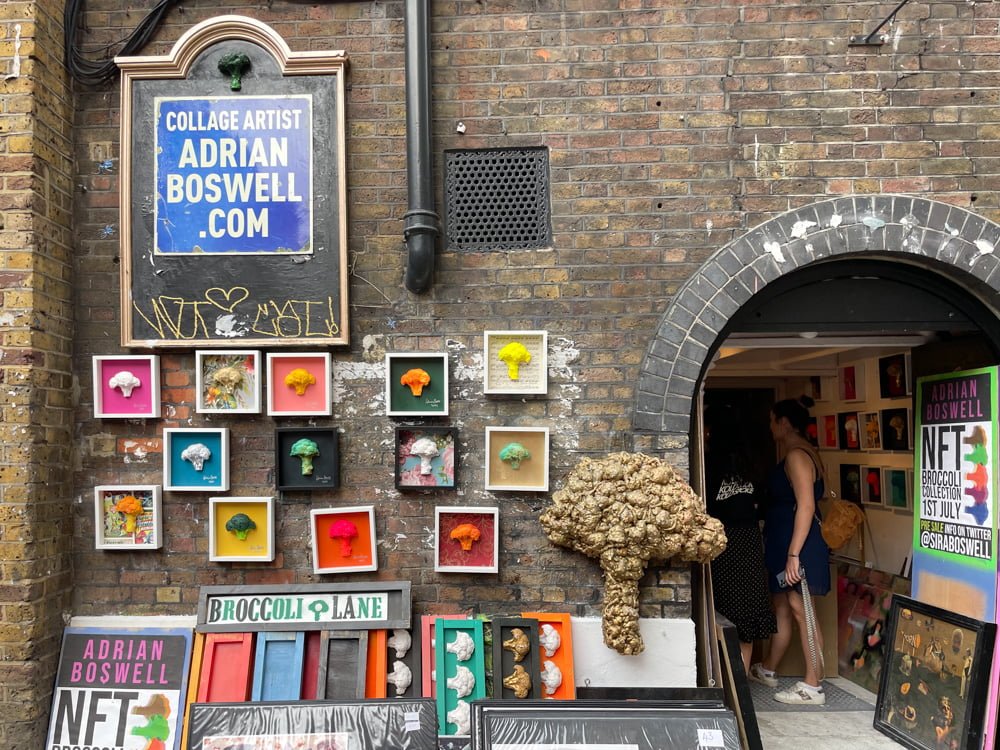
Brick Lane and the surrounding streets are among the best places in London to see street art, with ever-changing works by artists associated with the area, including Banksy, ROA, Space Invader, Ben Eine and Stik.
Part of the appeal is that the landscape never stays fixed. Murals appear, disappear or are painted over, which is why seeing certain works can never be guaranteed.
If you are interested in Banksy, works often associated with the area have included Surveillance Bin, Pink Car and Girl with Gas Mask, although some may have been altered or removed.
Brick Lane itself is not especially known for museums, but nearby Whitechapel Gallery is well worth visiting. Founded in 1901, it was one of London’s first public galleries and has played an important role in exhibiting major modern and contemporary artists, from David Hockney to Picasso, Frida Kahlo and Mark Rothko.
Whitechapel Gallery
77-82 Whitechapel High Street, E1 7QX
How to Get to Brick Lane London by Tube, Overground and Bus
Brick Lane is easy to reach with London public transport. Aldgate East is the nearest Underground station, while Shoreditch High Street is the closest London Overground stop. Liverpool Street is within walking distance as well, making Brick Lane simple to combine with other parts of East London. As with most journeys in London, I find Google Maps the easiest way to plan the best route, whether you are arriving on foot or by public transport.
Where to stay in London
London has a wide range of accommodation, from hostels to luxurious hotels, but it can be expensive. For a luxurious stay, I highly recommend the 5-star hotel Broadwick Soho, close to Piccadilly Circus, with refined and beautifully designed rooms, a terrace and a restaurant. A great choice is also the Hampton by Hilton London Waterloo, just a 5-minute walk from Waterloo train station and conveniently located near many popular attractions. Another option, if you are looking for a nice hotel with a limited budget, is the Assembly Covent Garden, a design hotel with well-decorated rooms and sculptures, ideal for those on a budget.
Brick Lane remains one of the most interesting parts of London to me, not only for its food and markets, but for the layers of history and change you can still feel while walking through it. If you have visited Brick Lane, share your impressions in the comments. This guide may also help you decide whether to add it to your London itinerary.
