
The Mekong Delta is one of the most rewarding day trips from Ho Chi Minh City, offering a closer look at rural life in southern Vietnam. Around Cai Be, you can explore canals, villages and small workshops in a single day. This guide explains what to expect and how to choose the right experience, before focusing on what you can see around Cai Be.
Table of Contents
What to See in the Mekong Delta Between Cai Be and Cai Lay
The Mekong Delta has many branches, which is why people call it the “river of nine dragons”. Around Cai Be and Cai Lay, a dense network of canals and waterways shapes the landscape. Exploring these canals by boat is one of the main highlights, offering a direct view of daily life along the river. You experience this place through movement, water and daily life rather than monuments.
PLAN YOUR TRIP TO VIETNAM – 5% discount on your eSIM and travel insurance
For getting around Vietnam with ease, choose a Holafly eSIM: you get unlimited internet, perfect for using Google Maps, Grab or other navigation apps, booking transport on the go, and sharing photos and videos in real time on WhatsApp without worrying about local SIM cards or extra charges.
For extra peace of mind, pair connectivity with Heymondo travel insurance, which covers you in case of medical emergencies, delays or cancellations. A practical solution that lets you focus on exploring Vietnam, rather than dealing with unexpected setbacks.
As you travel through the delta, you will see boats transporting fruit, small docks in front of houses and people going about their everyday activities. Life moves slowly here, and the river still shapes how people move and live. This constant interaction between water and daily life defines the experience, making it very different from more urban destinations in Vietnam.
The area is also one of the country’s most important agricultural regions, especially for rice and tropical fruit. Farmers in Cai Be grow a wide variety of crops in orchards close to the water. Seasonal flooding plays a crucial role in maintaining soil fertility and supporting local livelihoods. The river’s natural rhythm shapes agriculture here, influencing both the landscape and the local economy.
French colonial authorities expanded many of the canals to improve transport and trade. Today, they still play a central role in how goods and people move across the region. Travelling through this network helps you understand how the Mekong Delta functions. The experience is less about sightseeing and more about observing a living system, where nature and human activity are deeply interconnected.
Mekong Delta Day Trip from Ho Chi Minh City: Itinerary and What to Expect
Day trips to the Mekong Delta vary widely depending on the route and operator. Around Cai Be, most experiences combine a transfer from the city, a boat trip along the river and short activities in rural areas. Compared to the villages around Hoi An, this area feels noticeably less touristy, with a more local atmosphere. Each tour follows a slightly different structure, so you need to check what is included before booking.
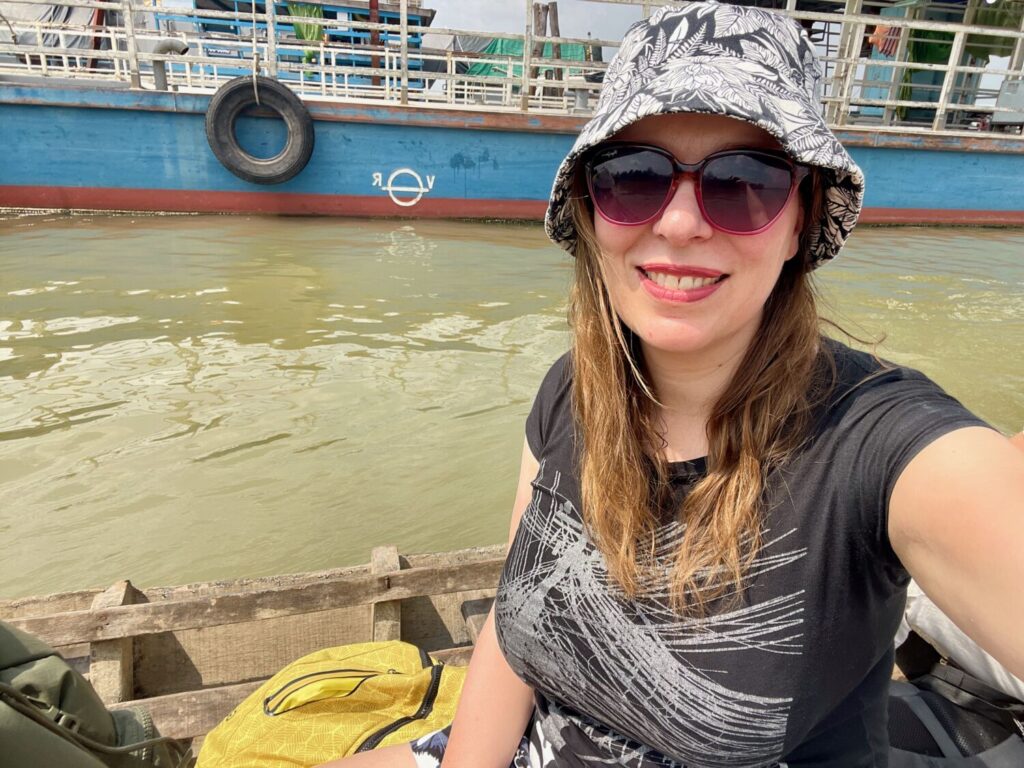
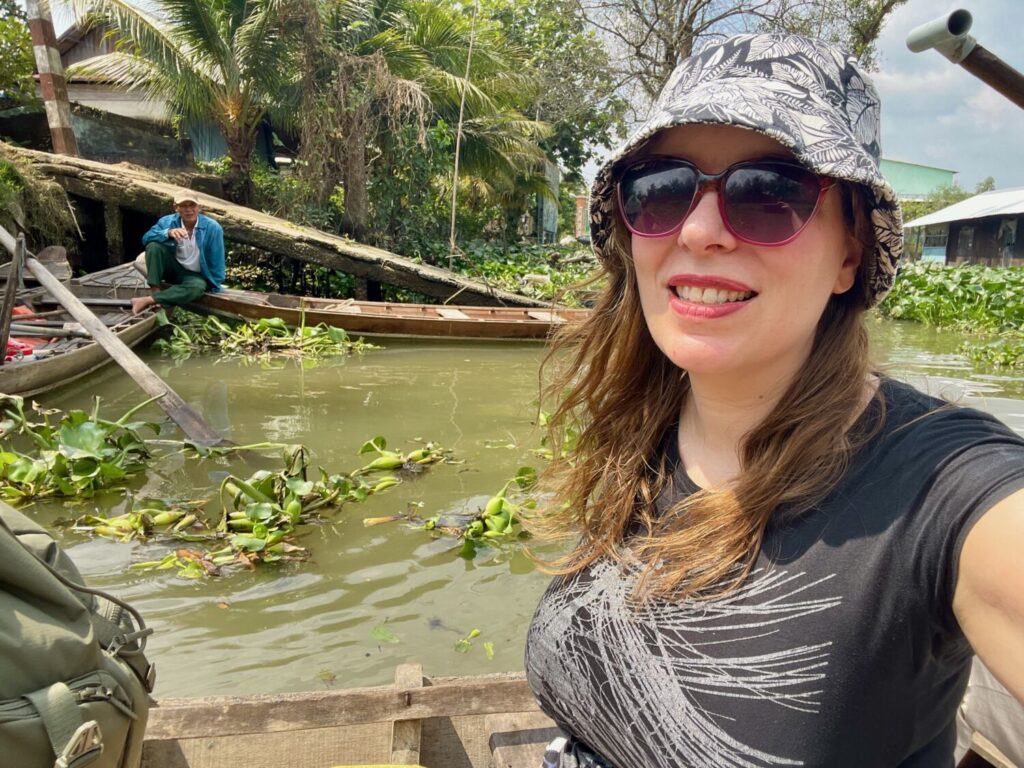
My experience, organised by Travel Sense Asia, started with a transfer of about two and a half hours from the city. Once in Cai Be, we boarded a motorboat to explore the main waterways, stopping in small riverside villages. Later, we switched to smaller rowing boats to enter narrower canals surrounded by dense vegetation. This change of pace makes the experience more immersive, as the atmosphere becomes quieter and more intimate.
While navigating the canals, the scenery shifts noticeably, with water hyacinths, palm trees and shaded passages creating a more enclosed environment. Around midday, we stopped for lunch at the Mekong Lodge, an eco-friendly property overlooking the river. The meal included local dishes and fresh fish, offering a break in a comfortable setting. This type of stop adds variety to the itinerary, balancing exploration with moments of rest.
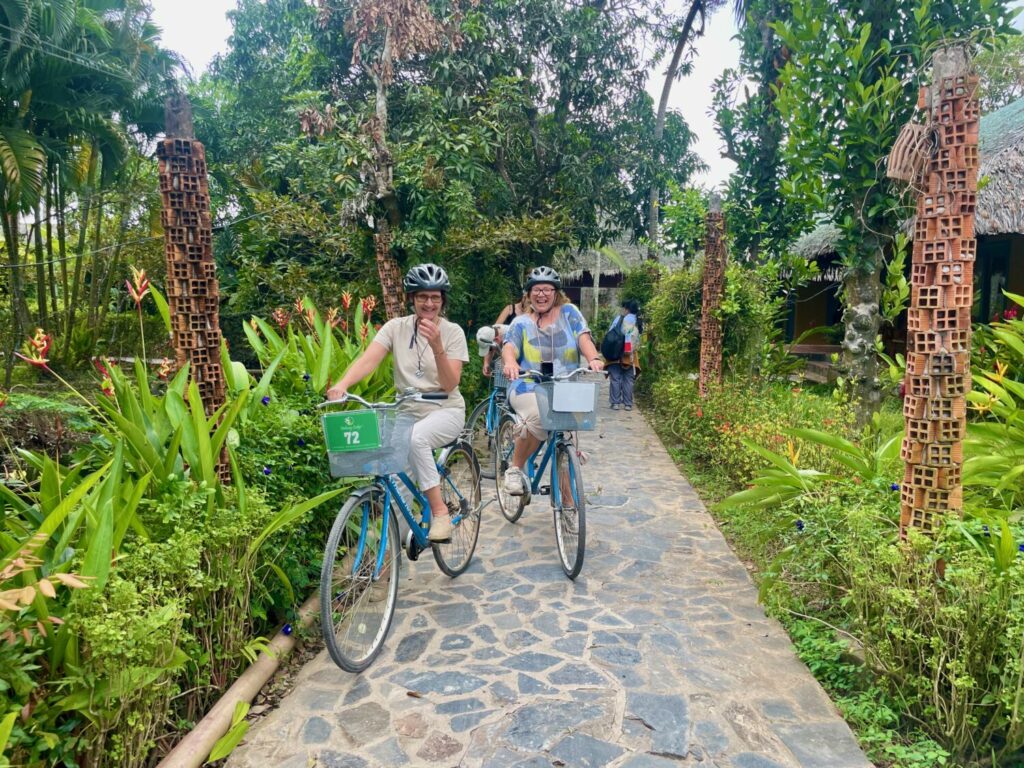
In the afternoon, the tour continued with a short cycling route through rural areas near Cai Lay, including the island of Tan Phong. We passed through small villages and stopped at local houses and workshops to observe traditional activities. Unlike more tourist-heavy itineraries, this tour did not include the floating market, which has largely shifted to land-based trade. Focusing on everyday life along the river made the experience feel more authentic and less staged.
Tan Phong Island: Cycling Through Villages in the Mekong Delta
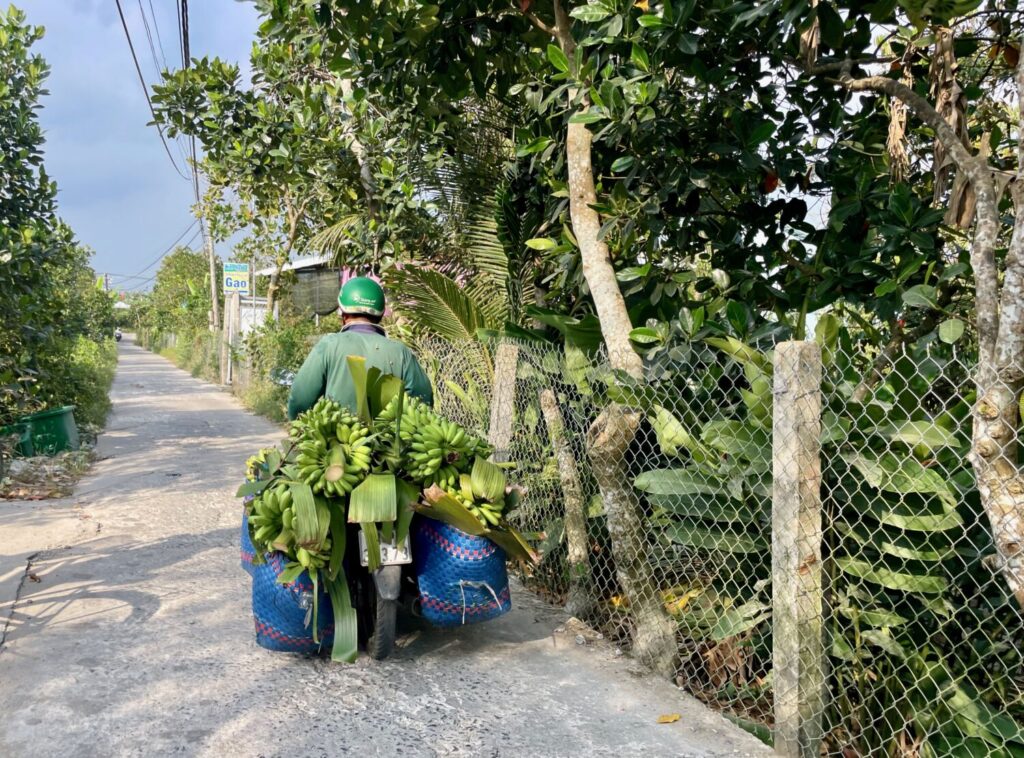
Compared to the time spent on the water, Tan Phong Island offers a slower and more grounded experience. The pace changes noticeably, and you begin to see how daily life unfolds away from the main river routes. Exploring the island by bicycle allows you to move at the same rhythm as the villages, stopping frequently and without a fixed schedule.
Most tours include a cycling route through narrow paths lined with tropical vegetation and small houses. Along the way, it is common to stop in local workshops or private homes, where everyday activities continue as usual. During my visit, I was unable to cycle due to a knee injury and was accompanied by a local guide on a motorbike instead. This flexibility made it possible to experience the same route without missing any part of the day, which is one of the advantages of a private tour.
The landscape on the island is lush and densely cultivated, with fruit trees, canals and small agricultural plots. Villages are connected by narrow roads, often quiet and shaded, where encounters happen naturally. In one case, I was invited into a traditional house, while in another we stopped to watch preparations for a wedding. These unplanned moments are what make this part of the Mekong Delta particularly memorable, as they feel spontaneous rather than staged.
Although the visit is part of an organised excursion, the interaction with local people feels more genuine than in more structured settings. There are fewer crowds, and the atmosphere is noticeably calmer. This combination of accessibility and authenticity is one of the reasons why Tan Phong stands out within the Mekong Delta experience.
Local Workshops in Cai Be: Rice Paper, Coconut Candy and Traditional Crafts
One of the most interesting parts of a Mekong Delta tour is visiting small workshops around Cai Be. These are not large factories, but family-run activities connected to daily life in the delta. Here you can see how traditional products are still made using simple techniques, often passed down through generations.
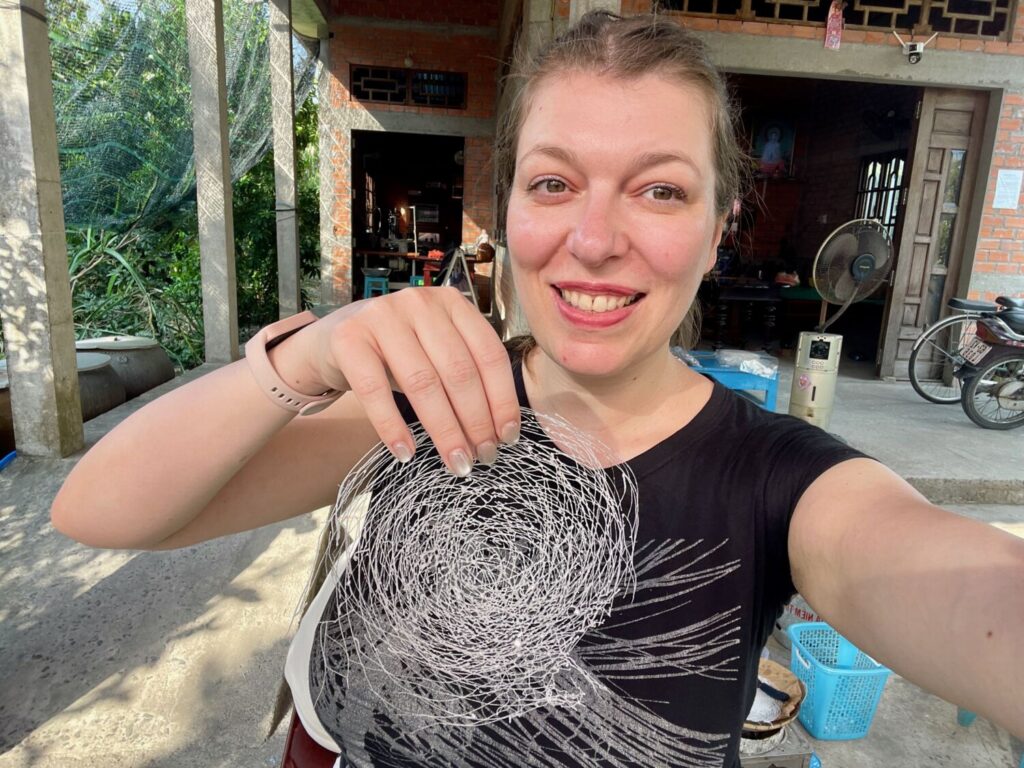
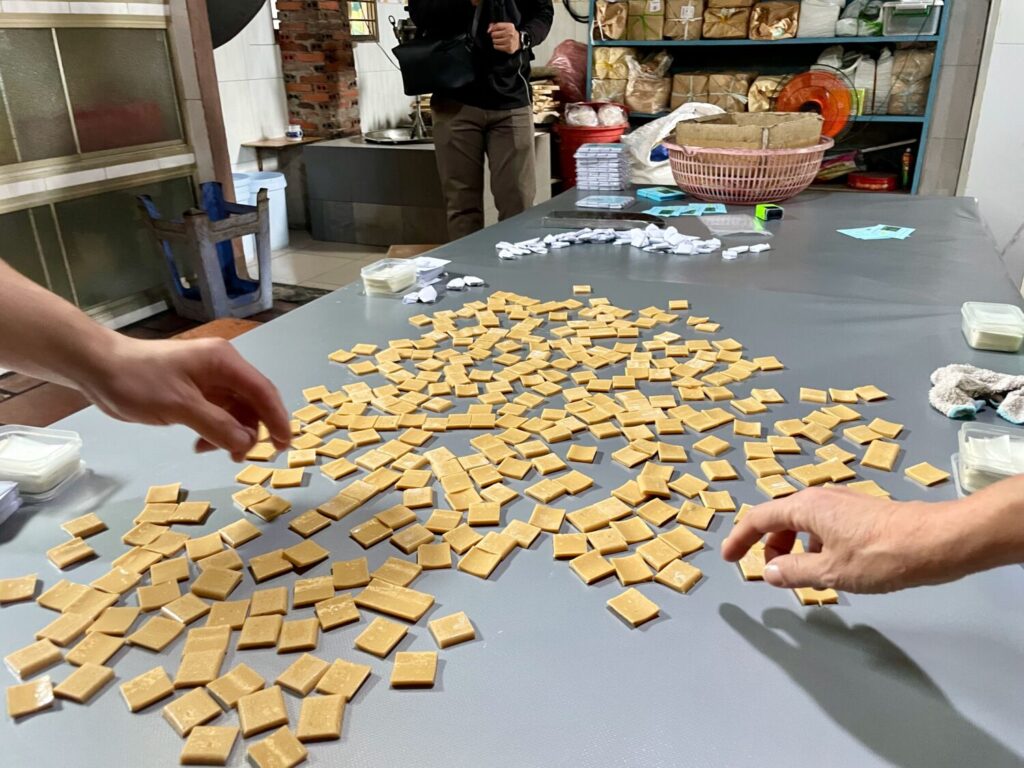
Rice paper is one of the most common products you will encounter. During the visit, I had the chance to see each step of the process and even try making it myself, using liquid rice batter. Coconut candy is another typical production, prepared by slowly cooking coconut pulp with malt until it reaches a dense consistency. These demonstrations are practical and easy to follow, making them engaging even if you are not familiar with the process.
An interesting aspect is how little is wasted. People use almost every part of the coconut, turning by-products into fertiliser or other materials. Water hyacinth, which grows abundantly in the canals, is collected, dried and woven into everyday objects. This approach reflects a resourceful and sustainable way of living, closely linked to the environment.
Some workshops are more structured for visitors, with small shops selling souvenirs, while others remain informal and take place inside private homes. In both cases, the experience offers a direct look at local traditions and working methods. These visits add depth to the excursion, moving beyond scenery and into everyday life in the Mekong Delta.
How to Choose the Best Mekong Delta Tour from Ho Chi Minh City
Choosing a Mekong Delta tour is not as straightforward as it may seem. Around Cai Be, itineraries can vary significantly in terms of pace, group size and activities. You can find many group tours online, which are usually more affordable and easy to organise in advance. However, these tours often follow fixed schedules, with limited time at each stop.
I visited the Mekong Delta with a private tour organised by Travel Sense Asia, which planned my entire journey in Vietnam from Hanoi to Ho Chi Minh City. This allowed for a more personalised experience, with a flexible itinerary and more time in each location. The main advantage of a private tour is the ability to adapt the day, focusing on what interests you most rather than following a rigid programme.
When comparing different options, it is important to look beyond the general description. Reviews can be useful, especially when they mention group size, timing and how structured the visits feel. Some tours cover many stops quickly, while others focus on fewer activities at a slower pace. These details make a real difference in how you experience the Mekong Delta, particularly if you are looking for something less rushed.
You can find many Mekong Delta tours from Ho Chi Minh City online, but not all offer the same type of experience. Before booking, check what each tour includes, how long each stop lasts, and whether it features activities such as cycling or workshop visits. Choosing carefully helps you avoid overly touristy tours and find a more balanced experience.
Practical Tips for a Mekong Delta Day Trip
Visiting the Mekong Delta in one day requires some planning, especially due to heat and humidity. Around Cai Be, temperatures remain warm throughout the year, typically between 22 and 32 °C, with higher peaks in the hottest months. The combination of heat and humidity can feel intense, particularly during outdoor activities and boat trips.
Light clothing is the best option for this type of excursion. Breathable fabrics and short sleeves help you stay comfortable throughout the day. Comfortable shoes are also important, especially if your itinerary includes cycling or walking in villages. I used the same trekking shoes I had worn in Hoang Su Phi, and they worked perfectly in this setting as well. Closed shoes or trekking sandals with good grip are usually the most practical choice, as you will be getting on and off boats several times.
You will spend much of the day outdoors, so sun protection is essential. A hat, sunscreen and sunglasses make a noticeable difference, particularly during the central hours of the day. Carrying enough water is equally important to stay hydrated. Simple precautions can significantly improve your overall experience, allowing you to enjoy the day without discomfort.
I recommend bringing insect repellent and using it especially near canals and vegetation. Even if the itinerary is not physically demanding, the environment requires some preparation. Being properly prepared lets you focus on the experience rather than the conditions, making the day more enjoyable from start to finish.
Visiting the Mekong Delta with Children: What to Know
Visiting the Mekong Delta with children can be a varied and engaging experience. Around Cai Be, the day typically includes boat rides, short walks and outdoor activities in rural areas. This mix of activities helps maintain attention, as the pace changes throughout the excursion without becoming repetitive.
One of the most interesting aspects for children is the direct contact with nature and local life. Watching local producers make everyday items, from rice paper to coconut candy, makes the experience more tangible and interactive. These moments are simple but memorable, especially because they happen in real working environments. Learning through observation and participation adds value to the day, making it more than just a sightseeing trip.
From a practical point of view, most tours are well organised, but some attention is needed when getting on and off boats or during cycling sections. Before booking, it is useful to check whether bikes suitable for children are available or if alternatives are provided. Choosing the right type of tour can make a significant difference, especially when travelling with younger children.
The climate is another factor to consider. Heat and humidity can affect the pace of the day, so regular breaks, water and sun protection become even more important. Roads on islands like Tan Phong are generally paved but can narrow in places. Planning with these conditions in mind helps ensure a smoother and more comfortable experience, especially for families.
Where to Stay in the Mekong Delta: Alternatives to a Day Trip
Spending one or two nights in the Mekong Delta allows you to experience the region at a slower pace. Around Cai Be, staying overnight means you can explore canals early in the morning or late in the afternoon, when the atmosphere is quieter. This extra time makes a noticeable difference, especially if you want to go beyond the typical day trip experience.
One of the most comfortable options is the Mekong Lodge, an eco-friendly property set along the river. Greenery surrounds the setting, with spacious rooms and a large pool that feels especially welcome after a hot day. From here, you can join activities such as cycling, boat trips and village visits. Staying in a place like this combines comfort with direct access to local experiences, without needing to travel far.
Homestays are another option and are widely available throughout the delta. Staying in a local house offers a more informal environment and closer contact with daily life. Facilities are usually simpler, but the experience feels more personal and connected to the community. This type of accommodation is ideal if you are looking for a more immersive stay, rather than a standard hotel experience.
With more time available, it is also possible to include activities such as cooking classes or longer boat trips deeper into the delta. The rhythm of the day becomes more flexible, with space to explore without rushing. Choosing to stay overnight changes the perspective of the visit, turning it into a more complete and relaxed experience.
