
Lake Hévíz in Hungary is the largest natural thermal lake in Europe where you can swim. It is fed by an underground hot spring that keeps the water pleasantly warm all year round. I visited in summer during a road trip in Hungary with my son, wanting to swim in a unique natural setting, very different from traditional thermal pools. In this article you can find out what it is like to swim in its jet-black waters, and how to visit the thermal lake of Hévíz with children.
Table of Contents
Lake Hévíz: Interesting Facts About Europe’s Largest Thermal Lake
Lake Hévíz lies in western Hungary, not far from Lake Balaton. A visit here is very different from a classic thermal spa, because wellbeing is combined with the natural setting. While planning the Lake Balaton leg of our road trip, I could not resist visiting this spa and swimming in the lake.
Why the Water of Lake Hévíz Looks Black
Hévíz covers about 4.4 hectares. It is a natural lake fed by an underground thermal spring, and it is promoted as the largest natural thermal lake in the world with a peat bed. The peat is stirred up and stays suspended in the water. This makes the lake look much darker than it really is.
The effect is quite curious and makes swimming here different from any other lake. Do not expect the blue or green of alpine lakes. At first glance it feels like looking through black glass. The water, however, is perfectly clear, and the dark colour comes from the peat dust.
My son and I had fun diving with goggles to watch the silt float and drift around us. In some places we could see and even touch the bottom, about two metres down.
This does not mean the water is stagnant. On the contrary, Lake Hévíz is completely renewed every three days, thanks to the spring’s exceptional flow of 410 litres per second. The water rises from an underground cave 17 metres wide and 14 metres high, discovered in 1975 by two divers. I did not understand exactly where it is. From what I found, the spring should be a short distance from the thermal lake.
Protected Flora and Fauna of Lake Hévíz: Water Lilies and Waterbirds
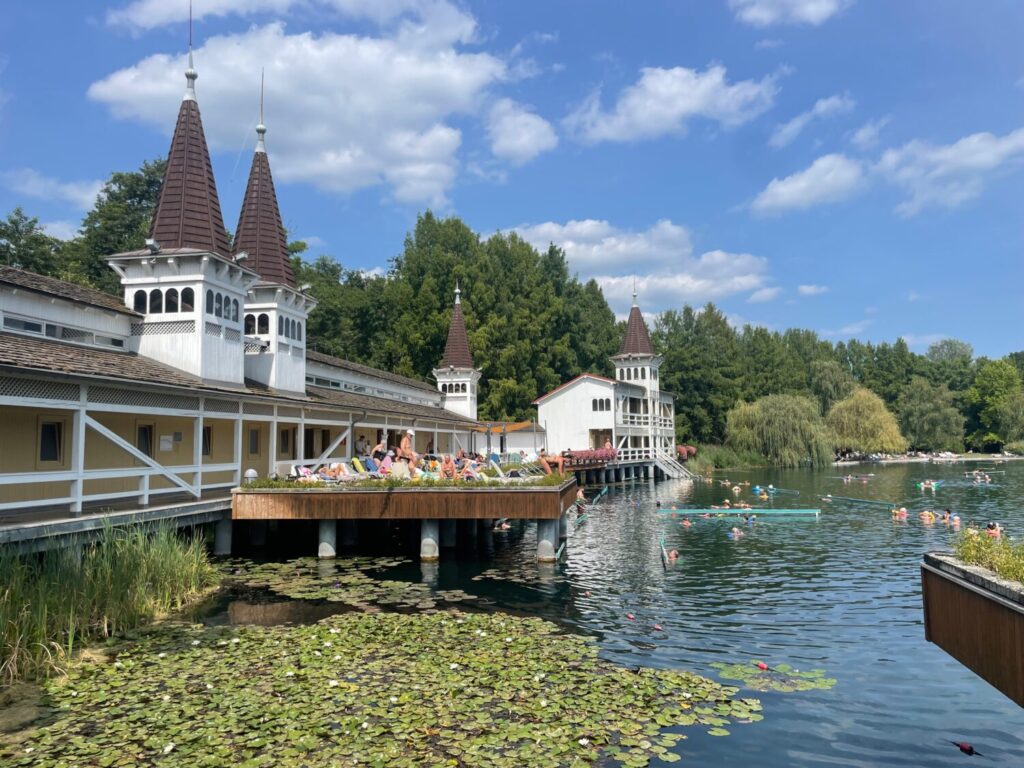
Besides its thermal properties, Hévíz is also interesting from a natural point of view. A large forest surrounds the lake and shelters it from the wind. It helps create a calm, relaxed atmosphere for the animals as well as for visitors.
The lake hosts a small ecosystem, and one of its most characteristic elements is the red water lily, considered one of the symbols of Hévíz. The water lilies also grow in the bathing areas, creating a landscape that resembles a water garden. Of course, you should admire them without touching or damaging them, to preserve the ecosystem.
The animal symbol of the lake is the little grebe (Tachybaptus ruficollis), a small waterbird that lives here all year round. According to the information panels on site, it does not leave the relatively warm waters of the lake even in autumn. It builds its nest mostly on water lily leaves and can lay eggs three or four times a year.
Hungary has an estimated nine or ten thousand breeding pairs in total. The birds at Hévíz are protected and must not be disturbed. One pair of little grebes regularly nests on a steel staircase of the spa building. If you visit at the right time of year, you can see them, always without disturbing them.
The surrounding forest deserves a walk. You can also enjoy it with a picnic if you buy a full-day entrance ticket for Lake Hévíz. We particularly liked relaxing on the sun loungers placed in the shade of the trees all around the lake. They really let us breathe in the unique natural setting around us.
Water Temperature of Lake Hévíz in Summer and Winter
One of the special features of Lake Hévíz is that it stays naturally warm even in winter. In summer the water can reach 35-38 degrees. In winter it never drops below 22 degrees, thanks to the geothermal heat of the spring. The effect is spectacular, because you see the lake wrapped in steam.
During our summer visit I found the water hot, but not too hot compared with the outside air. My son and I could swim without feeling tired or drained. That sometimes happens when you spend too long in hot water, whether at a spa or in the bath.
Hévíz Spa: Water Properties and Treatments
Although Lake Hévíz is entirely natural, a spa has been built over and around it where you can also follow specific treatments. The thermal water contains various minerals and dissolved gases, including sulphur, calcium, magnesium and carbonic acid, plus a small amount of radon. According to the operator, sulphur is the main active ingredient, both in the water and in the mud that covers the lake bed.
These characteristics make the lake a popular destination among Hungarians for treating rheumatic and musculoskeletal disorders. The therapeutic indications also include arthrosis, osteoporosis and rehabilitation after injuries or surgery. Among the best-known medical spa treatments in Hévíz are medicinal mud and weight baths. The latter combine traction and stretching with the effects of the water.
To get the most benefit, you should stay in the water for 20-30 minutes at a time. Alternate each dip with a break of at least half an hour. The recommended total time should not exceed an hour and a half per day. As with all thermal waters, the lake is not recommended in cases of infectious diseases, tumours, heart failure and circulatory disorders.
If you have health problems, ask your doctor before any thermal experience, in Hévíz or elsewhere. The heat of the water can affect the cardiovascular system and circulation. Besides the treatments, the spa also has saunas and a wellness area. I did not try them, because they are reserved for adults and I was travelling with my son.
Lake Hévíz or the Budapest Thermal Baths: Which to Choose
If you are planning a trip to Hungary, you may wonder whether Lake Hévíz is worth visiting or whether you should spend all your time at the famous Budapest baths. They are really two very different experiences, hard to compare because the atmosphere and features differ.
In general, Budapest has historic baths, often in monumental buildings, with many pools, saunas and architecturally valuable spaces. Each spa has its own character, though. The Lukács Baths, for example, offer a truly authentic Hungarian experience. The Palatinus Baths, on Margaret Island, are perfect for a family day outdoors.
Hévíz instead lets you swim directly in a natural thermal lake, surrounded by vegetation and far from the urban setting. In my opinion, if you are already at Lake Balaton, it is absolutely worth dedicating at least half a day to this experience.
Hévíz does not offer the variety of attractions of a big spa city. That simplicity is part of its charm. If you have little time and mainly want to explore the Hungarian capital, the Budapest baths are the better choice.
Lake Hévíz with Children: Tips for Your Visit
According to the official website, the company that runs the thermal lake advises against bathing for children under 12. In reality, it does not forbid it either. We were not the only family with children during our visit. It is not a water park or a spa designed for families, but the experience is very pleasant even with young children.
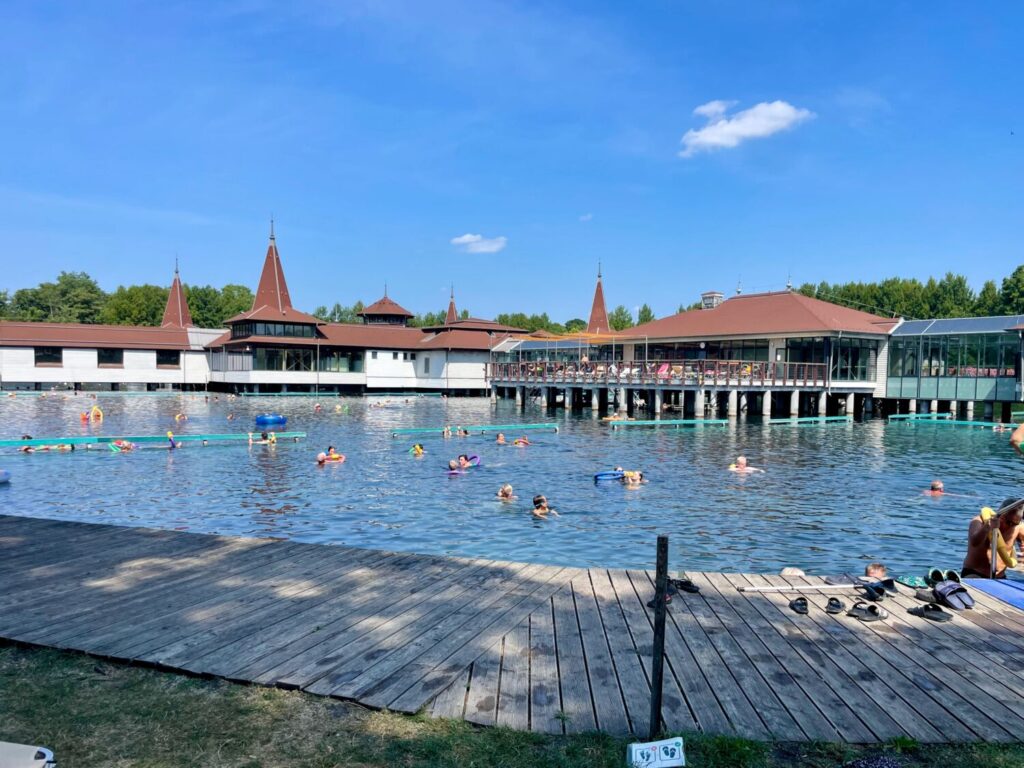
For children and teenagers under 14, there is a warm pool on the lakeside, opposite the entrance. It is very shallow. My son still loved it for playing when he was six. The pool only opens in summer, depending on the weather. The weather also affects the lake, which can close to bathers when it rains.
We both swam in the lake, and it was great fun. Lake Hévíz is between 2 and 38 metres deep, so make sure your child is a confident swimmer or has armbands or a float. My son already knew how to swim, but for safety I always had him wear armbands.
At the ticket desk you can rent giant rings and floats for you and your children. How the rental works is not very clear, because the information is only in Hungarian. If you are interested, it is worth asking for the floats at the entrance desk.
How to Visit Lake Hévíz: Practical Information
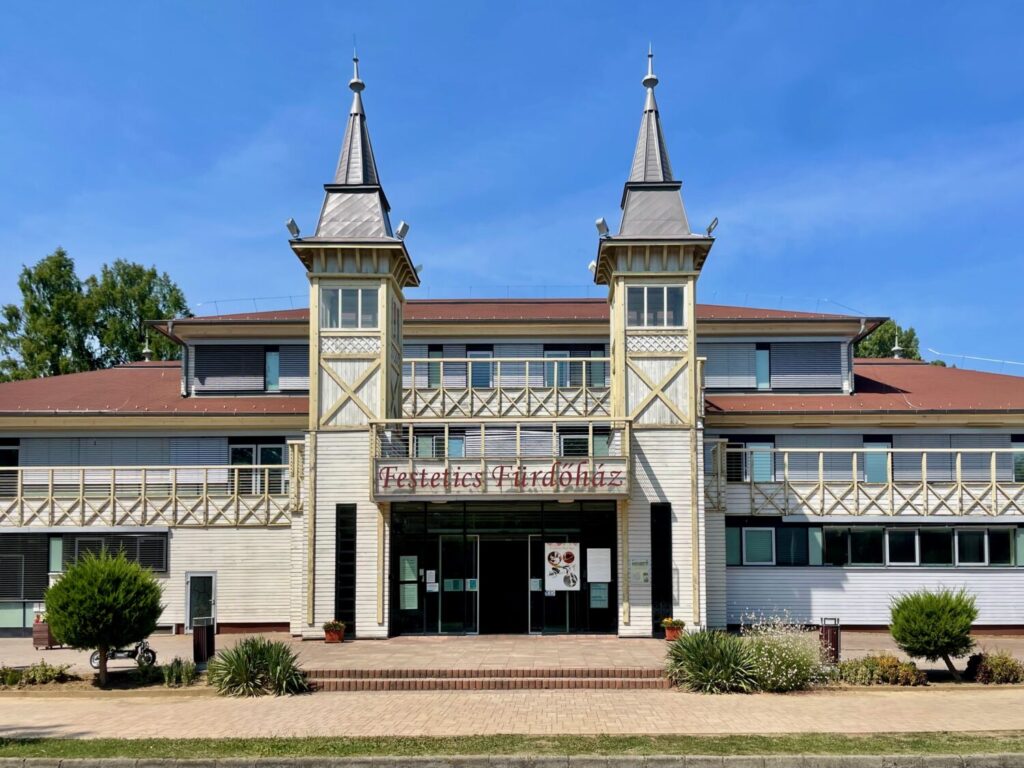
For your day at the lake, bring a swimsuit, flip-flops and a towel, plus shampoo, conditioner, shower gel and a hairbrush. At the desk you can pay in cash, in Hungarian forints, or by credit card, as I did.
At the entrance you receive a wristband. You can tap it on special displays to see how much time you have left before you must leave. For me it is a very convenient system, because you do not need to carry a watch or phone. You will probably take your phone anyway, to take photos.
Opening Hours and Ticket Prices for Lake Hévíz
Lake Hévíz is open all year, but the hours change, so I always recommend checking the website. Ticket prices also change by season. In summer, for example, you can buy a three-hour ticket or a full-day ticket. In winter there are only two-hour tickets or season passes.
The full-day ticket is particularly good if you want a picnic in the areas of the park with sun loungers. I saw many Hungarians doing this, and it is a lovely way to spend a relaxing day.
The hourly ticket allows a single entry on the day of purchase, with a maximum length of stay. You can check your remaining time on the displays inside the spa, using the electronic wristband you receive at the desk.
If you stay longer than your ticket allows, a surcharge applies for every half hour started. During my visit I only noticed from the display that the count included an extra hour for showering. To be safe, I recommend asking at the desk how your stay is calculated.
You can buy tickets directly at the desk or on the official Lake Hévíz website. At the time of writing, prices start from 3,000 Ft, about €8, for the two-hour ticket. Children under 6 enter free, while children from 6 to 14 pay a reduced ticket.
How to Get to Lake Hévíz from Budapest and Lake Balaton
Hévíz is in western Hungary. The nearest airport is Hévíz-Balaton Repülőtér, which only handles private and charter flights. Unless they come for thermal treatments, international tourists usually stay in Budapest or at Lake Balaton, famous for its wine and for the lavender grown at Tihany. They visit Hévíz in a day. We also visited it as an excursion from Lake Balaton.
The car is definitely the most convenient way to get there. The thermal lake is just outside the town of Hévíz, and there is a paid car park in front of the spa entrance. There is no other parking nearby. At most you can leave the car along the road, but very far away, and saving a few euros is not worth it.
If you arrived in Hungary by plane, you can hire a car on DiscoverCars. Without a car, reaching Hévíz by public transport is possible, but it takes a very long time. The intercity buses 1808 and 1848 run several times a day along the shores of Lake Balaton. They are very slow and only make sense if you are already in the area.
From Budapest you would first have to leave the city by train and then take a bus, taking 3 or 4 hours compared with 2 hours by car. For this reason, if you are staying in the Hungarian capital, I recommend booking a day trip to Hévíz from Budapest on GetYourGuide. This gives you direct transport from the city centre.
Hévízi Tófürdő (Thermal Lake Hévíz)
Dr. Schulhoff Vilmos stny., 8380 Hévíz, Hungary
Where to Stay in Hévíz: The Best Thermal Hotels
Hévíz is very popular with Hungarians and has accommodation for every budget. Options range from spa hotels to cheaper guesthouses and holiday homes, which you will find listed as panzió and vendégház. If you want to stay a few extra days or plan a real wellness holiday, I suggest the four-star Hotel Spa Hévíz, part of the lake’s thermal complex. It offers free access to the bathing area.
Alternatively, the Ensana Thermal Hévíz is another four-star spa resort with a pool, a short distance from the lake. If you are travelling with children, the best choice is definitely Le Primore Hotel & Spa. Besides several pools, it has a mini club and an indoor water park. Book in advance, especially in summer, because places like these are the first to sell out in high season.
Lake Hévíz: Why Add It to a Lake Balaton Itinerary
In my opinion, Lake Hévíz is absolutely worth a visit, especially if you are planning a holiday at Lake Balaton. It is not a classic spa, nor simply a lake for swimming, but a truly special natural setting.
Swimming in a natural thermal lake surrounded by forest is an experience you can hardly have anywhere else. Even when travelling with children, Hévíz can be a fun stop that is different from the usual. If you have a few days in Hungary, I recommend adding it to your itinerary. It is one of the most unusual things to do around Lake Balaton.
