
Greenwich is a UNESCO World Heritage Site located in south-east London, known worldwide as the home of the Prime Meridian and Greenwich Mean Time. Just a short journey from central London, it offers a completely different atmosphere from the city’s busiest areas. During my visit, I found a place where maritime history, green spaces and elegant architecture come together in a surprisingly relaxed setting. Spending a full day here allows you to explore its main attractions at a comfortable pace.
Access top attractions in Greenwich with one convenient pass
Table of Contents
Why Greenwich London Is a UNESCO World Heritage Site Worth Visiting
Greenwich is a UNESCO World Heritage Site, designated in 1997 for its global historical significance. Here, science, navigation and empire converged, shaping how people mapped and made sense of the world. Walking through Greenwich today means stepping into a place that helped define modern geography and timekeeping.
PLAN YOUR TRIP TO LONDON
Prepare for your London adventure by securing the London All-Inclusive Pass, granting access to 80+ attractions, guided tours, and a Thames adventure with the Hop-On-Hop-Off Big Bus and Uber Boats by Thames Clippers.
Stay connected in the UK with a giffgaff free SIM or an Airalo eSim for data coverage throughout your London journey. And don’t forget to get Heymondo Travel Insurance, which covers any inconveniences during your trip!
Greenwich played a central role in the development of navigation at a time when Britain relied on maritime power to expand its influence. The British Crown established the Royal Observatory here to solve one of the greatest challenges of the age: calculating longitude at sea. This breakthrough allowed ships to navigate more accurately across oceans, supporting trade, exploration and the growth of the British Empire.
What makes Greenwich stand out from other areas of London is its combination of scientific innovation and architectural harmony. The design of the Old Royal Naval College, the riverside and the surrounding park create a coherent landscape. In Greenwich, monumental buildings and open spaces reflect both power and order. Few places in London offer such a clear connection between history, design and purpose.
The entire area is compact and easy to explore on foot, yet incredibly rich in meaning. From the Prime Meridian to the historic waterfront, Greenwich is not just a collection of landmarks but a place where Great Britain defined global systems. Visiting it offers more than a cultural experience, helping you understand how the modern world took shape.
Planning Your Time in Greenwich: Half-Day or Full-Day Itinerary
If you are wondering how much time to spend in Greenwich, the answer depends on the pace you prefer and how deeply you want to explore the area. It is compact and easy to visit, yet rich enough to fill an entire day without feeling repetitive. The key is to balance the main sights with moments to slow down and enjoy the atmosphere of one of London’s most relaxed historic neighbourhoods.
This itinerary allows you to see the main highlights without rushing. I recommend starting your morning at the Royal Observatory and then enjoying the Cutty Sark before heading down into the historic centre. Around lunchtime, Greenwich Market is an ideal stop. Here, you can choose between street food or a meal in one of the nearby pubs and restaurants.
In the afternoon, if you plan to spend the whole day here, you can focus on the other museums within the Royal Museums Greenwich complex, including the National Maritime Museum and the Queen’s House. If you are travelling with children, late afternoon is perfect for relaxing in the park and enjoying its amazing views over London.
Personally, I chose to spend a full day here to explore everything at a comfortable pace, and it was worth it. If you prefer a more relaxed visit, you could even spread your time over two days, as there is more to see than it might seem at first.
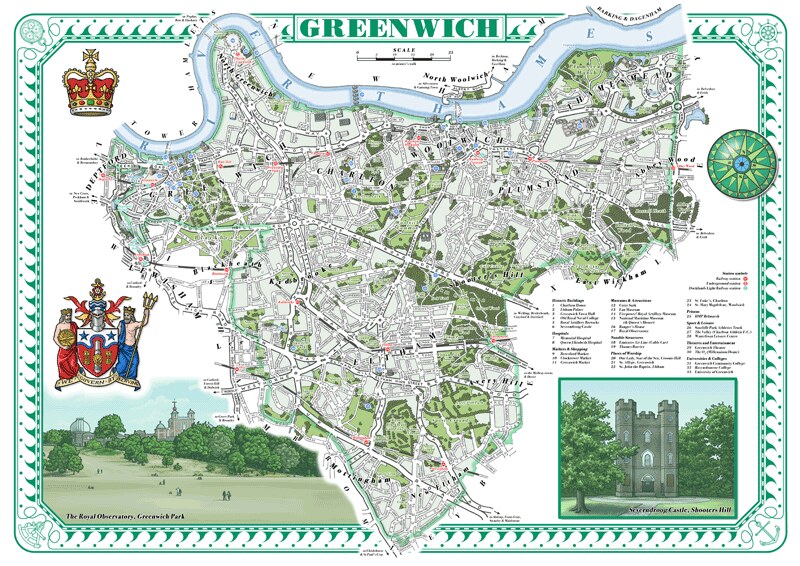
What to See and Things to Do in Greenwich London
Greenwich offers a mix of iconic landmarks and quieter corners that reflect its maritime past and scientific importance. As you explore the area, you will move easily between historic buildings, open green spaces and riverside views, all within a short walking distance. From standing on the Prime Meridian to visiting historic ships and local markets, Greenwich allows you to experience history, culture and everyday life in one place without the intensity of central London.
The Royal Observatory and the Prime Meridian: Where Greenwich Mean Time Begins
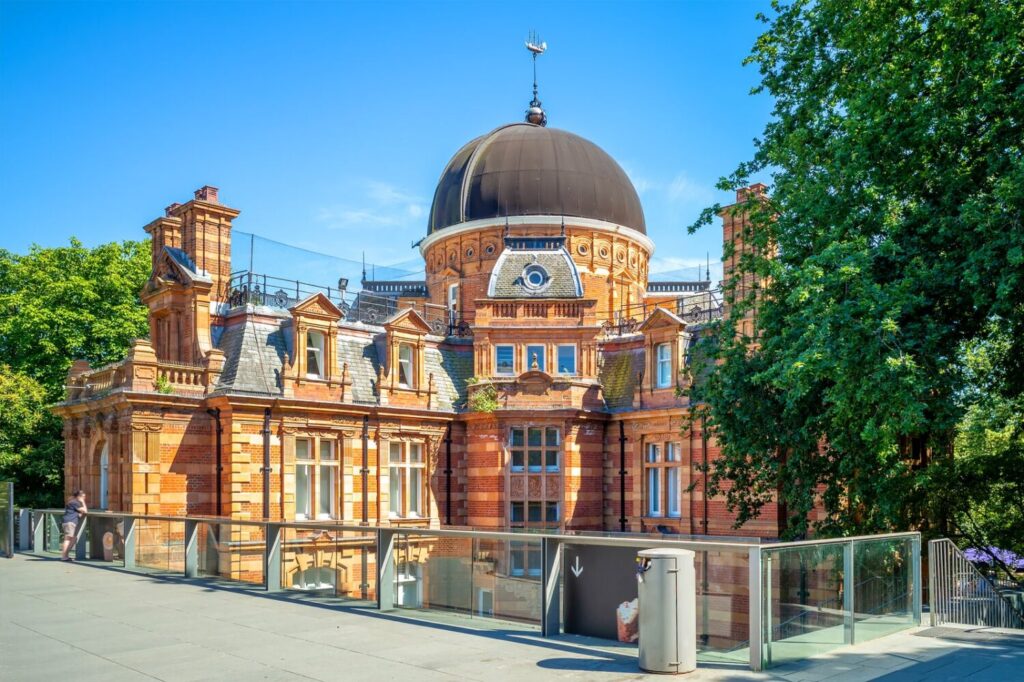
Standing at the Royal Observatory means stepping into the place where modern time and longitude took shape. This is not just a historic landmark, but a point that shaped how people measured and navigated the world. Greenwich is basically the place where the modern world was mapped, and this becomes clear as you explore the area.
King Charles II founded the Royal Observatory here in 1675 to improve navigation through astronomy. At a time when empires depended on maritime routes, solving the problem of longitude meant navigating oceans with precision. This is why Greenwich became a global reference point for science, exploration and navigation.
The Prime Meridian, marking 0° longitude, clearly indicated by a metal line, runs through the Observatory’s courtyard. Standing with one foot in each hemisphere is one of the most iconic experiences in London, but it also represents something much bigger. This line became the starting point for measuring longitude worldwide, placing Greenwich at the centre of the global coordinate system still used today.
Greenwich is also the origin of Greenwich Mean Time (GMT), the standard from which global time zones were historically calculated. Today, its successor, Coordinated Universal Time (UTC), is measured using atomic clocks, but for everyday purposes it is essentially the same as GMT.
On the Observatory walls, you can still see traditional units from the British Imperial system. Having grown up using the metric system, seeing them in person adds an unexpected layer to the visit. It offers a different perspective on how measurements were once standardised.
The Cutty Sark: The Fastest Tea Clipper of Its Time
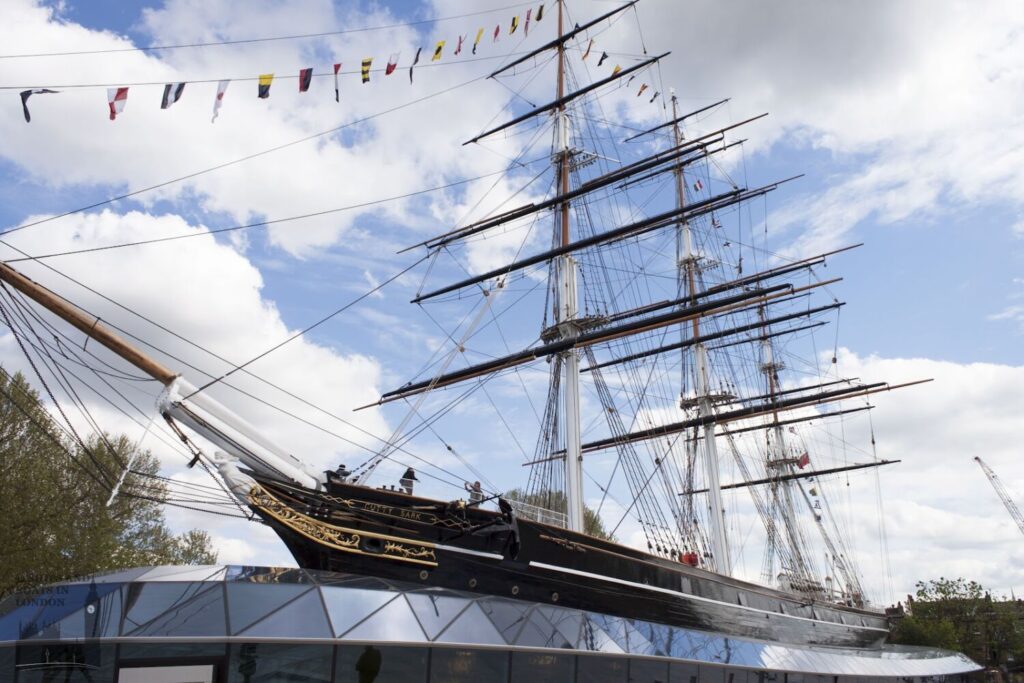
Exploring the Cutty Sark allows you to experience maritime history from inside one of the world’s most famous ships. Built in 1869, this British clipper was designed to transport tea from China to Britain as quickly as possible, competing in the famous tea races of the 19th century. Its design reflects the need for speed and efficiency, making it one of the most advanced ships of its time.
Instead of looking at exhibits behind glass, you move through the actual spaces where sailors lived and worked. You can learn about life on board, trade routes and the challenges faced by sailors during long journeys, while physically moving through the ship rather than simply reading about it. This hands-on approach makes the visit particularly interesting for families. For children, it is easy to engage with the space and imagine life at sea.
Although its working life was relatively short, the Cutty Sark remains an iconic symbol of Britain’s maritime heritage. Today, it is fully restored and open to the public as part of the Royal Museums Greenwich complex.
The Old Royal Naval College and the Painted Hall
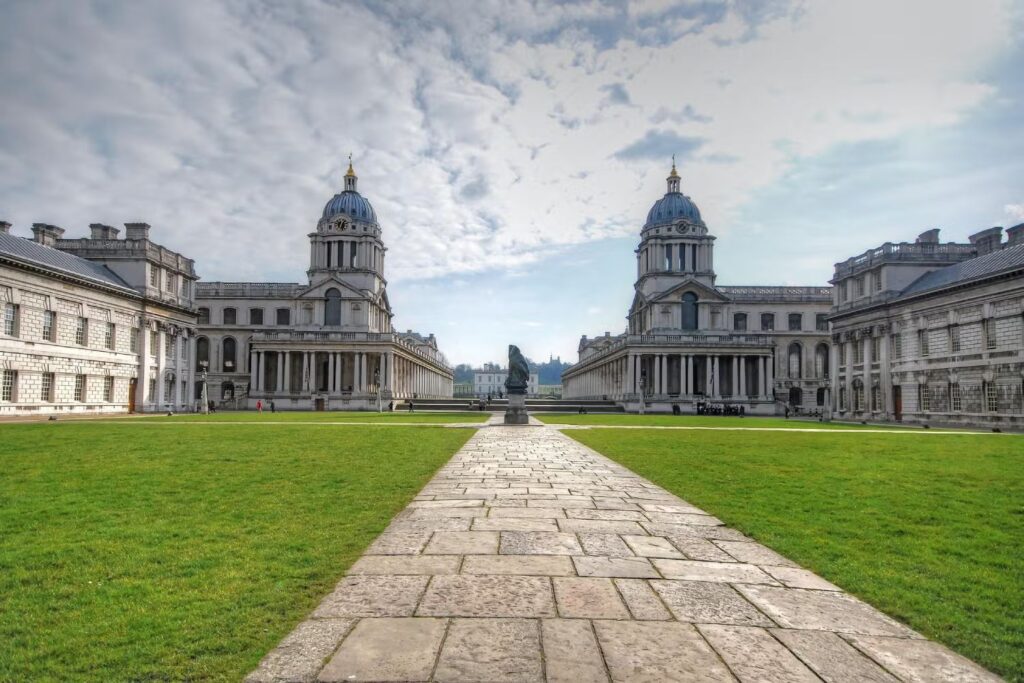
Visiting the Old Royal Naval College reveals one of London’s most impressive architectural settings along the Thames. Designed by Sir Christopher Wren in the late 17th century, this site was originally built as a hospital for retired sailors. Walking through the grounds, you immediately notice the symmetry and scale of the buildings, creating an imposing sense of order and grandeur.
The highlight of the complex is the Painted Hall, often described as the “Sistine Chapel of the UK”. As you step inside, the ceiling and walls reveal an extraordinary series of paintings celebrating British history, naval power and scientific progress. The combination of art and symbolism turns the visit into a visual journey through Britain’s maritime identity.
Beyond the Painted Hall, the entire area is worth exploring at a slower pace. The open courtyards, the riverside setting and the connection with nearby landmarks make this one of the most atmospheric parts of Greenwich.
Greenwich Market and the Historic Heart of the Old Town
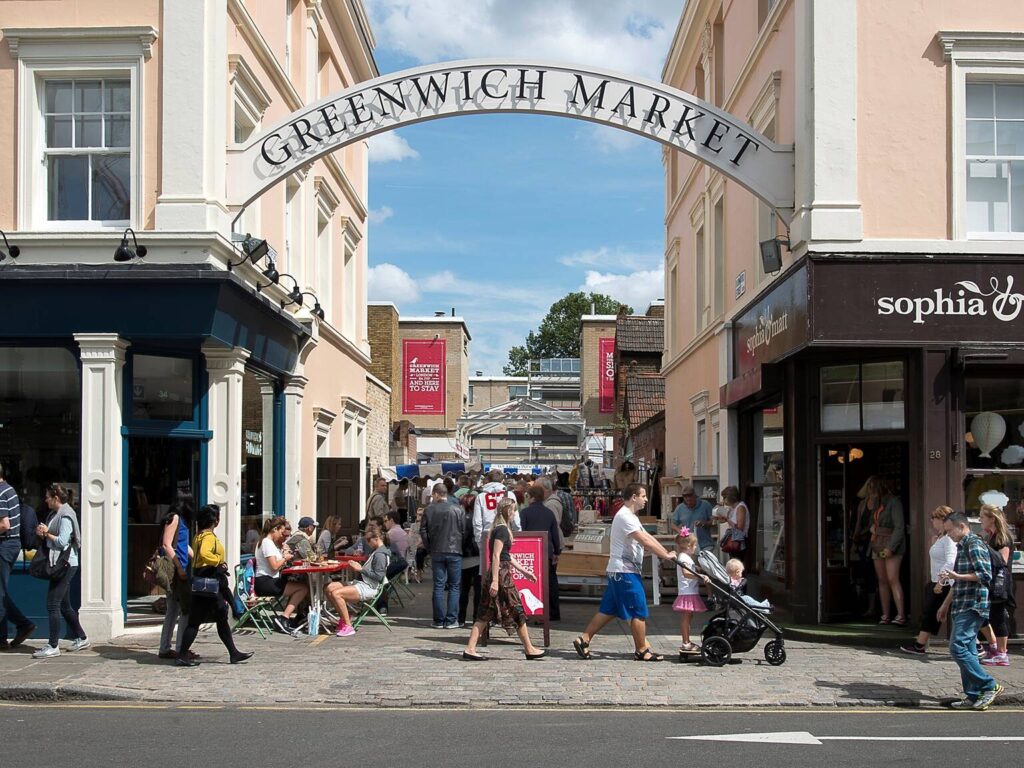
Outside the Maritime Greenwich World Heritage Site, you can experience a more local and lively side of the area. In contrast with its grand historic landmarks, around Greenwich Market, the atmosphere feels more informal and authentic. It is the perfect place if you enjoy discovering places beyond the main attractions.
Greenwich Market dates back to the 18th century and is still one of the most enjoyable markets in London. As you walk through it, you will find a combination of vintage items, handmade crafts and street food, the main reason I stopped here for lunch. It is worth spending some time here rather than just passing through.
Beyond the market, the heart of Greenwich’s historic centre offers more unusual attractions. One of the most curious is the Fan Museum, a small but unique museum dedicated entirely to fans, housed in an elegant Georgian building. Places like this offer a glimpse into the lesser-known cultural side of Greenwich.
Greenwich Park: Panoramic Views over London and the Thames
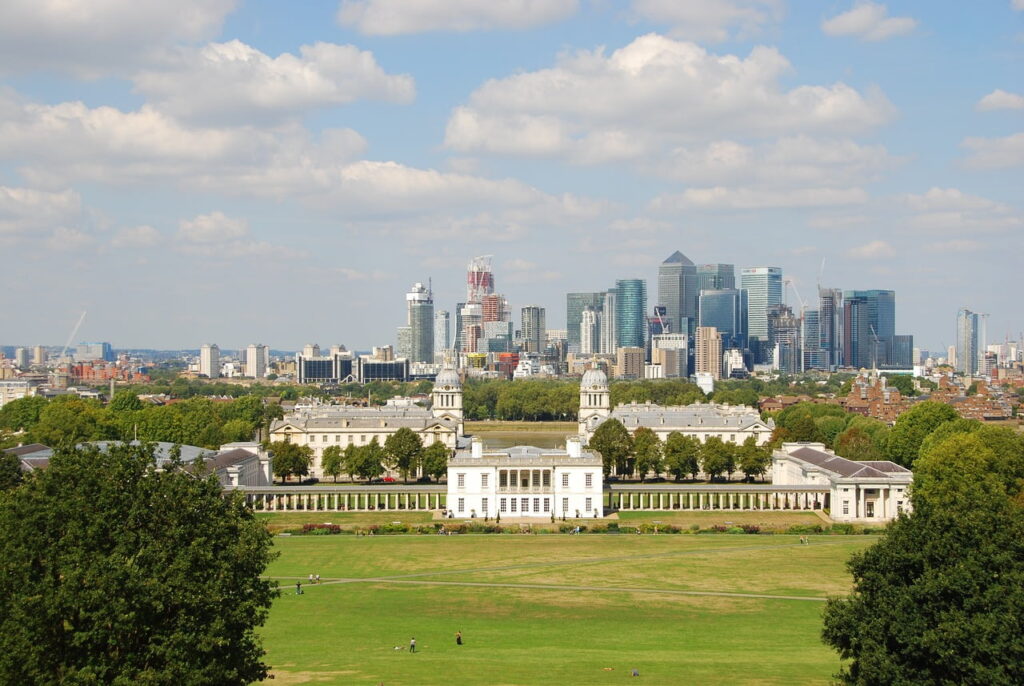
One of the best places to see London from above for free is Greenwich Park. From the top of the hill near the Royal Observatory, you can enjoy panoramic views over the city and the River Thames, with a clear contrast between historic Greenwich and the modern skyline of Canary Wharf.
The park’s hills and wide open spaces make it an ideal place to slow down after visiting the main attractions. Greenwich Park is also a great option if you are travelling with children. It is a great place to take a break and it offers plenty of space to move around. The atmosphere feels relaxed, particularly on sunny days when the park comes to life.
How to Get to Greenwich from Central London
Greenwich is one of the easiest day trips from central London, with fast and convenient transport links. Reaching the area by public transport is simple, and the journey itself can become part of the experience, especially if you choose a more scenic option.
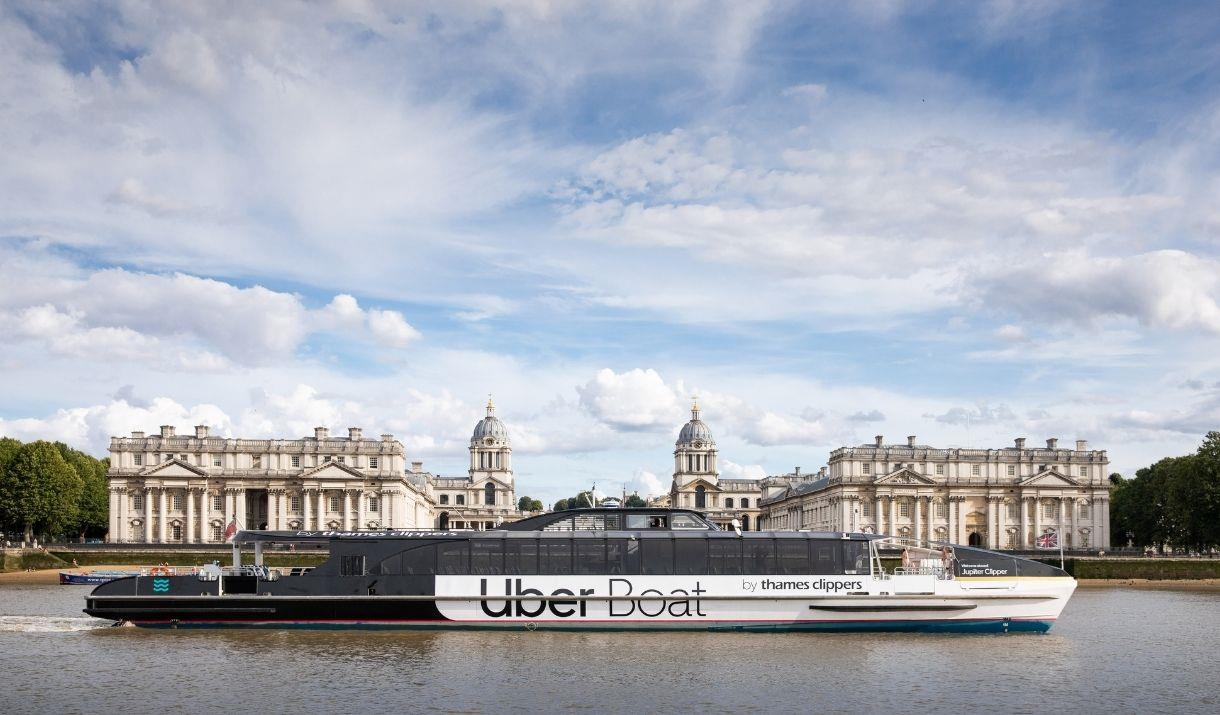
The most memorable way to get there is by taking the Uber Boat by Thames Clippers along the river. This is not just a means of transport but an experience in itself. Riding the Uber Boat offers amazing views of London’s landmarks from a different perspective as you travel towards Greenwich. It is a great option if you want to combine sightseeing with the journey.
Alternatively, you can take the DLR (Docklands Light Railway) or a train from London Bridge. Both of them take around 20 minutes and are often the fastest solutions. These options are more practical if you are short on time, while still making Greenwich an easy and convenient destination for a day trip from central London.
Tickets and Passes for Greenwich Attractions
If you plan to visit multiple attractions, it is worth checking combined tickets from Royal Museums Greenwich. It is a great deal as it includes access to both the Royal Observatory and the Cutty Sark. This can be more convenient and cost-effective than buying individual tickets.
With Royal Observatory, Cutty Sark, National Maritime Museum, and Queen’s House
Where to stay in London
London has a wide range of accommodation, from hostels to luxurious hotels, but it can be expensive. For a luxurious stay, I highly recommend the 5-star hotel Broadwick Soho, close to Piccadilly Circus, with refined and beautifully designed rooms, a terrace and a restaurant. A great choice is also the Hampton by Hilton London Waterloo, just a 5-minute walk from Waterloo train station and conveniently located near many popular attractions. Another option, if you are looking for a nice hotel with a limited budget, is the Assembly Covent Garden, a design hotel with well-decorated rooms and sculptures, ideal for those on a budget.
Final Thoughts on Visiting Greenwich
Greenwich offers a unique combination of history, science and open spaces, all within easy reach of central London. Spending a day here gives you a deeper understanding of Britain’s maritime past.
What makes Greenwich stand out is the contrast you experience throughout the day. After the intensity and crowds of central London, this area feels more open, with space to walk, sit and take in your surroundings. It is a place where history is not only visible but also easy to experience, whether you are standing on the Prime Meridian or relaxing in the park.
By the end of the visit, Greenwich feels less like a typical London attraction and more like a destination in its own right, offering a different perspective on the city.
