If you have ever travelled to Italy, you may have come across a bathroom fixture that raises curiosity, confusion, or quiet amusement: the bidet. For many visitors from the UK, the US, or Northern Europe, it looks unfamiliar and its purpose is not immediately obvious. For Italians, instead, the bidet is an everyday essential. Its absence can genuinely feel unsettling, almost as if the bathroom were incomplete. As an Italian born and raised, I will try to explain why we love it so much.
Table of Contents
Why the Bidet Is a Standard Feature in Italian Homes
In Italy, the bidet isn’t considered a luxury or a design choice. It’s a standard feature of residential bathrooms, whether the home is new or old, large or modest. Although France originally invented the bidet, Italy remains, to this day, the only country in the world where it can be found in virtually every home.
PLAN YOUR TRIP TO ITALY
Stay connected on the go with a Holafly eSIM, offering unlimited data at reliable 3G, 4G, and LTE speeds across Italy.
For added peace of mind during your travels, take out Heymondo travel insurance, perfect for a stress-free and well-protected adventure.
If you plan to explore beyond the main cities, renting a car is the best way to discover Italy’s hidden gems at your own pace.
Italian law has long required at least one bidet in private homes, as required by the Decreto Ministeriale of 5 July 1975. This legal framework has shaped everyday habits for decades, meaning that generations of Italians have grown up using a bidet from early childhood. As a result, Italians don’t perceive it as something special, luxurious, or bizarre. For us, it’s simply part of basic domestic infrastructure, on the same level as a toilet or a sink.
This legal and cultural normalisation explains why Italians are often genuinely surprised when they discover that bidets are rare, optional, or entirely absent in many other countries. The contrast is so striking that, not by coincidence, the most-read article on my Italian blog is about how to wash properly when travelling abroad without a bidet.
What Is a Bidet and How Does It Work in Italy
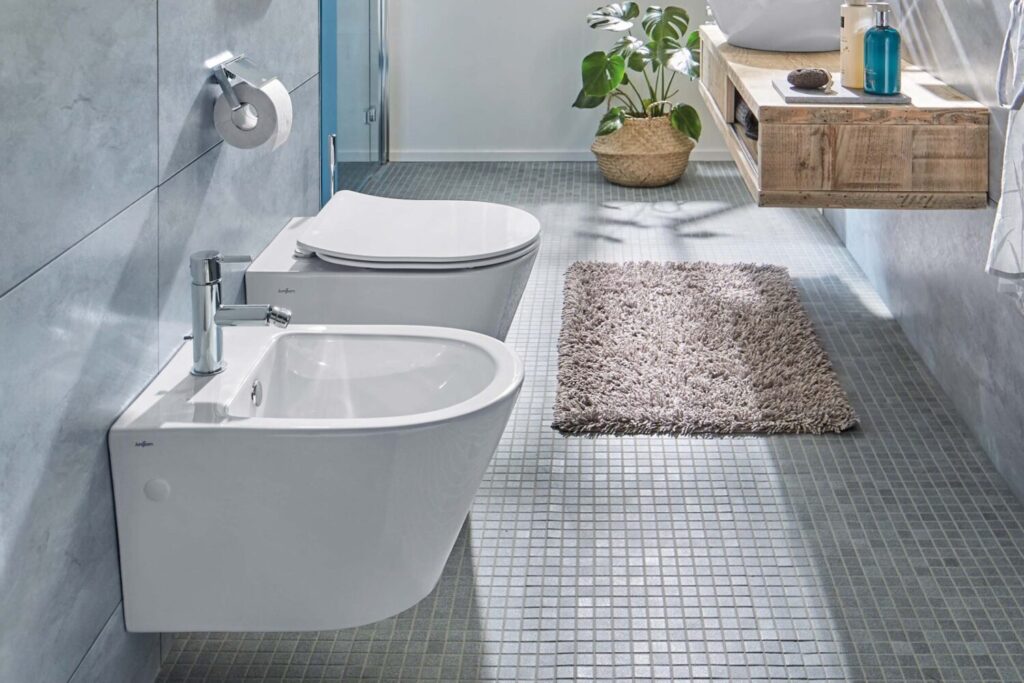
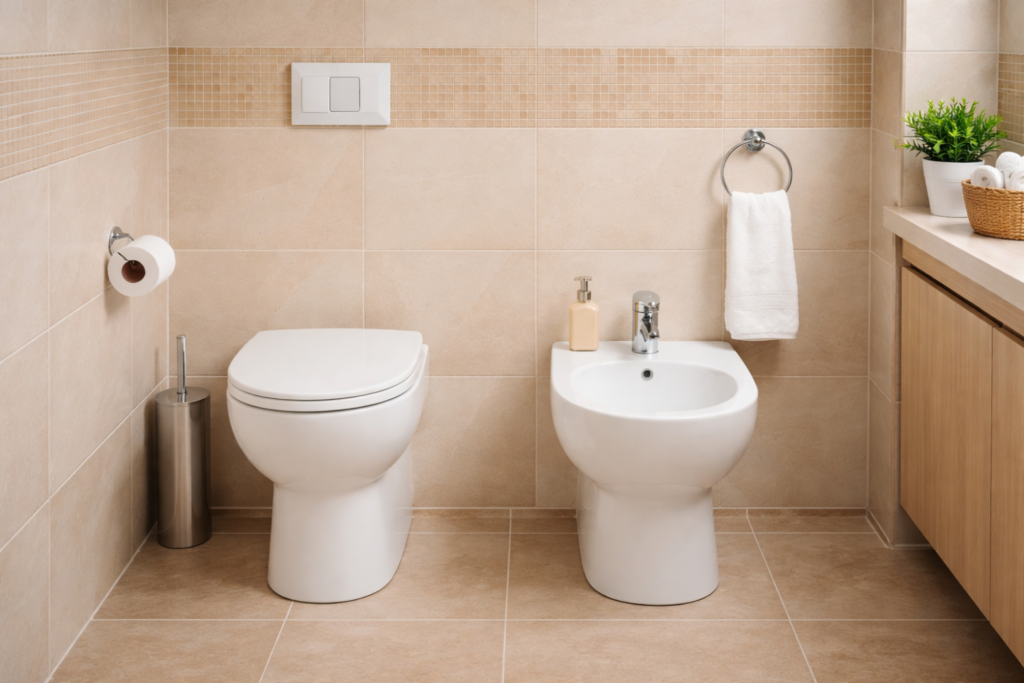
A bidet is a small basin located next to the toilet, designed to wash your intimate areas after using the toilet. In Italy, almost all bidets are standalone fixtures, completely separate from the toilet itself. It’s very rare to find a toilet with a built-in spray or handheld shower, like those commonly used in parts of Asia.
Instead of relying only on toilet paper, the bidet allows you to clean properly using water and, usually, a small amount of soap. In Italy, people see this approach as more hygienic and comfortable, and it’s the reason why Italians consider the bidet an essential part of everyday life at home.
One important thing to know, especially if you’re encountering a bidet for the first time: the bidet is not a toilet. You always use the toilet first, and only then move to the bidet to wash. Once you understand this simple sequence, the bidet stops being confusing and starts to make perfect sense.
The bidet is also not a foot bath. Of course, you can use it to wash your feet, but if you want an honest Italian opinion, needing to wash your feet in the bidet probably means it’s time to take a proper shower instead.
What Italians Use the Bidet For in Everyday Life
The primary function of the bidet is intimate hygiene using water. Italians strongly associate cleanliness with washing, not just wiping. Using water after the toilet is seen as more thorough, more comfortable, and more respectful of the body. After a bowel movement, Italians consider washing essential. Italians don’t view toilet paper alone as sufficient. It’s generally accepted only as a temporary solution when you’re out of the house or travelling.
The same logic applies even more strongly to women during their menstrual cycle. Many Italian women are genuinely surprised by the idea that it’s possible to feel properly clean without using a bidet. This perspective often feels self-evident to those who have grown up with one, which makes cultural differences around bathroom habits particularly striking.
Italian attachment to the bidet goes far beyond practicality. It reflects a broader cultural attitude towards personal care and physical comfort. Feeling clean isn’t framed as a luxury or a trend, but as a basic expectation of everyday life. This mindset helps explain why many Italians really struggle to adapt when travelling abroad: staying in accommodation without a bidet often feels like a temporary downgrade rather than a neutral difference.
How to Use a Bidet Properly in Italy
As an Italian, the bidet is part of my culture, and it’s something I’m genuinely proud of. Having lived abroad and shared homes with friends and flatmates from many different countries, I discovered with some surprise that the bidet is largely a mystery outside Italy.
I’ve already explained what it isn’t: it’s not a toilet and it’s not a foot bath. So I want to be very clear about how people actually use it. The basic steps are simple:
- Pull your clothing down or away so it doesn’t get wet.
- Sit on the bidet, facing the tap.
- Turn on the water and adjust the temperature.
- Use water and, if you like, a small amount of soap to clean your intimate areas.
- Dry off using your personal towel.
What Actually Happens When You Use a Bidet
At this point, it helps to look more closely at how a bidet is actually used in everyday Italian life. First of all, you sit on it without underwear. Your body should be facing the tap, so you can easily control the water temperature and pressure. There’s no real reason to worry about how clean the basin is. You’ll almost exclusively find bidets in private homes, not in public bathrooms, and they’re used only for personal hygiene.
Using a bidet is perfectly hygienic. You don’t need to be afraid of touching your intimate areas with your hands. Before using the bidet, wipe briefly with toilet paper, which always goes in the toilet, never in the bidet. If you’re concerned about hygiene, simply wash your hands with water and soap at the sink first.
You should never use a washcloth, sponge, or random small towel to clean yourself. In Italy, the small towel placed next to the bidet has a very specific purpose: it’s a personal towel used only to dry yourself after using the bidet. Each member of the household has their own. Using it incorrectly, or assuming it’s a general-purpose towel, is a guaranteed way to horrify your host.
To dry yourself, always use the cloth towel provided. Toilet paper isn’t used for this: it’s wasteful, it can tear, and it tends to stick to the skin. Think about how you wash your intimate areas in the shower, and simply replicate that process using the bidet.
Once you’ve done it a couple of times, it feels completely natural. For Italians, it’s just another everyday gesture of personal care, no more complicated than washing your hands.
Bidet Etiquette When Visiting Italian Friends or Family
In general, it’s best to use the bidet only at your own accommodation while travelling in Italy. If you’re invited to dinner at a friend’s, a cousin’s, or someone else’s home, don’t use it. In that situation, simply use toilet paper and wait until you’re back at your hotel or apartment to use your own bidet.
The reason is mainly about privacy and personal habits. In Italian homes, bidets are part of very intimate daily routines, and using someone else’s bidet, especially as a guest, can feel a bit too familiar. Saving your session for later avoids any potential awkwardness and keeps things comfortable for everyone involved.
Children and the Bidet: How Italian Kids Learn to Use It
Italian parents teach their children to use the bidet from a very young age, as it’s considered a normal part of daily hygiene. Small children usually need help getting onto the bidet and with washing, while older kids can manage on their own once they’ve learned to wipe first and use water properly.
In Italy, parents wash a baby’s bottom after every bowel movement. Parents often sit the baby on the edge of the bidet, holding them securely, gently wash the area with water, and then dry it with a cloth towel. It’s a routine that feels completely natural to Italian families.
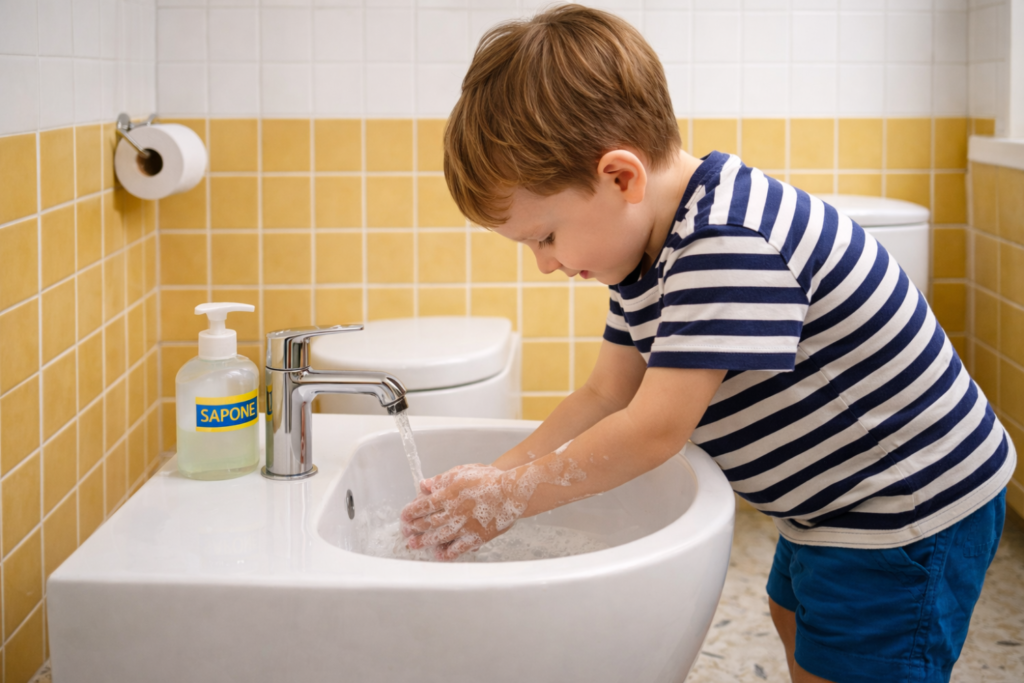
A small curiosity: in Italian homes with young children, kids often use the bidet as a kind of mini sink. Kids use it to wash their hands, clean up after playing, or generally learn basic hygiene in a way that’s both practical and perfectly sized for them.
Why Toilet Paper Alone Isn’t Enough for Italians
Italians consider toilet paper on its own often insufficient, especially when they want real freshness and cleanliness. Italians don’t see intimate wipes as a proper alternative either. Many people find them irritating for the skin, and a poor substitute for washing. Water and soap are far more effective, gentler on the body, and better for the environment.
The soap is also specific. In Italy, people don’t use a general soap to wash their bottoms, but detergente intimo, a dedicated intimate cleanser with a pH formulated for sensitive areas. Italians consider using a mild, appropriate soap part of proper bidet etiquette. This choice also explains why they find washing with water more comfortable and more respectful of the body.
From an Italian perspective, relying only on toilet paper can feel ineffective and, in some cases, slightly unhygienic. Italians see water as essential for proper cleaning after bodily functions. The logic is simple and often expressed quite bluntly: if you got dirty anywhere else on your body, you’d wash with water, not just wipe and hope for the best.
This way of thinking helps explain why Italians often feel genuinely baffled by resistance to bidets in other cultures. They usually don’t judge it; they simply feel honest confusion at the idea that something they consider basic at home can seem unnecessary elsewhere.
Why Italians Are So Attached to the Bidet
What may look like an obsession from the outside is, for Italians, a simple matter of habit reinforced by logic, culture, and regulation. The bidet answers a practical need in a way that feels natural once adopted. For those who grow up using one, giving it up rarely feels like progress.
For Italians living abroad, the bidet often becomes a symbol of home. Many actively look for apartments with a bidet or install one themselves if possible. Its presence represents familiarity, routine, and a certain idea of everyday comfort that goes beyond practicality. In this sense, the bidet is not just about hygiene. It is about feeling settled, grounded, and at ease in your own space.
Understanding the Italian bidet is a small but revealing insight into how daily life, cultural values, and the concept of comfort can differ across countries. If you’ve ever used a bidet while travelling in Italy, or if you’ve encountered one abroad and weren’t quite sure what to do with it, share your experience in the comments. Did you grow up with a bidet, try it for the first time in Italy, or avoid it altogether?
