
Vietnam is one of the places where I have eaten best in the world. From street food stalls to the most refined restaurants in major cities, the country offers an almost endless variety of flavours. What is truly remarkable is this: some of the best food hides in unlikely street food spots. You find it at simple stalls and tiny eateries with low plastic tables and stools. At the same time, many Vietnamese restaurants appear in the Michelin Guide, often at surprisingly affordable prices. In this article, I take you through cooking classes and street food tours to discover the aromas, ingredients and dishes you encounter along the journey.
Table of Contents
Flavours of Vietnamese Cuisine: Balance, Freshness and Identity
Vietnamese cuisine has a fresh, light character, thanks to the generous use of aromatic herbs that accompany almost every dish. You find coriander and mint virtually everywhere, alongside lesser-known herbs that are essential to balancing flavours.
PLAN YOUR TRIP TO VIETNAM – 5% discount on your eSIM and travel insurance
For getting around Vietnam with ease, choose a Holafly eSIM: you get unlimited internet, perfect for using Google Maps, Grab or other navigation apps, booking transport on the go, and sharing photos and videos in real time on WhatsApp without worrying about local SIM cards or extra charges.
For extra peace of mind, pair connectivity with Heymondo travel insurance, which covers you in case of medical emergencies, delays or cancellations. A practical solution that lets you focus on exploring Vietnam, rather than dealing with unexpected setbacks.
The search for balance is the core rule of Vietnamese cooking and what makes it so distinctive. Flavours change from North to South. Still, the aim remains the same: to harmonise sweet, salty, sour and spicy elements within a single dish.
Compared to other South-East Asian cuisines, Vietnamese food is not particularly spicy. There are exceptions in parts of central Vietnam, such as Hue, where chilli is used more assertively. Overall, however, flavours remain measured and restrained.
Cane sugar plays an important role, often caramelised in meat or fish stews slowly cooked with fish sauce. Sour notes then step in to counterbalance the sweetness, and they are fundamental to many preparations.
Every restaurant, from the most modest eatery to a Michelin-listed one, serves phở and soups with lime on the side, ready to be squeezed over the dish. Sharper ingredients like tamarind are instead used as a base for many sweet-and-sour recipes.
At the heart of Vietnamese flavour lies nước mắm, the fermented fish sauce found in every kitchen made by fermenting fish in salt for months. Just a couple of spoonfuls, often paired with chilli, are enough to add depth to soups and rolls, as I learned from a Vietnamese friend.
Eating in Vietnam: Street Food and Restaurants Compared
In Europe, street food often means a quick sandwich on the go. In Vietnam, people do not eat while walking. Vietnamese diners eat out, but always seated, even when it is just a simple street stall. Even the most informal setups come with low plastic tables and tiny stools set out on the pavement. They may look small to us, but they are widely appreciated by locals.
Plastic stools developed as an urban, economic and cultural response to fast, everyday eating. They suit a style of dining that is quick, shared and deeply embedded in daily life. Over time, they have become one of the most recognisable symbols of Vietnamese street food.
Today, plastic stools are as iconic as a steaming bowl of phở or a freshly filled bánh mì. Restaurants with higher tables and chairs are mainly found in tourist-oriented places or more elegant venues. If you want to eat really well, you need to go where Vietnamese people eat.
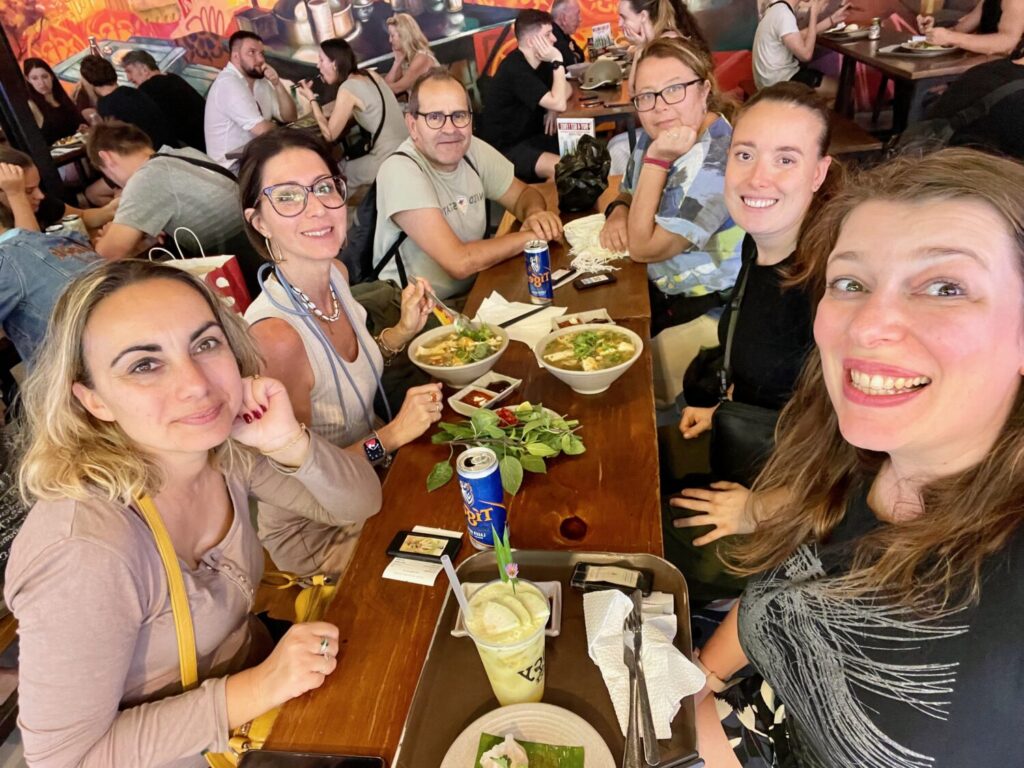
At first glance, though, it is not easy to tell which street stalls or restaurants are the best. In Vietnam it is genuinely hard to eat badly, but some places make your taste buds dance. If you do not have Vietnamese friends travelling with you, joining a street food tour is a great option. I took one in Hanoi during my trip to Vietnam with the Travel Blogger Italiane community.
Street food is usually meant for quick meals and individual portions, while the opposite often happens in more refined restaurants. Here, dishes are designed to be shared, and individual portions may not exist at all. You order plates for the whole table. So, if you are travelling in a group without a shared budget, the bill can feel confusing at first. However, in the end, the food is so good and so cheap that everyone tastes everything. The bill ends up being split evenly, and the issue solves itself.
Vietnamese Street Food: What to Eat to Understand the Country
Food in Vietnam is one of the things that will stay with you the most. Everything is delicious, incredibly fresh and remarkably affordable. For me, Vietnam is one of the places where you eat best in the world. The fact that individual dishes often cost between one and three euros makes it even more impressive.
Traditional food ranges from rice noodles served in broth to slow-cooked meat stews eaten with rice, as well as crispy baguettes filled with cold cuts and offal, a clear legacy of the colonial period reinterpreted in a Vietnamese way. It is an everyday cuisine, designed to be cooked and eaten daily.
Despite having travelled extensively across Asia, it is hard to find another country with such a wide variety of freshly prepared dishes cooked every single day. Every stall and open-air eatery hides flavours you can only find there.
Street stalls in Vietnam are open from morning until evening. As elsewhere in South-East Asia, there are unwritten rules and dishes tied to specific times of day. If something catches your eye, it is worth stopping straight away. You might not find it again later, or even in the same place, since it is often a recipe unique to that particular vendor.
Alongside food, tea is always present in Vietnam. It is offered as soon as you sit down, served in the simplest restaurants and in private homes alike. It never takes centre stage, but naturally accompanies meals and conversations. Vietnamese tea is light and only mildly aromatic, meant to quench your thirst rather than impress. Drinking tea together is a daily gesture of hospitality, a quiet form of conviviality that needs no ceremony.
Why Joining a Street Food Tour in Vietnam Is Worth It
The best way to taste as many dishes as possible is to join a street food tour. My group sampled countless dishes and local craft beer. We moved from open-air eateries to stalls known only to locals, following a route that would be hard to recreate independently.
Thanks to our guide Lan from Travel Sense Asia, we discovered truly unique dishes, some of which are almost impossible to order unless you already know them. Among these were raw noodles, small squares of folded and fried rice noodles served with meat and vegetables. Another highlight was steam rice cake, crêpes made from fresh rice sheets cooked on a small street stove, then rolled like spring rolls and filled with mushrooms.
At the same time, we learned how to enjoy fresh spring rolls the Vietnamese way: dipped into fish sauce mixed with papaya, lime and chillies. To complete the experience, we also tasted a classic bánh mì and a local craft beer, drunk in a place that was clearly not designed for tourists.
The street food tour experience is genuinely unique and, for me, something you should absolutely do when travelling in Vietnam. Repeating it in different cities also allows you to discover how flavours and dishes change from one region to another.
Cooking Classes in Vietnam: Learning Local Cuisine While You Travel
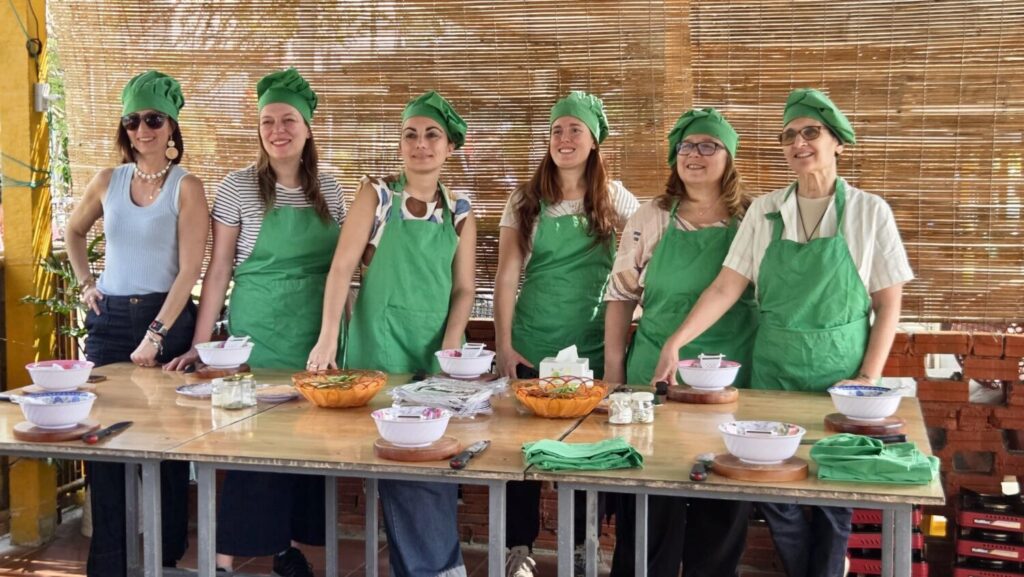
To learn how to cook a few Vietnamese dishes you can recreate at home, joining a cooking class is the most enjoyable option. Boutique hotels and local restaurants run classes across the country. Cooking classes help you understand ingredients, techniques and flavour combinations in a very practical way.
I joined a class in Cam Thanh, near Hoi An in central Vietnam, and found it engaging and genuinely fun. If you do not have Vietnamese friends inviting you into their homes, a cooking class is the best way to experience everyday home cooking and learn the basics of Vietnamese cuisine.
Iconic Dishes of Vietnam: Everyday Food That Defines the Country
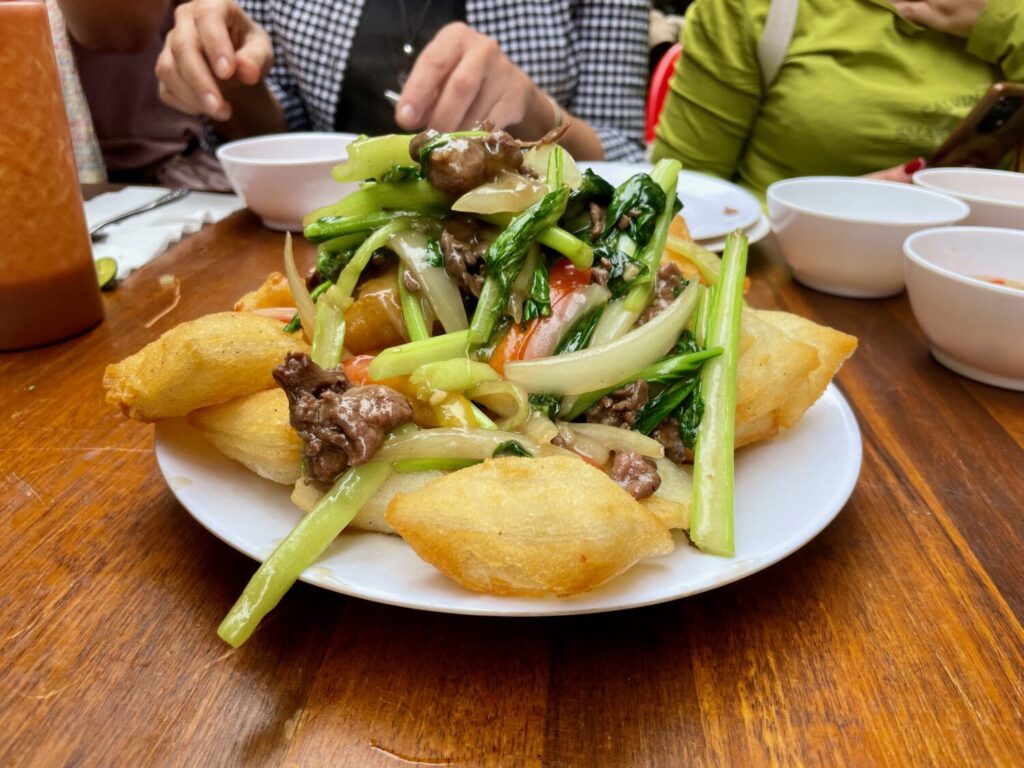
You discover Vietnamese cuisine one dish at a time, without a strict divide between street food and restaurants. Steaming noodle soups like phở, white or broken rice served with meat and sauces, fresh or fried rice-paper rolls, filled baguettes such as bánh mì, and steamed rice-flour dishes all belong to everyday life.
Each recipe shifts slightly from one region to another. Yet it follows the same core idea: balanced flavours, fresh ingredients and dishes prepared daily, often right in front of you. Eating this food at small stalls and family-run eateries, seated on plastic stools, is the best way to truly understand and enjoy Vietnam.
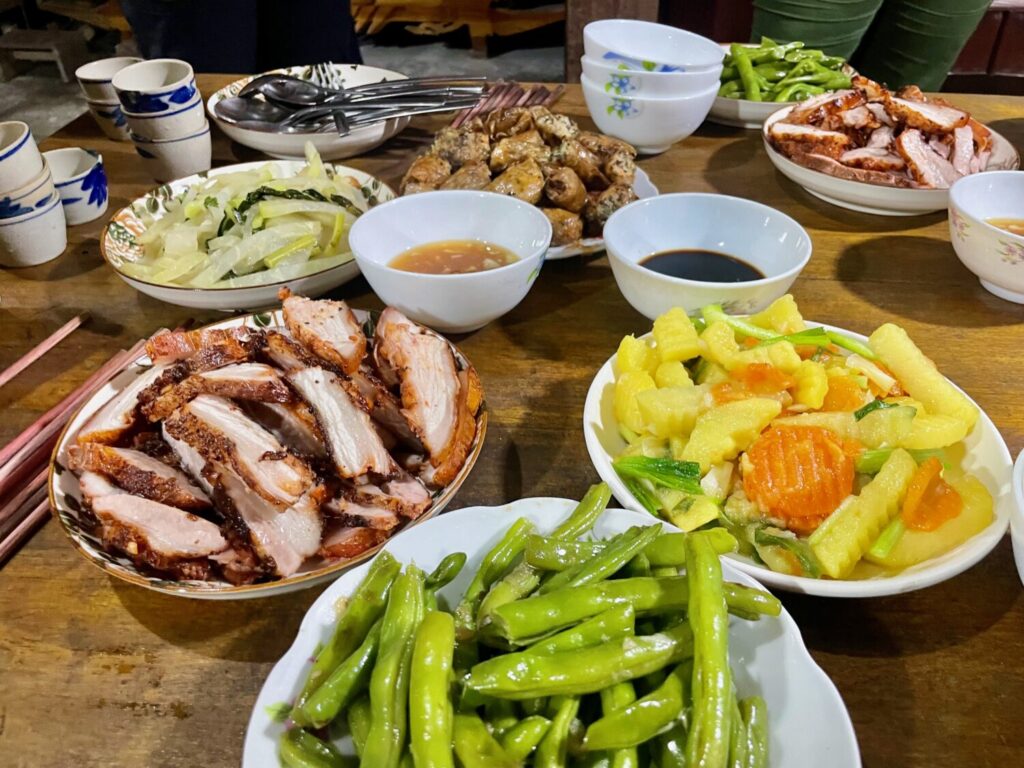
If you get the chance to eat in a Vietnamese home, the experience becomes even more meaningful. I experienced this both during homestay stays in Vietnam and on another trip, at the home of a Vietnamese friend’s family.
Sitting down to a family meal means stepping into everyday life. Dishes arrive together, placed in the centre of the table and shared, with no fixed order. Home cooking is simple yet thoughtful, built around rice, vegetables, soups and carefully prepared dishes meant to be eaten together. In Vietnam, food is deeply tied to conviviality. In these moments you realise eating is not just about nourishment, but about connection and hospitality.
Phở: Vietnam’s Most Iconic Noodle Soup
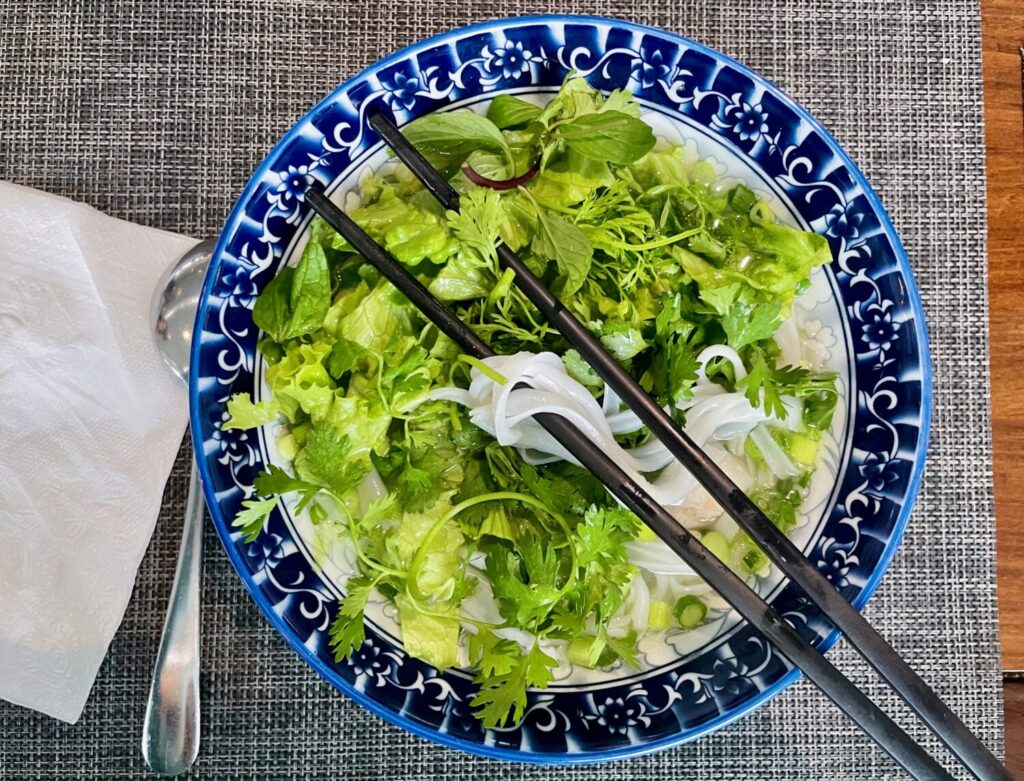
Phở is the traditional Vietnamese noodle soup made with rice noodles. People usually eat it in the morning, often for breakfast. A good phở starts with a carefully prepared broth, simmered for hours with beef or chicken bones, spices, ginger and onion.
Cooks serve the rice noodles in the broth with thin slices of meat. They add fresh herbs and bean sprouts just before bringing the bowl to the table. You then finish it yourself, with chilli to taste and a squeeze of lime.
I love phở and have eaten it for breakfast many times whenever I found it. Tasting it at a stall filled with local customers, sitting on a low plastic stool, lets you experience its most authentic side. Even so, phở served at breakfast in boutique hotels is still worth trying.
Each region offers its own version. In northern Vietnam, beef broth is the most common, while in the South, pork appears more often. Lastly, in central Vietnam, I even tried phở with liver and fish balls. That is why it is worth ordering it wherever you go, as every bowl keeps its own balance of flavours.
One reliable place to try well-made phở is Phở Cuốn Hương Mai, a small Vietnamese chain with several locations in Hanoi. Do not expect a European-style franchise. Despite multiple branches, it keeps the look and feel of a classic local restaurant. Besides phở, you can also enjoy excellent rice rolls and other traditional dishes from northern Vietnam.
Rice in Vietnamese Cuisine: White, Fried and Everyday Staples
Rice, often paired with chicken, fish or duck, is another cornerstone of Vietnamese cuisine. You find it everywhere, at any time of day. Cooks serve it white, broken, glutinous, or even as a rice porridge, adapting it to different meals and moments.
It usually forms the base around which sauces, meat, eggs and herbs come together. Plain white rice appears at every family meal and in restaurants, alongside meat or fish in sauce, much like bread in Italy.
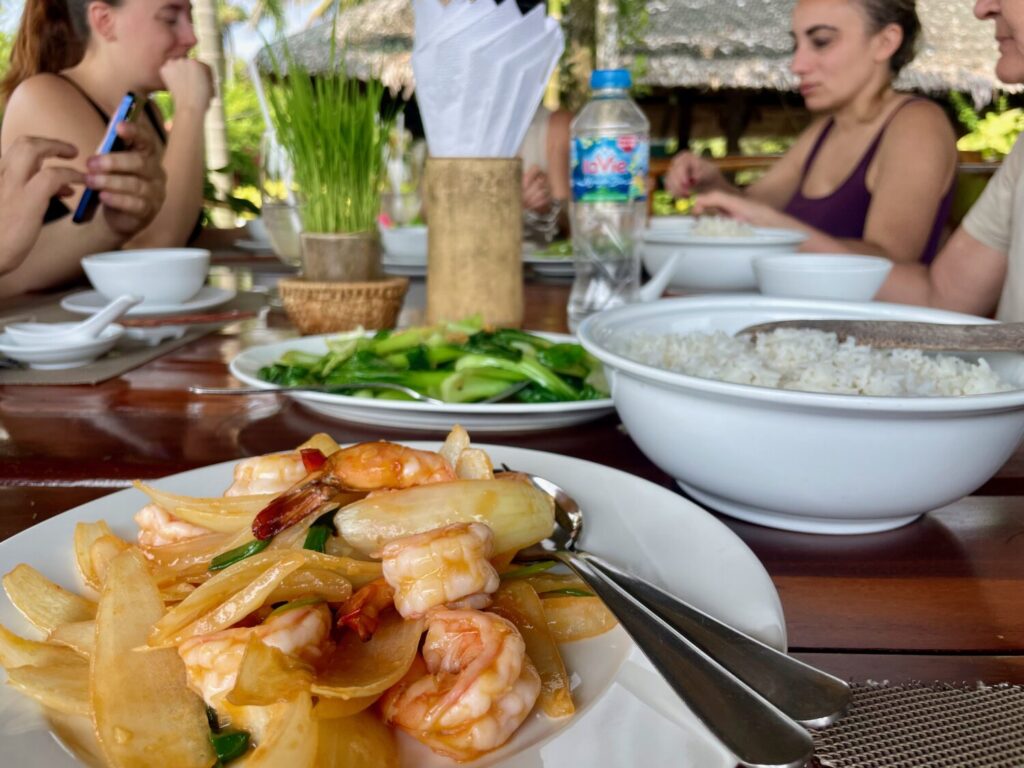
At street food spots, rice often turns into fried rice, quickly stir-fried with eggs, vegetables, meat or prawns. It is practical, filling and extremely common, ideal for a quick yet satisfying meal.
Rice Paper Spring Rolls: Fresh and Fried Variations
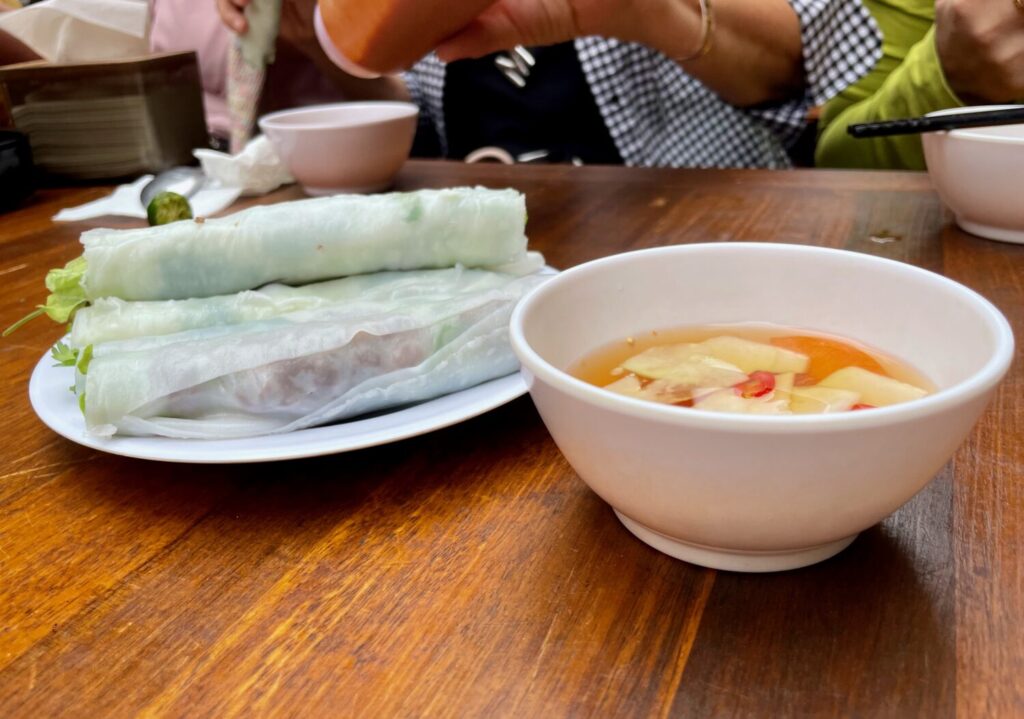
One of the most surprising dishes in Vietnamese cuisine is rice paper spring rolls, which in Vietnam come in both fresh and deep-fried versions. Cooks wrap fish or meat in softened rice paper sheets, together with aromatic herbs and lettuce. Depending on the preparation, they serve the rolls either fresh or deep-fried.
Whether fresh or deep-fried, you always eat spring rolls dipped in fish sauce, flavoured with chilli, lime, sugar or papaya depending on the region. As with phở, countless regional variations exist, and every place offers a slightly different version. That is why they are worth trying everywhere.
In southern Vietnam, spring rolls often come filled with prawns, pork, rice noodles and herbs such as coriander and mint, which makes them especially fresh and light. I first tasted them in Ho Chi Minh City, at the home of a Vietnamese friend’s family, filled with prawns and vegetables. During a street food tour in Hanoi, I tried a different version with carrots and beef.
In the South, fried spring rolls sometimes use a woven rice paper rather than a single smooth sheet. This type stays softer after frying and gives the rolls a richer texture. Whatever the filling or the style, spring rolls remain one of the dishes I recommend trying at every stop on a journey through Vietnam.
Bánh Mì: The French Baguette, Reimagined in Vietnam
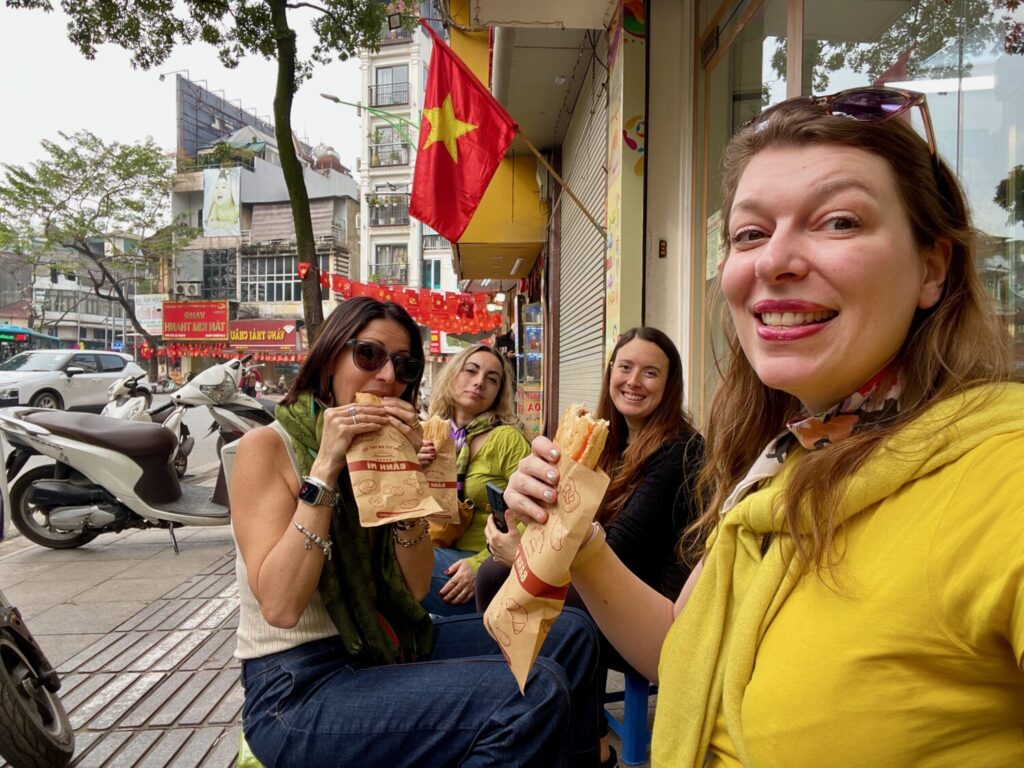
Bread in Vietnam is a French legacy. The term bánh mì refers to crispy baguettes filled with meat and vegetables. Each stall follows its own method, often passed down within the family. That is why you find bánh mì with chicken, beef, pork, fish, and also vegetarian versions.
Bánh mì stalls stay open all day, but you should not think of them as simple sandwiches. What makes bánh mì special is the way it combines a perfectly crisp French baguette with distinctly Vietnamese flavours, built around sauces, herbs and bold fillings.
To give you a concrete example, during a street food tour in Hanoi I stopped at Bánh Mì Như Hoa. I tried a bánh mì filled with an unidentified meat pâté, vegetables and offal cold cuts. The filling made my travel companions hesitate, but it turned out to be surprisingly good.
By contrast, a bánh mì I tasted in Da Nang had a much more European feel, filled only with omelette and vegetables. These two experiences show how much this sandwich changes from city to city, while remaining one of the most recognisable symbols of Vietnamese cuisine.
Steamed Rice Cake: Delicate Vietnamese Rice Crêpes
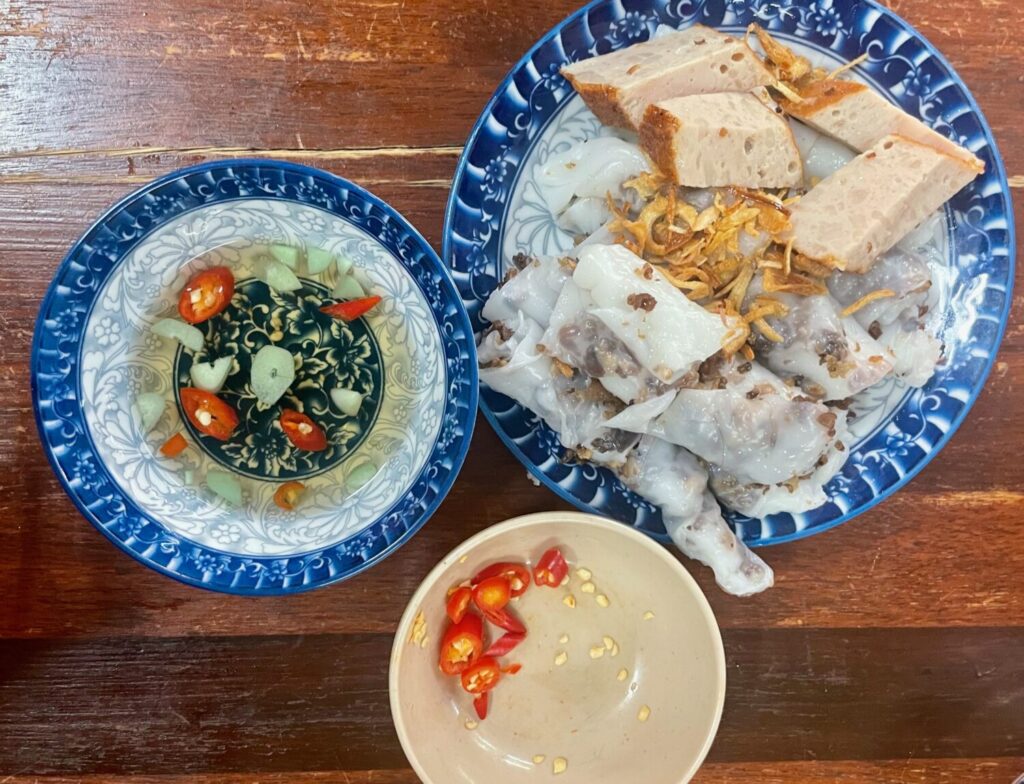
One of the dishes that surprised me the most, which I discovered thanks to a street food tour in Hanoi, was the steam rice cake from Bánh Cuốn Gia Truyền. This dish consists of a thin rice-flour crêpe, steamed, rolled like a spring roll and then cut into small pieces.
You usually find it filled with mushrooms or beef. I tried the mushroom version, which also works well for vegetarians and vegans, and I loved it. Just before eating, the pieces are dipped into fish sauce mixed with vinegar, garlic, chilli and lime, in the same way you eat spring rolls.
The woman who prepared them cooked over a small burner by the side of the road and was a true kitchen artist. I watched her, completely fascinated. Recreating a rice crêpe this thin and precise at home feels almost impossible, unless you are an experienced chef or willing to practise again and again.
Bia Hơi: Vietnam’s Traditional Draft Beer
Bia hơi is the Vietnamese craft beer you encounter most often, known for being light, refreshing and easy to drink. It has a low alcohol content and belongs mainly to northern Vietnam. This simple lager usually sits around 2–3% ABV, is unpasteurised and must be consumed within 24 hours of production.
This short lifespan sets bia hơi apart from any industrial beer. Local breweries produce it daily, deliver it every morning to bars and shops, and people drink it the same day. Many Vietnamese buy it in bulk and take it home, treating it like an everyday drink rather than a special occasion beer.
I had read about bia hơi in my Lonely Planet guide and was curious to try it. Still, most of the beer places I saw around Vietnam looked very tourist-oriented. I was not sure I would actually taste the real Vietnamese draft beer.
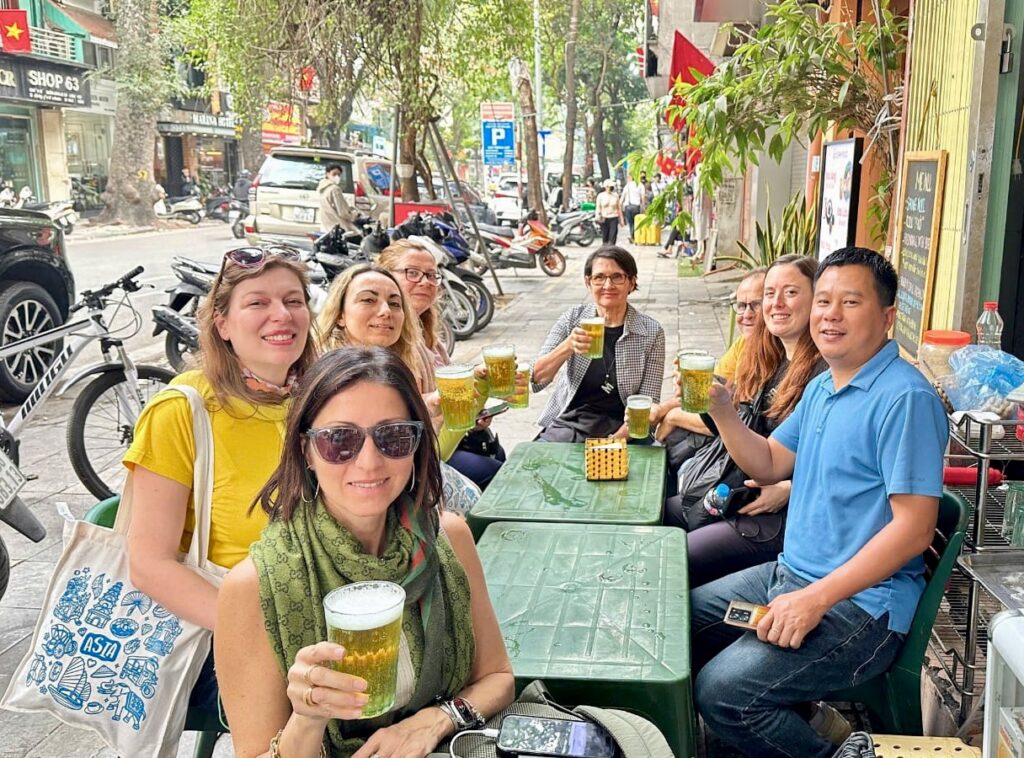
Luckily, our street food tour guide took us to the right place. We ended up at a spot that looked more like a garage or a small shop than a bar, even though Google Maps listed it as Hanoi Draftbeer & Traditional Food.
The beer sat hidden in a keg inside a fridge, with the glasses kept out of sight in the back. We sat down on the low tables, and only then did the owner bring out the glasses and start pouring. Meanwhile, regulars arrived on motorbikes, stopped outside and had bottles filled to take home.
The experience felt unique and very local. The bia hơi tasted exactly as I imagined it: very fresh, extremely light and perfect to drink while sitting on a low stool, watching everyday life unfold around you.
Michelin-Starred Restaurants in Vietnam: When Street Food Rivals Fine Dining
In Vietnam, as in many other South-East Asian countries, you can find Michelin-starred restaurants at surprisingly low prices. This mainly depends on economic and cultural factors. Ingredients, rents and labour costs far less than in Europe, which allows chefs to keep high standards while offering accessible prices.
You should keep in mind, though, that in Vietnam the Michelin Guide focuses primarily on consistency and flavour, rather than on the overall dining experience as it is understood in Europe. The award centres first and foremost on what arrives on the plate.
In many Vietnamese Michelin-starred restaurants, service does not follow the European model of detailed explanations, constant attention and carefully paced courses. The approach feels more essential and practical, in line with a food culture where the dish itself remains the true star.
A Michelin-Starred Meal in Hanoi and a Surprising Alternative in Ha Long Bay
Among my food experiences in Hanoi, I tried the Michelin-starred cuisine at Tầm Vị, a restaurant that became popular on social media for being considered one of the most affordable Michelin-starred places in the world. In this case, though, the experience did not excite me, even though I had already eaten at Michelin-starred restaurants in both Europe and Asia.
For me, the real level of Vietnamese cuisine lives on the street. Food feels alive there, with bold aromas and intense flavours, served naturally and often with a smile. Street food delivers an energy and authenticity that I felt far less inside a formal dining room.
If you are looking for a high-end experience in a more European style, but still at Vietnamese prices, I recommend the dinner with show at the Sacred Pearl Cave in Ha Long. Even without a Michelin mention, you can enjoy beautifully executed dishes of excellent quality, paired with service that clearly exceeds expectations.
Regional Vietnamese Cuisine: North, Central and South
Vietnamese cuisine also mirrors the country’s geography and history. A wide range of natural landscapes, from highlands to rice paddies, from mountains to coastlines, shapes the dishes and ingredients used every day.
This geographic richness blends with a long history of influences. Some remain subtle, such as the use of soy sauce in certain northern dishes. Others appear more clearly, like French influences in the baguettes that form the base of bánh mì.
As you travel and eat, you realise that food is not just about flavour. It offers a direct way to understand how Vietnam absorbed outside influences while preserving its own identity.
Northern cuisine shows the Chinese heritage most clearly, shaped by centuries of wars and invasions. Soy sauce sits alongside nước mắm. Vinegar often replaces lime or tamarind. Chilli gives way to black pepper, and cooking times tend to be longer than in the south.
Moving into central Vietnam, the imperial cuisine of Hue left a legacy of delicate dishes, small portions and great attention to presentation. At the same time, many street food stalls and family-run eateries surprise you with a noticeably spicier edge.
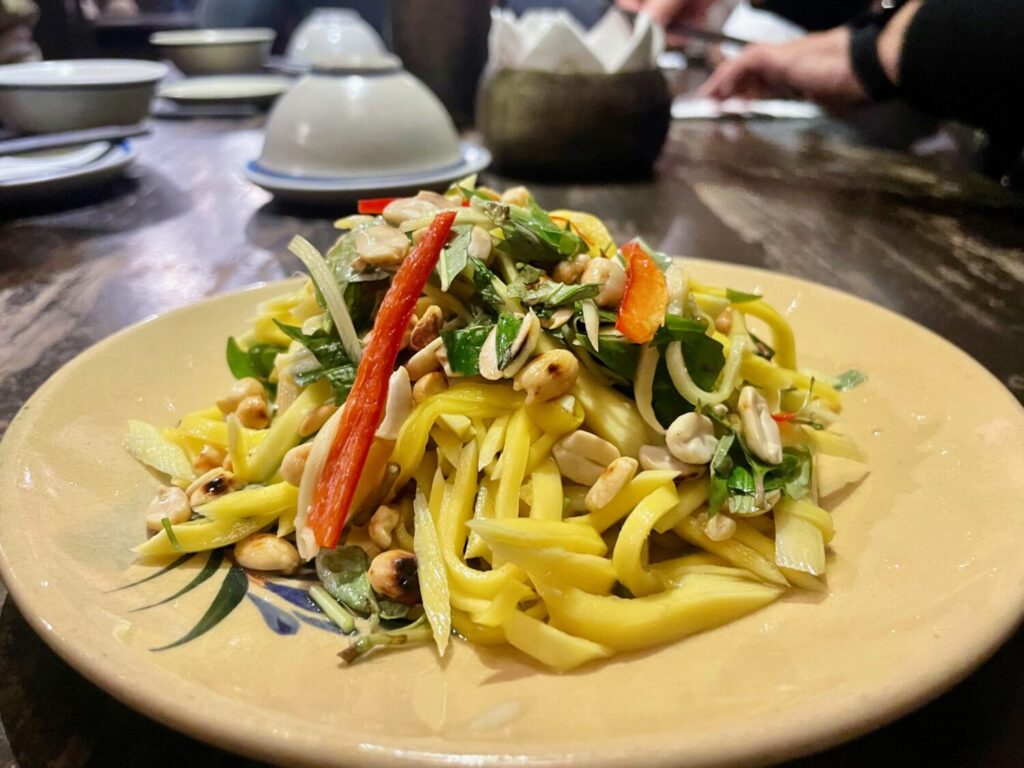
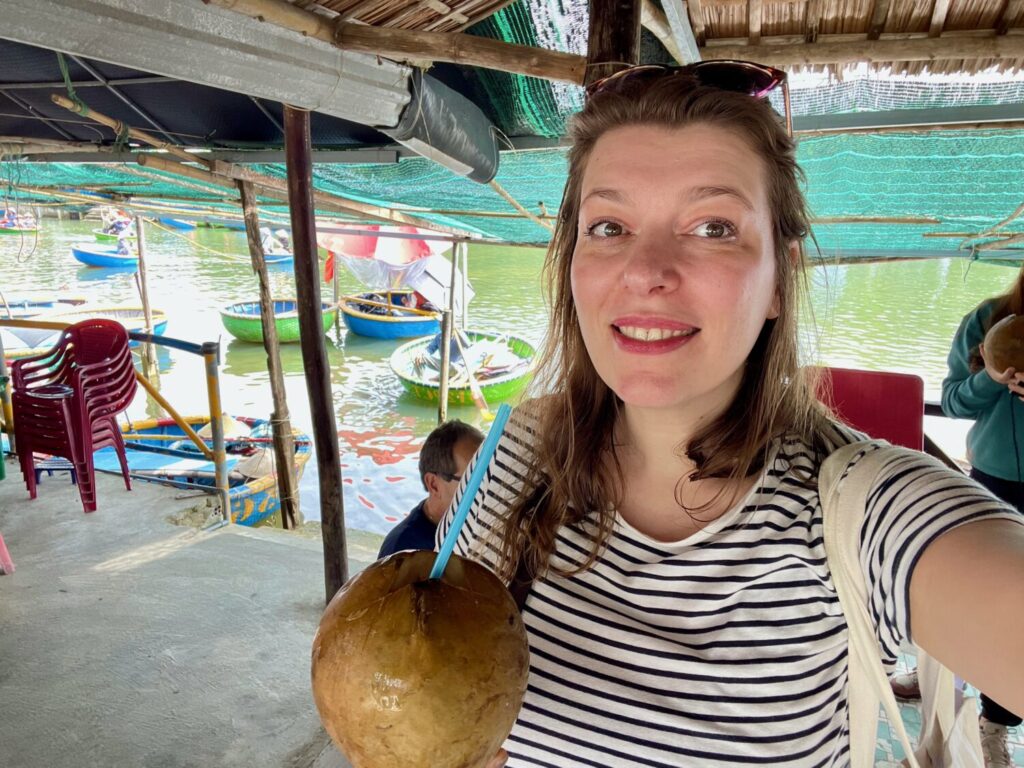
In southern Vietnam, flavours grow bolder and more generous. They reflect the trading history of the Mekong Delta, shaped by local ingredients and foreign influences. Markets overflow with fresh fish, broad-leaf vegetables and fruit in every colour. You move from sugarcane juice to drinking coconut water straight from the fruit, while salads celebrate fresh fruit and herbs in a convivial cuisine made to be shared.
Why Vietnamese Cuisine Tells the Country’s Story Better Than Any Itinerary
Vietnamese cuisine has been one of the main reasons that brought me back to Vietnam, even more than iconic landmarks or classic routes. Eating becomes a daily act that puts you in direct contact with the country, whether you are sitting on a low plastic stool or at a carefully set table.
Every dish tells a story of habits, seasons, influences and gestures repeated over generations. Through food, you understand the country from the inside, without filters. As you travel and eat, you realise that cuisine is one of the most immediate ways to read Vietnam’s history and identity, far more effectively than any guidebook.
If travelling in Vietnam means travelling through food for you too, share in the comments which dishes you would like to try, what you think about street food and Michelin-starred restaurants, and whether you would plan a journey driven entirely by taste.
