
At Skanzen Szentendre, the Hungarian Etnographic Open Air Museum, just 25 kilometres north of Budapest in the heart of the Danube Bend, you can step into everyday life in Hungary’s villages and farming towns from 100 to 200 years ago. This vast open-air museum is one of the country’s most engaging cultural attractions. In only a few hours, you can travel across the whole of Hungary, moving between landscape units that feel like real villages, complete with houses, gardens, fences, workshops and community buildings, each rooted in a specific region and historical period.
Table of Contents
What Is a Skansen? How Open-Air Ethnographic Museums Preserve Rural Life
The word skansen may sound unfamiliar if your first language is British English, French, Italian or Spanish. It is, however, widely used in Central and Eastern Europe. Many Americans also recognise the term through open-air museums in the United States.
PLAN YOUR TRIP TO HUNGARY
For a road trip in Hungary, choose a Holafly eSIM: you will have unlimited internet to use Google Maps or any other GPS app, and you can share photos and videos in real time on WhatsApp and social media without any worries.
To travel with complete peace of mind, don’t forget to also take out Heymondo travel insurance, which protects you from unexpected events and ensures a worry-free holiday.
A skansen is an open-air ethnographic museum made up of historic buildings displayed in their natural setting, such as the Ulster Folk Museum in Northern Ireland. These buildings are usually relocated from different regions of a country. Together, they recreate villages, farms and small towns from the past.
The term comes from Skansen in Stockholm, founded in 1891. It was created to show everyday life in Sweden before industrialisation. This museum became the model for many similar institutions across Europe and beyond. That is why Hungary’s open-air museum is called Skanzen Szentendre. The spelling is different, but the pronunciation is the same.
Open-air ethnographic museums appeared at the end of the 19th century for scientific reasons. Ethnography and museology were emerging as independent academic disciplines, and scholars needed new ways to study and present rural culture. Traditional indoor museums were no longer sufficient to explain how everyday life actually worked.
At the same time, Europe was changing rapidly. Industrialisation and urban growth reshaped both cities and countryside, while traditional rural buildings began to disappear from the landscape. Relocating endangered houses, workshops, and farm structures to open-air museums became a practical and effective solution.
Skansens therefore serve a clear double purpose. They protect architectural heritage and help explain historical ways of life in their original context. Walking through them feels closer to travelling across regions than visiting a conventional museum, allowing visitors to experience history as a lived environment rather than a static display.
What to See at Skanzen Szentendre: Villages, Traditions and Everyday Life
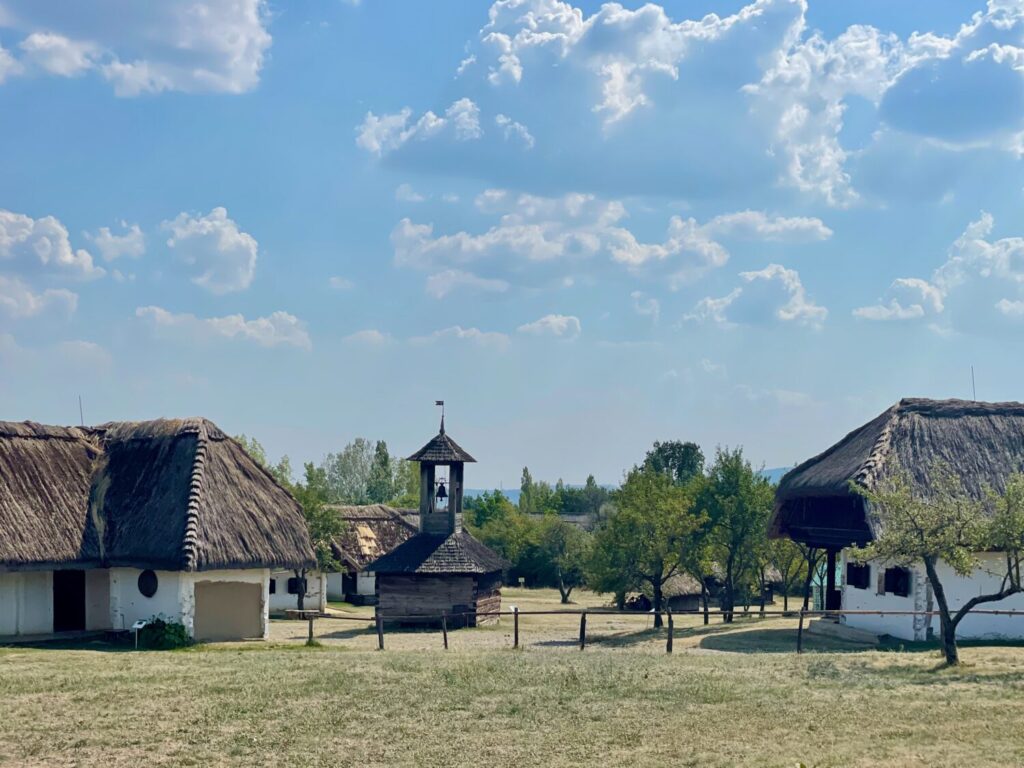
At Skanzen Szentendre, Hungarian ethnographers carefully selected historic buildings from across the country and relocated them here, one by one. The result is a permanent display made up of nine landscape units, each representing a different Hungarian region:
- Northern Hungary
- Upland market town
- Upper-Tisza Region
- Market town of the Great Hungarian Plain
- Southern Transdanubia
- Bakony-Balaton Uplands
- Western-Transdanubia
- Little Hungarian Plain
- Transylvanian building complex
As you walk through the museum, you quickly realise how diverse Hungary has always been. Religion, architecture and daily life varied widely between regions, with strong Lutheran and Calvinist areas alongside Catholic communities, such as the Matyó.
Clear information panels in front of each building explain what it was, when it was built and who lived or worked there, which makes a real difference. I loved discovering that a simple farmhouse turned out to be a blue-dyeing workshop because, in one of my previous trips, I visited the Goldberger Textile Industry Collection in Budapest, dedicated to this traditional printing technique.
A Walk Through Hungary’s Rural Regions, From Farmsteads to Market Towns
The regional sections of Skanzen Szentendre each represent a different part of Hungary. They show not only architecture, but also farming methods, traditions and everyday life. Everything sits inside a vast park, so you’ll move through green spaces on foot, by bike or on the museum railway. We felt like moving for real from one village to another.
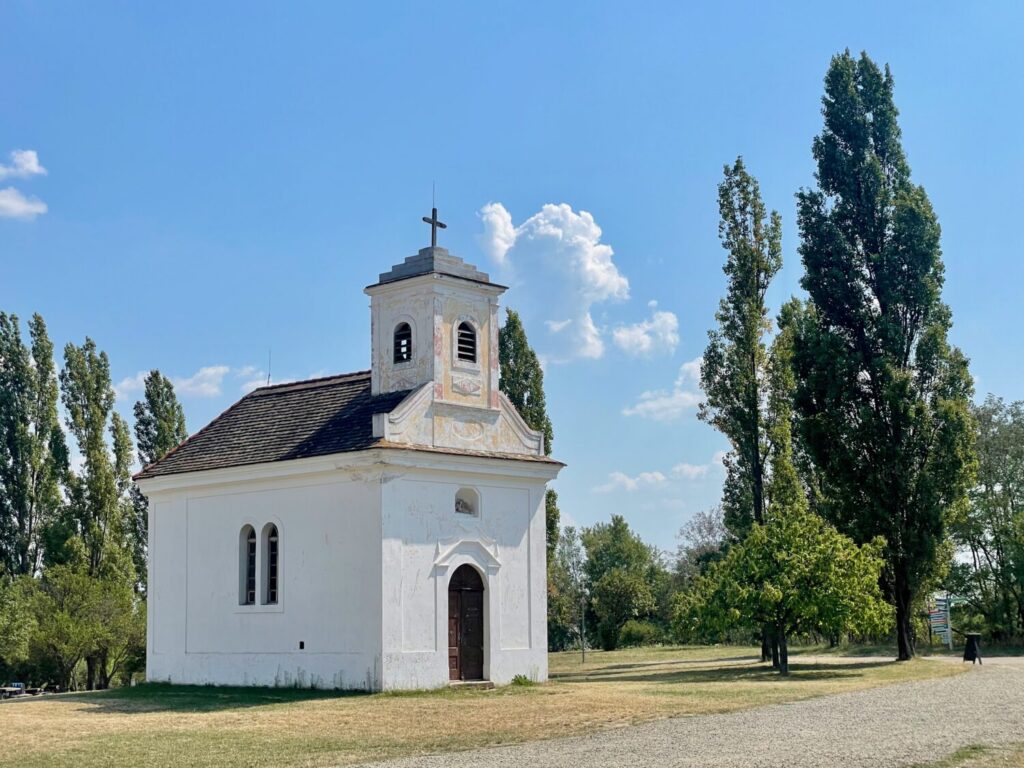
The first section, opened in 1974, is the Upper-Tisza Region, with farmhouses and barns. Its centrepiece is the famous Reformed church with a painted wooden ceiling, which reveals how large parts of Hungary were traditionally Protestant rather than Catholic.
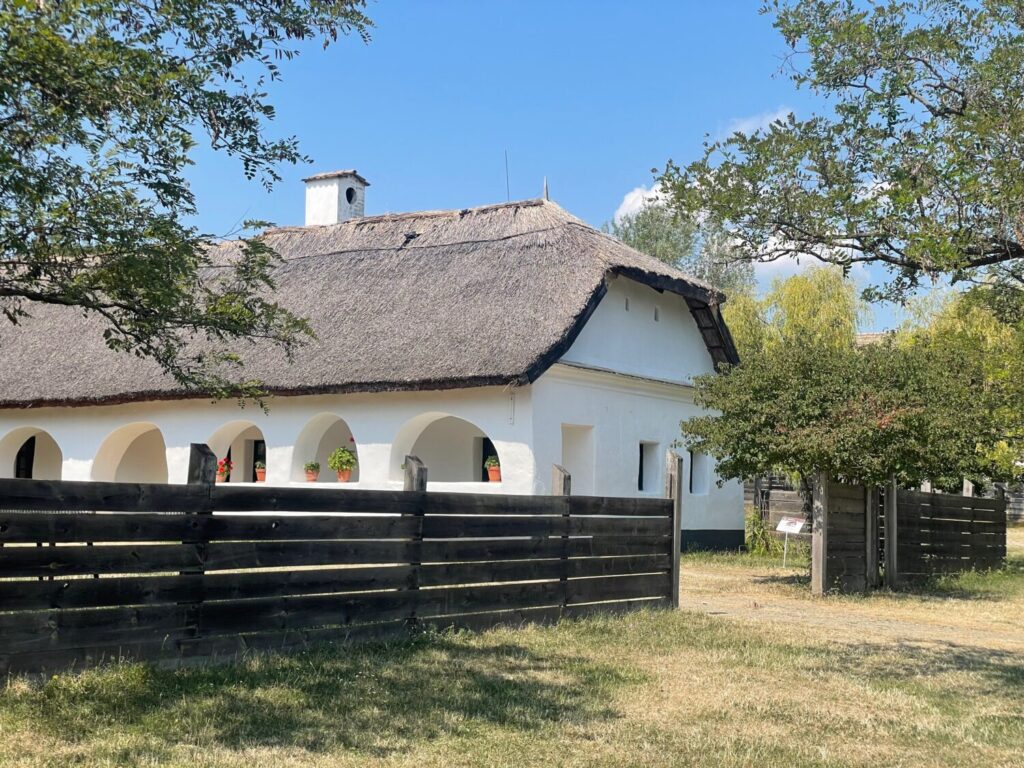
At the Hungarian Etnographic Open Air Museum, you’ll discover how many differences exist within Hungary itself. Western Transdanubia shows scattered szer settlements, with small hamlets clustered around wooden bell towers. In the Bakony and Balaton Uplands, stone houses, arched porches and cool wine cellars reflect centuries of viticulture.
The Little Hungarian Plain highlights social contrasts in western Hungary. Elegant brick houses of wealthier families stand opposite simple mud-built cottages with reed roofs. In the Great Hungarian Plain, you explore traditional farmsteads that developed on the edges of market towns.
You can step inside many houses to learn about the daily routines of farmers, craftsmen and traders. The market towns complete the picture, acting as cultural bridges between villages and cities, with workshops, cellars and taverns lining narrow plots. And, of course, the main restaurant and the railway station are also located in this area!
Art Nouveau Buildings in Transylvania and Life in a Small Town
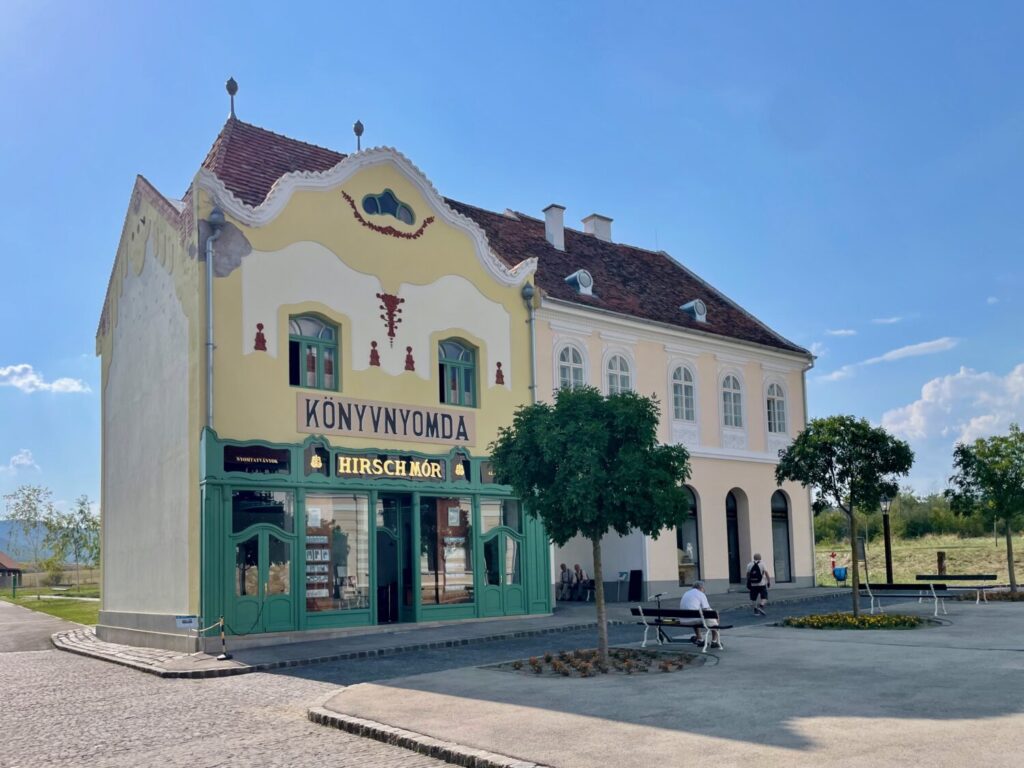
The Transylvanian area is the newest and largest part of Skanzen Szentendre, bringing a Transylvanian small town to life. Alongside traditional homes, you’ll find a post office, a pharmacy, a café and a printing house. The architecture is very different from the rural areas, and the focus shifts to people, professions and everyday urban life.
Through houses and interiors, you discover the stories of craftsmen and professionals who lived through the political and social changes of the 20th century. At the turn of the century, figures such as the pharmacist, the parish priest, and the teacher formed the local intellectual elite.
At the pharmacy, we learn that, by the late 19th century, pharmacies commonly produced and sold cosmetics, hygiene and beauty products such as toothpastes, mouthwashes, hair-growth products, dyes and creams. The most popular products were powders, scented soaps and creams for ladies, and moustache waxes for men.
Another surprise is the section dedicated to printing. After the Austro-Hungarian Compromise of 1867, economic growth boosted the Hungarian printing industry. Since no special licence was required, printing houses spread rapidly in Budapest and rural towns alike. Inside the building, you can learn how they played a key role in urban cultural life.
The Hungarian–Romanian Border Crossing: Passports, Borders and Cold War Europe
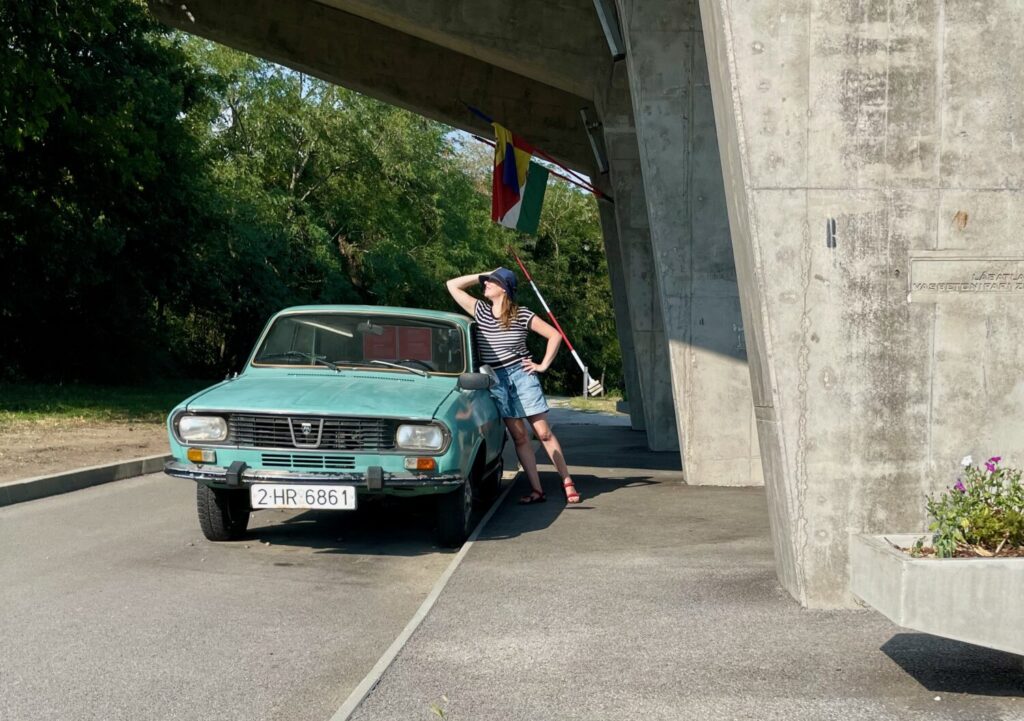
Part of today’s Romanian Transylvania once belonged to Hungary, which explains why this area has always been a cultural and historical mix. At the Hungarian Etnographic Open Air Museum, you can see a reconstructed border crossing. In an era of open borders, it reminds you that crossing from one country to another was not always simple.
The border crossing on display represents the period between 1961 and 1987, known as the era of the two types of passports. During this period, it was easier to obtain a red passport, valid only for socialist countries in Eastern Europe. Travelling west required a blue passport, which allowed just one return journey and only with a visa.
Information panels also explain what a border actually is and how borders were physically marked. Stone, concrete, wood or metal markers defined state limits. It is surprising to learn that the Hungarian–Romanian visa requirement was abolished only in 1968, a detail that adds real depth to this immersive reconstruction.
Temporary Exhibitions at Skanzen Szentendre: Migration, Identity and Daily Life
Temporary exhibitions at Skanzen Szentendre change regularly, but they are often one of the most interesting parts of the visit, especially if you aren’t Hungarian and may be unfamiliar with this period of history. During our visit, we learn about Hungarian emigration and daily life under the communist regime.
Inside one of the village houses, a powerful exhibition explored the lives of the kulak, a term that I had first encountered at the House of Terror in Budapest. They were small landowners labelled as enemies of the communist regime that despised private property.
Other houses hosted exhibitions on migration, tracing the impact of the Ottoman occupation, the arrival of German settlers and later forced population movements through personal stories.
After the Second World War, entire communities were relocated by political decisions. Germans in Hungary were deported to the Soviet Union, while Hungarians from Czechoslovakia were resettled into their former villages.
The Living Museum Experience: Crafts, Costumed Characters and Traditions
At the Hungarian Etnographic Open Air Museum, village life is not shown through static buildings alone. To understand how people lived centuries ago, you also need to experience daily activities. That is why Skanzen focuses on living history rather than traditional displays.
In the Transylvanian town area, history becomes even more immersive. You may meet an Armenian merchant, the postmaster and his wife, or a pharmacist going about their daily routine.
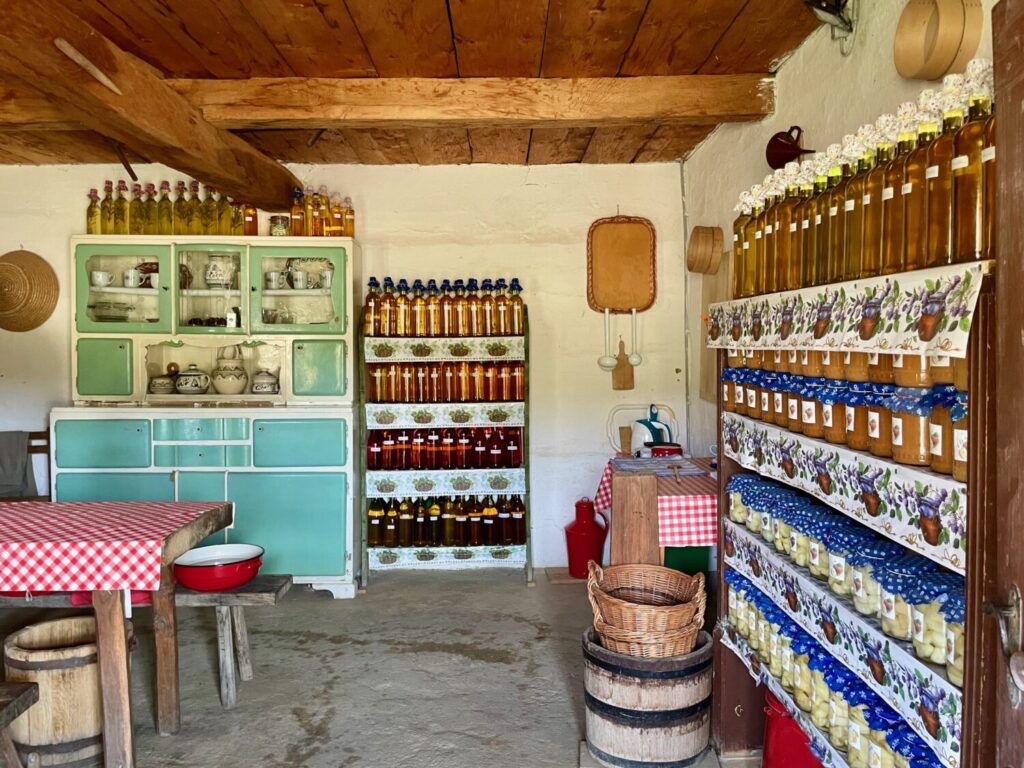
Rural areas offer similar surprises. A miller may be working inside the windmill, while a farm woman prepares jams or fruit drinks using traditional methods. These moments feel spontaneous and natural, rather than staged.
Children usually love this part of the visit. The costumed characters often speak English and interact easily with visitors, making the villages feel real and alive. It is an engaging way to learn, both for adults and younger travellers.
How to Move Inside the Skanzen Village: Walking, Cycling and the Museum Railway
You can explore Skanzen Szentendre on foot, but the museum covers a very large area. Seeing everything in a single day would be difficult if you only walk. Paths run through meadows and woodland, so moving between sections already feels like travelling across the countryside.
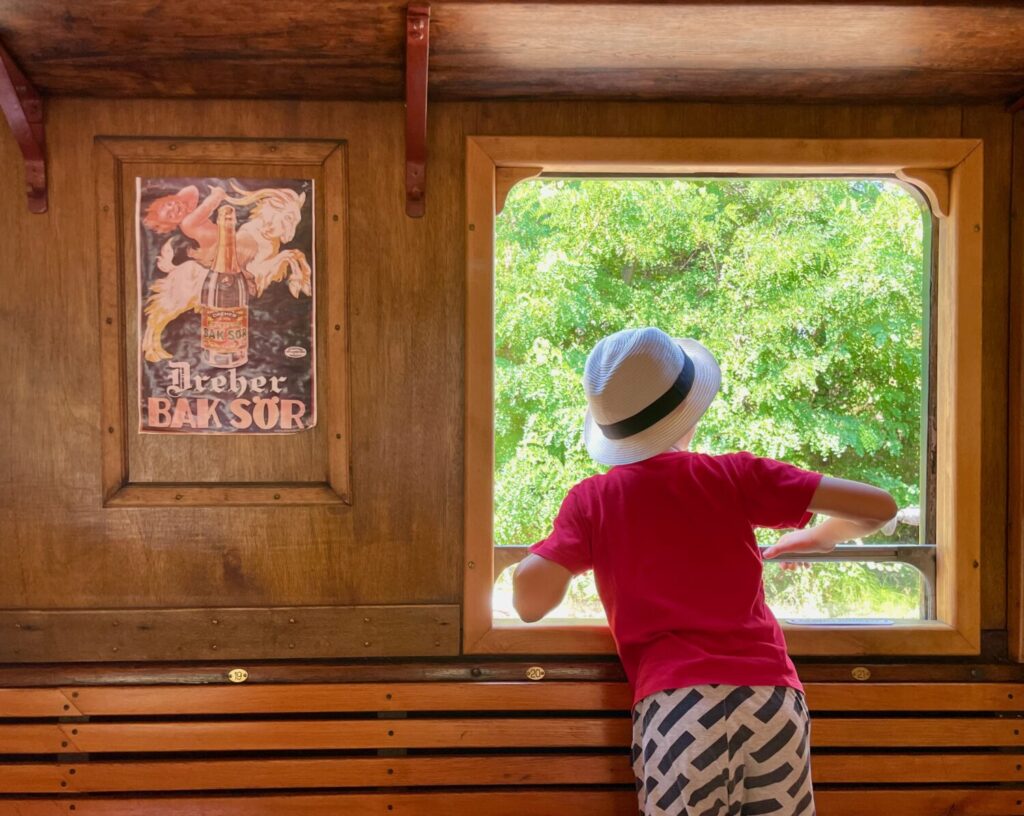
As an alternative, you can use the museum railway or rent a bicycle. Bikes are available with or without a child seat and cost around 2,000 HUF per day. We chose the train, mainly because my son was eager to ride it, and it turned out to be a fun and practical choice.
The Skanzen Railway: Riding Europe’s Longest Museum Railway
The Skanzen Railway is a normal-gauge railway and the longest museum railway in Europe, with 2.2 kilometres of track. Train drivers and conductors wear period costumes inspired by the 1930s, making the experience even more immersive. There are five stops, including one near the entrance building, and the train runs in a loop around the museum, completing the journey in about 30 minutes.
Visiting Skanzen Szentendre With Children: Playgrounds, Farms and Hands-On Activities
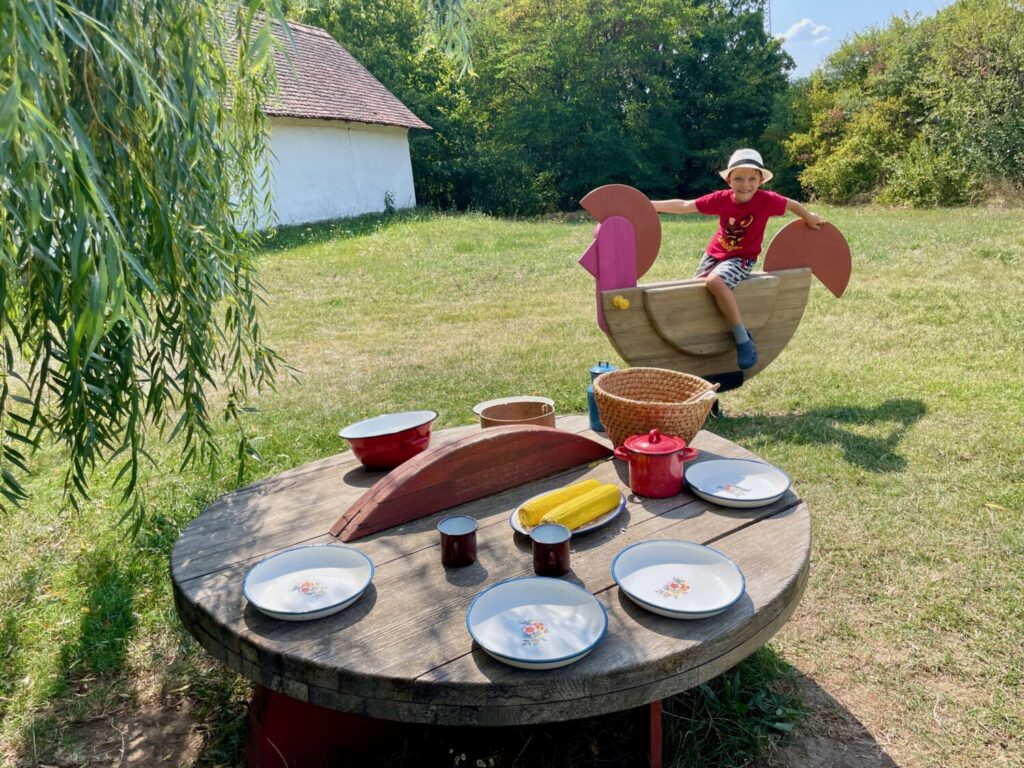
The Hungarian Etnographic Open Air Museum is a memorable experience for children. Across the museum, you’ll find several play areas and hands-on spaces. Kids can harvest wooden veggies at the Children’s Farm, explore how wood was used as a raw material at the House of Wood, or play at the Fairy-Tale Playground.
During Skanzen’s opening times, there are many family activities in Hungarian. If your kid doesn’t speak Hungarian, don’t worry. In our experience, children have fun even without these workshops.
My son spent a lot of time at the Children’s Farm. It’s a large playground with wooden vegetables to plant, harvest, and bring to the table. The post office in Transylvania is another fascinating stop. Here, children can discover how letters and postcards once worked in a world without emails and messaging apps.
Last but not least, moving around the museum by train is an attraction in itself. It adds a sense of adventure to the visit and turns travel between villages into part of the fun.
How to Plan Your Visit to Skanzen Szentendre
You can easily visit Skanzen Szentendre as a day trip from Budapest. The museum is very large and, realistically, you cannot see everything in one day. Arriving early helps if you want to explore several regions without rushing.
If you download the official Skanzen app before entering, you can check your real-time location, current activities and train timetables. Alternatively, you can orient yourself using the map available at the entrance.
Most of the visit takes place outdoors, so in summer bring sunscreen, a hat and plenty of water. There are several fountains in the museum where you can refill your water bottle.
You can enter almost all houses and buildings. In many of them, an audio explanation plays in Hungarian, but information panels always have a translation in English. I recommend reading them because they help you understand whether you are entering a private home, a workshop or a community building.
During our visit, some areas were under restoration. Even so, the museum was large enough to offer plenty to see and do. The Hungarian Etnographic Open Air Museum also hosts weddings and private ceremonies. During our visit, part of the site was closed for a wedding. I didn’t enjoy this as a visitor, although it must be a beautiful setting for such events.
Tickets and Practical Information
When planning your visit to Skanzen Szentendre, it’s worth knowing how tickets work, as not everything is included in the standard admission. The entrance ticket gives you access to the museum itself, while extras such as the train, bicycle rental and parking are paid separately.
A standard adult ticket costs 4,000 HUF (around €10). Students and young people up to 26 years old pay 2,000 HUF, while admission is free for children under 6 and visitors over 70. There are also reduced fares for families.
You can buy your entrance ticket and any extras directly at the ticket office, including the Skanzen Railway or bike rental. Staff at the counter may not speak English, so try to be clear about which tickets and extras you want, even with the support of Google Translate.
Parking is not included in the entrance ticket, and you’ll have to pay for it separately before leaving at a different cash desk near the exit.
Opening Hours and When to Visit
The Hungarian Etnographic Open Air Museum season runs from 1 April to 31 October. The museum is open from Tuesday to Sunday, from 9:00 am to 5:00 pm, and closed on Mondays.
Skanzen Szentendre is closed for the winter season from 1 November, with the exception of a few special events and festivities. If you’re going to visit Szentendre in winter, I recommend checking the official website for updated opening days and times.
Where to Eat Inside the Hungarian Etnographic Open Air Museum
Since the Hungarian Etnographic Open Air Museum is vast and you are likely to spend a full day here, it’s worth planning where to eat. Several picnic areas are scattered across the park, but there are also cafés and restaurants inside the museum.
We had lunch at the Skanzen Restaurant, which is part of the permanent exhibition in the market town. It is housed in a historic building relocated from Jászárokszállás and is located near the main entrance, just one minute from the railway station. The restaurant is open from 9:00 am to 5:00 pm and offers regional dishes from different parts of Hungary, which is why we chose it.
Other options include the Korzó Coffee House, the Resti Café and the Skanzen Bakery. Skanzen Bakery, located in the Great Hungarian Plain market town, is worth a stop for its excellent bread baked in a traditional oven using long-fermented sourdough.
Resti Café, next to the train station, serves coffee, drinks and pastries, with views over the open-air exhibitions and the Pilis Mountains from its terrace. Korzó Coffee House, in the Transylvanian town area, recreates the atmosphere of the late 19th and early 20th centuries and is a pleasant place for a break.
How to Reach Skanzen Szentendre from Budapest
The Hungarian Etnographic Open Air Museum is located inside the Duna–Ipoly National Park, about 25 kilometres north of Budapest. Besides visiting historic buildings and exhibitions, you’ll spend much of the day surrounded by green spaces.
By car, the journey from Budapest takes around 30–40 minutes, depending on traffic, following road no. 11. Once you reach Szentendre, simply follow the signs for Skanzen. A large parking area is located directly in front of the entrance. Parking costs 2,000 HUF per day for cars and 3,000 HUF per day for campervans.
By public transport, it takes around one and a half hours in total. You can travel from Budapest to Szentendre either by bus from Újpest–Városkapu or by taking the H5 suburban railway from Batthyány tér, which takes about 40 minutes.
Once in Szentendre, you’ll need a local bus to the Skanzen. Tickets cost 250 HUF one way, and you can buy one at the yellow ticket machines or at the ticket booth. Buses usually depart from platform 6. Alternatively, you can take a taxi from the station, with fares typically around €8–10.
Given the many transfers you’ll have to make, in my opinion, it’s best to travel by car, like we did. You can easily rent a car in Budapest. If you plan to use public transport, I recommend checking Google Maps to find the most convenient option, depending on where you’re staying in Budapest.
Skanzen – Szentendrei Szabadtéri Néprajzi Múzeum
Hungarian Etnographic Open Air Museum
Sztaravodai útca 75, H-2000 Szentendre
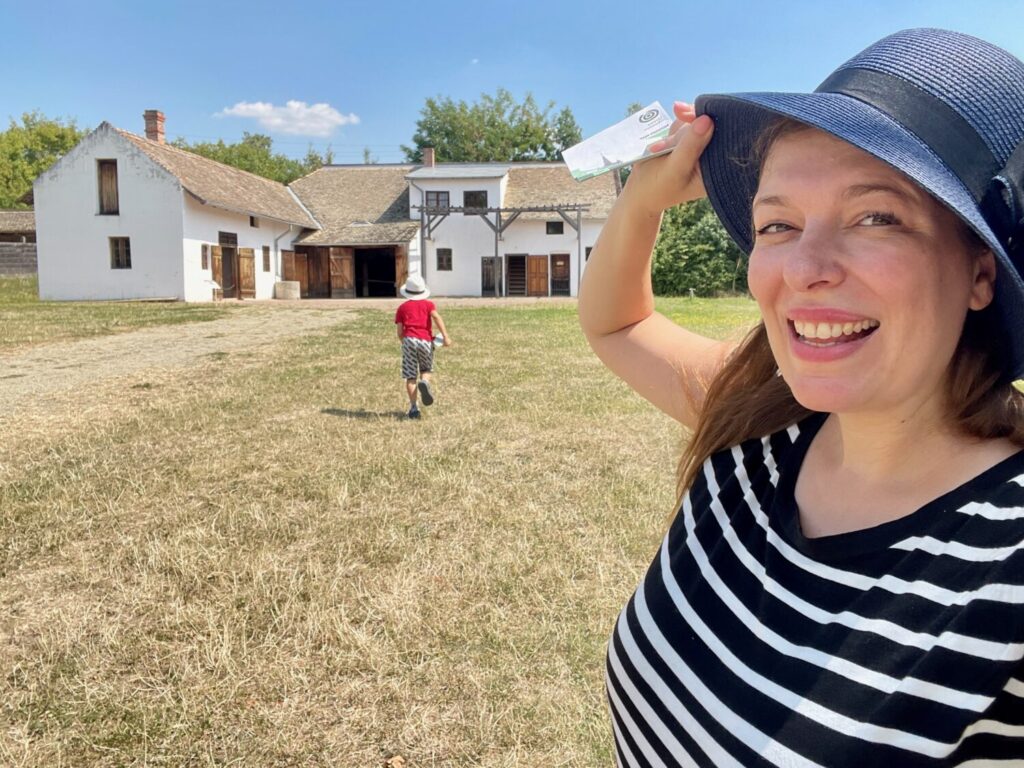
What to See Near Skanzen Szentendre: Day Trips and Scenic Stops
Just 25 kilometres from Budapest, Szentendre is ideal for a day trip. We visited Skanzen Szentendre during our road trip in Hungary to the Balaton Lake, so I can suggest you several destinations in the surrounding area.
If you are travelling with children, a detour to the Oroszlány Mining Museum is well worth considering. The museum tells the story of coal mining in a clear and engaging way, with fantastic exhibitions for younger visitors. From here, you can continue towards Lake Balaton, one of Hungary’s most popular regions.
The hills along the shores of Lake Balaton are dotted with excellent wineries. Stopping for lunch or a wine tasting with lake views is one of the most enjoyable ways to end the day.
Nearby, the Tihany peninsula is known for its Benedictine Abbey and lavender fields. A little further away, to continue your journey, the Tapolca Lake Cave offers a fantastic underground visit by boat, while Lake Hévíz is the largest natural thermal lake in Europe.
Where to Stay in Szentendre for Visiting the Skanzen
If your main reason for visiting Szentendre is the Hungarian Etnographic Open Air Museum, staying nearby makes the experience much more relaxed. A convenient option is the Skanzen Hotel, located on the outskirts of town, close to the museum entrance. Guests of the hotel benefit from discounted admission to the Skanzen, which can be a nice bonus if you plan a full day on site.
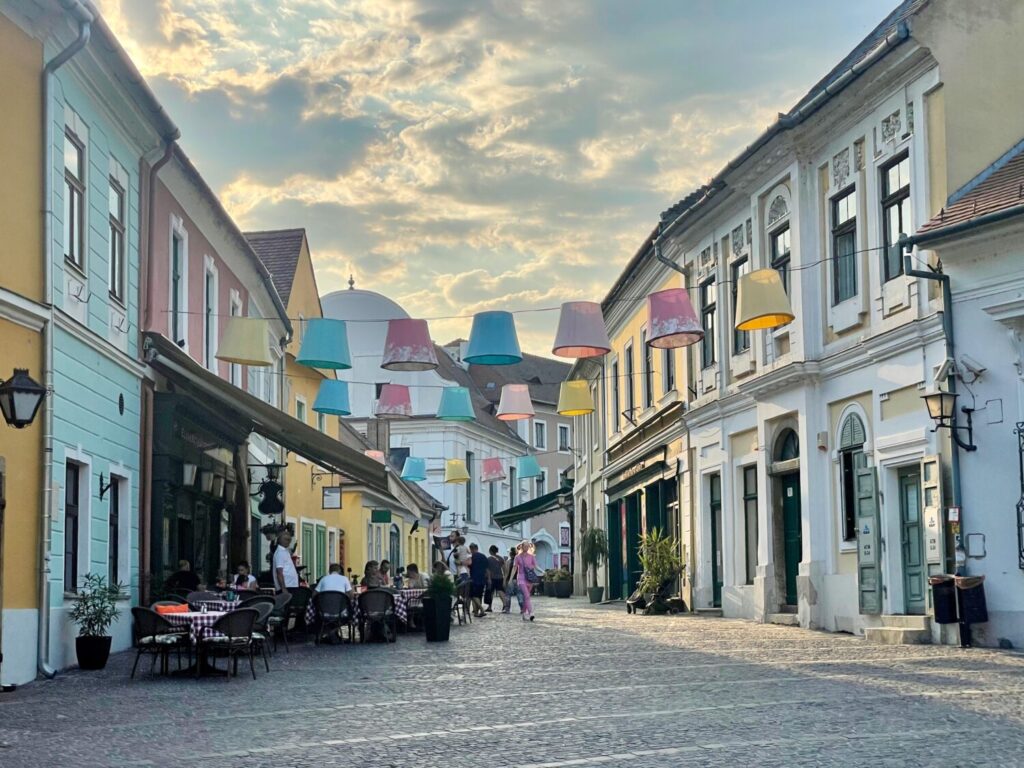
We visited the museum during a road trip through Hungary and chose to stay in the historic centre of Szentendre instead. We booked a room at Városi Vendégház Szentendre, run by the local tourist office. Housed in a historic building converted into boutique-style rooms, it is a great choice if you also want to explore Szentendre itself, with its galleries, cafés and riverside walks, after your visit to the museum.
Why Skanzen Szentendre Is One of Hungary’s Most Meaningful Museums
Skanzen Szentendre is definitely the best place to understand how people lived in Hungary’s villages over the past centuries. Its open-air setting, regional diversity and attention to everyday life make history engaging for all ages.
The museum combines authentic buildings with lived experiences, helping you connect architecture, traditions and social change in a meaningful way. It is a rewarding stop if you want to go beyond Budapest and explore Hungary’s cultural roots.
If you have visited Skanzen Szentendre or are planning to go, feel free to share your thoughts in the comments.
