
Despite the word interactive in its name, do not expect the Interactive Science Knowledgestore in Szeged, Hungary, to be a high-tech science centre. It is a small university museum filled with old objects and academic displays, and that is exactly what makes it interesting. You wander among jars with preserved animals, taxidermy specimens and unexpected curiosities from another era. When you have never seen anything like this before, the sense of discovery feels real. My son was fascinated throughout the visit and found it beautiful, even without any modern technology or digital displays.
Table of Contents
Discover the Interactive Science Knowledgestore in Szeged
Don’t expect the Interactive Science Knowledgestore in Szeged to be a modern hands-on science centre filled with screens, buttons and digital experiments. This is a small university museum housed inside the University of Szeged. Its atmosphere feels academic from the very beginning. The visit doesn’t start with colourful installations or playful devices, but with display cases, wooden cabinets and objects that look as though they belong to another century.
PLAN YOUR TRIP TO HUNGARY
For a road trip in Hungary, choose a Holafly eSIM: you will have unlimited internet to use Google Maps or any other GPS app, and you can share photos and videos in real time on WhatsApp and social media without any worries.
To travel with complete peace of mind, don’t forget to also take out Heymondo travel insurance, which protects you from unexpected events and ensures a worry-free holiday.
Even the name can be confusing. Interaktív Természetismereti Tudástár sounds exciting, but a more accurate translation would be Interactive Natural Science Knowledge Base. That wording already sets different expectations. Only one room in the entire museum allows you to actually use the objects. The rest of the collection invites you to observe, read and imagine rather than press buttons or run simulations.
Online descriptions often add to the misunderstanding. Google Maps frequently labels it as a children’s museum, which is not the best way to describe it. This place is not about entertainment and noise. It feels more like stepping into a quiet academic world. Here, science is preserved rather than performed. The focus is on natural history, old scientific tools and university teaching materials from the past.
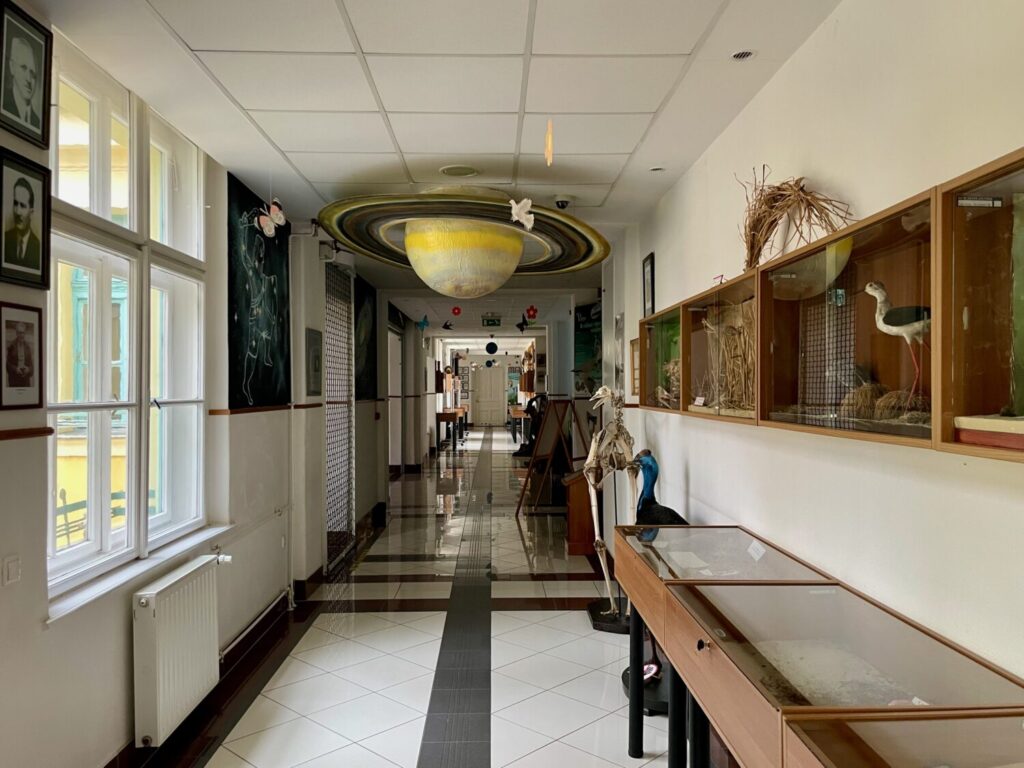
Why the Interactive Science Knowledgestore in Szeged Is Worth Visiting
What makes the Interactive Science Knowledgestore in Szeged special is the setting itself. Original 19th-century furniture fills the rooms and gives the impression that professors and students have just left. The museum’s style may remind you of places like the Fruit Museum or the Museum of Human Anatomy in Turin. You get the same sense of walking through a collection created for study, not tourism.
This is not a museum that tries to impress you with technology. It surprises you with authenticity instead. If you enjoy unusual places and hidden corners of a city, you may find this small museum far more fascinating than a polished science centre.
What to See Inside the Interactive Science Knowledgestore in Szeged
Inside the Interactive Science Knowledgestore, each room leads you into a different side of scientific learning. You move from old lecture halls to shelves of meticulously catalogued specimens, then into a space filled with surprising plaster flowers that look as though they belong in an art gallery rather than a university.
The route doesn’t follow a strict museum logic, but that’s part of its appeal. You’re not walking through a polished exhibition. You’re exploring how knowledge used to be stored, studied and passed on. The final room invites you to experiment with simple tools and physical objects. Together, these spaces show you how science once lived beyond textbooks and screens.
Historic University Classrooms in Szeged: Step Into a 19th-Century Science Lecture Hall
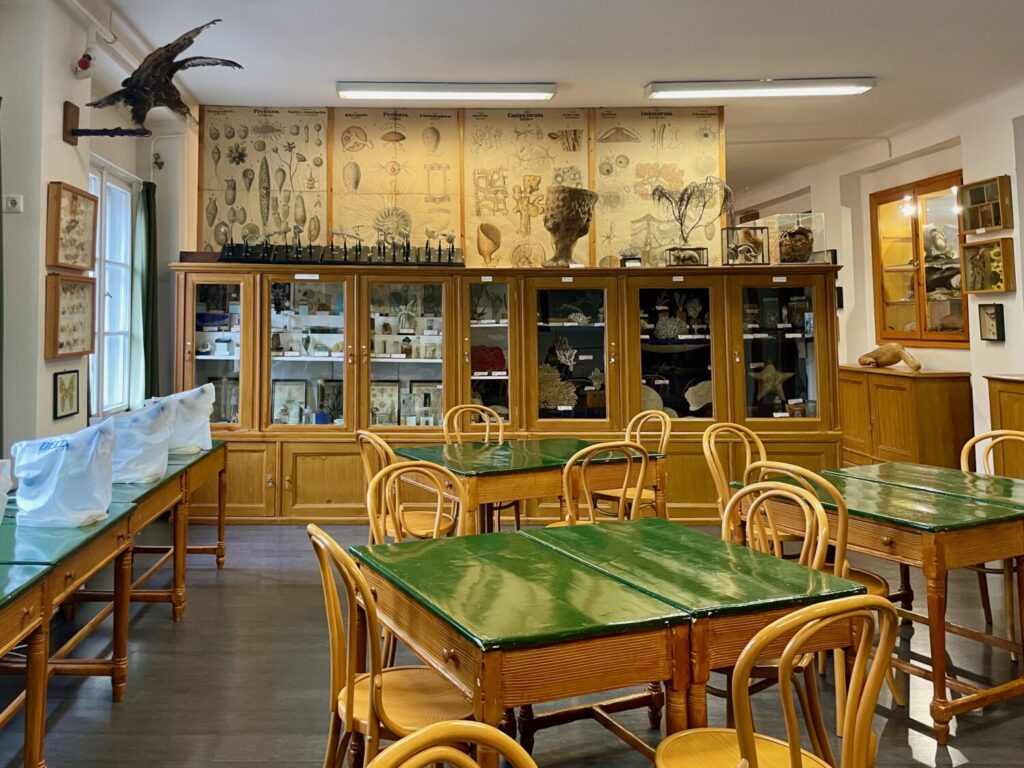
Some of the rooms inside the Interactive Science Knowledgestore are real university classrooms. Walking in, you feel as if you have stepped straight into the 19th century. Wooden desks, green tabletops and tall cabinets filled with scientific objects create an atmosphere that feels genuinely untouched by time.
Glass display cabinets line the walls, packed with natural specimens that once served as teaching material. Above them, faded botanical and zoological charts still hang in place. Nothing here feels modern.
Another room feels even more cinematic. A small lecture classroom opens up with wooden benches, a simple teacher’s desk and an old sink beside it. You cannot help imagining anatomy lessons taking place here, with jars, tools and specimens once laid out on that surface. The sink looks like something from an old film set rather than a working university today.
This isn’t a reconstruction for visitors. During my visit, a student was sitting inside, waiting for a lesson to begin. These rooms are part of the museum, yet they still belong to the university. You are visiting an exhibition and, at the same time, walking through everyday academic life that has barely changed in over a century.
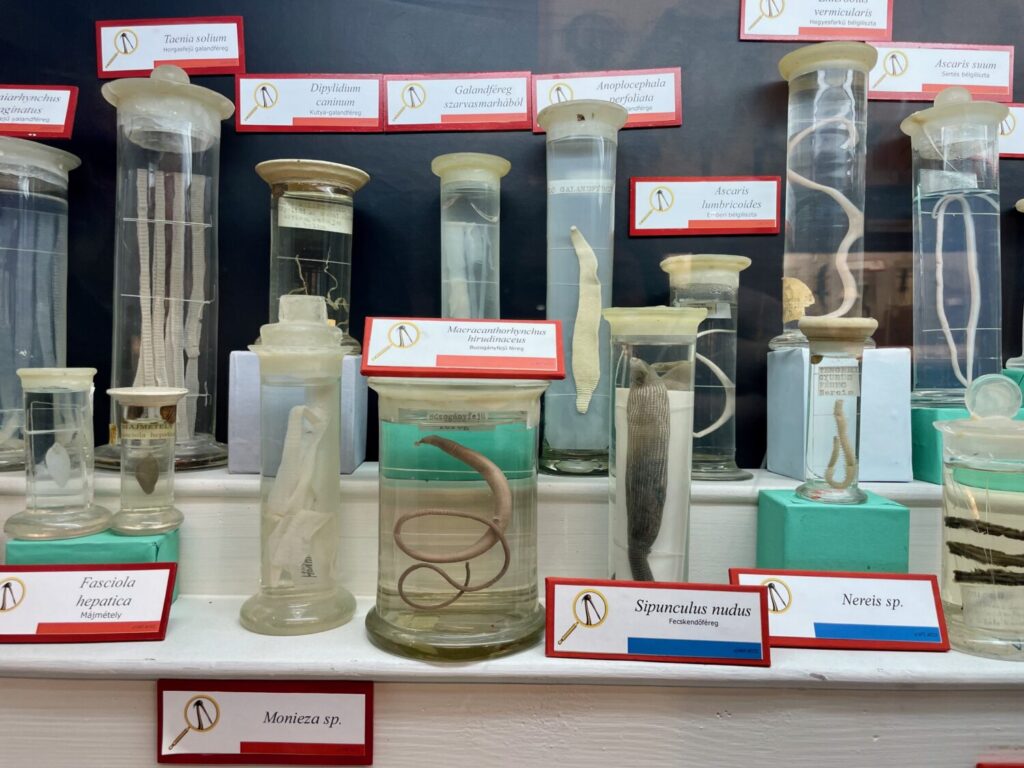
Preserved Animal Specimens and Taxidermy in Szeged: A Journey Through Anatomy and Conservation
This is probably the strangest part of the Interactive Science Knowledgestore. It’s odd, and in some places it’s a bit unpleasant too. Shelves hold jars filled with worms, leeches and long parasites suspended in liquid. At first it can feel uncomfortable, but it’s also strangely fascinating, especially if you’ve never seen a leech in real life.
Snake skeletons sit next to specimens preserved in alcohol. You can see every bone, every curve of the spine and every detail that would normally stay hidden under skin and scales. My son and I felt fascinated and slightly disgusted at the same time.
The taxidermy cabinets keep the same unsettling mood. You may want to skip this part if you’re scared of birds. Dozens of birds stare from behind glass, frozen in lifelike poses. Insects and spiders are neatly pinned, carefully classified and almost obsessively arranged.
These rooms feel more like an old scientific archive than a museum. It’s definitely weird, but you’ll leave with a much clearer idea of what studying nature at university once really meant.
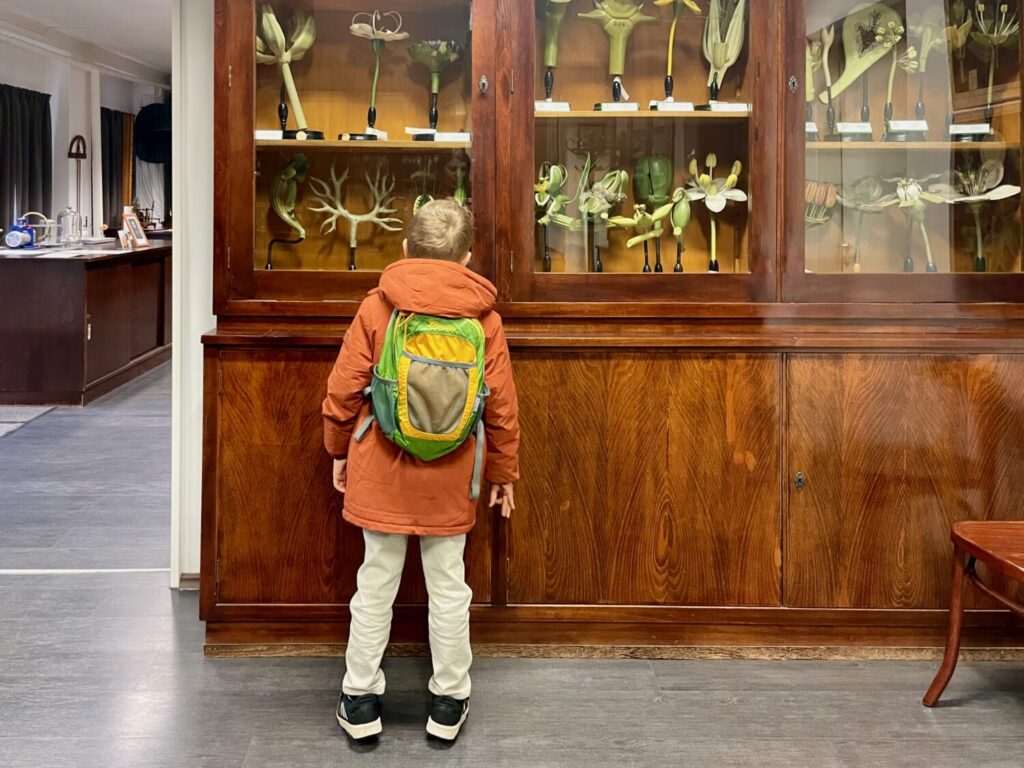
Plaster Flowers and Fruit Models in Szeged: Exploring Botany in Three Dimensions
When you step into the room of the Interactive Science Knowledgestore dedicated to plants and fruit, the mood changes completely. You suddenly enter a surreal world. The flowers are huge, clearly artificial, made of plaster and enlarged far beyond their natural size. They aren’t trying to look real. They look like modern sculptures. Striking, bold and unexpected.
You immediately realise you’re not looking at copies of nature, but at teaching objects transformed into works of art. They represent the same plants you can see at Szeged Botanical Garden, yet the makers exaggerated their shapes and exposed their structures on purpose. They designed every curve to be studied, not admired like a garden flower. Some models resemble strange sea creatures more than plants. Others look like abstract installations you’d expect to find in a contemporary gallery.
The fruit models follow a different logic. The model makers don’t enlarge them. They recreate them realistically, reproducing colours, sizes and surfaces with great accuracy. You recognise apples, pears and other fruit instantly. Yet they sit quietly in one corner of the room, almost in the background, overshadowed by the dramatic presence of the flowers.
Together, flowers and fruit show two very different approaches to learning. One exaggerated to reveal structure. The other realistic to train observation. Both remind you that science once relied on hands, eyes and physical objects. Not screens.
The Hands-On Room in the Knowledgestore: Touching History Rather Than Using Technology
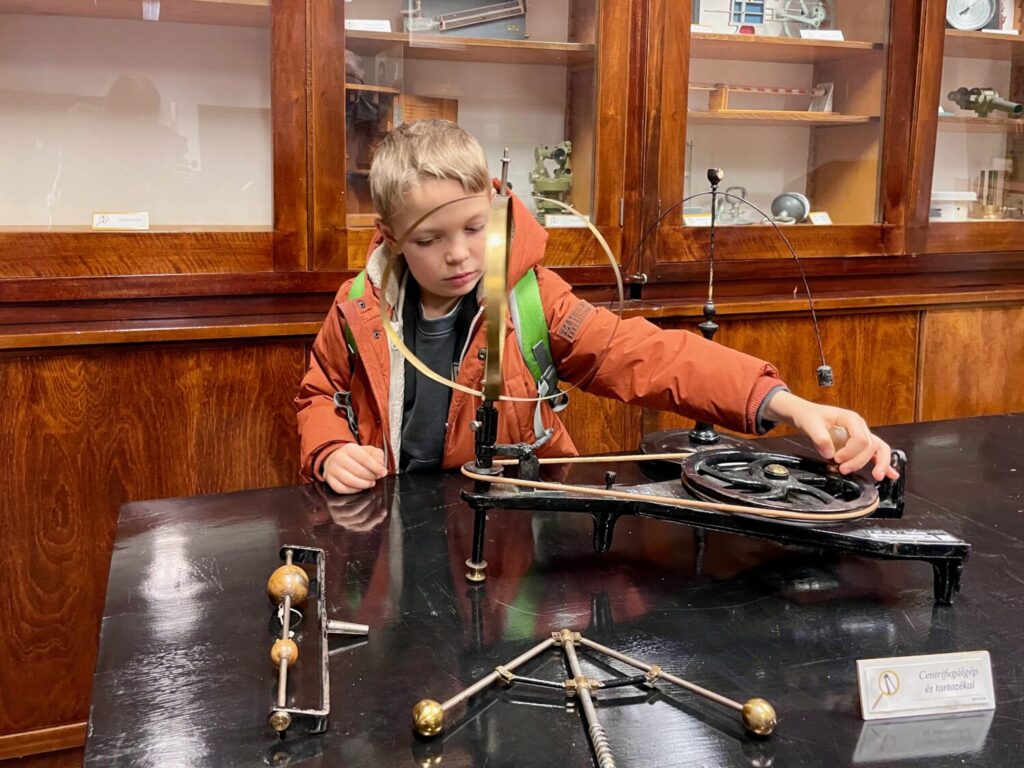
The last room is the only space where you can actually touch something. Even here, don’t expect a modern interactive zone with tablets and sensors. This room is interactive in a very old-fashioned way. You use your hands, your eyes and your curiosity. My son loved it. He moved from one object to the next with real excitement, even though everything felt simple and low-tech.
The most fun part is the UV lamp. You place a Hungarian passport under the light and suddenly hidden details appear out of nowhere. You can also see how tonic water glows under ultraviolet light and, if you’re wearing semi-permanent nail polish, you even notice every single brush stroke on your nails.
Other experiments invite you to try things out. You can spin a centrifuge and see how motion works. You can pluck a monochord and hear how string length affects sound. A zoetrope shows you how moving images worked before cinema. The Wimshurst machine lets you produce static electricity with rotating discs and crackling sparks.
Along the connecting corridor, more curious objects appear with no logical order. You come across a small model of a threshing machine and a very old toy tractor made of metal. Nothing fits into a neat category, and that’s part of the charm.
My favourite object was the motorised bicycle. Built in Hungary between the 1950s and the 1980s, it has a small fuel tank on the rear rack and a tiny engine that once powered the wheel beneath the pedals. Apparently, it used to be quite common in Eastern Europe. It’s a perfect reminder that technology also tells everyday stories, not just scientific ones.
Practical information for planning your visit
The Interactive Science Knowledgestore is open from Tuesday to Friday, from 10 am to 4 pm, and remains closed on Mondays and weekends. Planning your visit on a weekday is therefore essential.
Tickets are sold directly at the entrance, where you’ll find a small reception desk. An adult ticket costs 1,200 HUF, about €3. Reduced prices apply to children, senior visitors and students.
Finding reliable information online isn’t as easy as you might expect. The only official website is hosted under the University of Szeged domain and looks rather outdated. It isn’t mobile-friendly and seems stuck in the early 2000s, yet it is still the museum’s official page. For accurate and up-to-date details, the Szeged tourist office proved far more helpful.
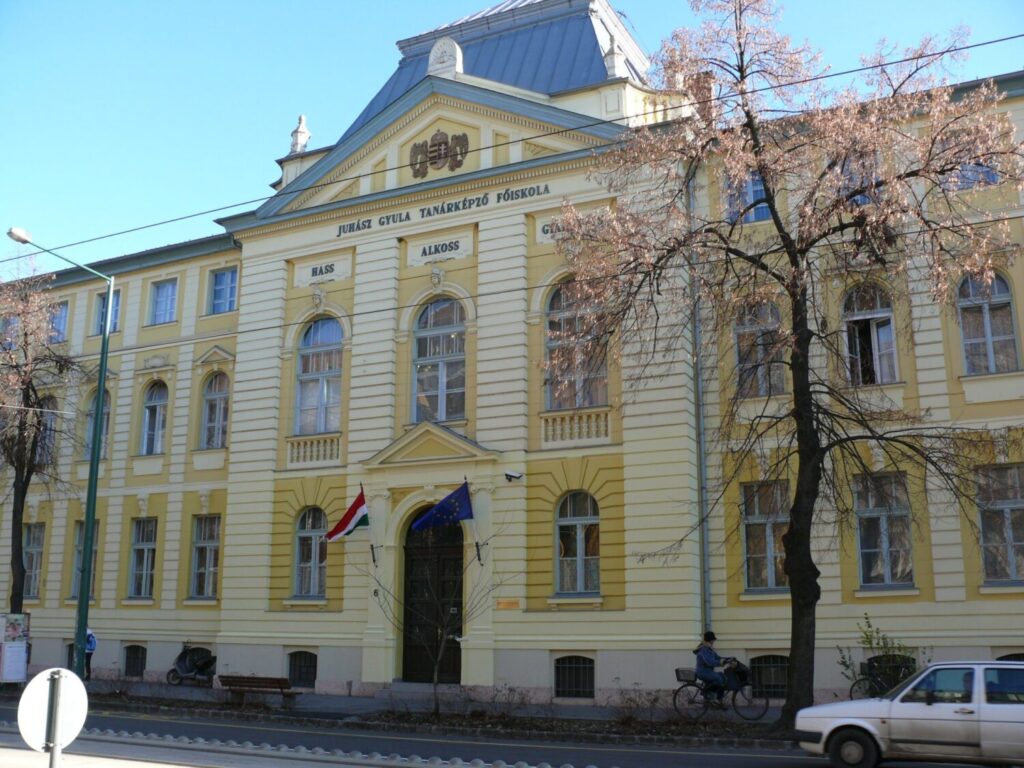
You’ll find the museum inside a university building and it occupies only a small section of it. There’s no separate entrance and no large signs pointing the way. You are entering an academic environment rather than a classic museum space, which may feel unusual at first.
However, a pleasant surprise awaits in the basement. The university café serves excellent coffee in a relaxed and welcoming setting. It’s an ideal place to pause before or after your visit.
Interaktív Természetismereti Tudástár
(Interactive Science Knowledgestore)
University of Szeged
Boldogasszony sgt. 6, 6725 Szeged
Where to Stay in Szeged
When visiting Szeged, staying in the city centre makes everything easier. All the main sights are within walking distance, including the Cathedral, the New Synagogue and the National Theatre.
For a comfortable hotel stay, Art Hotel Szeged offers modern design in the heart of the city. The restaurant serves Hungarian and international dishes, breakfast is included and the River Tisza is just a two-minute walk away.
If you prefer an apartment, the Noir Hotel residence provides air-conditioned studios with a kitchenette, coffee machine, fridge and private bathroom. A continental breakfast is available on site. For a budget-friendly option, Frasolis Studio Apartman is a small, but well designed apartment, ideal for two people. It’s simple, cosy and offers excellent value for money.
Final Thoughts on the Interactive Science Knowledgestore in Szeged
The Interactive Science Knowledgestore is not a place for special effects or polished exhibitions. It’s a quiet, slightly strange and deeply authentic corner of Szeged. You won’t leave with hundreds of photos for social media, but you’ll leave with a clear idea of how science used to be taught, explored and lived inside a university. That alone makes the visit worthwhile.
If you enjoy hidden places, old classrooms and museums that feel more real than perfect, this small collection may surprise you more than expected. If you have visited other unusual university museums around Europe, or explored places that felt more like living archives than attractions, share your experience in the comments.
