
Turin is not only defined by elegant palaces and grand piazzas, but also by its flavours. Wars, economic change and the rise of a confident urban bourgeoisie actively shaped the city’s traditional specialities. From chocolate to aperitif culture, food became part of Turin’s identity, transforming simple ingredients into lasting symbols. Each taste today still reflects history, craftsmanship and the character of Piedmont.
Table of Contents
Turin and the House of Savoy: Specialities Born at the Royal Court
Turin has many identities: former capital, industrial, automotive and Olympic city. The period linked to the House of Savoy and the birth of the Kingdom of Italy left the deepest mark on its cuisine. Royal patronage transformed food into a tool of identity and representation, shaping flavours that still define the city today.
PLAN YOUR TRIP TO ITALY
Stay connected on the go with a Holafly eSIM, offering unlimited data at reliable 3G, 4G, and LTE speeds across Italy.
For added peace of mind during your travels, take out Heymondo travel insurance, perfect for a stress-free and well-protected adventure.
If you plan to explore beyond the main cities, renting a car is the best way to discover Italy’s hidden gems at your own pace.
The Turinese relationship with chocolate began in 1563, when Emmanuel Philibert moved the capital of the Duchy of Savoy from Chambéry to Turin. To celebrate, he offered the aristocracy a drink still rare in Europe: hot chocolate. The beverage quickly became fashionable among the elite, laying the foundations of Turin’s chocolate tradition. It is no coincidence that the city today hosts Cioccolatò, a festival dedicated entirely to chocolate.
At the time, chocolate was a peculiar luxury rather than a regional symbol. The royal court gained access to cocoa beans through its alliance with Spain, which imported them from its Latin American colonies. European confectioners adapted the original Mayan and Aztec recipe, flavoured with spices and chilli, by adding sugar and milk. In Turin, refined pastry chefs and court cooks embraced cocoa and transformed it into a defining element of the city’s confectionery tradition.
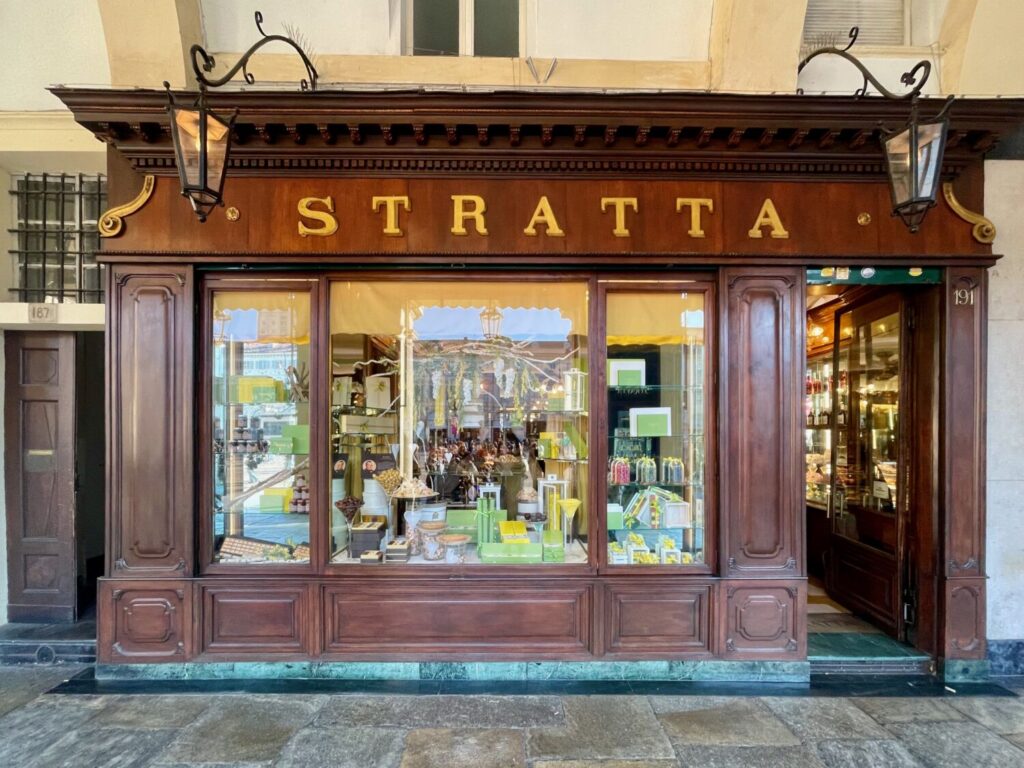
With the birth of the Kingdom of Italy, food also became diplomacy. Camillo Benso, Count of Cavour, offered marrons glacés and chocolates from the historic Stratta pastry shop to visiting rulers and ambassadors. Official receptions featured Barolo and Barolo Chinato wines, reinforcing the image of a modern and cultured capital. When foreign envoys arrived in Turin, they encountered elegance, order and prestige expressed not only through architecture, but also through taste.
Traditional Sweets of Turin: What to Taste and Take Home
Turin is one of Italy’s capitals of taste and its sweet specialities have become true symbols of the city. From gianduiotto to cri cri and marrons glacés, each product tells a story of wars, economic transformations and the rise of the urban bourgeoisie. Turin’s confectioners overcame crises with ingenuity and shaped a new bourgeois taste, transforming simple ingredients into specialities that people still recognise and appreciate today.
Gianduiotto: Turin’s Iconic Chocolate Made with Cocoa and Langhe Hazelnuts
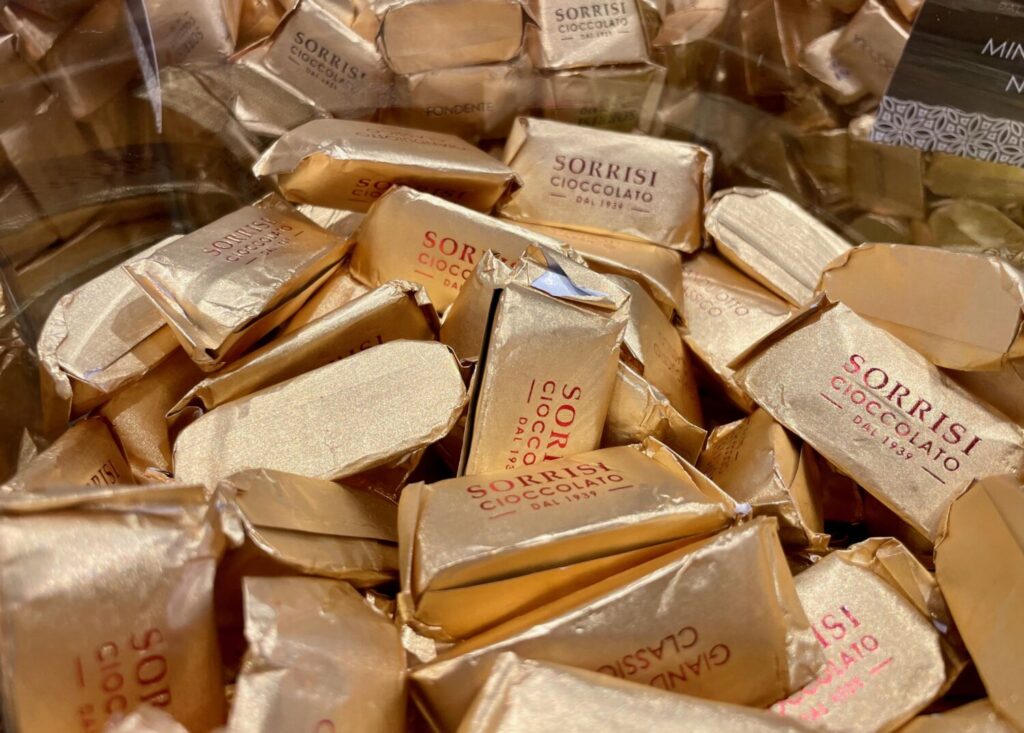
The gianduiotto is Turin’s most iconic chocolate, created from the combination of cocoa and hazelnuts from the Langhe. Its shape is unmistakable: small, triangular and individually wrapped in gold foil, still produced today by both major brands and artisan workshops.
Its origins date back to the nineteenth century, during the Napoleonic wars. The blockade of Atlantic trade made it difficult for cocoa beans to arrive from South America. For Turin’s master chocolatiers, this posed a real problem: without raw materials, chocolate production could not continue.
The solution came through a brilliant insight. Michele Prochet, partner of the Caffarel pastry shop, decided to mix the available cocoa with hazelnuts from the Langhe, which were abundant and less expensive at the time. Naturally rich in oils and sweetness, chocolatiers ground the hazelnuts together with cocoa paste using simple tools, long before factories introduced mechanised production along the River Dora.
The result was a softer, more fragrant mixture that enhanced a local ingredient and transformed it into an excellence. To promote it, producers adopted an original strategy: they linked the new chocolate to the Turin carnival mask Gianduia, a cheerful and popular figure. The name gianduiotto itself recalls this character, becoming an early example of effective marketing.
Turin Cri Cri: Hazelnuts Coated in Chocolate and Sugar Pearls
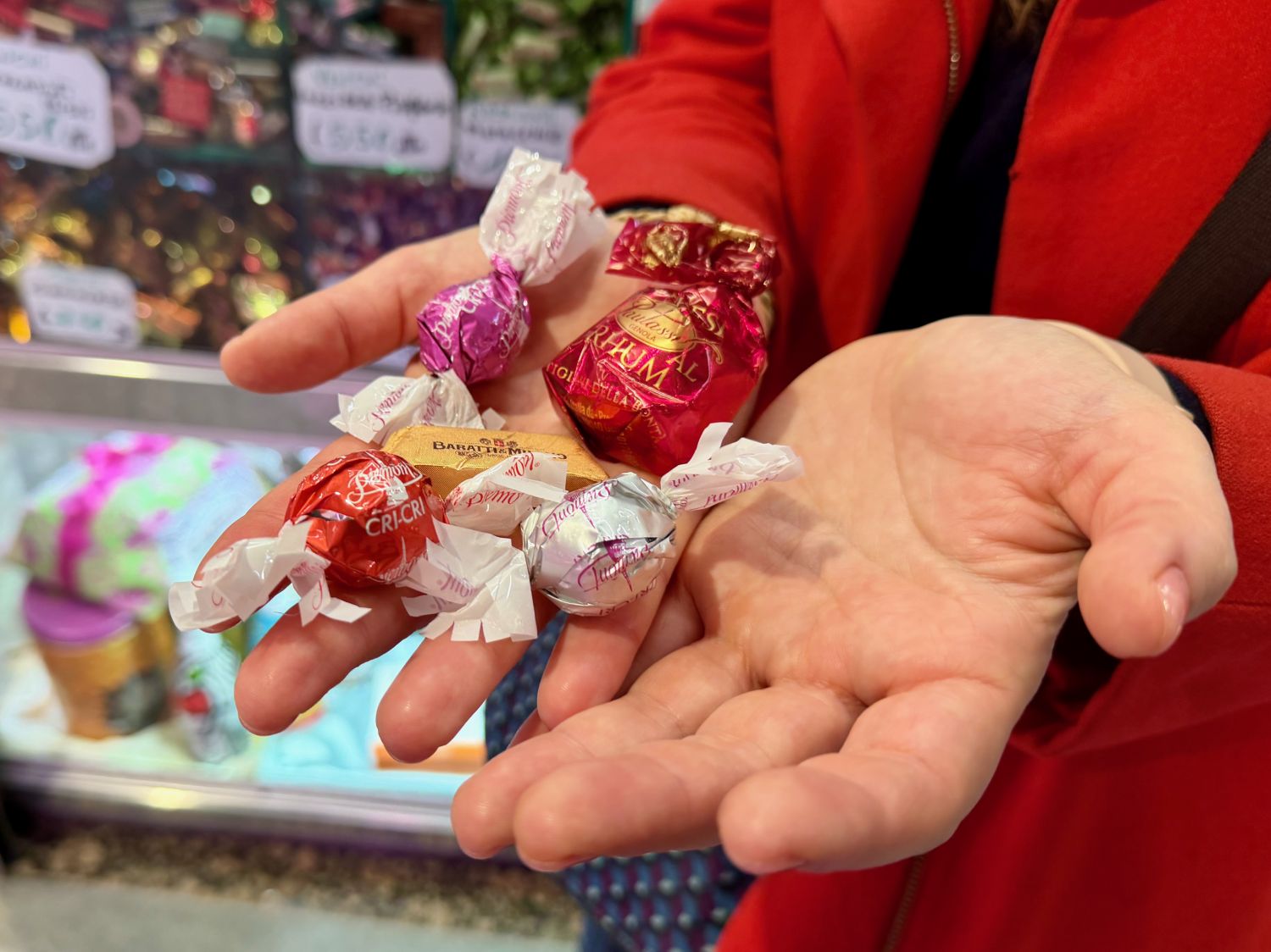
Cri cri are a chocolate sweet you can find only in Turin. Each one features a toasted hazelnut at its centre, coated in dark chocolate and covered with tiny white sugar pearls. The flavour is distinctive, combining sweetness and crunch in every bite, which makes them immediately recognisable.
Legend has it that they were created thanks to a young man in love with a girl named Cristina. Every day he bought her sweets and chocolates, so often that the pastry chef already knew those treats were for his Cri, diminutive of Cristina. From this affectionate nickname came the name cri cri, which has remained unchanged to this day.
Widely available in historic confectionery shops in the city centre, cri cri have become a classic gift and a popular edible souvenir. I often choose them as presents during the Christmas season for friends and relatives visiting from outside Turin. Small, light and easy to carry, they remain one of the city’s most iconic specialities.
Marrons Glacés in Turin: The Tradition of Historic Confectionery Shops
A marron glacé is a chestnut slowly candied in sugar syrup and then glazed until glossy outside and soft at its centre. In Turin it is not simply a sweet, but a symbol of elegance that takes centre stage in shop windows during autumn and Christmas. Historic confectionery shops in the city centre turned it into a luxury product, closely linked to the refined image of Savoy-era Turin.
In the nineteenth century, after the Statuto Albertino, the atmosphere in the city became more open and relaxed. The modern shop was born, aimed at a wealthy bourgeoisie eager to spend and display social status. Shop windows, as we know them today, began to appear, with food, such as marrons glacés presented in transparent containers that attracted passers-by inside.
Preparing marrons glacés requires time and precision. The marrone is not just any chestnut, but a larger variety cultivated in Piedmont. Confectioners immerse the chestnuts several times in syrup, leave them to rest, and finally glaze them with a thin, shiny coating. This slow process preserves their shape and enhances their natural sweetness. Tasting marrons glacés in a historic confectionery shop means rediscovering a tradition that combines craftsmanship, history and urban culture.
Historic Drinks of Turin: Aperitifs and Spoon Desserts
Between aperitifs and historic cafés, Turin expresses its identity through its signature drinks. From Vermouth, invented in the eighteenth century and later central to aperitif culture, to bicerin served in traditional cafés, and zabaione linked to popular tradition, each speciality reflects the meeting point of innovation and social change. Together, they shape the refined gastronomic character of the Piedmontese capital.
Vermouth of Turin: The Aromatised Wine Symbol of the Turinese Aperitif
Vermouth is an aromatised wine infused with herbs and spices that gradually became the symbol of the Turinese aperitif. In the eighteenth century, Giovan Battista Carpano developed a recipe based on white wine, alcohol and medicinal herbs and kept the formula as a closely guarded industrial secret.
At first, producers marketed Vermouth as a restorative syrup that people believed could relieve various ailments. Only later did it gain popularity as an aperitif. Through exports, Vermouth reached America, where it became a key ingredient in early cocktails. When these drinks returned to Europe, they further strengthened the international reputation of the Turinese product.
A significant turning point came with the creation of white Vermouth by the Martini house, designed for a female clientele. Until then, Vermouth had been red due to the addition of caramel, despite its white wine base. This lighter and more elegant version made it socially acceptable for women to enjoy an aperitif in public.
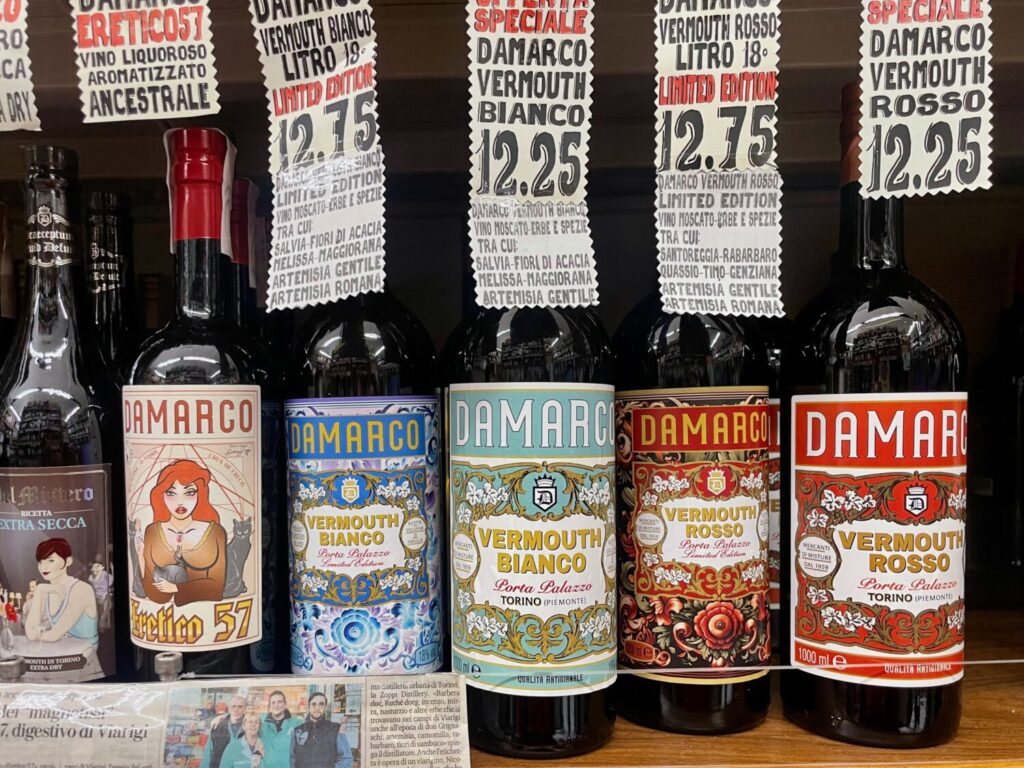
Today Vermouth is protected by a consortium of producers, each with their own distinctive recipes, which helps preserve and promote its Piedmontese origin. By tasting different labels, you can discover that the flavour of Vermouth ranges from very sweet to decidedly dry. More “modern” Vermouth styles tend to be drier because they work better in cocktails. My favourite is the Belle Epoque Vermouth from Da Marco: sweet and intense, exactly as the traditional recipe intends. You can find it in the historic shop overlooking Piazza della Repubblica.
Bicerin: Turin’s Sweet Signature Drink in Historic Cafés
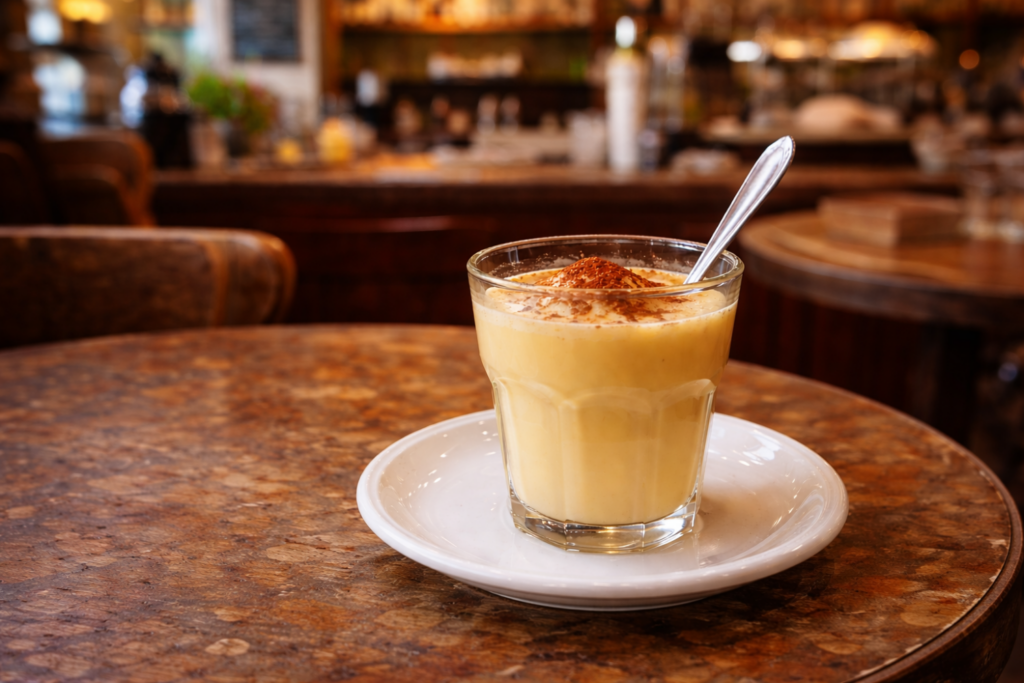
Bicerin is the most famous drink served in Turin’s historic cafés. Baristas prepare it with three simple yet perfectly balanced ingredients: espresso coffee, hot chocolate and cream. Its distinctive feature is the layering, which allows you to see the three levels clearly before stirring them together.
Cafés serve it in a small glass from which it takes its name, as bicerin in the Piedmontese dialect simply means “small glass”. In the eighteenth century, the historic Caffè Al Bicerin, near the Santuario della Consolata in Turin, created the drink according to local tradition.
Bicerin soon became a ritual pause for intellectuals, politicians and members of the urban bourgeoisie. Today it is still enjoyed while sitting at the tables of historic cafés, without haste. You may drink it as it is, allowing the flavours to blend gradually, or stir it for a smoother texture. Tasting bicerin means stepping into a refined urban tradition rooted in everyday café culture.
Zabaione: The Spoon Dessert to Drink, Invented in Turin
Zabaione is a warm, frothy cream made with egg yolks, sugar and fortified wine, traditionally Marsala. Its texture is soft and velvety, allowing it to be enjoyed with a spoon or drunk directly from a cup. According to tradition, zabaione originated in Turin and later became one of the city’s most emblematic desserts.
The most widespread legend links it to Saint Paschal Baylón, a Franciscan friar who was said to recommend a restorative mixture of eggs and wine in Turin. The recipe gradually became popular in Piedmontese kitchens, evolving into a refined cream served in bourgeois homes and city cafés. The saint’s name, shortened in dialect to San Bajon, is believed to have inspired the word zabaione, which sounds similar in the Piedmontese dialect.
In Turin, zabaione is still prepared fresh, whisked by hand until light and airy. You will find it mainly on traditional menus and in historic pastry shops, where it remains one of the most authentic expressions of Turinese sweetness.
Turin Breadsticks: From the Savoy Court to Today’s Tables
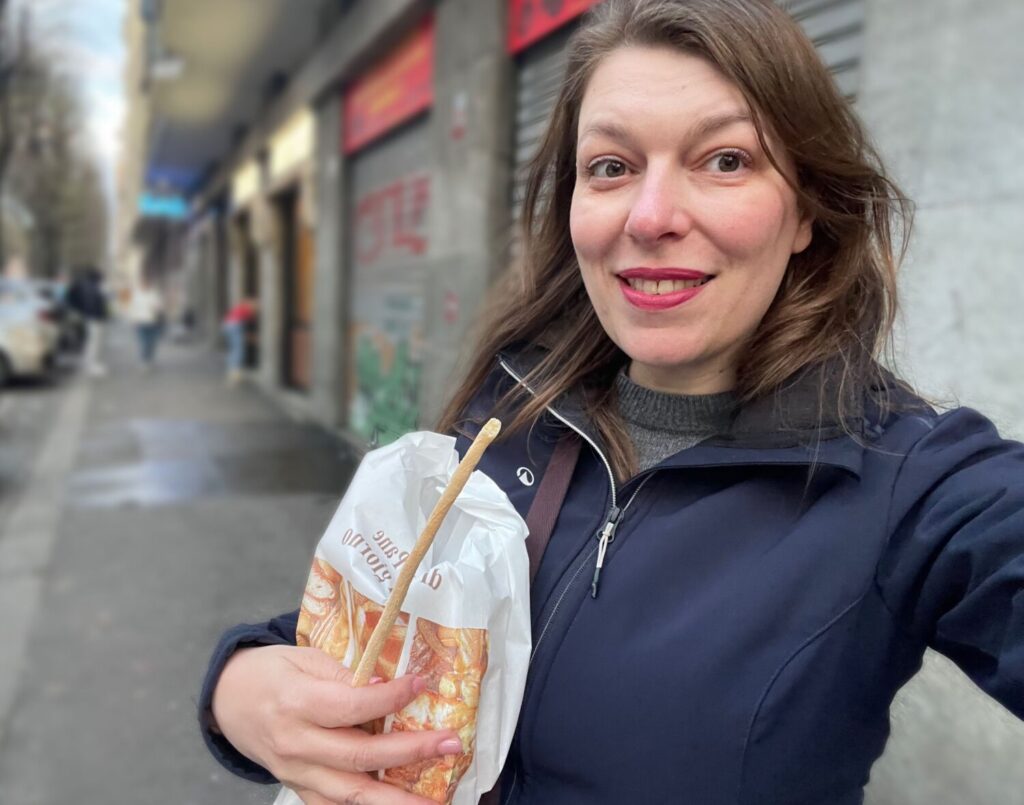
Turin breadsticks are thin, crisp sticks of bread that have become one of the city’s most recognisable symbols. Many packages proudly display the word “torinesi”, meaning “from Turin”. The name grissino derives from the Piedmontese ghersin, a diminutive of ghersa, meaning bread. Legend claims that even Napoleon loved grissini so much that he had them sent daily from Turin.
Grissini originated in the eighteenth century at the Savoy court, where bakers created them to encourage the frail young heir Vittorio Amedeo to eat. Alongside this courtly legend, a more popular version links their birth to poverty. Bakers may have sold the ghersin as a smaller loaf for a few coins, allowing more people to afford bread.
Bakers prepare breadsticks in two main varieties: rubatà, which are shorter and hand-rolled, and stirati, which are longer and thinner. Stirati breadsticks are worked by hand and prepared with the addition of oil or, in traditional recipes, also lard, then baked in the oven. The rubatà breadstick, whose name means “rolled” in Piedmontese, uses a similar dough but is hand-rolled, resulting in a firmer texture and a richer flavour.
Over time, breadsticks evolved from a courtly remedy into an everyday staple that accompanies every Turinese table. Restaurants place them wrapped beside the plate or loosely in the bread basket, while local bakeries offer the finest versions, freshly baked and still fragrant.
Where to Taste Authentic Specialities in Turin
The historic centre and its markets represent the two complementary souls of Turinese gastronomy, both worth exploring. In the city centre, historic cafés and pastry shops, some operating for over a century, still prepare gianduiotti, cri cri and marrons glacés by hand. Stepping inside these establishments means experiencing a blend of flavour and atmosphere, surrounded by period interiors and carefully curated shop windows.
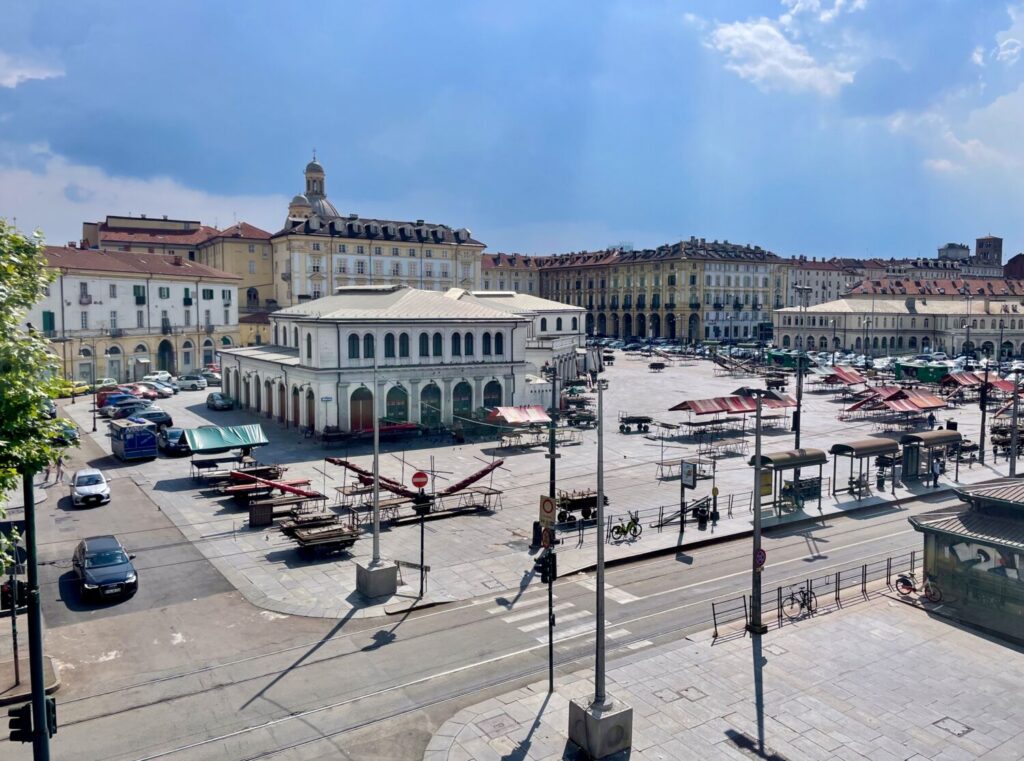
At the huge Porta Palazzo market, just a short walk from the centre, you can discover all of Turin’s typical products, from artisan breadsticks to local specialities. Market stalls and small shops offer more accessible prices and a lively, everyday atmosphere that feels authentic and grounded in daily life.
Food Tours in Turin: Discovering Traditional Sweets and Vermouth
Joining a food tour in Turin is one of the most enjoyable ways to discover traditional sweets and drinks while tasting local specialities. It is ideal if you have limited time or are visiting the city for the first time. In around two and a half hours, you walk through the historic centre with a guide who connects tastings and stories, turning a simple sampling session into a cultural journey, from gianduiotto to vermouth.
I personally joined Tasty Turin, an itinerary that combines chocolate, cri cri, zabaione, breadsticks and Vermouth tastings, including a stop at a pastry shop where I learned how artisans make gianduiotti by hand. I appreciated the way it alternates visits to historic confectioneries with deeper explanations about the origins of each product. It is no coincidence that the tour is popular not only with visitors, but also with local residents.
Historic Cafés in Turin Where to Taste Local Specialities
Turin’s historic cafés date back to the eighteenth and nineteenth centuries and have preserved their original interiors and atmosphere. They are not simply coffee bars, but venues that once hosted intellectuals, politicians and artists, becoming part of the city’s cultural life. For this reason, they have joined in an association, aiming to obtain recognition as UNESCO Intangible Cultural Heritage.
Stepping into a historic café means entering elegant, bourgeois Turin and tasting local specialities in the very context in which they were created. While bicerin finds its natural setting in cafés near the Consolata, elsewhere you can enjoy zabaione, gianduiotti and marrons glacés served on silver trays or accompanied by a glass of Vermouth.
Historic cafés are more than a culinary stop. They offer a cultural experience that blends architecture, memory and gastronomic tradition. You may visit several independently in an afternoon or join a guided tour dedicated to Turin’s café culture, discovering anecdotes and decorative details from another era.
Where to Stay in Turin
In Turin, as in all major cities, location greatly influences your experience, because staying in the city centre means having museums and historic cafés just a short walk away. Among the finest hotels are the NH Collection Torino Piazza Carlina, modern and functional, and the elegant Principi di Piemonte | UNA Esperienze, right in the heart of the city.
Alternatively, more affordable and equally interesting options include the contemporary hostels with co-working spaces and private rooms at Combo Torino, set inside a former fire station, and the residence CX Turin Belfiore, located in Aurora and San Salvario respectively, two lively neighbourhoods filled with restaurants and bars.
Turin’s gastronomic specialities intertwine history, flavour and diplomacy. Feel free to share in the comments which sweets or drinks interest you most, whether you have already tasted them, or whether you would join a guided visit to enjoy them in the places where they were born, surrounded by historical curiosities.
