
In recent years, travelling independently across Southeast Asia has become far easier thanks to ride-hailing apps. In Vietnam, Thailand, Malaysia, Singapore and other countries, Grab is one of the most widely used platforms for booking cars or motorbikes with a driver. For independent travellers, it has genuinely changed the way they organise daily transport, removing the need to negotiate every fare. Grab is particularly useful when you do not feel comfortable flagging down a taxi on the street, especially if you are travelling alone, or when you simply want to avoid inflated fares aimed at tourists.
Table of Contents
What the Grab App Is and How It Differs from Traditional Taxis
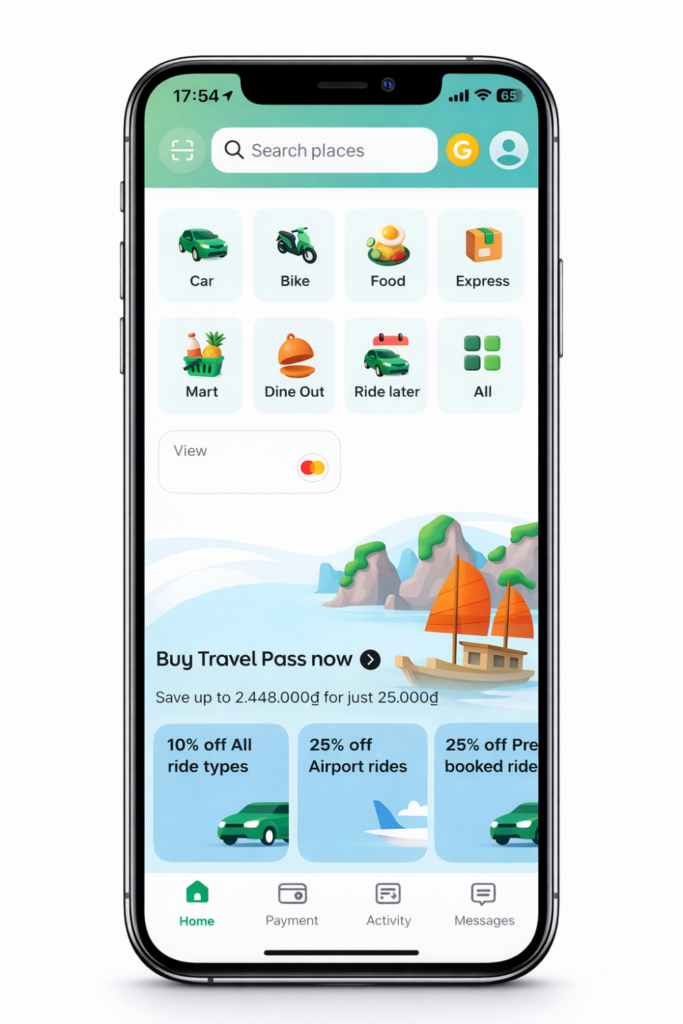
Grab is a ride-hailing app that allows you to book a car or motorbike with a driver directly from your smartphone. If you have not used it before, you can download Grab for iPhone or Grab for Android from the relevant app stores. Unlike traditional taxis hailed on the street, you book and pay for the ride entirely through the app. You see the fare in advance and there is no need to negotiate.
When travelling, knowing the price beforehand changes the experience significantly. Language is another practical advantage. You enter your pick-up point and destination directly on the map, reducing the risk of misunderstandings with the driver. There is no need to explain an address or rely on translation tools. You simply check the registration number shown in the app and get into the correct vehicle.
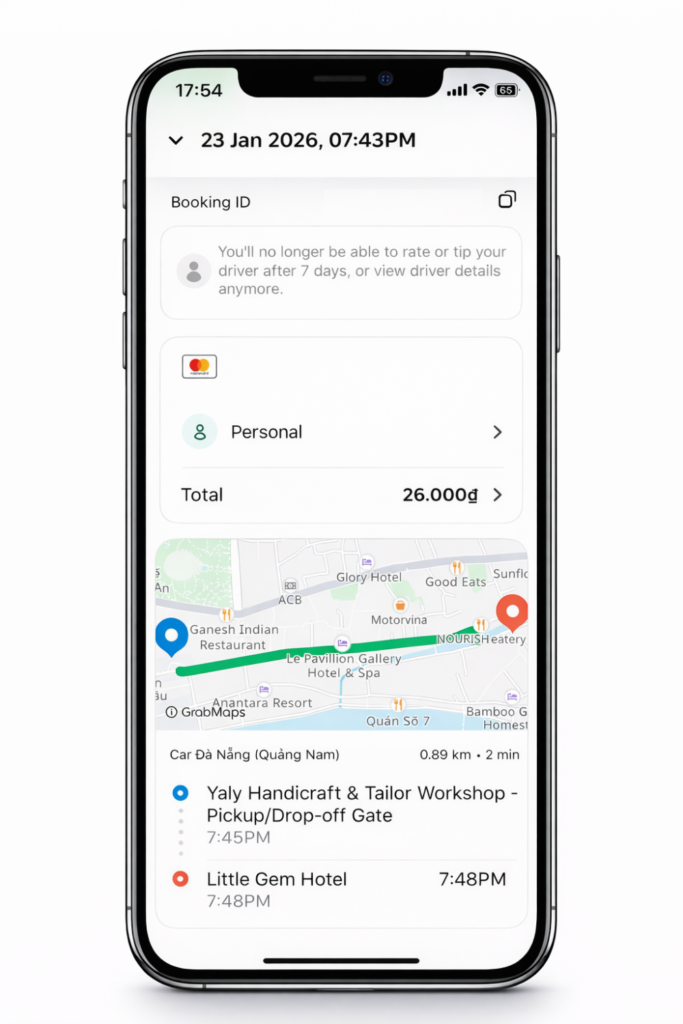
Safety is another important factor. The app tracks each journey, displays the driver’s profile and keeps a record of your ride history. It does not remove every possible risk, but it provides a greater level of transparency than hailing a taxi at random. For many independent travellers, particularly those travelling alone, this added reassurance makes a noticeable difference.
How the Grab App Works: Booking and Payment Explained
To use Grab, you simply download the app on your smartphone, register with an email address and phone number, and add a payment method. You can choose to pay in cash, but in my experience this is less practical. Paying through the app makes the process smoother and reduces the likelihood of misunderstandings.
Across much of Southeast Asia, digital payments are widely accepted, even for small services such as massage chairs in shopping centres. Paying directly through the app helps avoid language barriers and potential overcharging aimed at tourists. The app displays the final fare before you confirm the booking, and the price remains fixed. Only after the ride can you decide whether to leave a tip through the app, without any pressure from the driver.
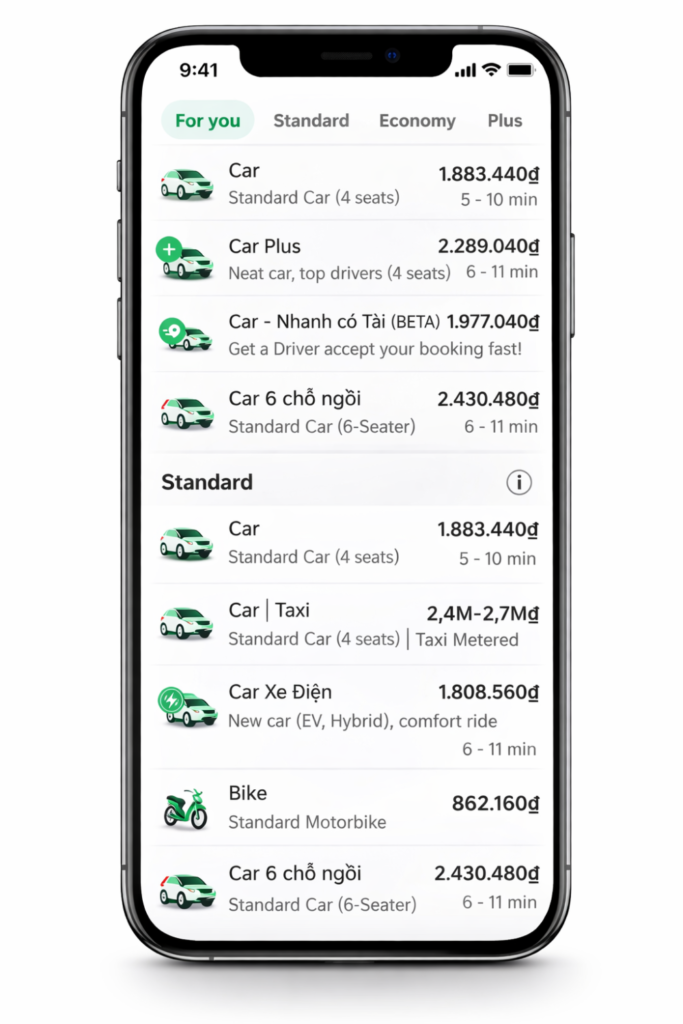
The app calculates the fare based on the distance between your current location and the destination you enter, while also factoring in demand at that specific time and the type of vehicle you choose. During peak hours or major events, the same journey can cost more. Luxury cars or six-seater vans naturally cost more than standard cars or motorbikes.
To book, you simply enter your destination on the map. The app automatically identifies your pick-up point, shows nearby drivers and displays the available options, including different categories of cars, vans or scooters. Once a driver accepts the request, you can track their arrival in real time, check the registration number and communicate via in-app chat, with automatic translation into English.
Grab Discounts and Promotions: How They Work
One of the less well-known aspects of Grab concerns its promotions. In addition to the standard welcome discount when you first register, the app regularly features offers on rides and services. You can also collect GrabCoins by completing specific activities, such as ordering food, booking a ride in advance or organising a group order, and later convert them into discounts.
The value of discounts and the related conditions vary from city to city and from country to country. Some promotions are valid only during certain time slots, while others apply to airport transfers. Not all offers are available everywhere, and many are time-limited.
Even if you are visiting as a tourist and only using Grab for a few days, it is worth checking the promotions section before confirming a ride. You may find immediate reductions simply by selecting a different vehicle category, without needing to enter codes or meet complicated requirements.
Where Grab Is Available in Southeast Asia: Vietnam, Thailand, Indonesia and Beyond
Over the years, Grab has become one of the main transport apps for travellers exploring Southeast Asia independently. It is active in most major cities and popular tourist destinations, making daily journeys much easier to organise. For many independent travellers, it represents one of the most practical ways to get around without negotiating fares or searching for reliable taxis.
Today, Grab operates in:
- Vietnam
- Cambodia
- Indonesia
- Malaysia
- Myanmar
- The Philippines
- Singapore
- Thailand
That said, coverage is not always uniform within each country. In capital cities and larger urban centres you are unlikely to encounter difficulties, whereas in rural areas or on less-visited islands the app may not be available. For example, in Indonesia Grab works in Jakarta and Bali, but it does not operate on every island in the archipelago.
Before relying entirely on the app, it is advisable to check whether your specific destination is covered. You can find the most up-to-date list of serviced areas in the “Where We Are” section of Grab’s official website.
When to Choose a Scooter or a Car with Grab in Southeast Asia
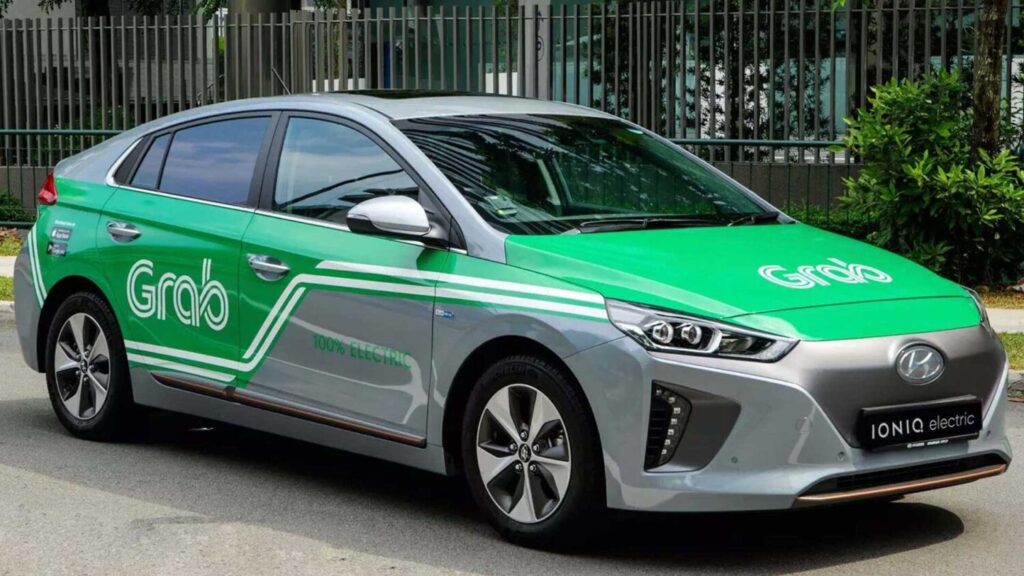
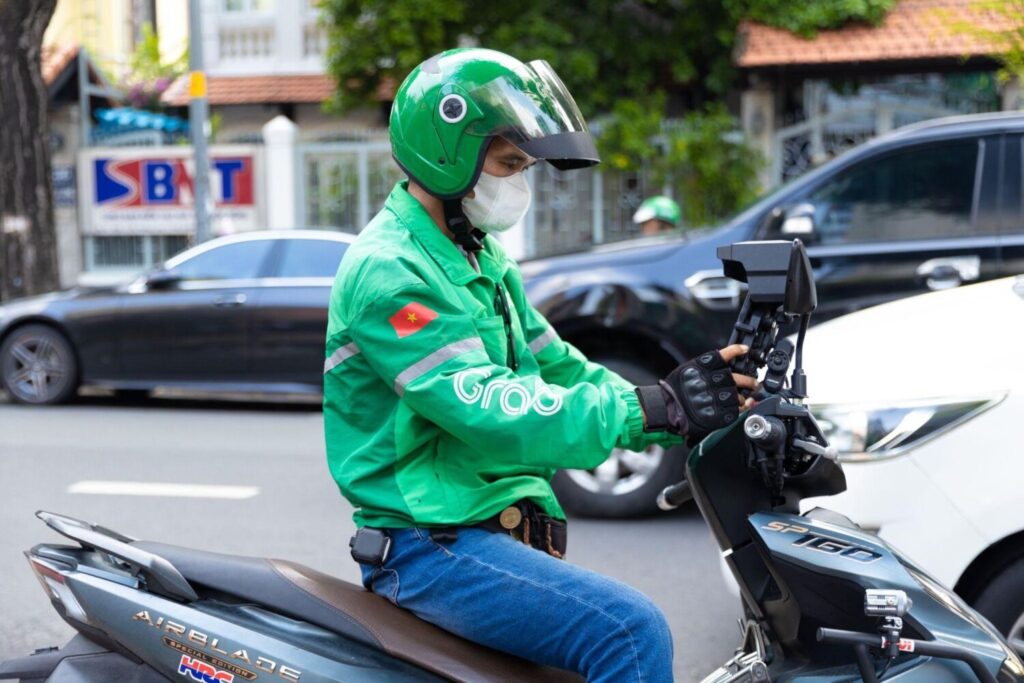
When you book a ride with Grab, you can choose not only a car but also a motorbike with a driver. The price difference is often significant, particularly in large cities where traffic is heavy. In most cases, a scooter offers the cheapest and quickest way to cover short urban distances.
In some situations, the saving is so noticeable that two people may spend less by booking two separate motorbike riders rather than one car. This works especially well if you are travelling as a couple without bulky luggage. A scooter also moves more easily through traffic and often cuts journey times during peak hours.
Motorbikes used as taxis are a normal part of daily life across much of Asia. In Vietnam, for example, the traditional motorbike taxi has operated for decades under the name xe ôm. Grab has simply digitalised an already established practice, making it more transparent and easier to track.
A car remains the better option if you are travelling with large suitcases, with children or during tropical downpours. A scooter suits short city journeys when you want to save money and move quickly through urban traffic.
Grab Beyond Transport: Food Delivery, Shopping and Other Services
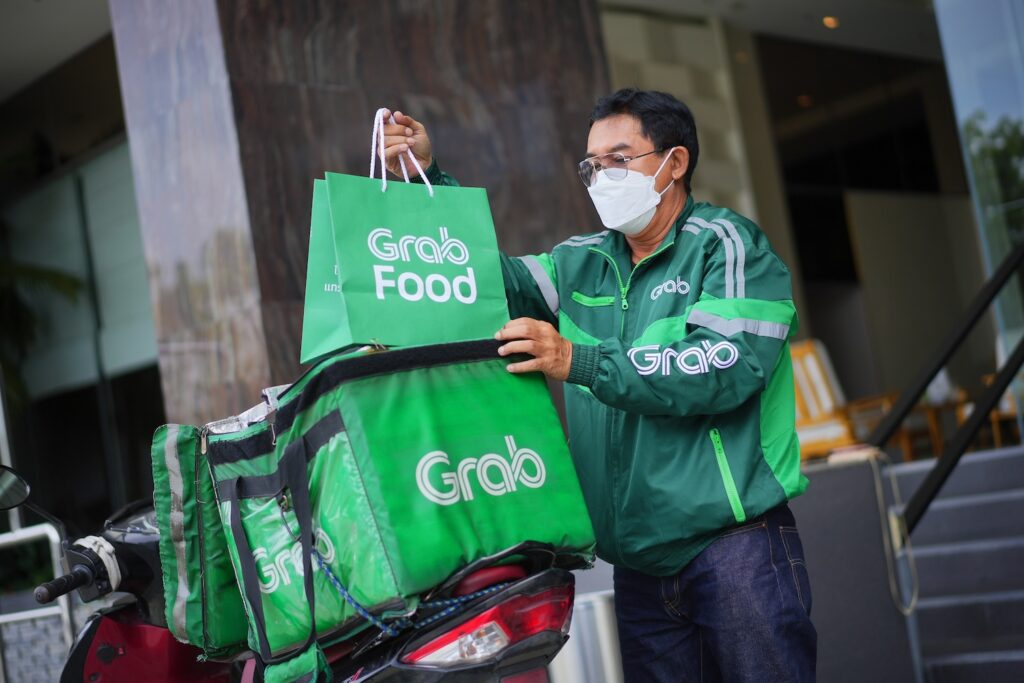
The Grab app is not only a platform for booking cars or motorbikes with a driver. Over time, it has developed into a multi-service platform that combines transport, deliveries and digital payments within a single ecosystem. People across Asia use it daily, not just to get around, and this makes it particularly useful for travellers as well.
In several countries, GrabMart allows you to order groceries, snacks, drinks or pharmacy items and have them delivered quickly. If you are staying in an apartment or spending a few days in the same city, this can save time and effort, especially when you need water, breakfast supplies or small essentials without searching for a supermarket.
While travelling, you can use GrabFood to order local dishes or international cuisine directly to your hotel, hostel or apartment. It works well when you return late from an excursion, when it is raining or when you simply prefer to rest after a long day of sightseeing. The system operates in a similar way to the delivery apps used in Europe, such as Deliveroo, Glovo or Just Eat. Grab clearly displays reviews, delivery times and prices before you place your order, too.
How Grab Helps You Travel More Safely in Southeast Asia
For many women travelling alone, safety influences everyday decisions, including the choice of driver when moving around a city. Using an app such as Grab means you can track the journey, view the driver’s details and keep a record of your ride history. Digital tracking adds a level of transparency that a taxi hailed on the street does not always provide, especially in places where you do not speak the language or understand local dynamics.
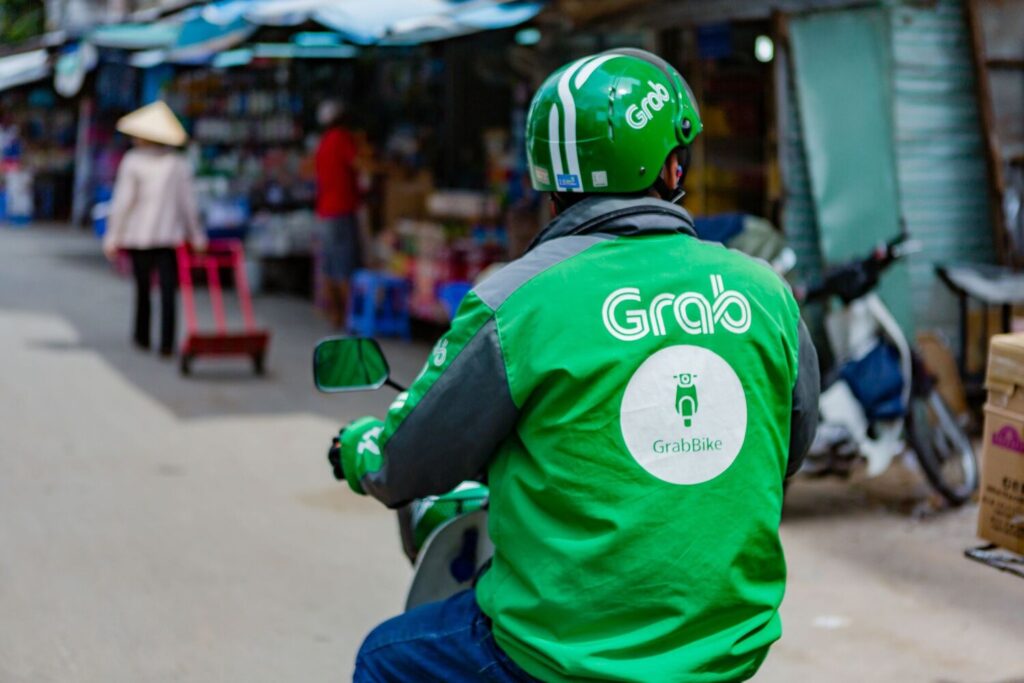
While walking along the street, someone wearing a Grab uniform may offer you a direct ride. Drivers are generally polite, but I recommend booking only through the app and relying on authorised riders and drivers. Those who approach you in the street often operate outside the platform, and the fare they request may be higher than the price shown in the app. Remember that a uniform alone does not guarantee authenticity. In several countries, including Vietnam, you can find Grab jackets and helmets for sale in souvenir shops!
After a regular ride, some drivers may give you their personal number and suggest contacting them directly in the future. Taxi drivers have used this practice for years because it allows them to avoid the commission that Grab or taxi companies deduct from each ride and to keep the full payment in cash. However, booking through the app remains the only way to ensure your journey is tracked, your fare is transparent and platform safeguards apply.
Most drivers act in good faith and simply aim to earn a little more. If you are satisfied with the service, you can reward a courteous driver by leaving a tip through the app. Rounding up the fare will usually cost you just a few cents in euros. If you consider arranging a private ride, check the expected fare in the app first. Agree on the price in advance and, if it does not seem reasonable, book another driver through Grab.
Long-Distance Transport in Southeast Asia: Trains, Buses, Flights and Ferries
Grab works perfectly for getting around cities or covering short distances. To cross a country or reach another city, long-distance trains and buses often provide the most economical option. For longer journeys, compare timetables, duration and comfort levels before booking. In many parts of Southeast Asia, the price difference between a basic seat and a higher class ticket is minimal, yet it can transform the overall travel experience.
In Vietnam, for example, the overnight train connecting Hanoi and Ho Chi Minh City crosses much of the country and offers several seating categories, from standard seats to sleeper berths. During my first low-cost trip to Vietnam, we booked standard seats and found the journey extremely uncomfortable.
After that experience, I chose a higher-class sleeper berth on the overnight train from Bangkok to Chiang Mai in Thailand. When travelling by coach from Malaysia to Singapore, I selected “luxury” buses with wide seats, spending only a few euros more than standard services.
In Thailand and Cambodia you can also find sleeper buses with reclining seats and proper beds for overnight travel. If you are travelling between islands, ferries often form an essential part of the journey. When you are short on time, domestic flights can save many hours compared with travelling overland or by sea.
To compare timetables and fares across Asia, I recommend using the booking platform 12Go, which brings together different transport options in one search. You simply enter your departure and arrival points to review journey times, costs and transport types before booking. Compared with many European and US booking platforms, 12Go usually offers a wider range of choices in Asia.
Getting around Southeast Asia is now far easier thanks to ride-hailing apps, and Grab remains one of the most practical options for city travel. For longer distances, it is always worth comparing trains and long-distance buses, taking comfort and journey time into account. Feel free to share your experience in the comments if you have used Grab in Asia and how you usually organise your transport while travelling.
