
Staying in a homestay in Vietnam meant living, even for just a day, the ordinary reality of those who opened their homes to me. I moved away from Western standards and comforts, and it was not always easy. I shared spaces, slow rhythms and habits far removed from my own routines. The experience goes far beyond the romantic image of hospitality found in travel brochures. It demands adaptation, patience and curiosity. Yet it is deeply rewarding, because you remain captivated by the warm and generous hospitality that defines Vietnam.
Table of Contents
Where to Find Authentic Homestays in Vietnam: From Northern Mountains to the Mekong Delta
In Vietnam, the most authentic homestays are in rural areas, far from major tourist centres. In these small villages, inhabited for generations, life still follows the rhythms of nature and agricultural work. Daily routines continue regardless of who is sleeping under the same roof.
PLAN YOUR TRIP TO VIETNAM – 5% discount on your eSIM and travel insurance
For getting around Vietnam with ease, choose a Holafly eSIM: you get unlimited internet, perfect for using Google Maps, Grab or other navigation apps, booking transport on the go, and sharing photos and videos in real time on WhatsApp without worrying about local SIM cards or extra charges.
For extra peace of mind, pair connectivity with Heymondo travel insurance, which covers you in case of medical emergencies, delays or cancellations. A practical solution that lets you focus on exploring Vietnam, rather than dealing with unexpected setbacks.
In the north of the country, you can stay in homestays in the mountains around Sapa and Hoang Su Phi. While Sapa is now firmly part of organised tourism, in Hoang Su Phi I encountered very few Western travellers. To reach mountain villages such as Giang Ha, I walked for hours along narrow paths climbing through terraced rice fields. The journey itself became part of the experience.
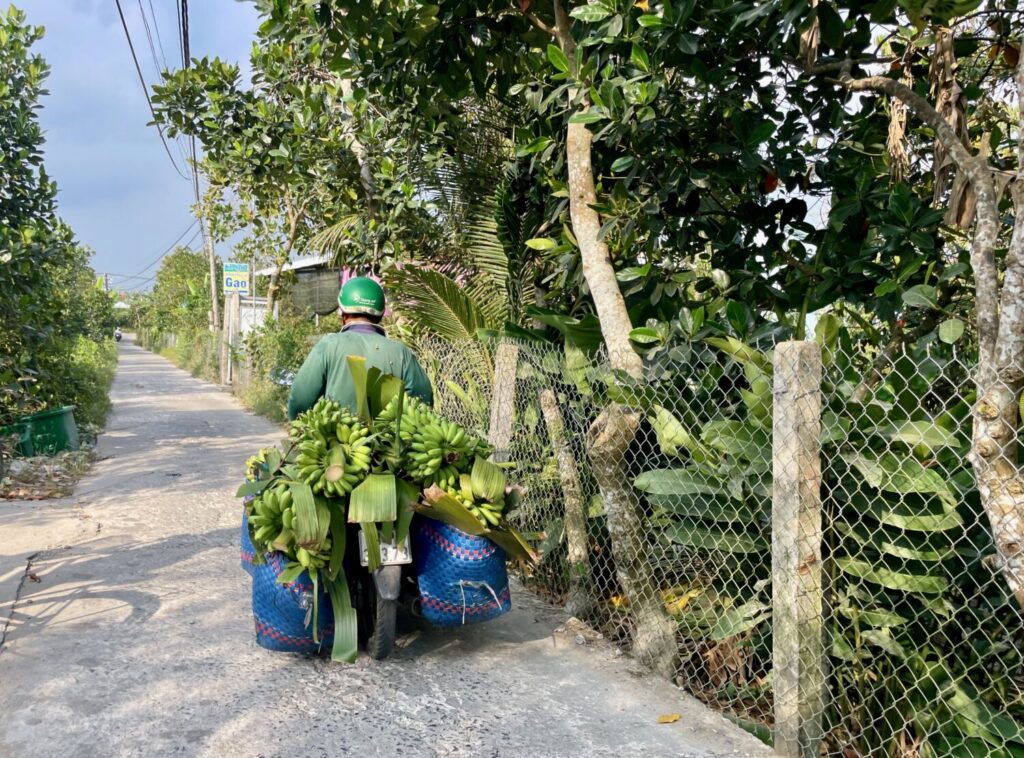
In southern Vietnam, in the Mekong Delta, rural houses stand along the canals. Water and fruit orchards surround the houses, and daily life unfolds outdoors. Although the concept of homestays in Vietnam began here, the experience remains deeply rooted in local family life. The household does not pause for guests, and everything flows at the river’s slow pace.
To reach the more isolated areas, I had to make a real effort, yet I was rewarded with hospitality untouched by commercial logic. Although I arrived as a traveller, I quickly understood that in rural Vietnam sharing is simply part of everyday life. Families do not offer a packaged experience; they open their homes and routines without filters. You receive a genuine glimpse into daily reality rather than a curated tourist product. That honesty is exactly what makes the experience so distinctive and compelling.
What Staying in a Vietnamese Homestay Really Means
In Vietnam, the term homestay does not simply describe a type of accommodation. It reflects a different way of inhabiting space and sharing daily life. Many properties labelled as “homestays” online are located near larger towns or along established routes. They offer greater comfort and private areas, yet they do not represent the reality of rural Vietnamese homes.
For me, the most powerful experiences were those that were hardest to reach. The adventure began long before arrival, and the connection with the place felt complete. A true homestay means stepping into a house organised solely for those who live there every day. Nothing is adjusted to suit your preferences, and family routines continue unchanged.
Adapting to established schedules, sleeping rhythms and shared spaces shaped by generations was both unique and disorientating. Although I am used to travelling in countries with different languages and customs, I initially felt genuinely out of place. The cultural distance felt deeper than I had expected.
Accepting the absence of modern comforts proved challenging, especially at first. In rural Vietnam, homes are often simple, with concrete floors and no clear division between kitchen and sleeping areas. My idea of privacy quickly disappeared, replaced by total sharing of space.
Choosing this form of hospitality forced me to surrender control over my daily routine. Yet it transformed my journey from a conventional trip into something far more meaningful. Living according to rules that were not mine offered a perspective on Vietnam that no traditional hotel could provide.
Inside a Rural Vietnamese Home: Why You Should Forget Hotel Standards
The homestays I experienced in Vietnam were simple rural houses, far removed from any idea of a hotel or resort. They welcome you without altering the local way of life. Breakfast is usually included, yet the comparison with a bed and breakfast ends there. Choosing to stay in a rural home means living exactly as local families do.
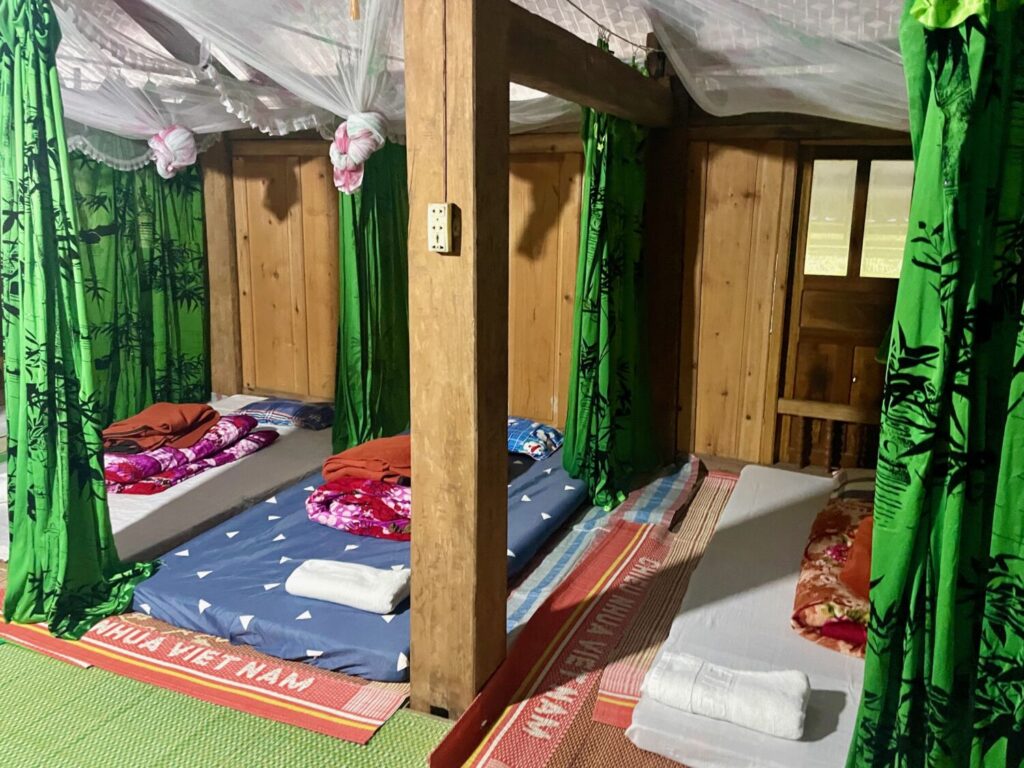
You must quickly forget the comforts of even a basic European guesthouse. In a Vietnamese homestay, you might sleep on a traditional wooden bed, under mosquito nets and ceiling fans instead of air conditioning. At times, you may rest on a woven mat laid over a thin mattress on the floor. In mountain houses, such as the one where I stayed in Giang Ha, the sleeping area can be a single shared room divided only by light curtains.
For this reason, the first encounter with a homestay can feel demanding if you are not prepared for the experience. Comfort is not the focus, and adaptation is essential. Yet this very simplicity shaped my most authentic memories of Vietnam. The absence of excess allowed everyday life to emerge with clarity and honesty.
My First Night in a Vietnamese Village: Culture Shock and Hospitality
During my first trip to Vietnam, I spent one night in the old family home of a friend, in a central village with no street lighting at all. That experience felt unusual from the very beginning. I shared a large communal room with friends and relatives travelling with us. In Vietnam, the concept of personal space stands far from European expectations.
Homes are shared naturally between several families and generations. What may initially feel disorientating gradually reveals itself as a remarkable form of hospitality. Vietnamese families open their doors to strangers in ways that many Europeans would find unimaginable. Despite the initial discomfort, that quiet generosity stayed with me and remains one of my most vivid memories of the journey.
A Night with the Red Dao: Life in a Remote Northern Homestay
In Giang Ha, an isolated mountain village, I stayed with a family of the Red Dao minority. We reached the house after a demanding trek through steep paths and terraced landscapes. By the time we arrived, exhaustion had already reshaped our expectations.
The structure that welcomed us was incredibly basic, almost difficult to define as a “house” by Western standards. It consisted of a large room with a concrete floor, an outdoor bathroom and a wooden loft covered with woven mats where we slept. Everything was essential and functional. Nothing had been adapted for visitors.
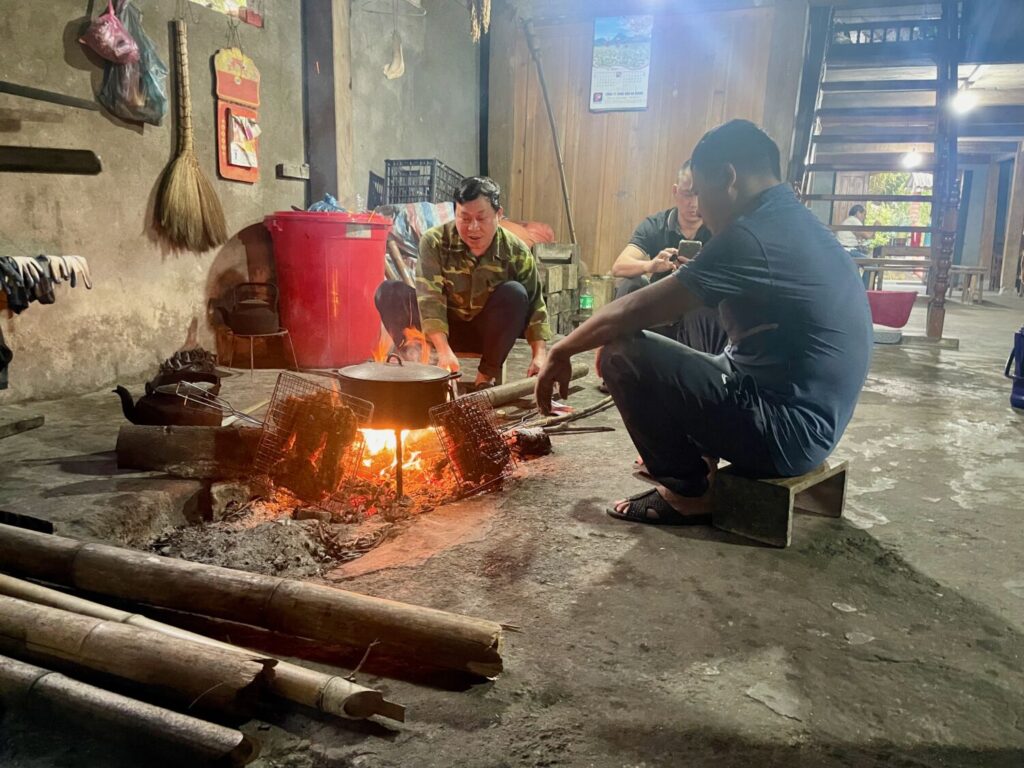
In rural Vietnamese homes, there is no division into separate rooms as in Europe. Daily life revolves around a single shared space. The cooking area, often a stove placed at the centre, forms the heart of the house. Beds are usually arranged along the sides of the room.
There was no heating, no television and no internet. Our “bedroom” was a thin mattress on the floor. I felt completely cut off from the outside world. Yet witnessing how what seems unimaginable to us represents everyday normality for others became a profound lesson. In that deep silence, I experienced the full meaning of hospitality on the other side of the world.
Planning Your Homestay in Vietnam: Practical Advice Before You Go
In a homestay, you share spaces, meals and sometimes even daily activities with the host family. The experience is truly unique because it allows you to discover a way of life that you would never encounter through a conventional tourist itinerary. You witness meals prepared over an open flame inside the house. You watch families cultivate rice and raise their domestic animals.
I had stayed with a family in Ho Chi Minh City years earlier, so I already knew that Vietnamese family life revolves around meals. In a homestay, you genuinely understand the deep connection between Vietnamese cuisine and hospitality. You observe the entire family cooking for guests using local and seasonal ingredients.
However, beyond the appeal of this shared experience, you must also consider certain challenges. The isolation of the locations and the cultural shock can be significant. It is important to prepare yourself consciously for a family stay in Vietnam.
Reaching Remote Ethnic Villages in Northern Vietnam: What to Expect
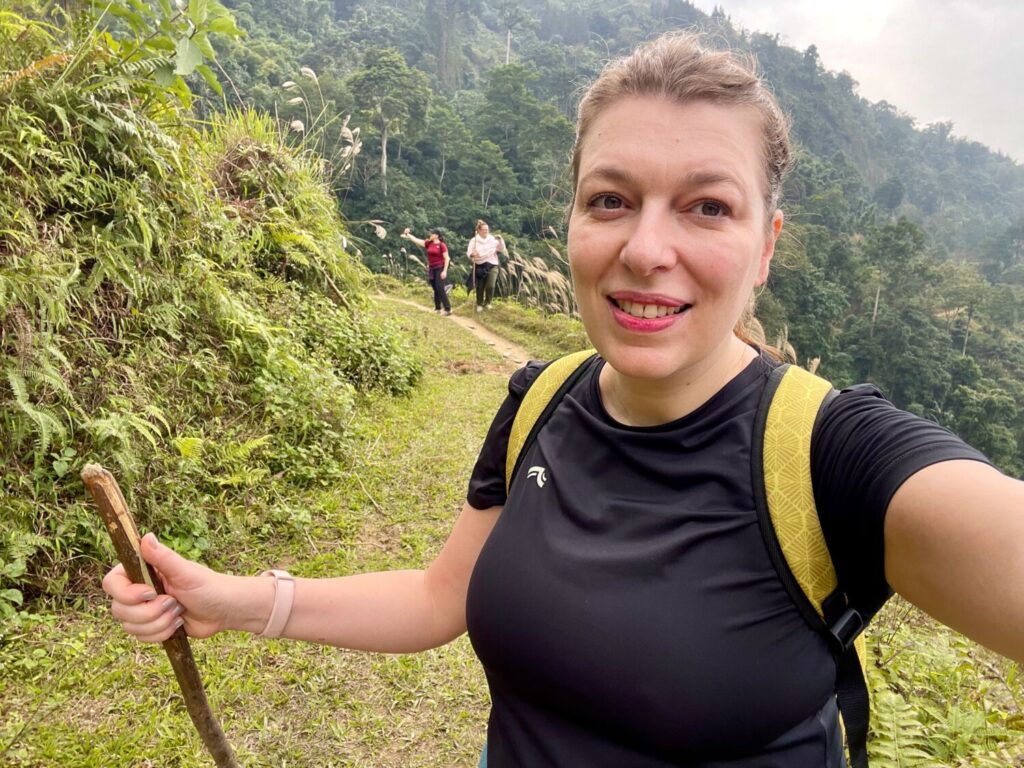
If you choose to stay in a homestay among the ethnic minorities of northern Vietnam, the only way to reach the villages is by walking for hours along mountain paths. I must admit that no one in my group had prepared properly, and we found the journey there exhausting. A trek in northern Vietnam is far more demanding than the gentle walk through rice fields you might imagine.
The villages are truly isolated from everything. Locals navigate the steep paths by motorbike, while children walk for more than an hour to reach school. For this reason, completing primary school is a source of great pride for families. They carefully frame the diplomas and display them on the walls of their homes.
Navigating Language Barriers in Vietnam’s Ethnic Minority Regions
In the mountains of Vietnam, staying in a homestay truly takes you into another world. In northern Vietnam you can meet people from the ethnic minorities such as the Red Dao, the H’mong, the Tay and the Nung. The encounter feels intense because of customs shaped by isolation. Language becomes a barrier that extends beyond standard Vietnamese.
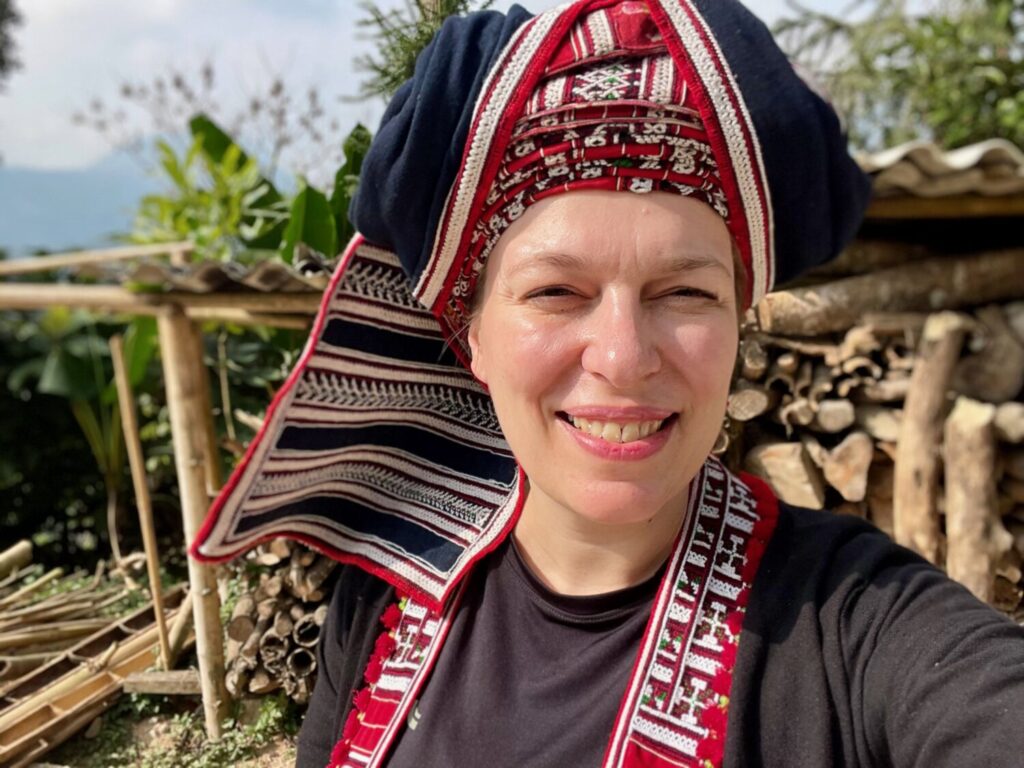
To reach Giang Ha, we travelled with our Vietnamese guide and a local guide who did not speak English at all. He knew the mountain paths and the local dialects. Thanks to him, we discovered that the woman who hosted us for lunch near Hoang Su Phi personally sews and embroiders the traditional garments worn by visitors and sells them on request.
Behind every house and family there is a story that deserves deeper understanding. You can access it only through mediation by a local guide. Without someone who speaks the local language, you remain on the surface of a world rich in traditions and narratives. The same applies to minority dialects in the north as well as to standard Vietnamese in homestays in the Mekong Delta.
What to Pack for a Vietnamese Homestay: Essentials You Truly Need
A homestay takes place in a private house and, although you will almost certainly find soap, towels and blankets, you should bring items normally provided in hotels. For our stay in Giang Ha, the guide advised us to carry shampoo, conditioner and toothpaste, which were not available. What may surprise you is how limited the comforts can be.
To give you an idea of our disorientation, one member of our group brought hair straighteners to a place where charging a phone was already uncertain. Based on our experience, you should pack a sleeping bag liner to place between the blankets and a microfibre towel, given the humidity. Practicality matters far more than appearance in these remote settings. I also recommend a tracksuit for sleeping instead of pyjamas, a head torch for the outdoor bathroom at night and a power bank.
In rural areas, you will need to carry everything in a backpack. If your homestay includes trekking, organisers often arrange porters. Even so, you must keep your luggage extremely light, as they usually load the group’s bags together onto a motorbike. Avoid fragile items and reduce your belongings to the bare minimum.
Travelling with Children in Vietnam: Why a Homestay Can Be Transformative
During my stay in Giang Ha I was travelling with fellow bloggers, yet I immediately thought how much my son would have enjoyed it. When he saw the photographs, he asked when we would go together. Children, less conditioned by comfort and routine, often adapt more easily to simplicity.
I genuinely believe that travelling with children in a rural homestay can be unexpectedly educational. Open spaces, direct contact with nature and observation of daily life encourage curiosity and respect for different cultures. Vietnamese cuisine, simple and fresh, often suits younger tastes.
Homestay Costs and Bookings: How to Arrange an Authentic Experience
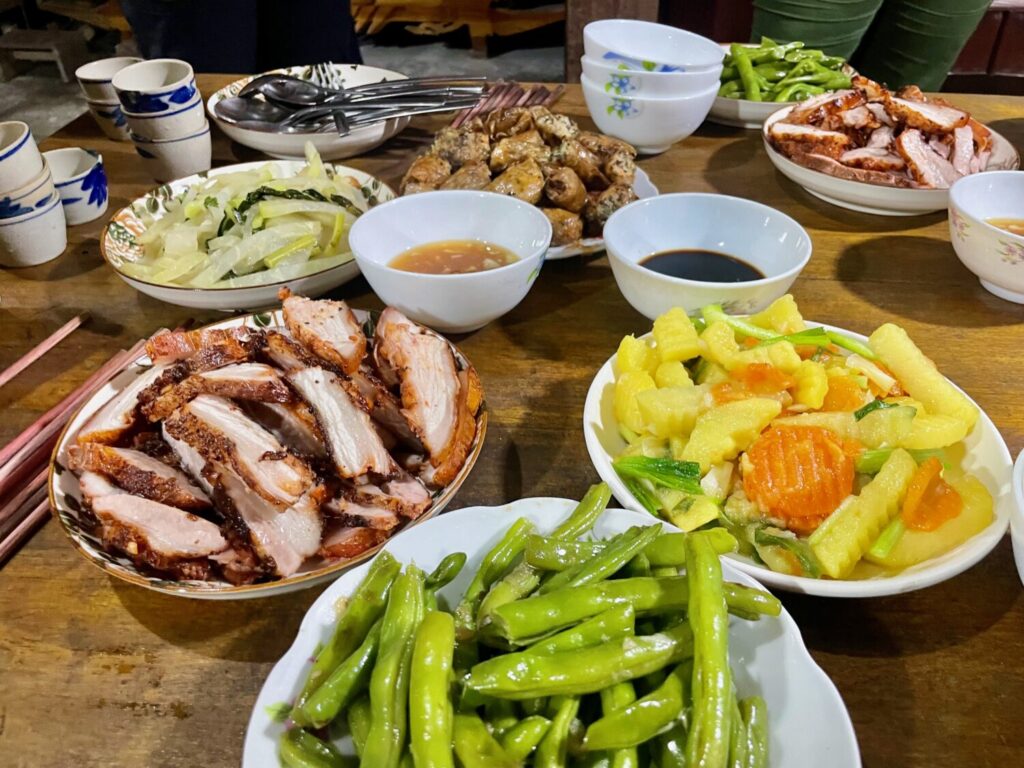
Homestays are an affordable form of accommodation, with prices ranging from €10 to €25 per person per night, depending on the area and included services. Homestays usually include meals in the price, as the villages are often so isolated that you simply cannot eat elsewhere.
Keep in mind that homestays found online and booked independently are usually closer to guesthouses than to genuine family homes in rural areas. The unique experience I had in Giang Ha was possible only through the mediation of the local tour operator Travel Sense Asia.
The Panhou Retreat, near Hoang Su Phi, supports this project, working with the host families and the local trekking guides. This eco-sustainable property works closely with local minorities to promote a sustainable local economy. For homestays, relying on a reputable local agency is essential to book an authentic experience rather than a softened version designed for tourists.
Why Choosing a Homestay in Vietnam Changes the Way You Travel
Choosing a homestay in the mountains or countryside of Vietnam means embracing a slower and more mindful approach to travel. This form of accommodation allows you to move away from established routes, connect with local communities and experience your journey with greater awareness.
Staying in a homestay also supports local economies and promotes forms of hospitality that respect both environment and culture. Travel becomes a true exchange, far removed from mass tourism. Feel free to share in the comments if you have experienced something similar or are considering a homestay during your next trip to Vietnam.
