The Three Countries Museum in Lörrach, known as the Dreiländermuseum in German and the Musée des Trois Pays in French, is an ideal stop when travelling in southern Germany. It offers a unique cultural experience and is also perfect if you are visiting with children. Lörrach stands at the meeting point of three countries in a region where languages and traditions mix naturally every day. As you enter the museum, you start a journey across political, cultural and historical borders. The exhibition explains complex topics in a clear and engaging way.
Table of Contents
Discover the Three Countries Museum in Lörrach
The Dreiländermuseum in Lörrach, also known as the Musée des Trois Pays, stands at the corner of a triangle formed by Germany, France and Switzerland. It is the only museum in Europe to focus entirely on the similarities and differences between three neighbouring countries. You can find something similar only in Gorizia and Nova Gorica, at the border between Italy and Slovenia.
The geographical area is the same across all three nations. The landscape does not change and rivers flow continuously across borders. Laws, identities and frontiers, however, are shaped by people and by history.
Arriving in Lörrach from France, you hardly notice any real change and you do not feel the moment you cross the border. With nearby Basel in Switzerland, Lörrach shares public transport through a direct regional train service. From the train window, the urban landscape looks seamless and uninterrupted.
This sense of continuity makes the museum even more meaningful once you step inside. It helps you understand how borders can be invisible in daily life and powerful on maps, offering a clearer and more thoughtful way to read this unique region.
What to See at the Three Countries Museum in Lörrach with Children
The Three Countries Museum in Lörrach tells the story of this region’s deep connection with Germany, France and Switzerland through images, maps and 3D models. Each room leads you on a geographical and historical journey that starts from the land and moves towards everyday life, showing how landscapes, rivers and towns have shaped borders, habits and identity over time.
Large maps and detailed scale models reveal how artificial borders often are when compared to the real landscape. Mechanical exhibits, sliding panels and hands-on displays make the visit easy to follow even without reading every caption.
The Three Countries Museum is highly interactive and especially enjoyable for children. They can touch, move and experiment while learning how river systems work or how borders have changed through the years. Every room feels like a small classroom of geography and history, where learning happens naturally through play and observation.
Shared Heritage: Similarities Between Germany, France and Switzerland
The first part of the museum is a large introductory hall filled with panels and maps explaining the geography of Baden-Württemberg and the surrounding regions. Looking at the area from above, borders almost disappear, just as they did when I arrived in Lörrach by car.
After this visual and geographical introduction, the route continues towards the floor dedicated to temporary exhibitions and then to the permanent section on the similarities between Germany, France and Switzerland.
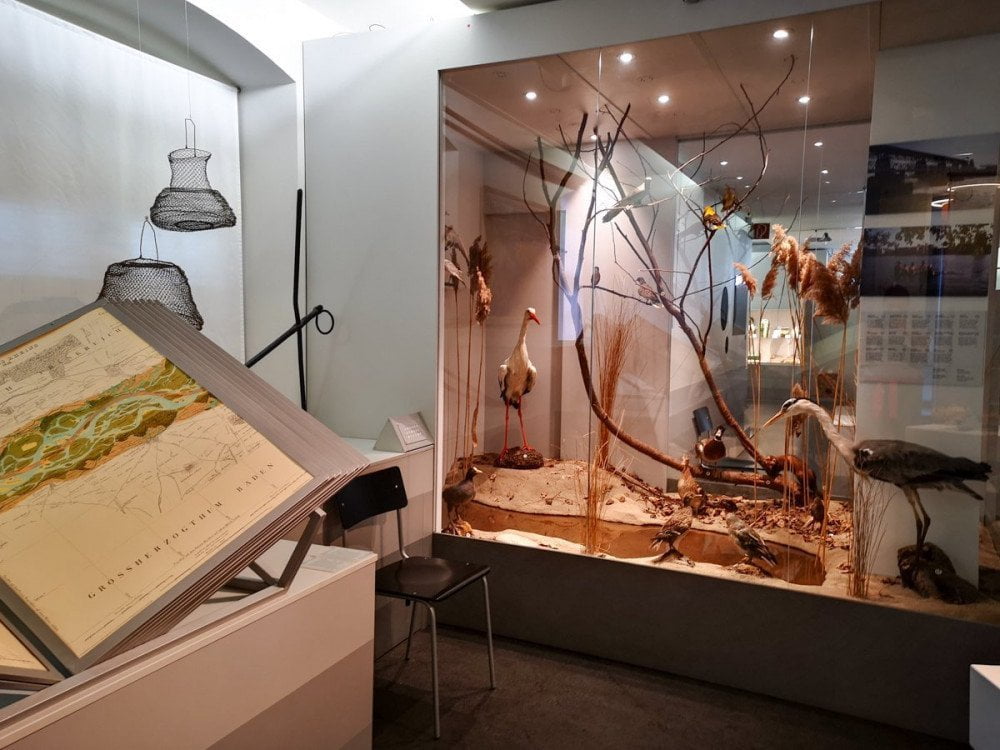
Here, the landscape becomes the main focus, with the River Rhine acting as the central thread. Through scale models and interactive displays, you discover how water, climate and terrain have always connected this region, unlike political borders that later divided it.
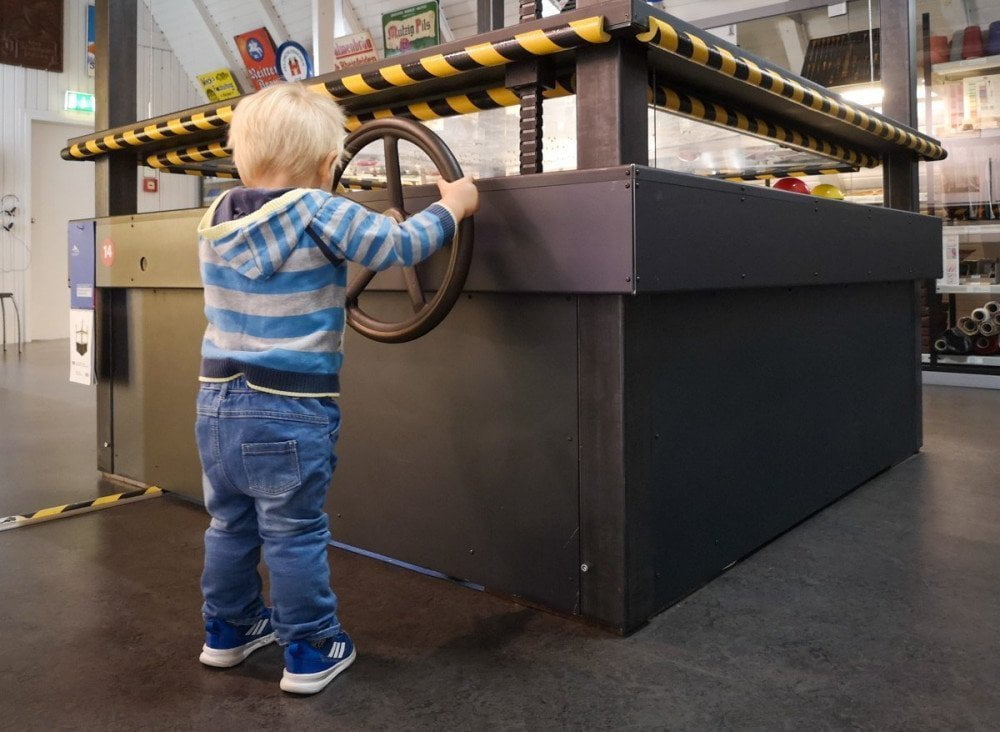
Children can enjoy playing with a large wooden river where marbles can be rolled, tilted and redirected. This hands-on activity explains in a simple way how floods work and how rivers change their course over time.
Nearby, river scenes with taxidermy animals recreate daily life along the Rhine. I am not a fan of taxidermy, which seems to appear in almost every natural history display. However, the Three Countries Museum does an excellent job, and these dioramas feel realistic without being unsettling.
Borders and Identity: Differences Between the Three Countries
I will say it straight away: this was my favourite section of the Three Countries Museum in Lörrach because it is genuinely fascinating. After exploring geographical similarities, the next rooms focus on the closure of borders between Germany, France and Switzerland from 1918 onwards.
The German sign “Einführung der Grenzkontrolle” sets a serious and rigid tone. If, like me, you grew up in the 1980s, you probably remember long queues at border controls and the need to carry documents just to travel across Europe, even if you were a European citizen.
One area is dedicated to symbols and stereotypes from the three neighbouring countries. Both adults and children can try on traditional German, French or Swiss costumes and look at themselves in distorted mirrors. I also loved the section on local production, where yoghurt pots and chocolate wrappers show how tastes and design have changed over time.
If you enjoy immersive displays, you can step into a dark room where the surrounding mountains come to life. The visit ends with a section on the First World War, told through German and French propaganda posters and a display of objects from the Reichsland period.
Practical Information for Visiting the Three Countries Museum in Lörrach
Before planning a visit to the Three Countries Museum in Lörrach, it is useful to know how communication works inside the museum, especially if you do not speak German, which is essentially the only language used by the staff.
The museum is fully accessible from a structural point of view. However, during my visit I was not allowed to use the lift with a pushchair and had to leave it at the entrance. I cannot say whether this is always the rule, but it is something to consider if you are visiting the Dreiländermuseum with very young children.
Large bags and backpacks must be left at the entrance in the locked lockers. This is a common practice in most museums and makes it easier to move around freely without unnecessary weight or clutter.
Languages Used Inside the Three Countries Museum
The museum captions are written in German and most of them are also translated into French. However, the staff, at least during my visit, did not speak French and had very limited English, so some explanations may be difficult to follow if you do not understand German.
This should not come as a surprise, even though it feels strange in such an international border area. Many museums in Germany, including those in larger cities, do not always provide detailed information in English, so it helps to be aware of this before your visit.
Locally, the Dreiländermuseum is well known for its family activities, which are also available only in German. The guided tours for children allow them to touch, experiment and play with several displays, turning the museum into a place of active discovery rather than simple observation.
Temporary Exhibitions at the Three Countries Museum in Lörrach
The Three Countries Museum regularly hosts temporary exhibitions. During my visit, there was an excellent exhibition exploring the relationship between art and Nazism. Created in collaboration with the Basel Historical Museum, it compared the official aesthetics promoted by the regime with the work of artists who did not conform to it.
Opening Times of the Three Countries Museum
The Three Countries Museum in Lörrach is open from Tuesday to Sunday, from 11:00 to 18:00. Opening hours may vary on public holidays, so it is best to check the official museum website before your visit.
Tickets and Prices for the Three Countries Museum in Lörrach
Entrance to the Three Countries Museum is affordable and designed with families in mind. Adult tickets cost € 3, while children under 6 enter for free. For children over 6, admission is € 1, and reduced family tickets are also available if you are visiting with more than one child.
How to Reach the Three Countries Museum in Lörrach
I visited the Three Countries Museum by car, a convenient option if you are travelling around the region with several stops between Germany, France and Switzerland. The museum is located in the city centre, so once you park you can easily reach it on foot and combine your visit with a walk around Lörrach.
If you are using public transport, the museum is still easy to reach. From Basel station, take tram line 6 to Riehen Grenze, cross the border and then continue by bus 6 or 16 to the Museum stop. It is a curious journey because you change country within minutes without really noticing. From Weil am Rhein station, the museum is only a four-minute walk away.
Dreiländermuseum / Musée des Trois Pays
(Three Countries Museum)
Basler Straße 143
79540 Lörrach
Conclusion: Why the Three Countries Museum in Lörrach Is Worth Visiting with Children
If you are planning a trip to Lörrach or nearby Basel, the Three Countries Museum is an interesting stop that is well worth adding to your itinerary. Children will enjoy the interactive displays, while adults will discover how borders are often more political than real in everyday life.
Feel free to share your experience in the comments to help other travellers with ideas and inspiration. I want to hear if you have already visited the museum or know of other places dedicated to border regions and neighbouring countries.
