Mulhouse Zoo is a beautiful biopark set within the city’s botanical garden, home to over 1,200 animals representing 190 species. Some are remarkably rare, including the okapi, halfway between a zebra and a giraffe, and the polar bear. The walking paths wind through woodland and landscaped areas, mixing wild and domestic animals with open green spaces. Visiting Mulhouse Zoo in Alsace feels like a full immersion in nature, perfect for curious travellers and families.
Table of Contents
Mulhouse Zoo: A Botanical Garden and Zoological Park in Alsace
Mulhouse Zoo, known in French as the Parc zoologique et botanique, is one of the oldest zoos in France and was founded in 1868. If you take a ride on the small electric train, you can discover more about its construction. The driver explained that some of the stone buildings were constructed by prisoners of war. This surprising detail contrasts with the zoo’s long-standing social and educational mission.
PLAN YOUR TRIP TO FRANCE
Stay connected with a Holafly eSIM during your trip to France and enjoy unlimited data, with fast reliable internet and no roaming charges.
Get Heymondo travel insurance to travel carefree and enjoy every moment of your adventure.
Unlike many zoological parks, Mulhouse Zoo was designed from the start as a place of learning. In 1965, it launched the “school at the zoo” programme, which still runs today. Volunteer teachers lead guided visits every Thursday, welcoming around 14,000 pupils each year, supported by two educators and scientific mediators.
Beyond being a biopark, Mulhouse Zoo is also a botanical garden. The grounds feature more than 3,000 plants, including 450 varieties of rhododendrons. Since 1995, clear plant labels have made identification easier. You can also see 200 species from the Alsatian botanical conservatory, displayed in themed gardens.
The Woodland Trail: A Nature Experience for Children
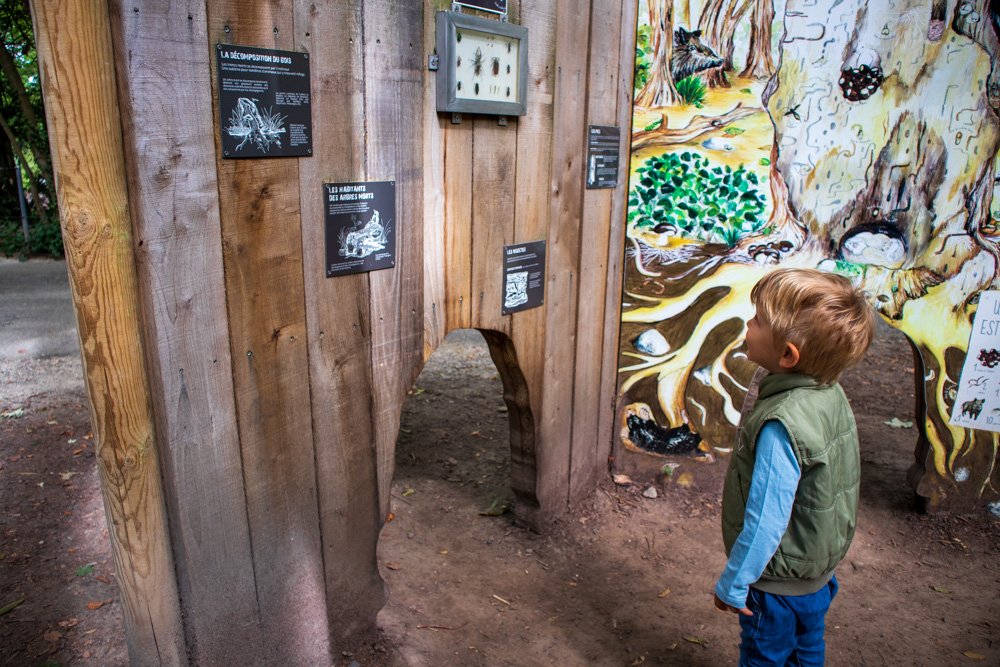
One of the most appealing parts of Mulhouse Zoo is the full immersion in the Alsatian woodland. Here, information panels are designed especially for children. Along the paths, you discover what happens when a tree dies and which animals live inside it, turning a simple walk into a learning experience.
Younger children quickly become curious about nature’s life cycle and the tiny insects living on the forest floor. Large colourful illustrations, clear panels and life-sized insect models keep their attention high and encourage questions, making the woodland trail both educational and engaging.
Wildlife Conservation and Research at Mulhouse Zoo
Since 1982, Mulhouse Zoo has gradually evolved into a research, conservation and breeding centre for endangered species. During your visit, you can view the incubation rooms from outside, where eggs hatch in protected conditions. This area supports the breeding of bird species whose natural habitats are now under threat.
Around half of the species living at the zoo are endangered in the wild, and Mulhouse Zoo actively takes part in international conservation programmes. For example, the park is a founding member of the AEECL, an association created to protect Madagascar’s lemurs. Today, one of the zoo’s main goals is preserving threatened species within their original habitats.
Art Installations and Temporary Exhibitions at Mulhouse Zoo
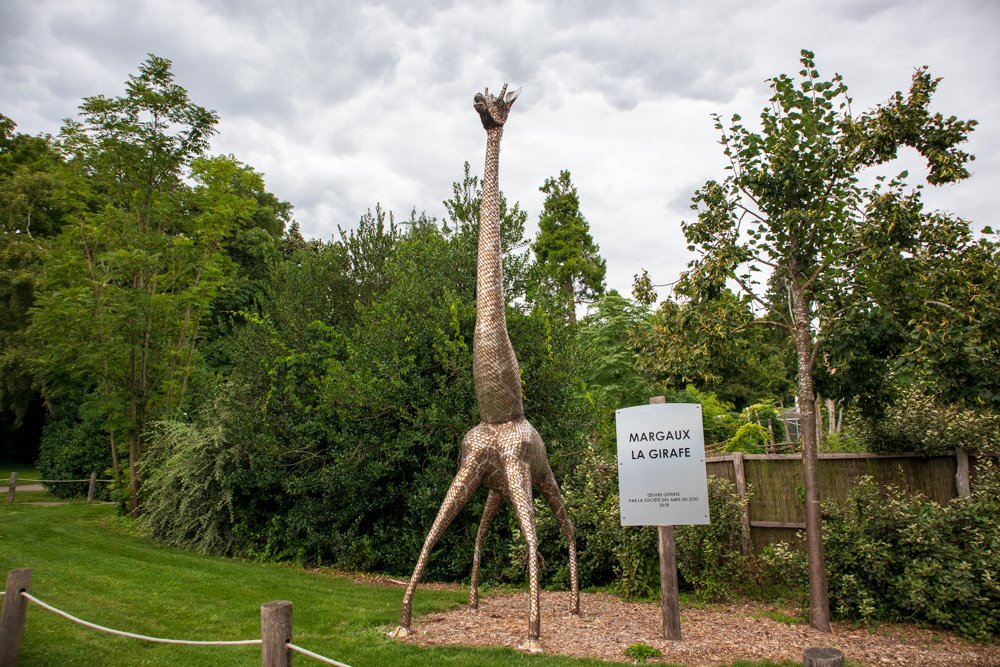
Beyond the unusual combination of a zoological park and a botanical garden, Mulhouse Zoo also stands out for the presence of art throughout the grounds. As you walk through the park, you come across exhibitions featuring animals illustrated by leading European comic artists, alongside original animal-themed sculptures.
This creative approach works brilliantly to draw attention to different species and adds another layer to the visit. Art and nature blend seamlessly, making the experience even more engaging and memorable.
Animals at Mulhouse Zoo: Species You Can Encounter
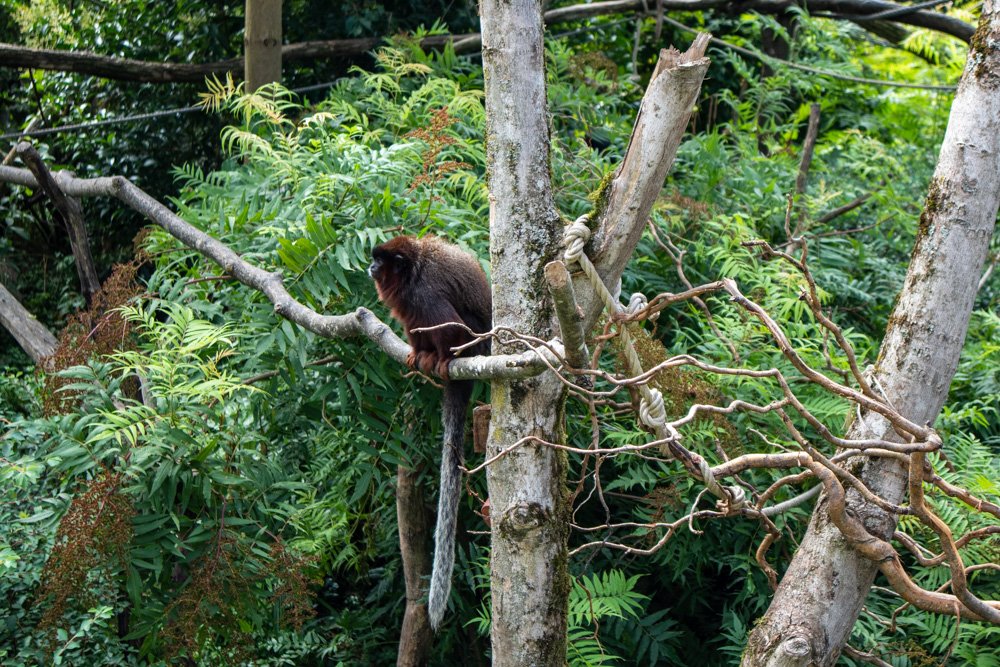
Mulhouse Zoo is home to an impressive variety of animals, including rare species you rarely see in other European zoos. One of the highlights is the okapi, a fascinating animal that looks like a mix between a zebra and a giraffe. We were also lucky to spot a polar bear with its cub, a powerful scene that revealed the predator’s intense and watchful nature rather than a tender moment.
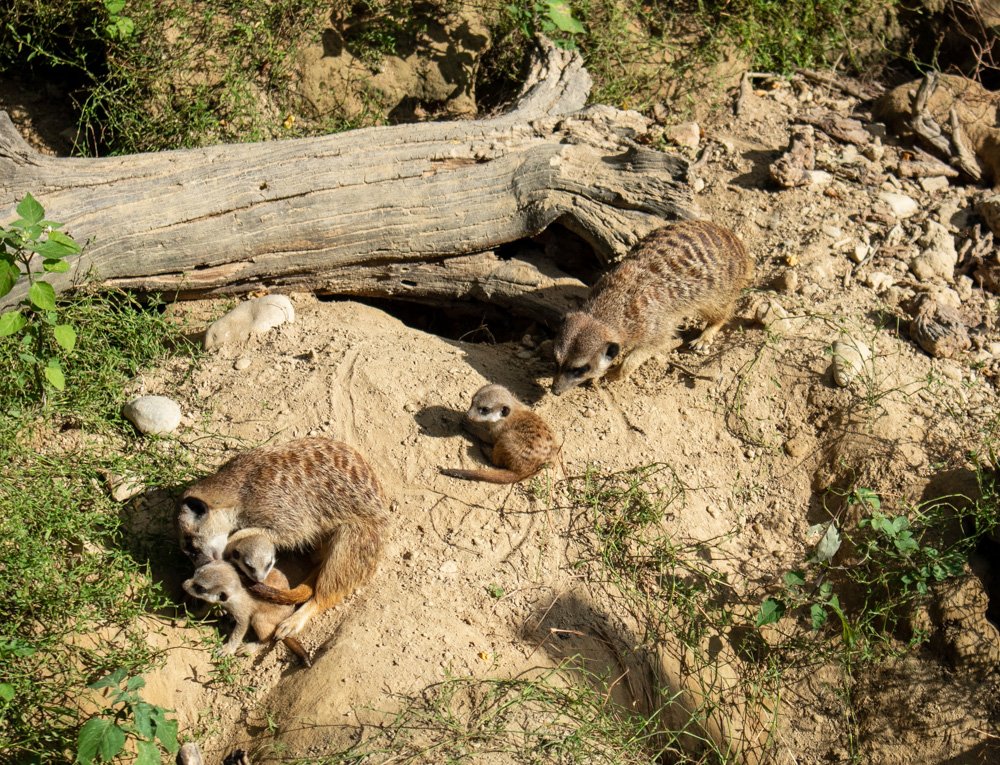
You can see many familiar zoo animals, such as monkeys, alpacas and lemurs, alongside less common species. A whole area is dedicated to tortoises, slowly roaming their enclosure. The zoo also hosts several deer species, dwarf crocodiles, kangaroos and wallabies, red pandas, wolves, polar animals and Amazonian species.
For my son and me, the visit felt like a true immersion in nature. A woodland walk combined with the excitement of discovering different animals, plants and ecosystems made the experience unforgettable. One article cannot cover everything there is to see, but it can explain why Mulhouse Zoo is truly unmissable.
Rare and Endangered Animals at Mulhouse Zoo
One of the first rare animals we encountered at Mulhouse Zoo was the sand cat, an incredibly cute small feline that lives in the harsh deserts of Africa and Asia. It looks surprisingly similar to a fluffy domestic cat, yet this species can survive in some of the most extreme environments. We had never seen one anywhere else, so spotting it in person was a real surprise.
The Asiatic lion is another species slowly facing extinction. Stockier than its African relative and with a smaller mane, it is now confined to a very limited range. The pair we saw at Mulhouse Zoo rested calmly on a wooden platform overlooking visitors, but in the wild the species is endangered. In past centuries, Asiatic lions were heavily hunted by Indian royalty and British colonists. Today, their main threat comes from livestock farming within the Gir Forest reserve in India, the last area where they survive.
The okapi also left a strong impression. Part of the giraffe family, it has a short neck and distinctive zebra-like stripes. Native to the Congo, it was only “discovered” by Europeans in the 20th century. Its habitat is now threatened by logging and human activity, especially armed groups that disrupt conservation efforts. Seeing an okapi up close is a rare and unforgettable experience, as this animal is almost impossible to spot in the wild.
Siberian Big Cats: Tigers and Amur Leopards
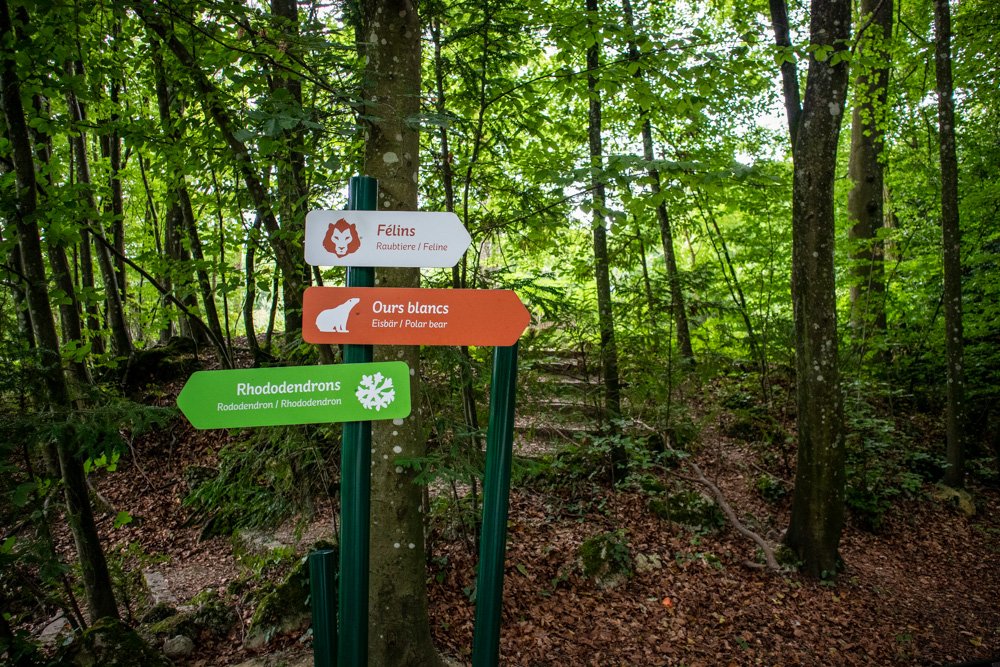
Mulhouse Zoo dedicates a large area to the Siberian big cats living in the Amur region, with clear information panels explaining each species, their habitats and the reasons behind their decline. In the wild, only about 450 Siberian tigers remain, a critically low number. The Amur leopard is even more endangered, with around 50 individuals left, making it the rarest big cat in the world.
Several factors drive the extinction of Siberian cats. Prey scarcity, poaching, habitat loss and conflict with human settlements all play a role. As populations shrink, genetic diversity also declines, increasing vulnerability to disease.
Beyond housing Amur tigers and leopards, Mulhouse Zoo actively supports conservation efforts. These include monitoring wild populations, providing technical and financial support for anti-poaching initiatives, and raising awareness among local communities about the importance of protecting these iconic felines.
The Incubation Area and Breeding Programmes
The incubation area at Mulhouse Zoo is both moving and educational, even though it can only be viewed from the outside. Here you can see eggs inside incubators, newly hatched chicks and young animals from endangered species. Breeding within the park greatly increases survival rates for birds and young tortoises that would otherwise be easy prey in the wild.
This area forms part of the EEP (EAZA Ex-situ Programme), which focuses on breeding animals in zoos while preserving genetic diversity. One of the most important roles of modern zoological parks is their contribution to restoring wild populations of endangered species.
More and more zoos now work alongside conservation organisations to balance in situ conservation, in natural habitats, and ex situ conservation, in captivity. Both approaches share the same goal: reintroducing species into the wild. Zoos are no longer places of confinement, but modern institutions dedicated to animal protection, hosting only rescued animals or those born in captivity.
Visiting Mulhouse Zoo with Children
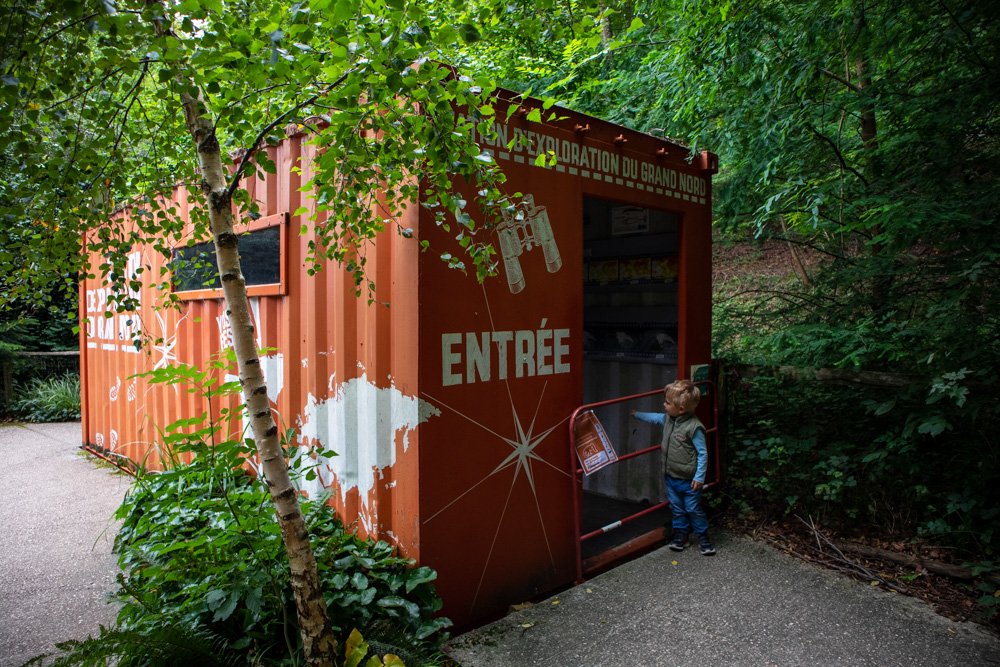
Mulhouse Zoo is especially well suited for a family visit. Numerous picnic areas, wide grassy spaces and woodland paths make it an ideal park for exploring with curious young travellers. Children can move freely, play outdoors and enjoy nature at their own pace.
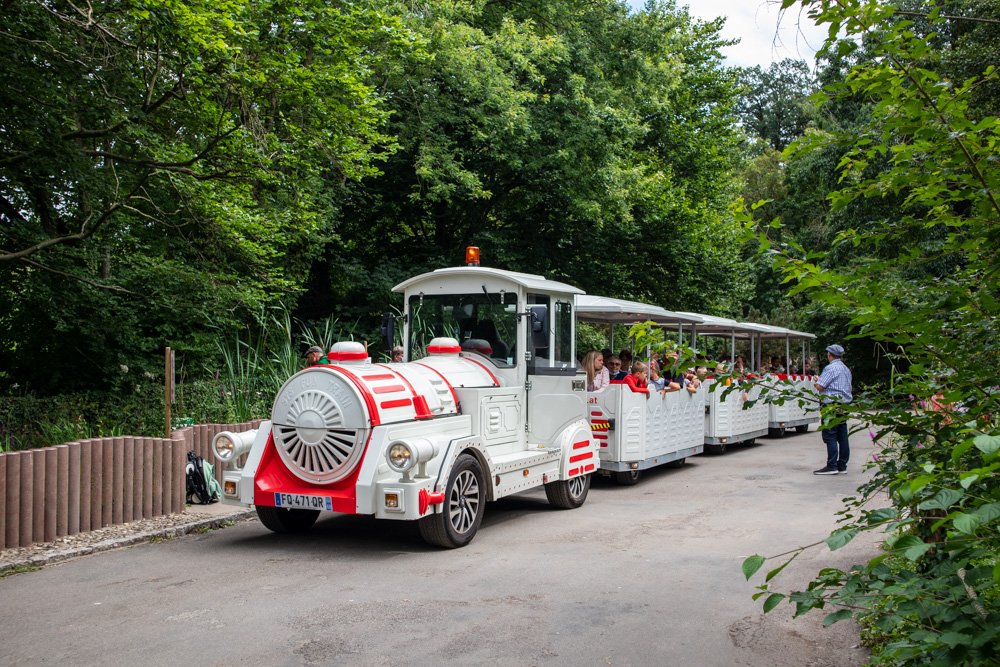
Like other zoos, Mulhouse Zoo also features a small electric train that takes visitors around the park. It is a fun and relaxing way to complete the full route, particularly appreciated by families with younger children.
The Petting Zoo: Hands-On Experiences for Young Visitors
My son absolutely loved the children’s zoo area, known as the zoo pour enfants, where he could interact with goats and poultry. I have visited other petting zoos before, but the one at Mulhouse Zoo truly feels like a paradise for young children.
The pygmy goats were clearly eager to welcome new visitors into the enclosure, patiently waiting to be stroked and cuddled. It is a gentle, hands-on experience that adds a warm and memorable moment to a family visit.
The Electric Train: Exploring Mulhouse Zoo with Children
The electric train at Mulhouse Zoo has two stops inside the park and costs just a few euros, paid directly to the driver. Younger children ride for free, which makes it even more family-friendly.
Every couple of rides, the driver shares interesting facts about the zoo and its animals in French before setting off. Even if you do not understand the language, the train journey remains a pleasant and relaxing experience, especially for children.
Practical Information for Visiting Mulhouse Zoo in Alsace
If everything you have read so far is encouraging you to plan a visit, save this article and take note of the following tips. For the best experience, try to visit on a weekday, as Mulhouse Zoo is one of the most popular attractions in Alsace, with around 400,000 visitors each year.
The zoo attracts both international tourists and many French and German visitors from nearby areas. The city sits very close to the German border, which explains its strong cross-border appeal and busy weekends.
Mulhouse Zoo Tickets, Prices and Opening Hours
Mulhouse Zoo opening hours change with the seasons, staying open longer in summer and closing earlier in winter. During the winter season, the zoo is open from 10:00 am to 4:00 pm, while summer opening hours run from 9:00 am to 5:00 pm.
Ticket prices also vary by season. Summer admission costs €17.50, while winter tickets cost €11.50. Discounts are available for season tickets, families and groups, making the visit more affordable if you are travelling with children.
Where to Eat at Mulhouse Zoo
Mulhouse Zoo offers several excellent picnic areas, where we stopped for a simple breakfast with fruit. We did not bring a full picnic, which would have saved us a long queue at the self-service restaurant inside the park. That said, the burger menu was surprisingly good, and we enjoyed eating at the outdoor tables under large parasols.
For a more refined dining experience, or if you plan to stay for dinner nearby, L’Auberge du Zoo is an elegant restaurant located within the zoological and botanical gardens. Built in 1902 and designed by local architect Joseph Trumm, it serves à la carte French cuisine at mid-range to high prices, along with interesting tasting menus.
How to Get to Mulhouse Zoo
Mulhouse Zoo sits on a green hillside, just a short distance from the city centre. You can reach it easily by bus using line C7 towards Hôpital Muller or line 57 towards Stiermatt, getting off at the Zoo stop in both cases.
If you are arriving from outside the city or travelling by car, simply follow the signs for centre-ville, gare, and then zoo. I used Google Maps and had no trouble at all. Mulhouse Zoo offers a large, free car park, shaded by trees near the entrance, making driving a convenient option.
Parc zoologique et botanique
51, rue du Jardin zoologique
68948 Mulhouse
Why Mulhouse Zoo Is Worth Visiting
Mulhouse Zoo is one of the best zoological parks I have visited. It gives you the chance to see rare animals that are hard to find elsewhere while learning about wildlife conservation in a truly unique setting. The combination of a zoo and a botanical garden, set within a beautiful Alsatian woodland, makes the experience feel special and immersive.
The park is also ideal for families with children, thanks to its picnic areas, the petting zoo and the fun electric train. If you already knew Mulhouse Zoo, or if this guide has inspired you to visit, feel free to share your thoughts in the comments.
