
After several years, I returned to Vietnam through an editorial project for my Travel Blogger Italiane community. What began as a structured plan soon evolved into a journey far beyond expectations, shaped by contrasts and constant movement from north to south. I travelled from the mountains of Hoang Su Phi to the Mekong Delta, crossing very different landscapes along the way. Between wild scenery and urban chaos, meaningful encounters and Michelin-listed restaurants, each stop revealed a new perspective on the country. A minor injury even led me to experience the Vietnamese healthcare system firsthand. In this article, I share the main highlights of the itinerary together with practical advice to help you plan a similar adventure.
Table of Contents
Vietnam Travel: Independent or Organised Tour
Planning a trip to Vietnam independently is entirely possible, especially if you focus on the classic highlights. Travelling by overnight trains and local buses, while managing your own bookings online, offers a strong sense of freedom and flexibility. My first journey to the country was a low-cost, entirely DIY itinerary.
PLAN YOUR TRIP TO VIETNAM – 5% discount on your eSIM and travel insurance
For getting around Vietnam with ease, choose a Holafly eSIM: you get unlimited internet, perfect for using Google Maps, Grab or other navigation apps, booking transport on the go, and sharing photos and videos in real time on WhatsApp without worrying about local SIM cards or extra charges.
For extra peace of mind, pair connectivity with Heymondo travel insurance, which covers you in case of medical emergencies, delays or cancellations. A practical solution that lets you focus on exploring Vietnam, rather than dealing with unexpected setbacks.
At that time, however, I was travelling with a Vietnamese friend, which made everything easier. Depending on the areas you wish to explore, language barriers and logistical complexity can quickly become challenging. Outside major tourist routes, English is not widely spoken, and even museum translations can be confusing.
Why Local Support Can Make a Difference
If your goal is to discover rural and authentic Vietnam, local support becomes almost essential. Choosing an organised tour does not necessarily mean following a standardised programme. You can select an operator that truly shares your travel philosophy and depth of experience.
In our case, working with Travel Sense Asia added real substance to the journey. Having professionals on the ground allowed us to optimise time and avoid unnecessary delays or disappointing accommodation. Local experts can open doors to experiences rarely found in guidebooks, such as genuine homestays or village activities.
The true value of an organised journey becomes clear when something goes wrong. During this trip, I suffered a minor injury, and the local agency coordinated transport and medical support seamlessly. Thanks to that efficiency, I was able to rejoin the group immediately after the hospital visit and continue the itinerary without disruption.
My Vietnam Itinerary: 12 Days from North to South
This journey began as an editorial project I organised to showcase the country alongside Travel Sense Asia and my Travel Blogger Italiane community. The goal was to see as much of Vietnam as possible within a limited timeframe, which meant constantly adjusting our pace. Moving from the intensity of major cities to the silence of rural landscapes allowed us to build a broad and unfiltered perspective of contemporary Vietnam.
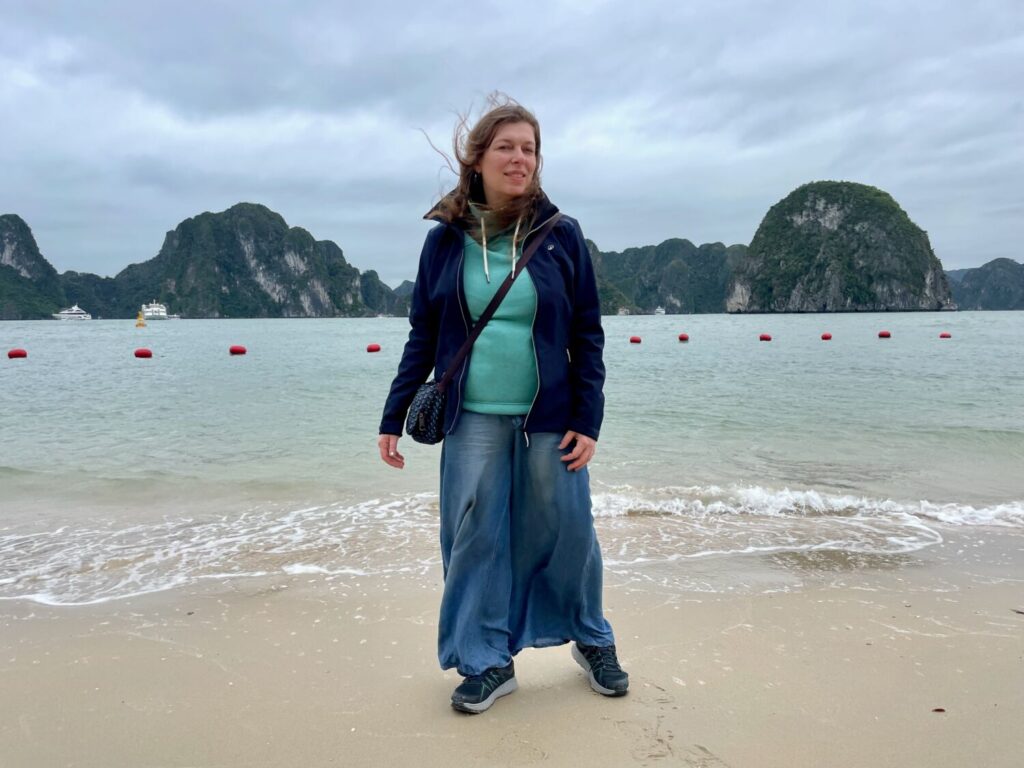
Our itinerary started in Hanoi, the political capital and our first encounter with the country’s layered history. From there, we travelled to the spectacular terraced rice fields of Hoang Su Phi before continuing to the majestic Ha Long Bay. Heading southwards through central Vietnam, we stopped in Hoi An, with its timeless charm, and Hue, the former imperial capital. The final stretch unfolded in the south, between the dynamic energy of Ho Chi Minh City and the waterways of the Mekong Delta.
Hanoi: Ancient Temples and Street Food
Hanoi feels institutional and composed, where the weight of history is present on every corner. We spent two full days exploring the city at a steady pace. Walking through the streets, you immediately notice the constant display of red flags and the austere atmosphere typical of political power centres. The Ho Chi Minh Mausoleum stands at its symbolic heart, surrounded by a palpable sense of respect and solemnity.
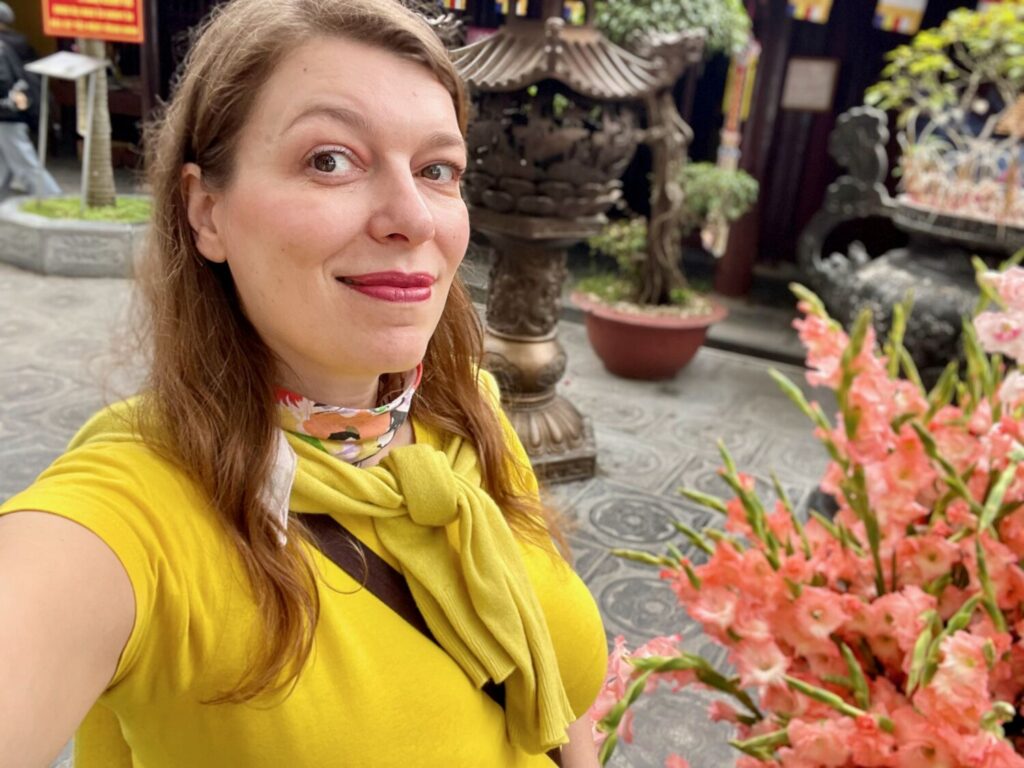
Crossing districts through the endless flow of motorbikes, you reach another key landmark, the Temple of Literature, founded in 1070 as the country’s first university. Despite its immense historical value, the site is now equally known for groups of young women in traditional dress posing for elaborate photo shoots. The contrast between Confucian heritage and modern social rituals makes it unexpectedly fascinating.
Around Hoan Kiem Lake, you can pause and enjoy a rare moment of calm in the city. After cultural visits, I recommend joining a street food tour to understand Hanoi through its flavours. Ending the day with a traditional water puppet performance offers a glimpse into northern Vietnam’s folk traditions.
Where to stay: Bespoke Boutique Hotel Hanoi
Hoang Su Phi: Authentic Trekking Through Terraced Rice Fields
Reaching Hoang Su Phi requires several hours of travel, yet the scenery rewards every kilometre. This remote region is renowned for some of the most spectacular terraced rice fields in Vietnam, sculpted into the mountainsides over generations. The landscape feels vast and untouched, far removed from the country’s urban centres.
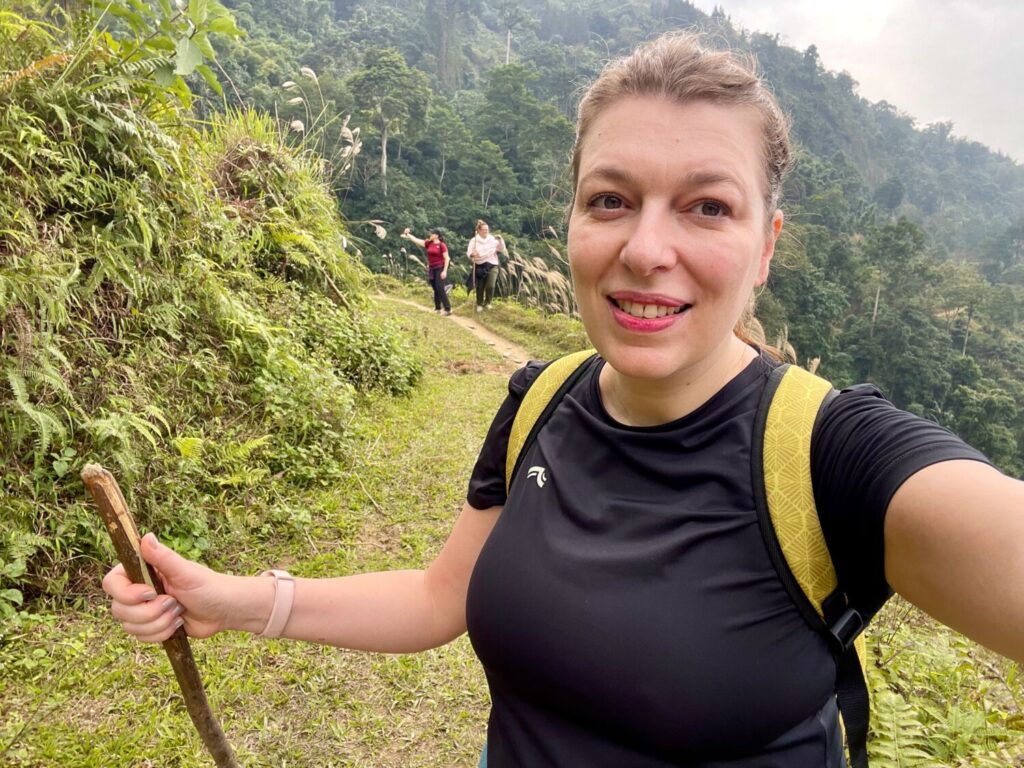
We stayed at Panhou Retreat, an eco-resort hidden in the jungle where nature truly takes centre stage. A more demanding trek than expected led us through remote villages and into contact with the Red Dao ethnic minority. We spent the night in a traditional house in the village of Giang Ha, immersed in everyday rural life.
The experience requires adaptability, as accommodation is simple and mountain paths can be challenging. For this reason, relying on an experienced local guide is essential. Sharing dinner with a local family and toasting with their “happy water”, a powerful rice spirit, became one of the most intense and memorable moments of the entire journey.
Where to stay: Panhou Retreat Hoang Su Phi, Homestay Ha Giang
Ha Long Bay: Cruise, Overtourism and an Exclusive Cave Experience
After leaving the mountains behind, we headed towards Ha Long Bay, a UNESCO World Heritage Site. Its extraordinary popularity has turned it into one of Vietnam’s most visible examples of overtourism. What was once a simple visit aboard fishermen’s boats has evolved into a highly efficient tourism machine.
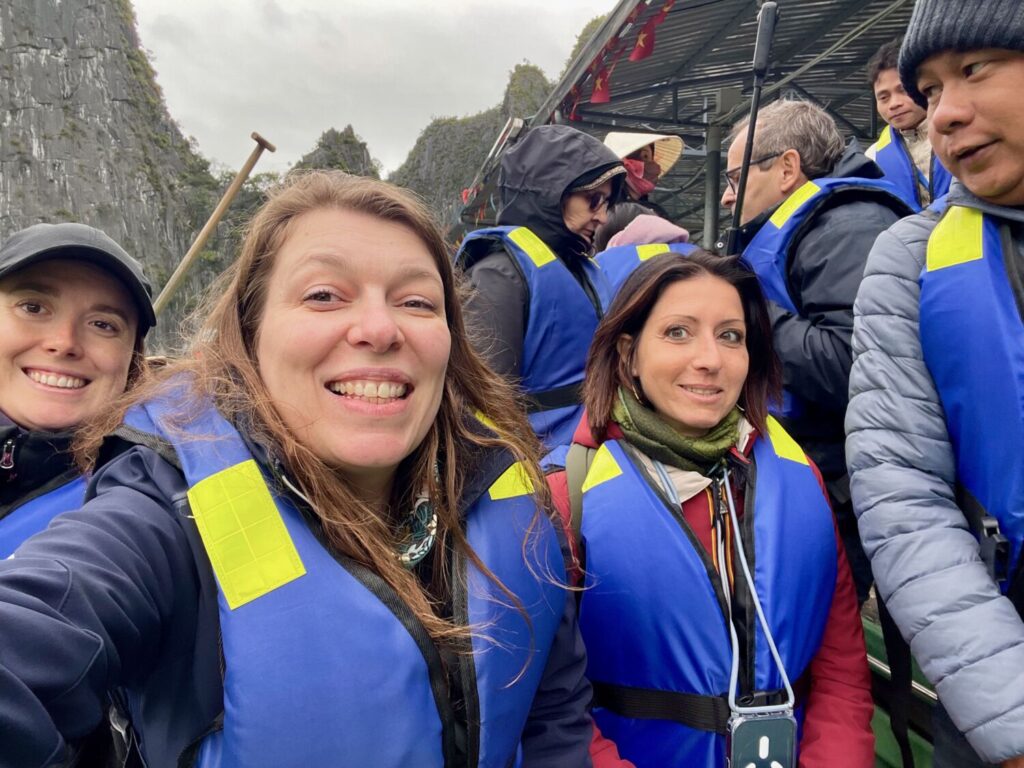
Today, large cruise ships dominate the bay, offering refined meals alongside tightly scheduled excursions. Sailing between the limestone karsts still inspires genuine awe, yet sharing the scenery with loud tour groups inevitably makes you reflect on your own impact as a visitor. The beauty remains undeniable, though the atmosphere has changed.
Any discomfort, however, disappeared during an extraordinary dinner show inside the Dragon Pearl Cave. Illuminated cave walls framed an unforgettable evening in one of the few restaurants in the world set entirely within a cavern. It would have been the perfect farewell to northern Vietnam, had I not fallen heavily outside our Hanoi hotel later that night and injured my knee.
Da Nang: An Unplanned Stop at the Hospital
In Da Nang, the original programme included Marble Mountains and the nearby Sculpture Village. You will find detailed accounts of those visits on my fellow bloggers’ websites, because my schedule took an unexpected turn. After injuring my knee the night before, I had no choice but to go straight to hospital following our flight from Hanoi.
The experience felt surreal by Western standards. Apart from two nurses, no one spoke English, so conversations with the doctors relied entirely on Google Translate. The plastic surgeon’s office felt slightly disconcerting. The doctor appeared more focused on his sudoku puzzle than on my knee, and the room itself resembled a questionable beauty salon rather than a proper medical clinic.
Despite the unusual setting, the emergency doctor who stitched my knee using a nylon thread rarely seen today did an excellent job. I will probably not even have a noticeable scar. Limping but properly treated, I rejoined the group thanks to the seamless coordination of local transfers and logistics, which allowed me to continue the journey without further disruption.
Hoi An: Exploring the City of Lanterns
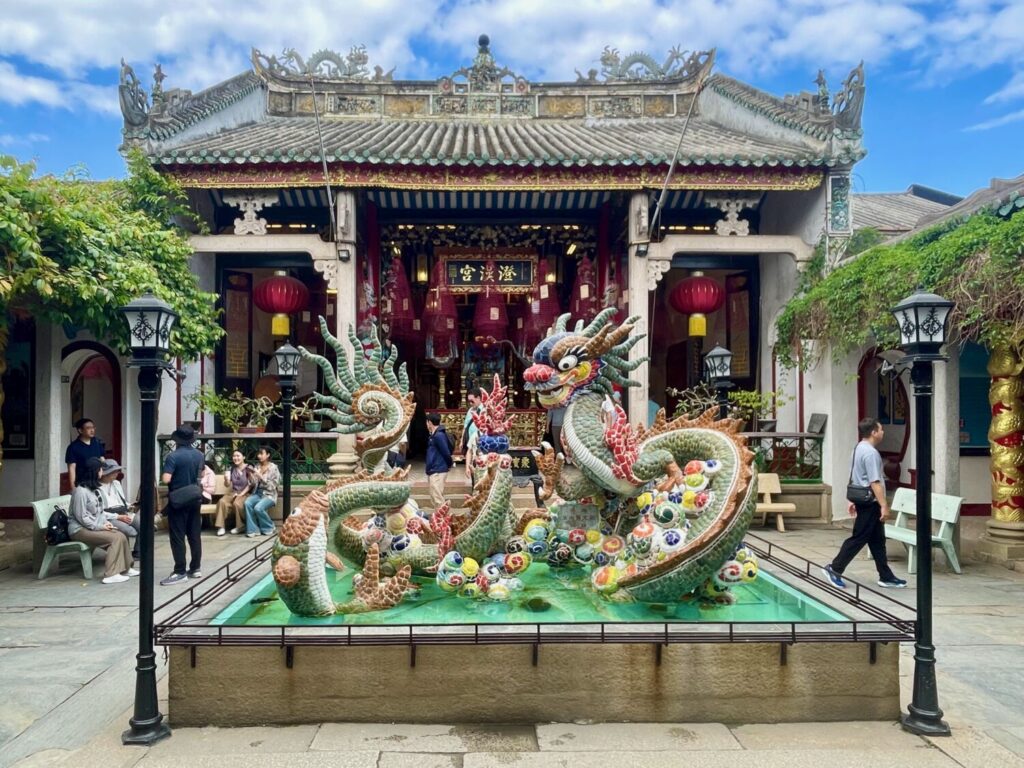
Hoi An is one of the most atmospheric destinations in Vietnam, especially at sunset when hundreds of lanterns shimmer on the river. The town is widely known for bespoke tailoring, yet its UNESCO status comes from the remarkable heritage buildings and temples left by Chinese merchants. My fellow travellers fell completely in love with it, while I must admit that, still limping and sore, I appreciated it less than it deserved.
Compared to my previous visit, Hoi An now feels significantly more tourist-oriented. I remembered buying simple lanterns from improvised stalls and setting them afloat on the river. Today, nearly every corner has become a souvenir shop, albeit often selling beautifully crafted items. The charm remains, though it feels more curated than spontaneous.
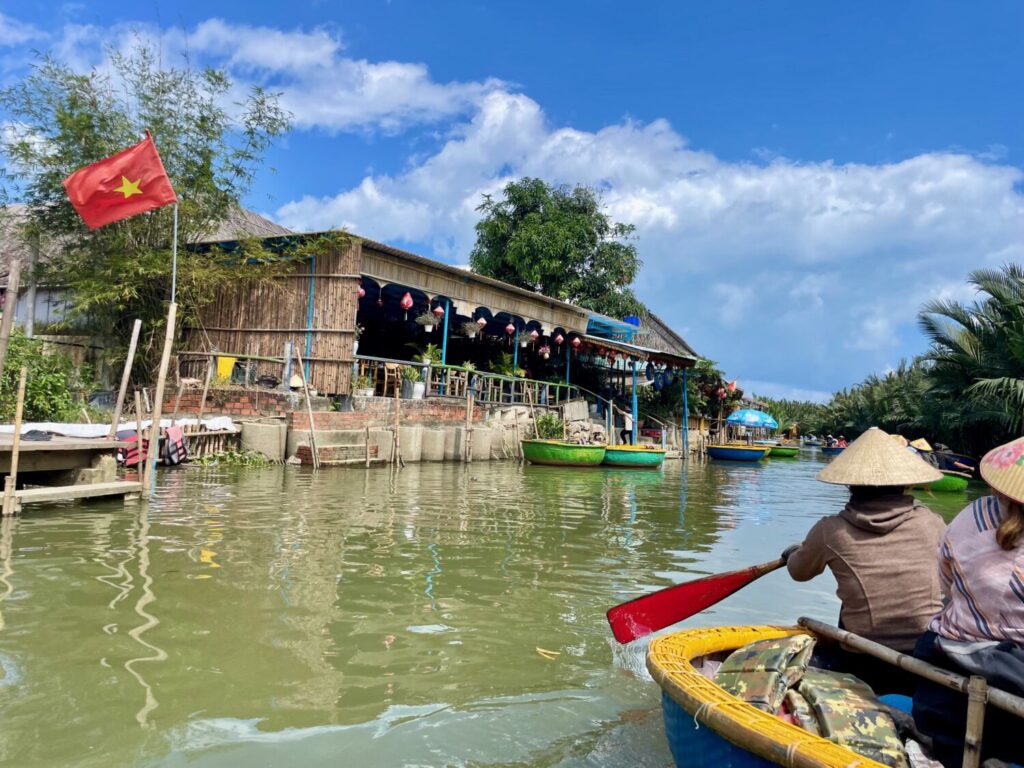
In the surrounding countryside, we visited Kim Bong village, known for traditional woodworking, and Cam Thanh village for a ride in the iconic round bamboo basket boats. There, we enjoyed a herbal foot massage and joined a cooking class, which became one of the most enjoyable and authentic experiences in the area.
Where to stay: Little Gem Hoi An
Hue: Discovering the Former Imperial Capital
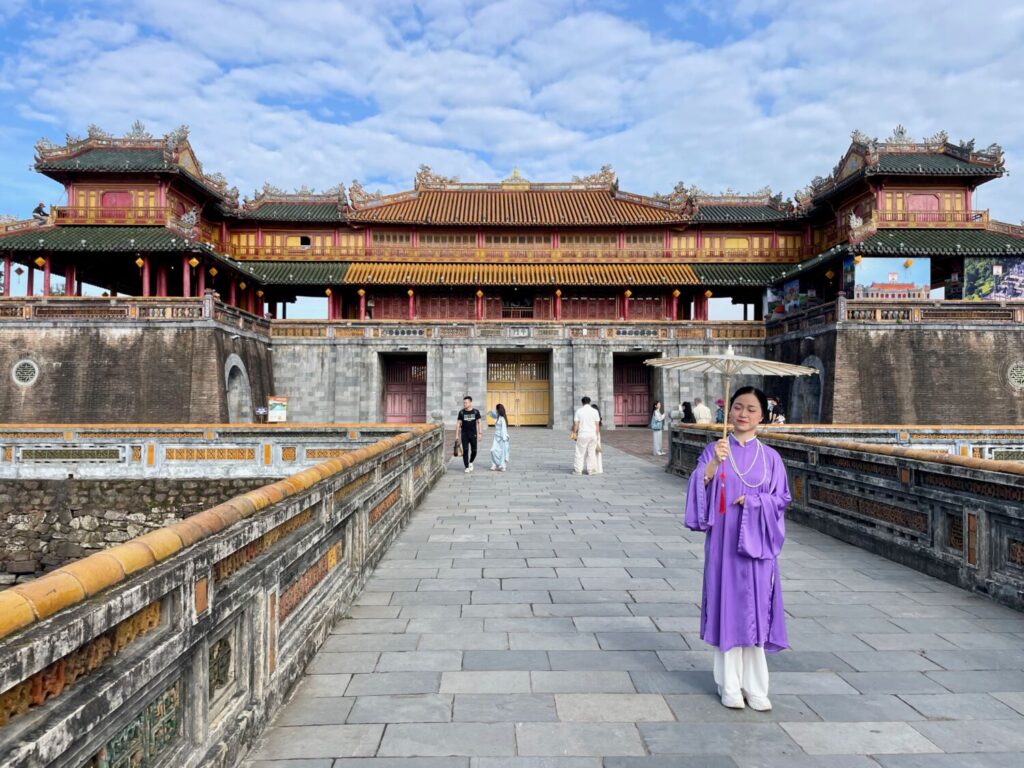
The following day, we travelled to Hue to explore the Imperial City, the Tomb of Emperor Tu Duc and the Thien Mu Pagoda. Inside the Imperial City, the refined architecture reflects the grandeur of Vietnam’s imperial past. The ceremonial changing of the guard at the main gate evokes the splendour of Hue when it served as the country’s imperial capital.
The emperor once lived in the highest and most protected section, while mandarins and women occupied strictly separated spaces. Today, only about thirty per cent of the original complex remains, yet it still requires several hours to explore properly.
With the help of a guide, we focused on the most significant areas before continuing to the atmospheric Tu Duc Mausoleum and the elegant Thien Mu Pagoda. We also stopped at a workshop in the Incense Village, where colourful bundles of incense dry in the sun.
What surprised me most, however, was the contrast between historical Hue and its modern side. The main tourist district, where our hotel was located, felt loud and crowded, more geared towards nightlife than cultural reflection.
Where to stay: Rosaleen Boutique Hotel Hue
Ho Chi Minh City and the Mekong Delta: The Soul of the South
Our journey continued in southern Vietnam, between the restless energy of Ho Chi Minh City, the modern name of former Saigon, and the slower rhythms of the river. We visited Cai Be on a day trip, though I would recommend staying overnight if your schedule allows. Spending more time here offers a deeper understanding of life shaped by the Mekong’s waterways.
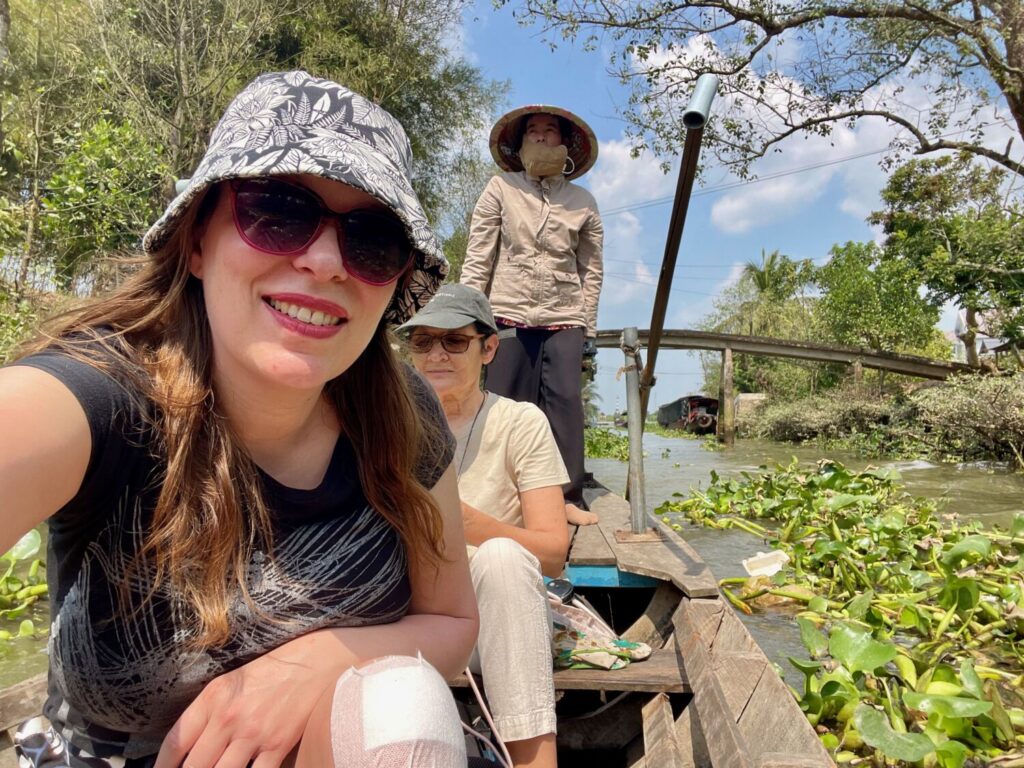
Exploring the branches of the Mekong Delta aboard wooden boats and cycling through the countryside around Cai Be, or riding a scooter in my case, are experiences not to miss. Watching daily life unfold along the riverbanks, among small workshops and houses facing the canals, reveals how central water is to this region’s identity. The pace feels entirely different from the cities.
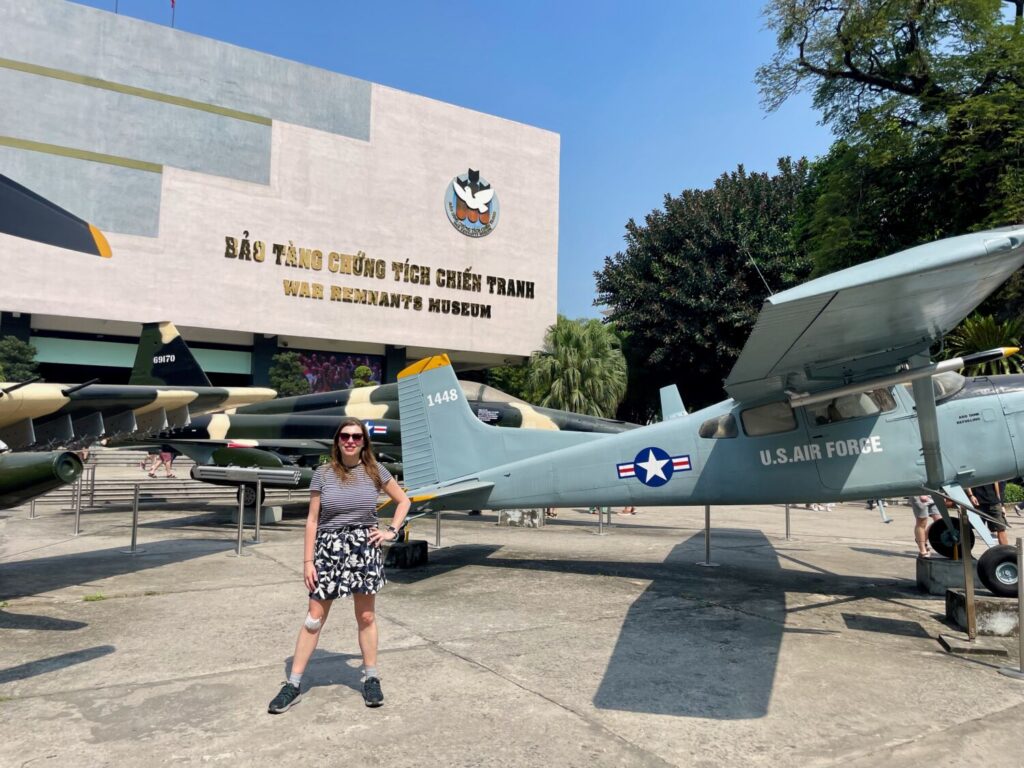
We concluded the itinerary with a guided visit of Ho Chi Minh City. The city is a continuous dialogue between sleek skyscrapers, French colonial buildings and chaotic markets best explored with expert insight. Visiting the War Remnants Museum is essential to understanding the country’s recent history. Hearing the Vietnam War narrated from a Vietnamese perspective remains a powerful and deeply moving experience.
Where to stay: Winsuites Saigon Hotel, Mekong Lodge Cai Be
Planning a Trip to Vietnam: Practical Guide from North to South
For an itinerary like this, choosing between an organised tour and independent travel is only the first step. Distances are considerable and the regions you cross differ dramatically in climate and landscape. Careful planning helps you manage long travel times and varied geographical conditions without feeling overwhelmed.
Vietnam Visa: Entry Requirements and Current Regulations
Entry requirements have become more straightforward in recent years. Many nationalities can now enter Vietnam visa-free for stays of up to 45 days, provided their passport has at least six months’ validity remaining. If you plan to stay longer, you can apply online for an e-visa, which allows up to 90 days with multiple entries.
Before travelling, always check the most up-to-date regulations on your government’s official foreign travel advice website. Visa policies can change, and relying on outdated information may cause unnecessary complications.
When to Visit Vietnam: Climate and Vietnamese New Year
Vietnam’s long, narrow shape creates completely different microclimates between north and south. Finding the perfect season for the entire country is challenging, as sunshine in the north may coincide with heavy rains in the south. During one January trip, I wore a wool jumper in Hanoi while dressing in summer clothes in Ho Chi Minh City.
Generally, March to April and September to November offer the most balanced weather conditions across the country, though these months also fall within high season. For trekking in northern rice terraces, late August to September is ideal, when the fields glow bright green before harvest.
Unless you specifically wish to experience the celebrations, I would recommend avoiding travel during Tết, the Vietnamese Lunar New Year. Prices rise and many services operate on reduced schedules, as the celebration is primarily a family occasion with people returning to their hometowns.
Travel Insurance: Why It Is Essential
If this journey taught me anything, it is that the unexpected is always around the corner. I could tell you that insurance is not a cost but an investment, yet I prefer to be honest. For minor issues, healthcare in Vietnam can be surprisingly affordable.
For my consultation, stitches and medication, I spent an amount comparable to a standard emergency visit in many European countries. I am still waiting for reimbursement from the insurance included in the travel package, which involves lengthy administrative procedures. The process has been far slower than expected.
For serious medical problems, however, costs can rise significantly, especially if hospitalisation or medical repatriation becomes necessary. That is why I recommend arranging comprehensive cover in advance. Services such as Heymondo travel insurance allow you to manage assistance directly through an app and, in many cases, advance medical expenses when required.
Staying Connected: Choosing an eSIM for Travel
When travelling, I never give up internet access. I rely heavily on Google Maps and Grab for transport, and on messaging apps to communicate with hotels and local guides. After years of buying local SIM cards at airports, I have switched to the simplicity of digital eSIM technology.
An eSIM is a digital SIM installed via a QR code, without the need for a physical card. It works on most modern smartphones, though it is essential to check compatibility before purchase. While all recent iPhones support eSIMs, some Android models still do not.
I usually choose providers such as Holafly or Airalo, which offer coverage in most destinations worldwide. Airalo is often cheaper, though I frequently ran out of data and needed to top up. Although Airalo has recently introduced unlimited data options, I have since switched to Holafly’s unlimited plans. For me, staying connected without constantly checking data usage is the most important factor when travelling.
Getting Around Vietnam: Flights, Trains and Private Drivers
For an itinerary like this, you must factor in frequent travel days. We managed to cover so much in just twelve days thanks to domestic flights and privately arranged transfers. This combination allowed us to optimise time and maintain a fast-paced yet manageable travel rhythm across very different regions.
If you have more time, travelling by train between major cities is a rewarding alternative. On my first trip, I chose an overnight train, which proved both exciting and safe, even as a solo traveller. Slower journeys can offer a deeper sense of connection with the landscape.
For more remote destinations, such as the northern mountains, a private driver is a far more practical option than local buses. Without speaking Vietnamese, understanding routes and schedules can be extremely difficult. Beyond the language barrier, it is also a matter of efficiency, as having a driver allows you to focus on the experience rather than the logistics.
What to Pack: Dressing for Vietnam from North to South
The most challenging part of planning was deciding what to pack. Travelling in January meant preparing for cool temperatures in the north and tropical heat in the south. Trekking in the mountains of Hoang Su Phi also required different clothing from what I needed in the cities. I solved this by choosing versatile pieces that worked well together, relying on a practical layering strategy to avoid an oversized suitcase.
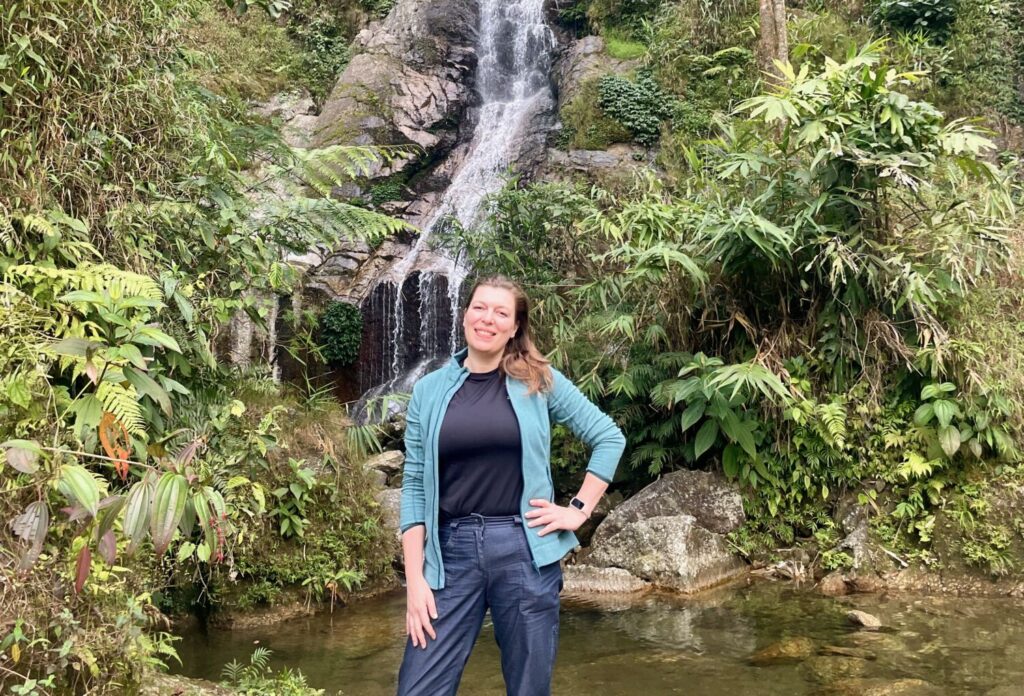
For walking in the northern mountains, proper trekking shoes are essential. Even routes described as easy can prove unexpectedly demanding. As someone who does not trek regularly, I chose affordable yet functional outer layers, including a waterproof softshell jacket and a fleece, while investing in a reliable pair of quality hiking shoes.
In Hanoi, I wore the jacket mainly in the evenings, while during the day a light jumper over a T-shirt and long trousers were sufficient. The jacket became particularly useful during our excursion in Ha Long Bay, when temperatures dropped noticeably. In central Vietnam, I packed away the heavier layers, and in the south I stayed comfortably in short sleeves and lightweight clothing throughout.
Conclusion: Why Vietnam Should Be Your Next Journey
Visiting Vietnam means stepping into a country of striking contrasts. You move from the silence of northern rice fields to the relentless horns of Saigon, from the spirituality of ancient temples to the pragmatic energy of a remarkably resilient people. It challenges you constantly, yet rewards you with moments of unexpected beauty at every stage of the journey.
My advice is to experience it without rushing, allowing space for encounters and unplanned moments. The most authentic memories often emerge from what you did not anticipate. From my perspective, travelling with knowledgeable local support offers a deeper and more nuanced connection to the culture.
From my very first visit, I understood that people make the true difference in any destination. This journey confirmed how reliable local coordination can transform even an injury into part of the story, without diminishing the overall experience. If you have already travelled to Vietnam or are considering it, I would love to hear your thoughts on this itinerary in the comments.
