
Close to the borders with Serbia and Romania and famous for its Art Nouveau heritage, Szeged reveals its charm as soon as you start walking through its streets. After a devastating flood in 1879, the city was almost completely rebuilt and became a showcase for the most fashionable architectural styles of the time. Pastel façades, wide boulevards and elegant cafés create a unique atmosphere. The compact city centre blends Art Nouveau, Art Deco, Neo-Classical and Eclectic buildings and feels like an open-air museum.
Table of Contents
Why Szeged Is One of Hungary’s Most Interesting Cities for Architecture
Szeged would not look the way it does today without tragedy. In 1879, a catastrophic flood on the Tisza River destroyed almost everything, leaving only a few hundred houses standing and forcing the city to reinvent itself.
PLAN YOUR TRIP TO HUNGARY
For a road trip in Hungary, choose a Holafly eSIM: you will have unlimited internet to use Google Maps or any other GPS app, and you can share photos and videos in real time on WhatsApp and social media without any worries.
To travel with complete peace of mind, don’t forget to also take out Heymondo travel insurance, which protects you from unexpected events and ensures a worry-free holiday.
What followed was not a simple reconstruction, but a bold reinvention. Wide boulevards replaced narrow streets, leafy squares took shape and elegant palaces began to define the skyline. Szeged became a canvas for the most fashionable architectural ideas of the time.
The rebuilding coincided with one of Europe’s most creative periods in architecture. The city embraced styles from the late nineteenth and early twentieth centuries, blending eclectic façades with expressive Art Nouveau design. Wealthy merchants, bankers and university professors invested in homes that were meant to impress, both outside and in. Decorative staircases, stained glass and ceramic tiles turned everyday living into art.
By the early 1900s, an Art Nouveau boom filled the last empty plots in the city centre. Nearly fifty new buildings appeared in just a few years, influenced by folk traditions and continental movements alike. Today, Szeged feels like an open-air architecture museum, where beauty grew directly out of loss.
The Architectural Styles You’ll Find in Szeged
Before walking from palace to palace, it helps to understand the architectural languages you’re about to meet. Szeged is not defined by a single style, but by a sequence of fashions that followed the Great Flood, creating a living catalogue of European architecture from the late nineteenth and early twentieth centuries.
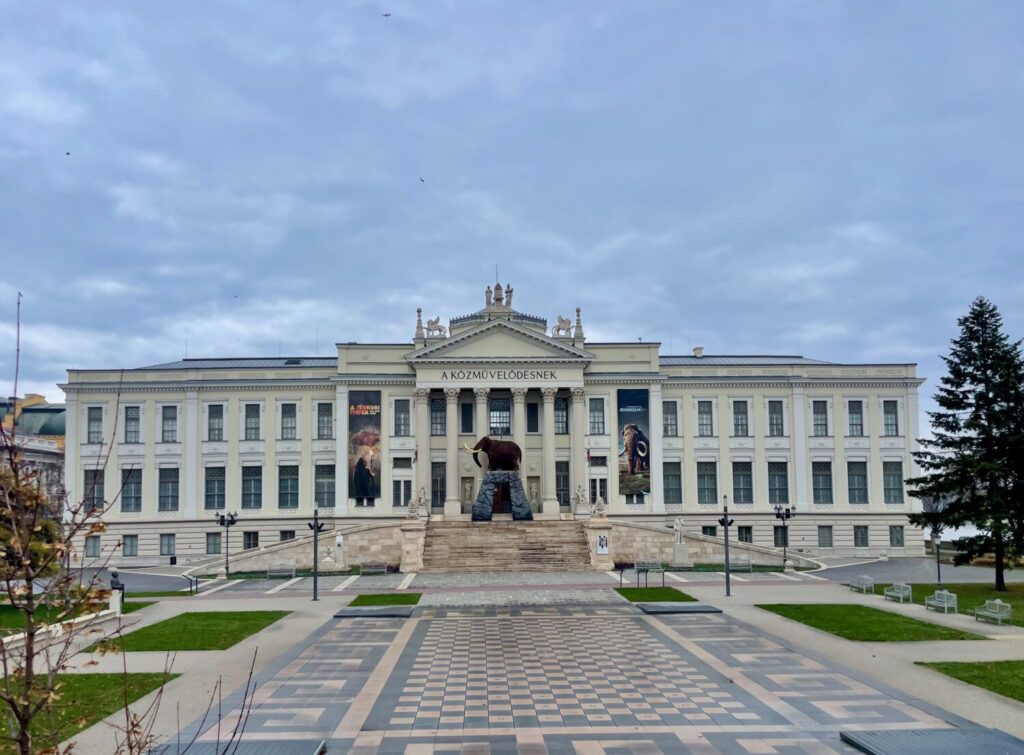
You’ll first notice Neo-Classical architecture, inspired by ancient Greece and Rome. It feels sober and monumental, with symmetry, columns and triangular pediments. The Móra Ferenc Museum is a perfect example, formal and perfectly balanced.
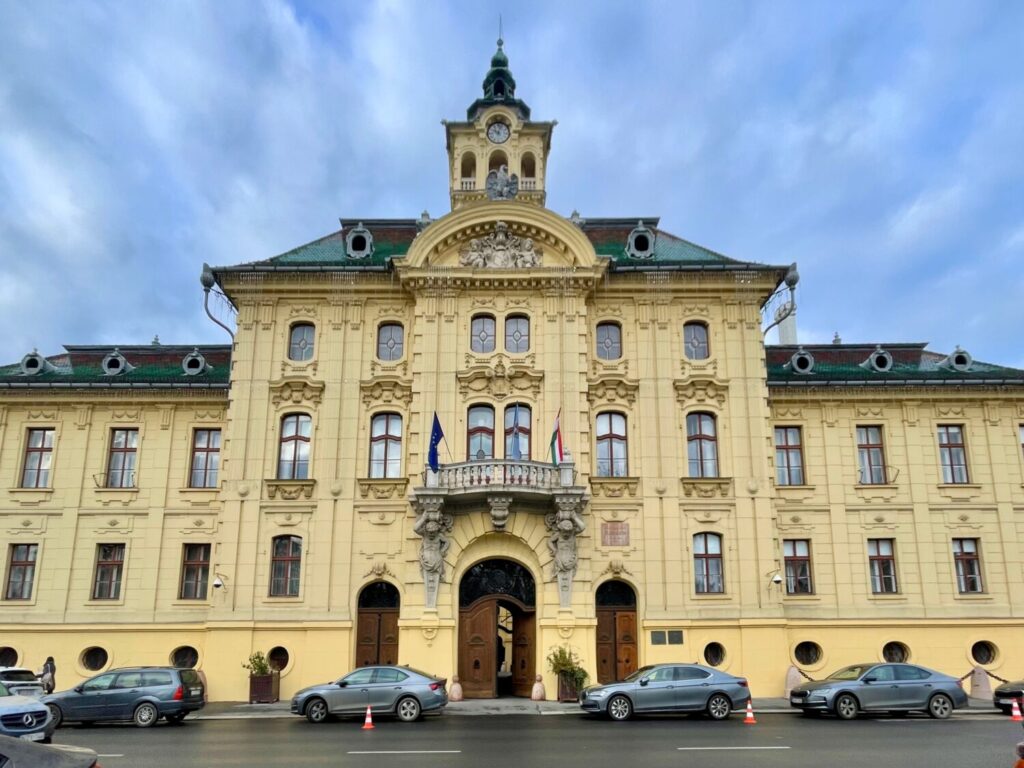
A short distance away, Neo-Baroque takes over with more drama. Curves, domes and decorative flourishes dominate buildings like City Hall and the National Theatre. Architecture becomes theatrical and expressive. Closer to the river, Neo-Romanesque and Neo-Gothic influences emerge. Arched openings, towers and brick façades recall medieval Europe, with the Votive Church standing as the most powerful example.
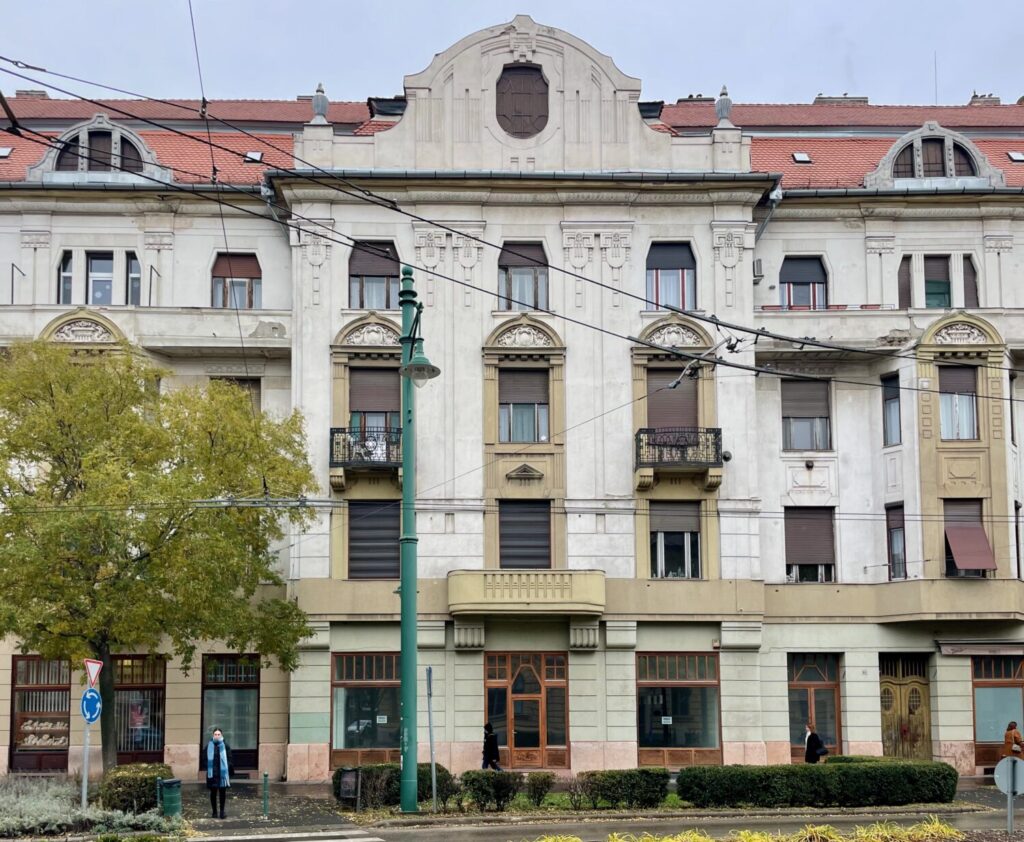
Then comes Eclectic architecture, where different historical styles meet. Residential palaces along Roosevelt Square and Tisza Lajos Boulevard mix Renaissance, Baroque and Classical details into single façades.
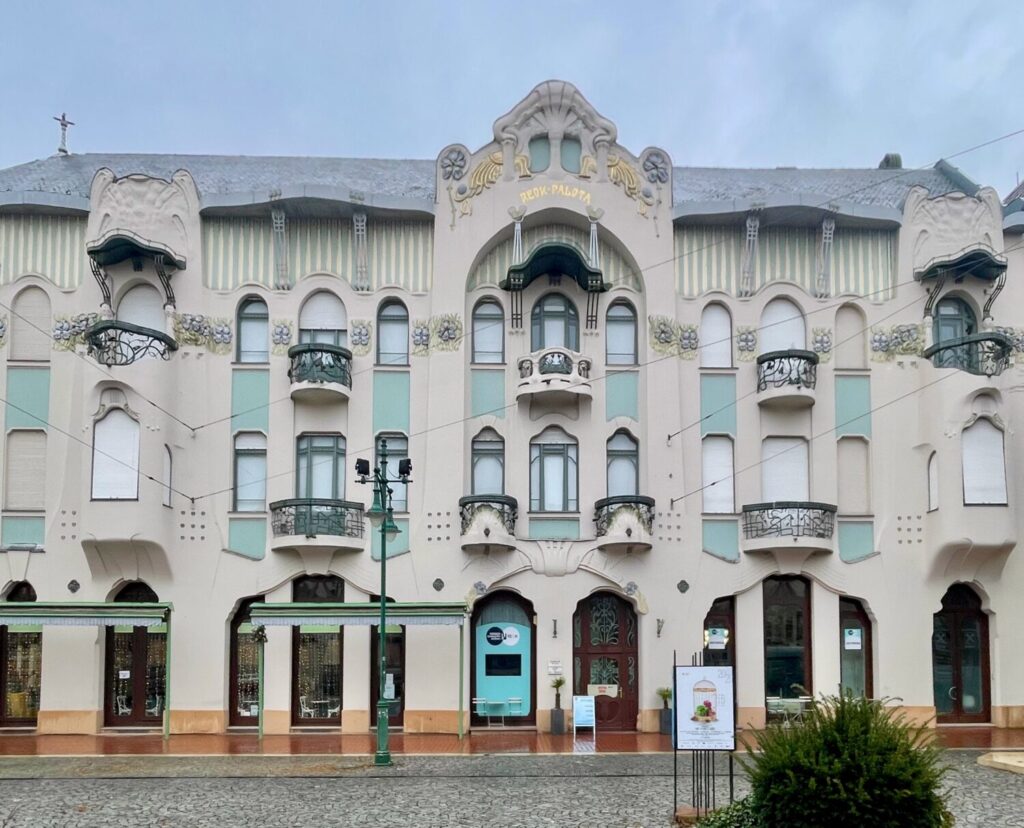
Finally, Szeged’s true signature appears: Hungarian Secession, or Art Nouveau. Floral motifs, curved lines and colourful ceramics transform buildings into works of art, with Reök Palace and Ungár–Mayer House bringing the city’s identity to life.
Art Nouveau in Szeged: Hungarian Secession Buildings You Shouldn’t Miss
Art Nouveau does not define Szeged on its own, but it is the style that gives the city its most recognisable face. After the great rebuilding at the end of the nineteenth century, Szeged became one of the most enthusiastic adopters of Hungarian Secession, turning this artistic language into a powerful and visible layer of its identity. The result is a remarkable concentration of Art Nouveau buildings that transforms an ordinary walk into an architectural discovery.
Hungarian Secession differs from the softer versions you might associate with Paris or Brussels. Here, lines feel bolder, colours richer and decoration more symbolic. Motifs inspired by folklore, plants and local traditions replace classical columns and strict symmetry. Ceramic tiles from the famous Zsolnay factory, curved windows and playful details give many façades a sense of movement, as though the buildings were shaped rather than built.
What makes Szeged particularly interesting is that this style did not remain limited to luxury mansions or cultural institutions. Art Nouveau entered everyday life. Schools, apartment blocks and private homes adopted it, turning creative experimentation into something ordinary, as the city used architecture not just to rebuild, but to express a new identity.
In the following sections, you’ll find the most beautiful buildings to admire as you walk through the city with your eyes fixed on the façades above you.
Reök Palace (REÖK): Szeged’s Art Nouveau Masterpiece
Reök Palace is the finest example of Hungarian Art Nouveau in Szeged. Designed in 1907 by the young architect Ede Magyar, the building immediately stands out for its light colours, fluid forms and richly symbolic decoration.
The palace was commissioned by the water engineer Iván Reök, and the theme of water flows through the entire design. Blue water lilies decorate the snow-white façade, balcony railings twist like water plants and the textured wall surfaces resemble gentle waves. Even from a distance, the building looks more sculpted than constructed.
Inside, you can admire a magnificently decorated staircase, where metal leaves and flowers climb along the railings in a continuous botanical pattern. It feels more like entering a work of art than a residential building.
Originally built as a private home, the palace has hosted the Regional Arts Centre since 2007, with rotating exhibitions featuring international artists. On the ground floor, you’ll also find a wonderful pâtisserie, making this one of the most enjoyable stops in the city.
Reök Palace
Magyar Ede tér 2, 6720 Szeged
Gróf Palace: A Monumental Secession Landmark
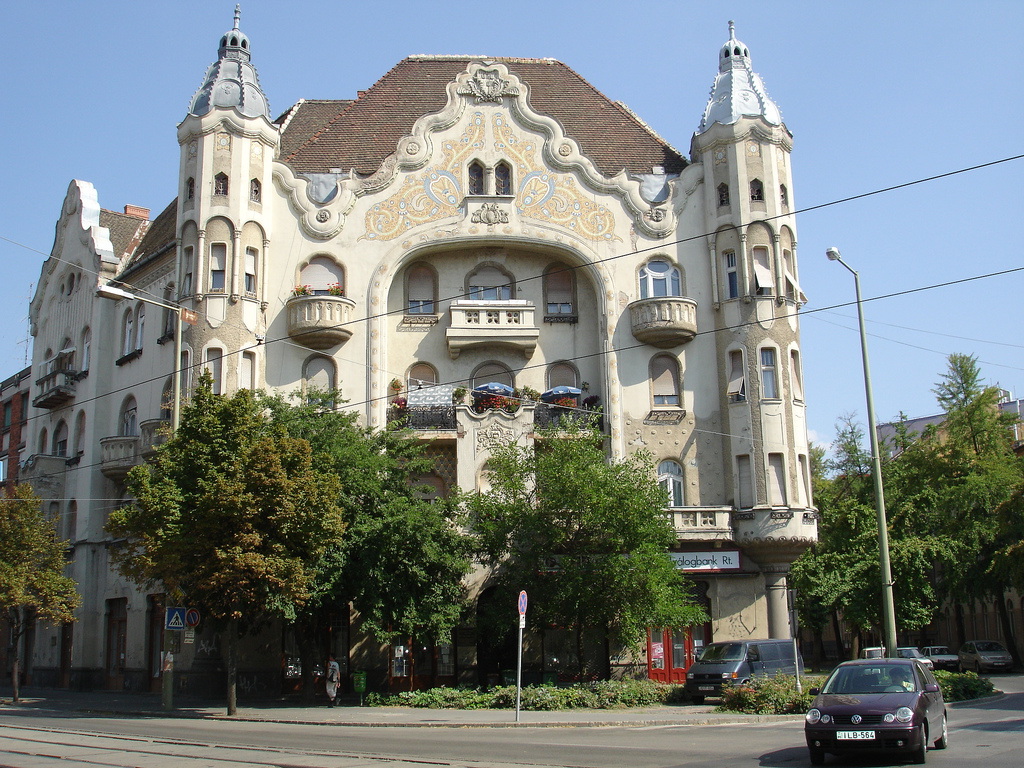
Gróf Palace is one of the most imposing Art Nouveau buildings in Szeged. Built between 1912 and 1913 and designed by Jenő Raichl, it dominates Tisza Lajos Boulevard with its scale and decorative ambition.
The building sits on a triangular plot and fills the space with remarkable confidence. Its façade is divided into balconies, niches and projecting sections that give it rhythm and movement. Corner balconies wrap around the upper floors, adding depth and elegance.
Look closely and you’ll spot motifs inspired by Hungarian folk art alongside colourful ceramic decorations in shades of blue, yellow and gold. Wrought iron details appear on windows and railings, completing a palace that feels ornate, expressive and unforgettable.
Gróf Palace
Tisza Lajos körút 20, 6720 Szeged
Ungár–Mayer House: A Late Art Nouveau Experiment
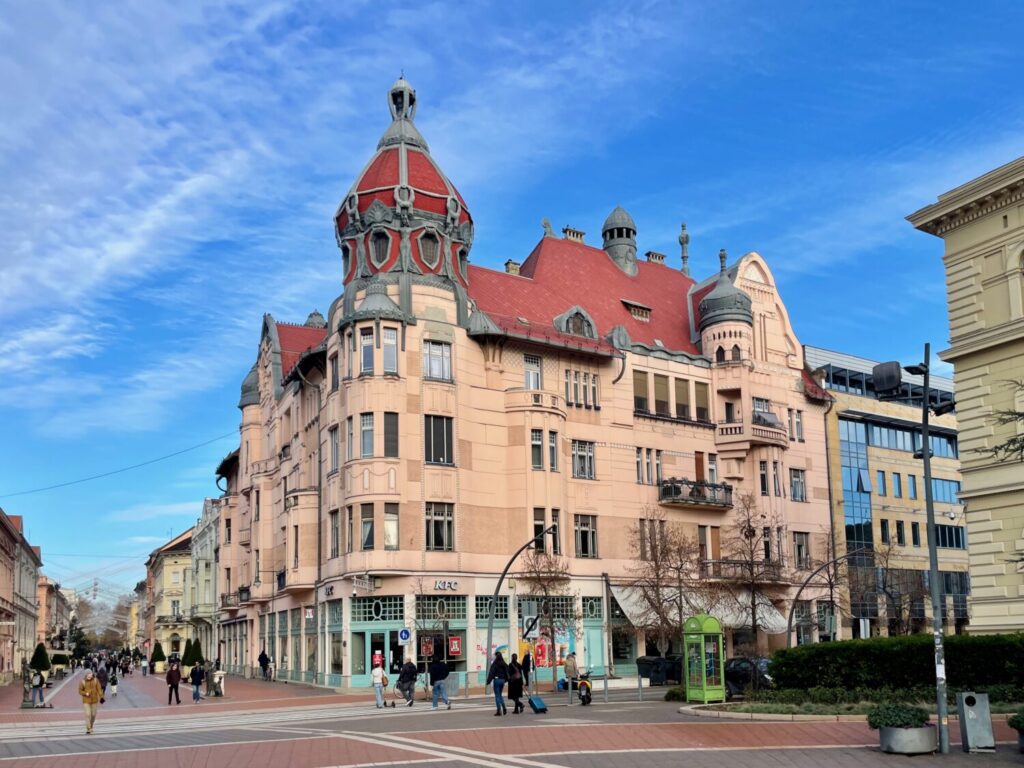
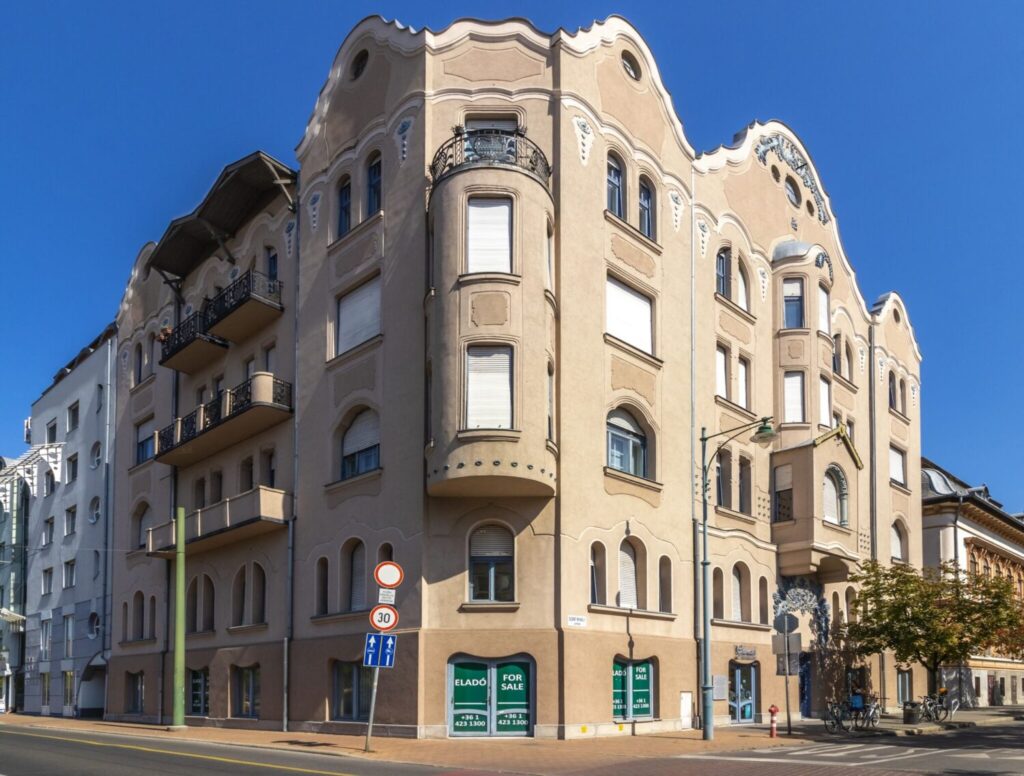
Ungár–Mayer House is one of the most striking examples of late Art Nouveau in Szeged and a building that immediately draws your attention. Designed by Ede Magyar, it reflects a moment of transition, when the flowing lines of Art Nouveau began to blend with more eclectic influences. The result is a façade that feels imaginative, theatrical and slightly dreamlike.
Standing on a prominent corner plot, the building is crowned by an impressive corner cupola that looks almost sculpted rather than built. Ornate gables, curved turrets and decorative tinwork create a roofline that rewards slow observation. Floral details and carved heads appear across the upper levels, adding layers of detail to every angle.
Inside, elegance once continued through decorated staircases and internal galleries. The ground floor hosted the famous Corso Café, which also served as a restaurant during the First World War. Over time, large flats were divided, shops replaced the original façades and a public shelter was created in the cellar in 1941. A major renovation in 1999 restored its external beauty.
Ungár–Mayer House
Kárász utca 16, 6720 Szeged
Beregi House: Brick Art Nouveau and Folk Motifs
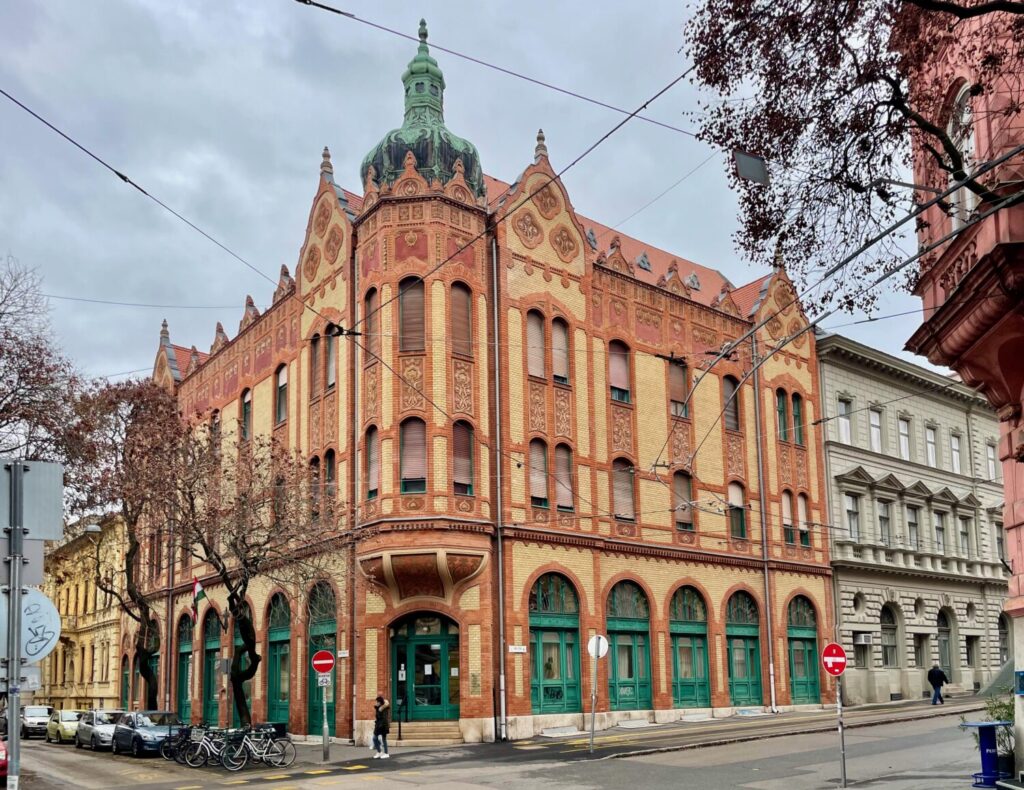
Beregi House is one of the most distinctive buildings along Szeged’s elegant boulevards and a fine example of brick-based Art Nouveau in Hungary. Designed by Pál Kótay for a local teacher, it reflects a version of Hungarian Secession that feels earthy, decorative and deeply rooted in craft traditions.
The façade stands out for its rich use of colour and texture. Red bricks, warm yellow clinker bricks and darker plastered areas create a layered surface that changes with the light. Folk-inspired pyrogranite floral ornaments appear among the brickwork, blending architecture and decoration into one continuous design.
As your eyes move upwards, the detailing becomes more elaborate. Fired-brick cordon patterns divide the façade rhythmically, while mouldings and finials give the building a jewel-like quality. The highlight is the ornately decorated corner spire.
Although the shops on the ground floor have changed over time, the staircase, inner courtyard and gallery still preserve the refined atmosphere of the early 20th century.
Beregi House
Vár utca 3, 6720 Szeged
Márer House: Geometric Art Nouveau and Bold Forms
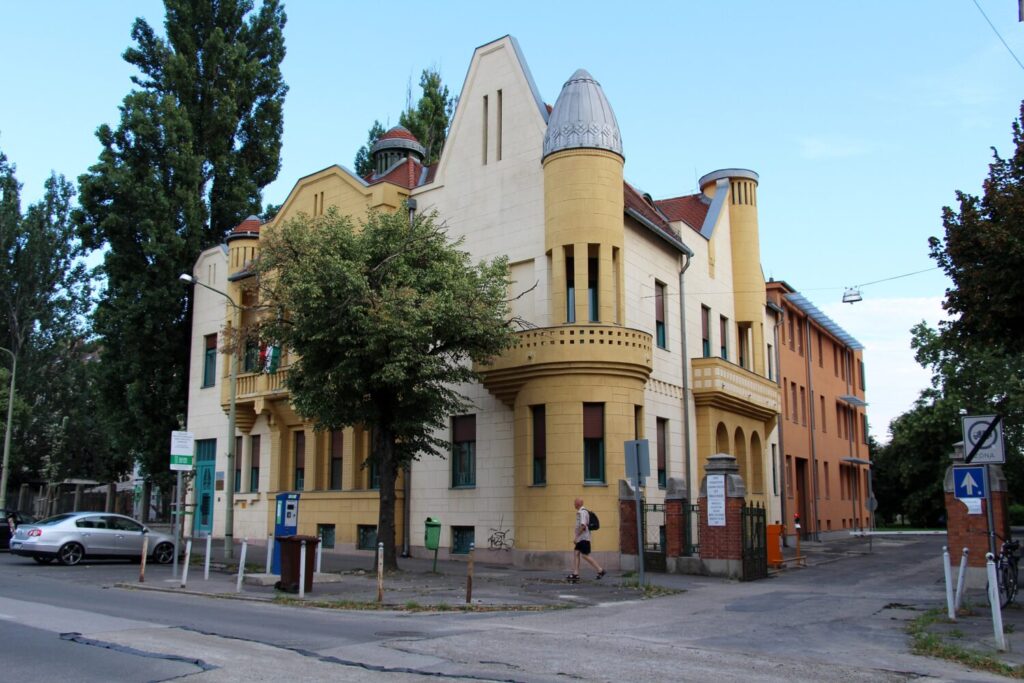
Márer House is one of Szeged’s most unusual examples of geometric Art Nouveau, and its façade immediately feels playful, bold and slightly surreal. Recently restored, the building stands out for its strong shapes and striking asymmetry.
Bay windows, shallow loggias and a bastion-like corner turret create a dynamic composition, with architectural forms leaning into one another like pieces of sculpture. Higher up, decorative gables, pinnacles and window patterns add to the layered effect. Look closely and you will spot grotesque masks, owl-like eyes and geometric plaster work, all carefully integrated into the design.
The entrance gate alone is worth stopping for, with its finely crafted wrought iron and expressive detailing. The building was originally intended for an industrial use, later became residential, and over the years housed workshops and university offices. Since 2008, a memorial room dedicated to Albert Szent-Györgyi has been part of the building, connecting architectural beauty with scientific history.
Márer House
Tisza Lajos Boulevard 109, 6720 Szeged
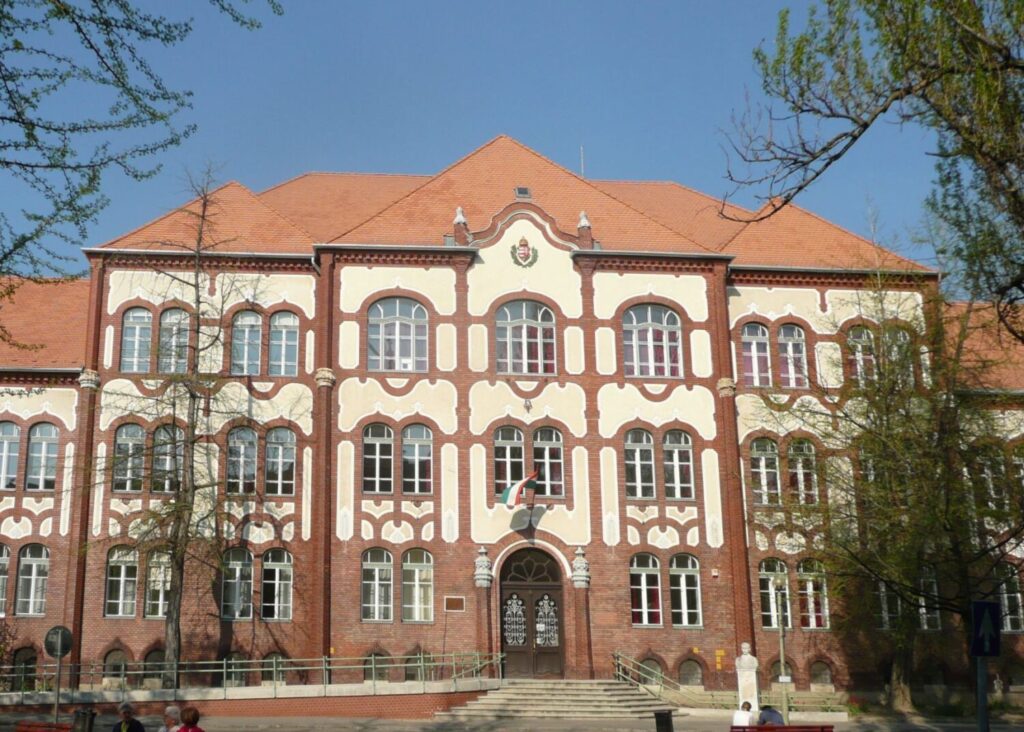
Upper Elementary Girls’ School: A Restrained Take on Hungarian Secession
The former Upper Elementary Girls’ School is a restrained but elegant example of late Art Nouveau in Szeged, where decoration gives way to clarity and balance. The two-storey façade is marked by an arched roofline, subtle brickwork and striped ornamental details that reflect a softer, more national interpretation of Hungarian Secession.
Unlike the city’s more theatrical palaces, this building feels composed and functional. Decorative brick patterns bring movement to the façade without overpowering it. The overall style is calm, measured and expressive in a quieter way.
Its history is as layered as its walls. Originally a girls’ school, it became a military hospital during the First World War and later even served as a military prison. In the interwar years, it returned to education before becoming the Tömörkény High School of Art and Design, which it still houses today.
A full renovation in 2008 preserved the original façade while adding a modern wing, allowing this historic school to continue shaping new generations.
Upper Elementary Girls’ School
Tömörkény Street 1, 6720 Szeged
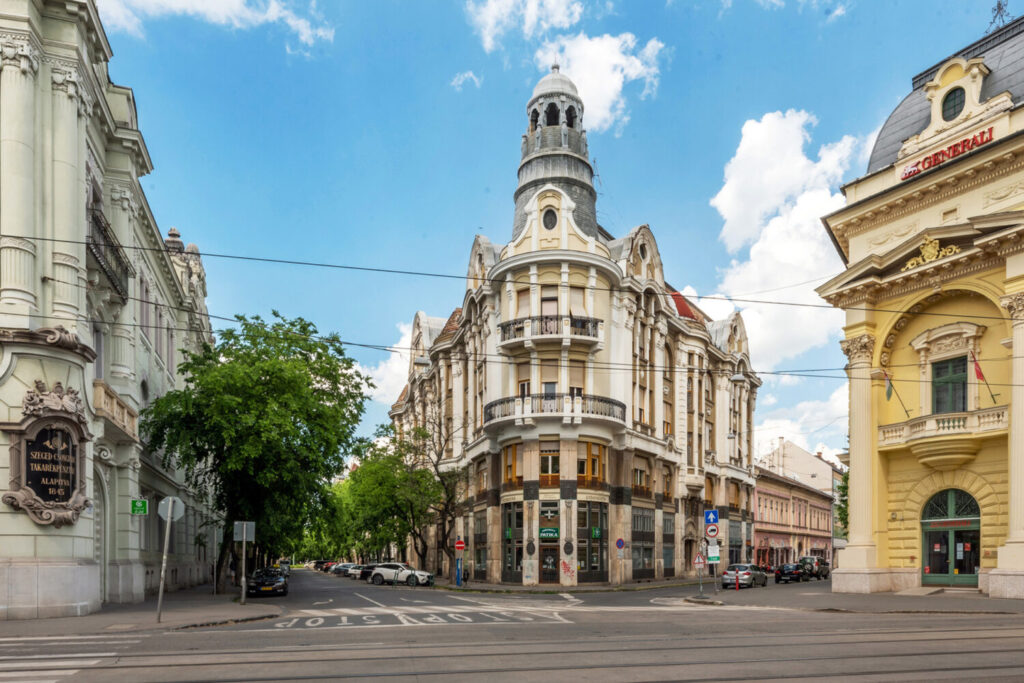
Flatiron Palace: Szeged’s Most Unusual Art Nouveau Corner Building
Flatiron House takes its name from its dramatic triangular shape, which immediately sets it apart in the streetscape. From a distance, its sharp corner, tall pinnacle and layered façade already suggest that this is no ordinary residential building.
At street level, the details begin to reveal the building’s true character. The pilasters are topped with delicate Art Nouveau capitals decorated with red copper, while the entrance gate and balcony railings display beautifully crafted wrought iron. A decorative copper lamp marks the main doorway like a piece of jewellery on the façade.
The building is rich in small surprises. Comic faces peer from unexpected places, sculpted leaves climb across column heads and playful decorations appear where you least expect them. Even the pharmacy that once occupied the corner featured interiors in harmony with the building’s style.
Flatiron Palace
Takaréktár Street 8, Horváth Mihály Street 9, 6720 Szeged
Móricz House: Middle-Class Living in Hungarian Secession Style
Móricz House is an elegant four-storey example of Hungarian Secession overlooking Saint Stephen Square. Built between 1910 and 1912 by architect Jenő Ferenc Raichl for a local postal official, it was designed for the comfort and status of the upper middle class.
The façade is enriched with ceramic decorations inspired by traditional sheepskin coats, a subtle reference to Hungarian folk culture. Inside, walls were once covered in secessionist paintings, turning private apartments into carefully styled living spaces. When the building opened, it featured gas lighting and tiled stoves for heating. A lift was also planned from the start, although it would only be installed many years later.
After the Second World War, the house became a council building and slowly fell into decline. A full restoration in 2007 finally brought back its original elegance. Today, it stands as a refined reminder of Szeged’s early 20th-century ambitions.
Móricz House
Szent Mihály utca 9, 6720 Szeged
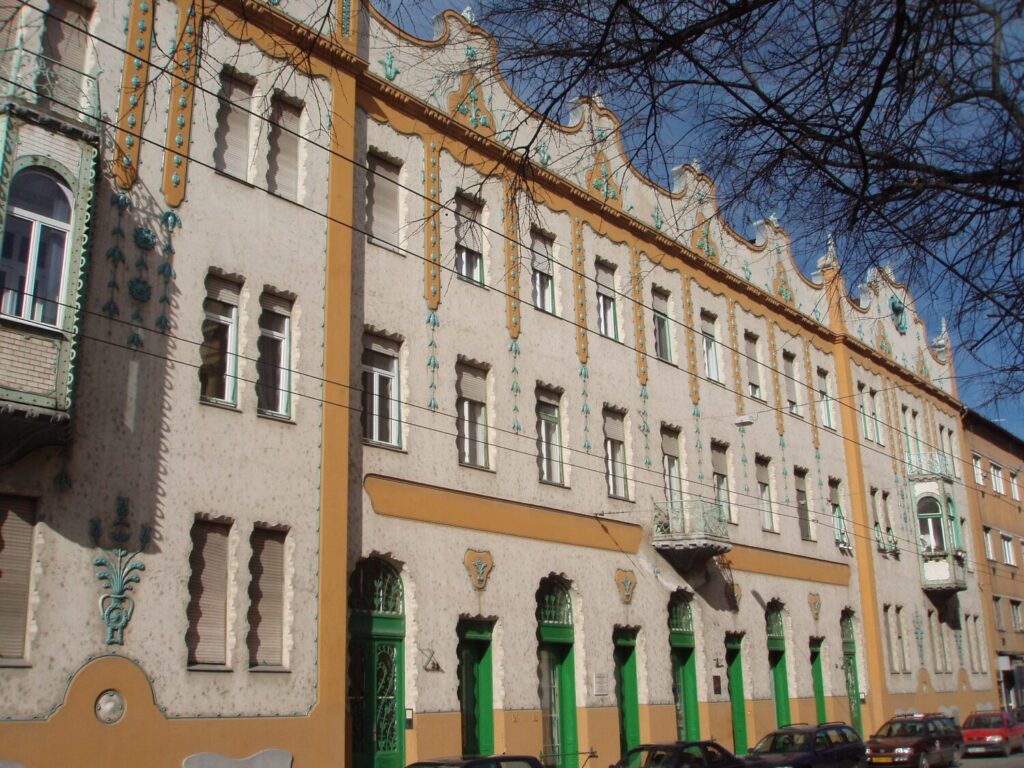
Deutsch Palace: Colour, Ceramics and Art Nouveau Detail
Deutsch Palace is a rich and colourful example of Hungarian Art Nouveau and one of Szeged’s most decorative façades. Built between 1900 and 1902, it was designed by Mihály Erdélyi, with details inspired by the work of Ödön Lechner, the leading figure of Hungarian Secession.
What immediately draws the eye is the building’s bold use of colour. Shades of green, blue and orange appear across the façade through glazed ceramics and Zsolnay ornaments inspired by folk art. Above the entrance, a soft blue pyrogranite pediment curves gently, crowned by rhythmic decorative friezes.
Balconies alternate between enclosed porcelain-like forms and open sections framed by elegant wrought-iron foliage. Even the entrance door becomes a piece of art, with finely crafted metalwork that feels both ornamental and welcoming. Inside, the staircases continue the decorative language of the exterior, reinforcing the impression that the building was conceived as a complete work of art.
Deutsch Palace
Dózsa utca 2, 6720 Szeged
Reformed Church Palace: Art Nouveau with Symbolic Meaning
Reformed Church Palace stands out for its unusual position and pentagonal layout, which give the building a strong visual presence in the cityscape. Its wings embrace an open inner courtyard, creating a beautiful play of light and shadow across the curved balconies and elegant wrought-iron railings.
The entrance gate is one of its most striking features. Divided into three sections, it carries religious symbolism through stylised ironwork that blends faith with Art Nouveau craftsmanship. Above, heavy roof forms introduce a Baroque influence, while flowing lines, decorative cornices and varied window shapes bring movement to the façade.
Despite the richness of its decoration, the building retains a sense of restraint that reflects the values of the Reformed Church. It was nationalised in 1953, although church organisations were allowed to remain inside. The palace has always combined religious and residential functions and still hosts church offices and university departments today.
Reformed Church Palace
Tisza Lajos Boulevard 37, 6720 Szeged
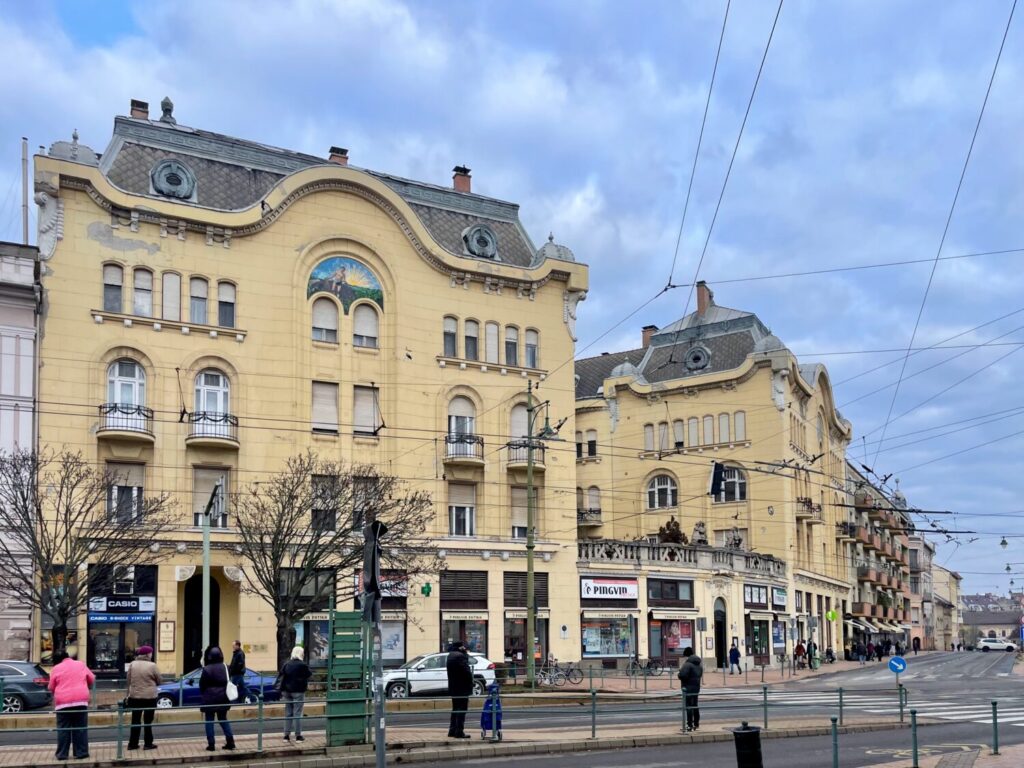
Twin Villas on Lechner Square: Raffay House and Szígyártó House
These two neighbouring houses on Lechner Square show how Art Nouveau reached the middle class in Szeged, not just wealthy patrons and grand institutions. Built as private homes for two teachers, they reflect a more personal and domestic interpretation of Hungarian Secession.
Raffay House, set slightly back from the corner, is the more restrained of the two. A band of glazed ceramic beadwork runs beneath the cornice, adding subtle decoration without overwhelming the façade. The overall effect is balanced and harmonious, with an emphasis on proportion rather than excess.
On the corner stands the more expressive Szígyártó House, instantly recognisable for its colourful ceramic details. Peacock-feather patterns and richly decorated window frames give the building a playful and vibrant character. Raffay House functioned as a residence until 1990 and later became a small student hostel. Szígyártó House remains residential.
Raffay House
Lechner Tér 2/A, 6720 Szeged
Szígyártó House
Lechner Tér 2/B, 6720 Szeged
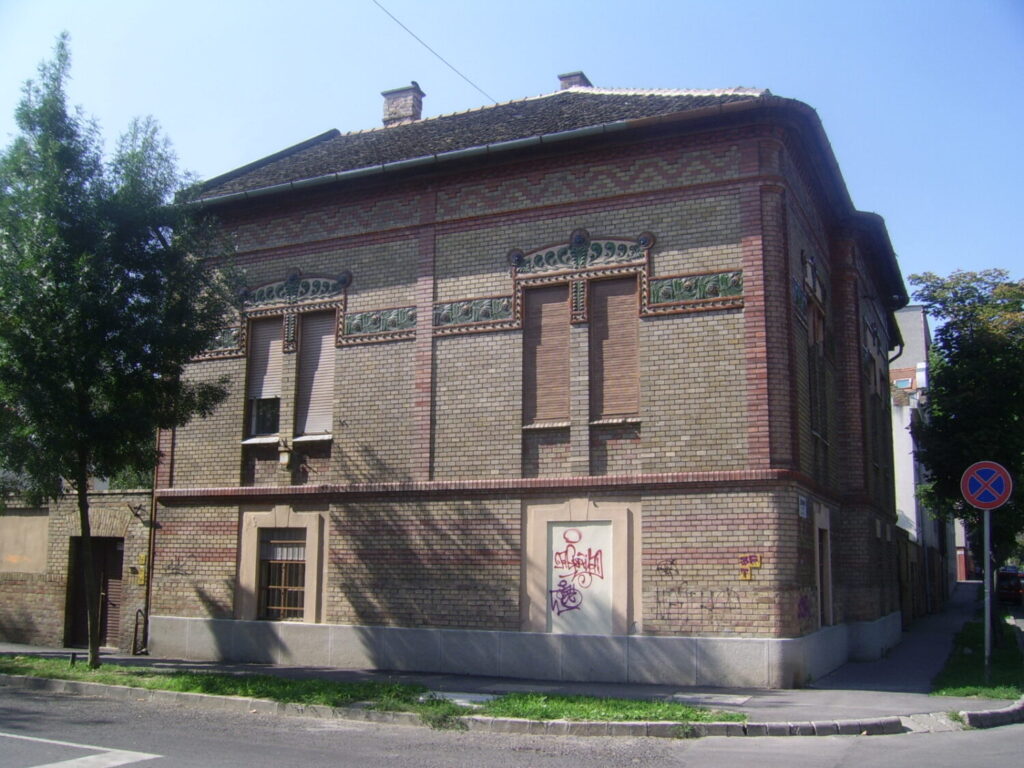
Raichl House: The Architect’s Own Art Nouveau Statement
Raichl House is the personal statement of architect Ferenc Raichl in Szeged and one of the city’s most expressive Art Nouveau buildings. While it is more restrained than his famous palace in nearby Subotica, it still dominates its surroundings with confidence and scale.
The most striking section is the corner façade. Deep bay windows decorated with majolica tiles project from the wall, above which sit open balconies supported by wooden brackets inspired by Transylvanian architecture. Higher up, ceramic ornaments in warm ochre tones decorate the pediments, leading the eye towards the turret rising from the roof like a small fortress tower.
Along the side façades, mosaics shine in blue and gold, filled with folk-inspired patterns, stylised leaves and floral motifs. Smaller details reward close attention: lace-like wrought-iron railings, plant holders beneath the windows and carved wooden roofing.
Originally built as a private apartment house with shops on the ground floor, the building later hosted the Apollo Cinema. Since the 1980s, it has served as part of the University of Szeged, adapted into a school while preserving much of its exterior character.
Raichl House
Szentháromság Utca 2-4, 6720 Szeged
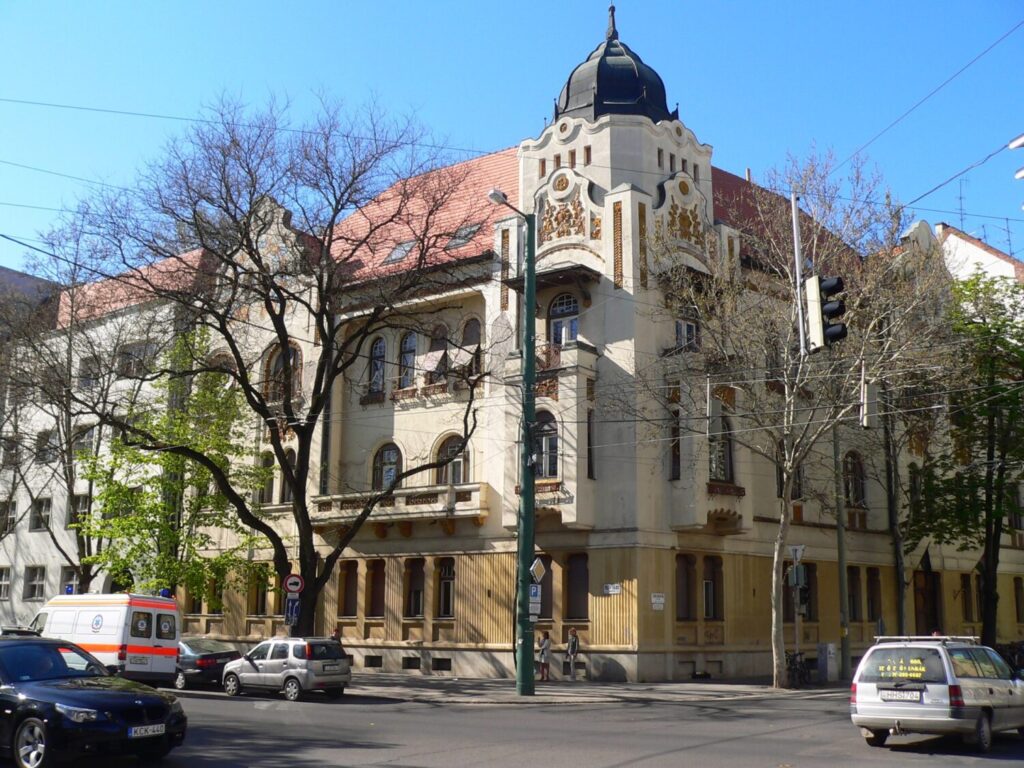
Beyond Art Nouveau: Other Architectural Highlights in Szeged
Walking through Szeged feels like leafing through a beautifully illustrated architecture book. Although Art Nouveau steals much of the spotlight, the city is shaped by far more than one style.
Neo-Classical public buildings speak of order and ambition. Neo-Baroque façades add theatrical elegance, while calmer late-19th-century apartment houses quietly frame leafy squares and broad boulevards. University buildings, churches and theatres complete the picture, revealing how architecture in Szeged evolved alongside its social life.
Szeged rewards curiosity. The beauty of the city lies in its walkability and visual rhythm. One moment you admire a richly decorated palace, the next you discover a quiet courtyard behind an unassuming façade or a monumental entrance hidden in plain sight. Cafés open beneath historic balconies, and everyday life unfolds inside buildings that feel anything but ordinary.
In the following sections, you’ll find more buildings you shouldn’t miss during your architectural walks around Szeged.
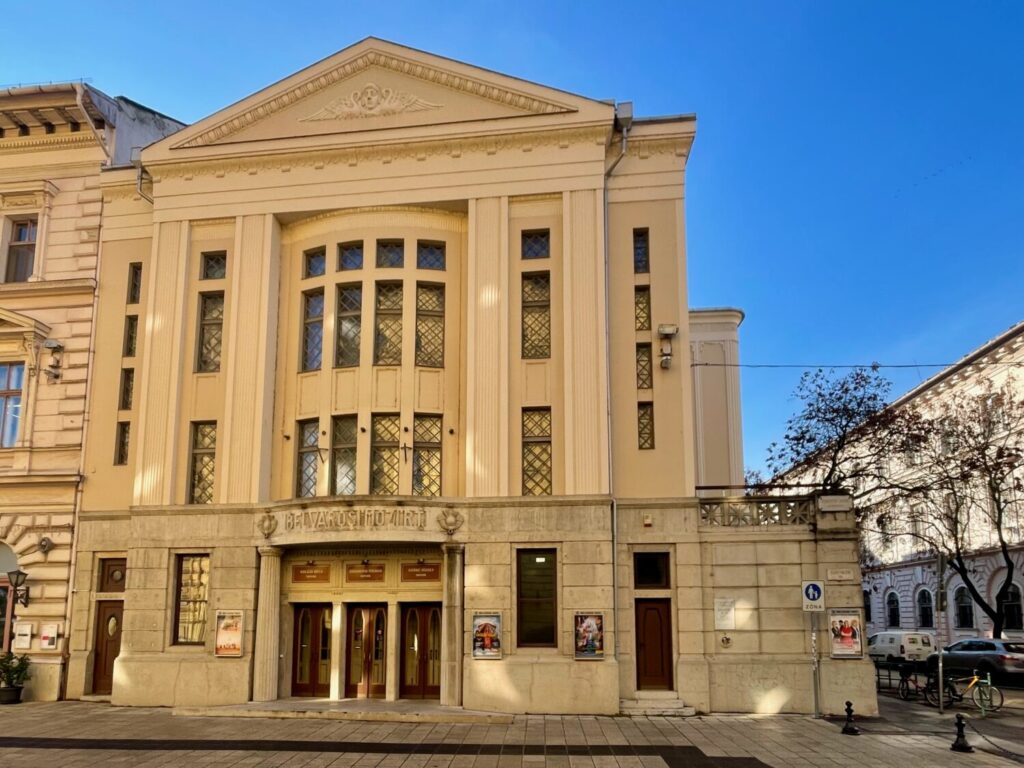
Belvárosi Cinema: Art Deco and Film History in Szeged
Belvárosi Cinema is one of Szeged’s most distinctive Art Deco landmarks. Built in 1920 to designs by architect Endre Sebestyén, it holds a unique record: it is the only cinema in Hungary that was purpose-built as a cinema and has operated continuously ever since.
Carefully restored in 2019, the building now combines history with innovation. Alongside its screenings, you’ll find a film history exhibition, VR experiences and interactive installations that celebrate cinema as both art and technology. The main auditorium seats over 500 people and features a generous balcony, creating the atmosphere of a classic film palace.
The hall is named after Vilmos Zsigmond, the Oscar-winning cinematographer born in Szeged, and the venue hosts the annual Vilmos Zsigmond International Film Festival in his honour. Today, you can watch everything from Hungarian independents to global classics, as well as live opera and theatre broadcasts.
Belvárosi Cinema
Vaszy Viktor tér 3, 6720 Szeged
New Synagogue: Art Nouveau, Symbolism and Spiritual Architecture
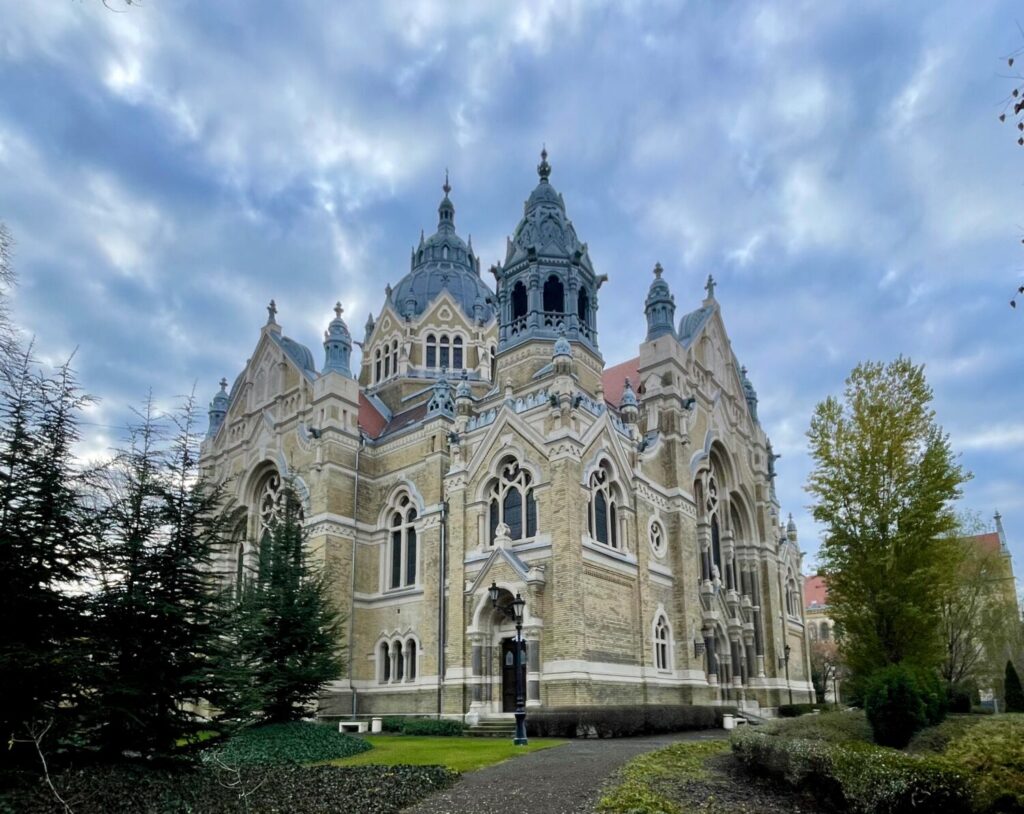
The New Synagogue is one of Szeged’s most impressive landmarks and a masterpiece of early 20th-century architecture. Designed by Lipót Baumhorn and completed in 1902, it combines Art Nouveau with historic styles in what is often called the Hungarian Secession.
Step inside and your eyes are naturally drawn upwards. The dome rises almost 50 metres and fills the space with light filtered through stained-glass windows by Miksa Róth. Moorish patterns merge with Gothic ribs, Roman columns and richly painted surfaces in a harmonious and theatrical composition.
The Torah Ark was built using wood traditionally associated with the Temple of Solomon, while botanical details reference ancient Jewish symbolism. Every element feels intentional and deeply symbolic. Today, the synagogue functions both as a place of worship and as a concert and cultural venue. It’s the second largest synagogue in Hungary, after the Dohány Street Synagogue in Budapest, and one of the largest in the world. Yet it feels intimate, peaceful and emotionally powerful.
New Synagogue
Jósika Utca 10, 6722 Szeged
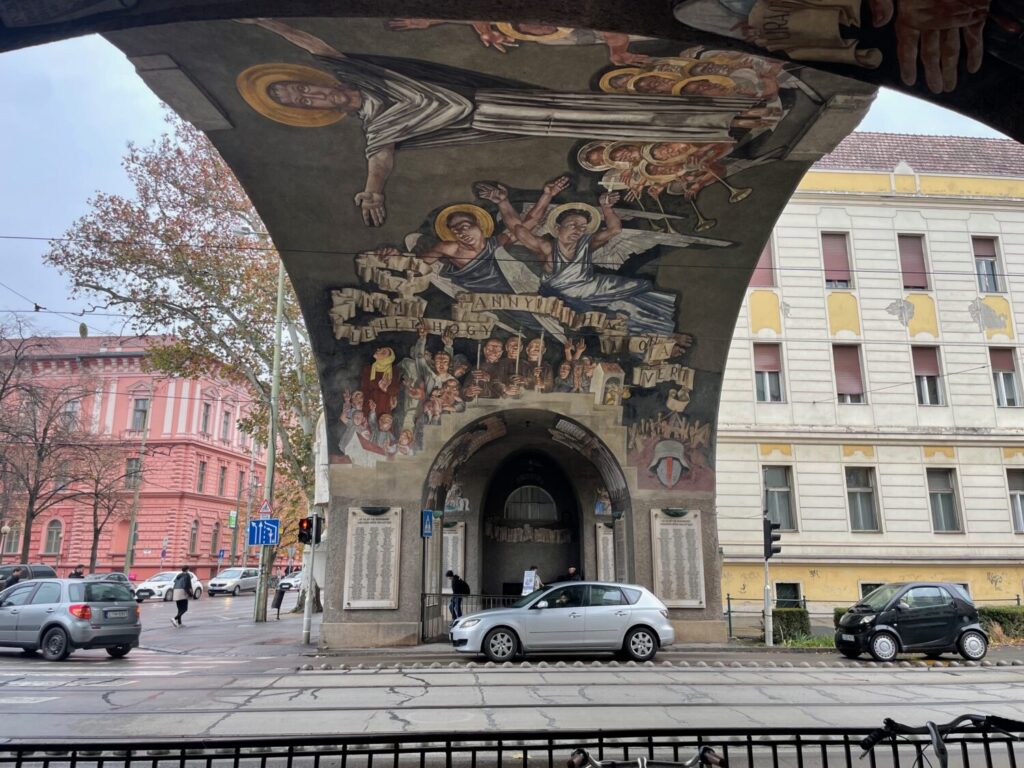
Gate of Heroes: Monumental Architecture and Memory
The Gate of Heroes, Hősök Kapuja in Hungarian, belongs to a far more solemn and commemorative style than Art Nouveau. Built in the 1930s to honour the soldiers fallen in the First World War, it reflects moral reflection and national memory rather than decorative playfulness.
Its structure is bold and symmetrical, with clean lines and a monumental presence that immediately sets it apart from the more organic façades nearby. The most distinctive element is its painted interior fresco, created by Vilmos Aba-Novák, one of Hungary’s most important modern muralists.
The imagery is intense, emotional and deliberately dramatic, turning the archway into a narrative space rather than a simple passage. Walking through the Gate feels like stepping into a historic statement, and it’s pretty impressive!
Gate of Heroes
Boldogasszony sgrt., 6725 Szeged
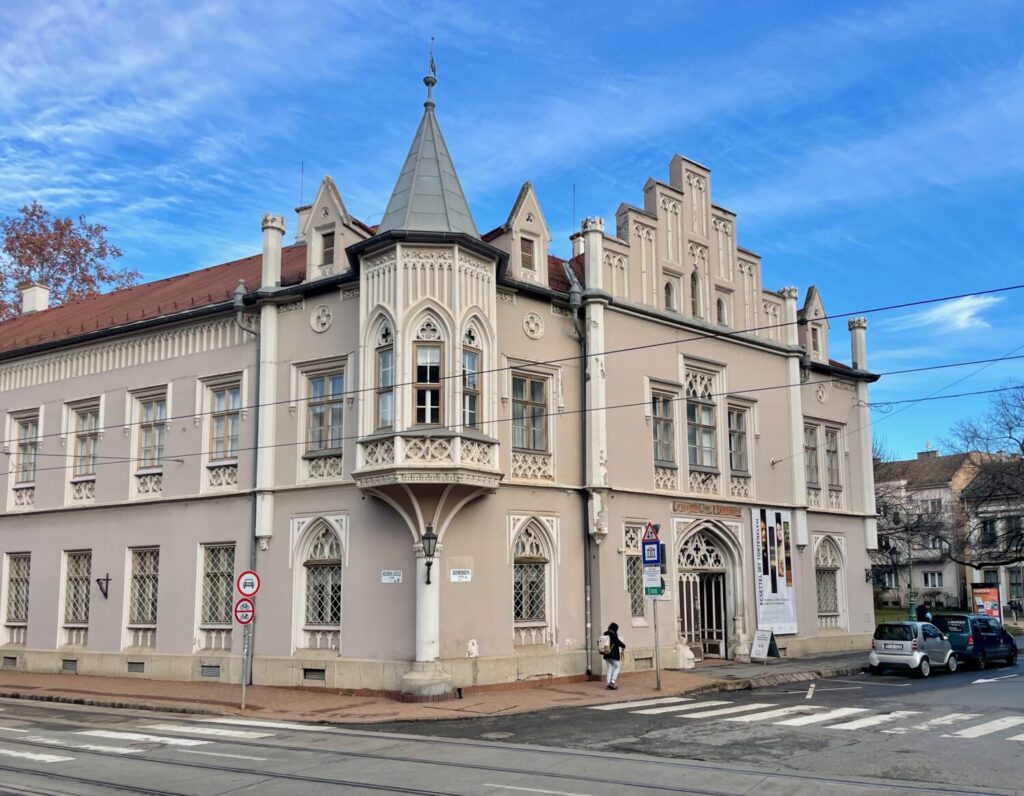
Black House: Renaissance and Baroque Layers in Szeged
The Black House, Fekete Ház in Hungarian, stands out immediately in Szeged’s city centre. Despite its name, the building isn’t actually black. The façade catches your eye, yet the architecture belongs to a completely different world from Art Nouveau. The house has Renaissance and Baroque origins, and its current appearance comes from several later transformations.
You’ll notice arched windows, heavier proportions and simple decorative details that reflect earlier architectural traditions. It feels solid and historic, offering a clear contrast to the colourful curves of Szeged’s Art Nouveau palaces.
Today, the Black House hosts exhibitions organised by the Móra Ferenc Museum. During our visit we explored a fine art display, a reconstructed historic pharmacy and a charming exhibition about an early kindergarten. It’s a quiet but interesting stop, especially if you enjoy discovering the many architectural layers that shape Szeged.
Black House
Somogyi utca 13, 6720 Szeged
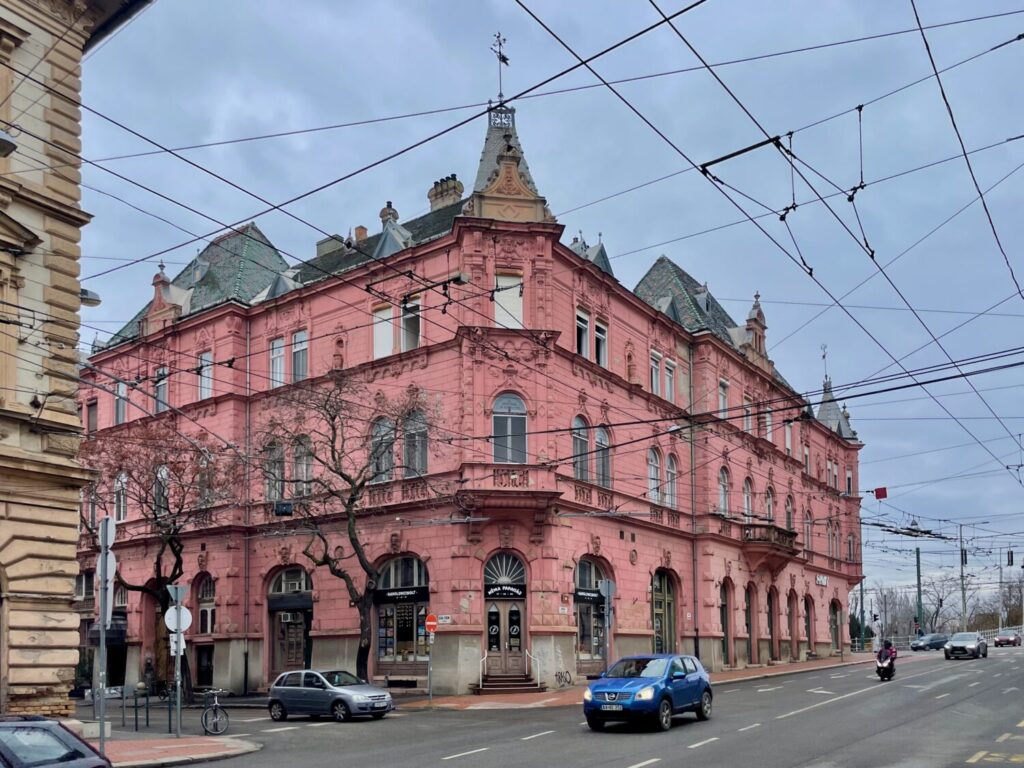
Milkó Palace: French Neo-Renaissance Elegance
Milkó Palace is one of Szeged’s most striking French Neo-Renaissance buildings, and you’ll spot it easily just a short walk from the Móra Ferenc Museum. Built in 1883, it was designed by Ödön Lechner and Gyula Pártos, the pair who would later become key figures in Hungarian Secession.
Its history is surprisingly varied. At street level, the palace originally hosted several shops, reflecting the lively commercial atmosphere of the city at the time. In 1934, Dr Gyula Holtzer commissioned architect Pál Ligeti to redesign the interior, adding mezzanine apartments that updated the building while keeping its elegant façade intact.
Most recently, in 2024, the Municipality of Szeged carried out a full renovation, investing heavily in restoring the structure and decorative elements. Today, Milkó Palace stands beautifully renewed, a clear example of how Szeged continues to value and preserve its architectural heritage.
Milkó Palace
Roosevelt tér 5, 6720 Szeged
Water Tower: Engineering, Art Nouveau and City Views
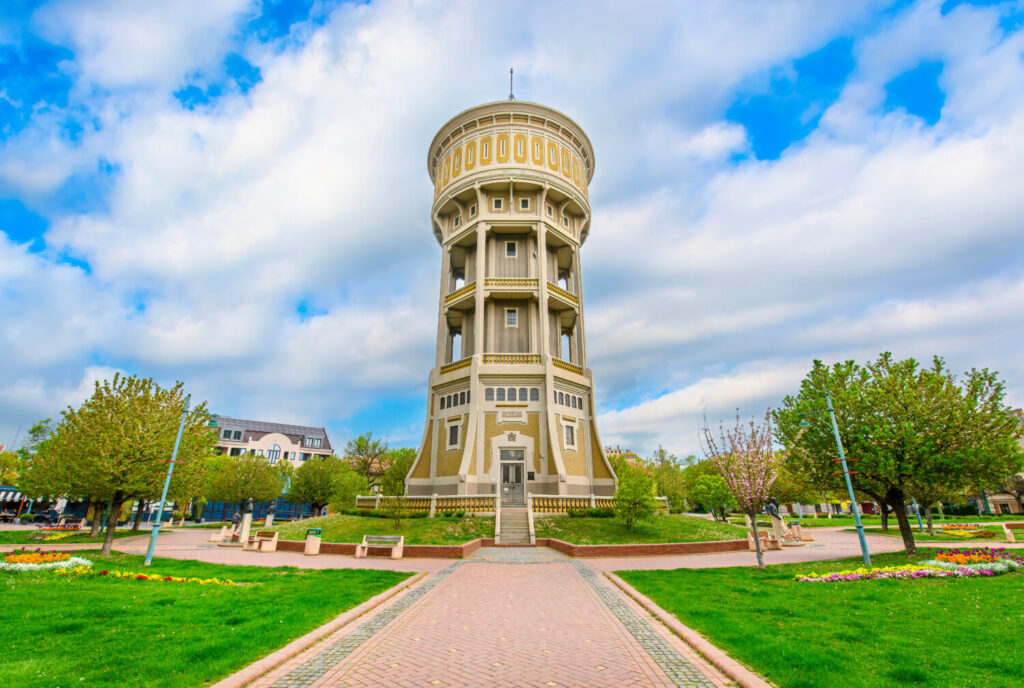
Szeged’s Water Tower is one of Hungary’s earliest reinforced-concrete industrial monuments and a fascinating landmark to visit. Built in 1904 and designed by Szilárd Zielinski, it was the first water tower in the country made entirely of reinforced concrete. Remarkably, it still performs its original function today.
The tower rises above Saint István Square, surrounded by a pleasant park and the busts of seven architects who shaped Szeged after the Great Flood. When you step inside, you find a small but engaging exhibition, including a Foucault pendulum that demonstrates the rotation of the Earth.
If you climb the many stairs to the top, you’re rewarded with one of the best panoramic views of Szeged. Along the way you can see colourful old soda bottles and displays on the history of engineering and physics. The tower’s simple geometric lines also reveal touches of early Art Nouveau, blending functionality with turn-of-the-century elegance.
Water Tower
Szent István tér, 6720 Szeged
Where to Stay in Szeged
When visiting Szeged, staying in the city centre makes everything easier. All the main sights are within walking distance, including the Cathedral, the New Synagogue and the National Theatre.
For a comfortable hotel stay, Art Hotel Szeged offers modern design in the heart of the city. The restaurant serves Hungarian and international dishes, breakfast is included and the River Tisza is just a two-minute walk away.
If you prefer an apartment, the Noir Hotel residence provides air-conditioned studios with a kitchenette, coffee machine, fridge and private bathroom. A continental breakfast is available on site. For a budget-friendly option, Frasolis Studio Apartman is a small, but well designed apartment, ideal for two people. It’s simple, cosy and offers excellent value for money.
Final Thoughts on Szeged’s Architecture
Szeged is the kind of city that rewards anyone who loves wandering with their eyes pointed upwards. Its streets form an open-air gallery where Art Nouveau, Art Deco, Neo-Classical and Eclectic styles coexist in a harmony that feels both unexpected and deeply authentic. What began as a reconstruction after tragedy has become one of Hungary’s most captivating architectural landscapes.
And this guide only scratches the surface. Beyond the major palaces and well-known landmarks, Szeged hides countless other gems worth adding to your walk. Buildings such as Déri Miksa House, Tisza Palace, Post Office Palace, Reizner House, Villa Békési and many more are scattered across the city, each with its own story and distinctive design. Several of these structures aren’t even fully documented in guidebooks yet, which makes discovering them even more exciting.
Exploring Szeged’s architecture means letting yourself slow down, follow the curves of a façade, peek into a courtyard, or step inside a building you might otherwise pass unnoticed. If you’ve visited Szeged or discovered architectural details we’ve missed, leave a comment below and share your impressions.
