Vietnam souvenirs are a tangible way to continue your journey even after returning home. Choosing between playful T-shirts, mountain tea, lanterns and incense means deciding which flavours, objects and traditions you want to rediscover in your own space. Every purchase becomes a deliberate choice about the memories you wish to carry forward, long after the trip itself has ended. From bustling markets to carefully curated design concept stores, this article includes updated prices and everything you need to know to shop thoughtfully during your travels in Vietnam.
Table of Contents
Where to Buy Souvenirs in Vietnam: Markets, Fixed-Price Shops and Shopping Tips
In every tourist area of Vietnam you will find small shops, market stalls and street vendors selling souvenirs. Yet you can also buy your travel mementoes in traditional markets, family-run shops or more curated concept stores. Product quality can vary, though it is generally good, both for clothing and accessories and for food-related souvenirs.
PLAN YOUR TRIP TO VIETNAM – 5% discount on your eSIM and travel insurance
For getting around Vietnam with ease, choose a Holafly eSIM: you get unlimited internet, perfect for using Google Maps, Grab or other navigation apps, booking transport on the go, and sharing photos and videos in real time on WhatsApp without worrying about local SIM cards or extra charges.
For extra peace of mind, pair connectivity with Heymondo travel insurance, which covers you in case of medical emergencies, delays or cancellations. A practical solution that lets you focus on exploring Vietnam, rather than dealing with unexpected setbacks.
In Vietnam, bargaining is fairly common, although not as intense as in North Africa and some parts of the Middle East. As a practical example, if you buy two items you can usually ask for a small discount, yet prices rarely drop by half. In one market in Ho Chi Minh City, I managed to pay just over half of the initial price, but only because the seller had first quoted me a “tourist” rate and then lowered it when I pointed out that I knew the real prices.
Generally, in northern Vietnam and in rural areas prices tend to be fairer and less inflated, so bargaining is more limited. By contrast, in central and southern cities, vendors often target tourists with higher prices, so you should try to negotiate a small reduction. However, bargaining remains polite and relatively relaxed.
In fixed-price shops, such as concept stores, there is no negotiation. Shops display fixed prices, yet they provide higher quality products and a more boutique-like atmosphere. Costs can be up to ten times higher than in markets, though there is greater attention to materials, design and product origin.
Vietnam Souvenir Prices: How Much Things Really Cost in Dong and Euros
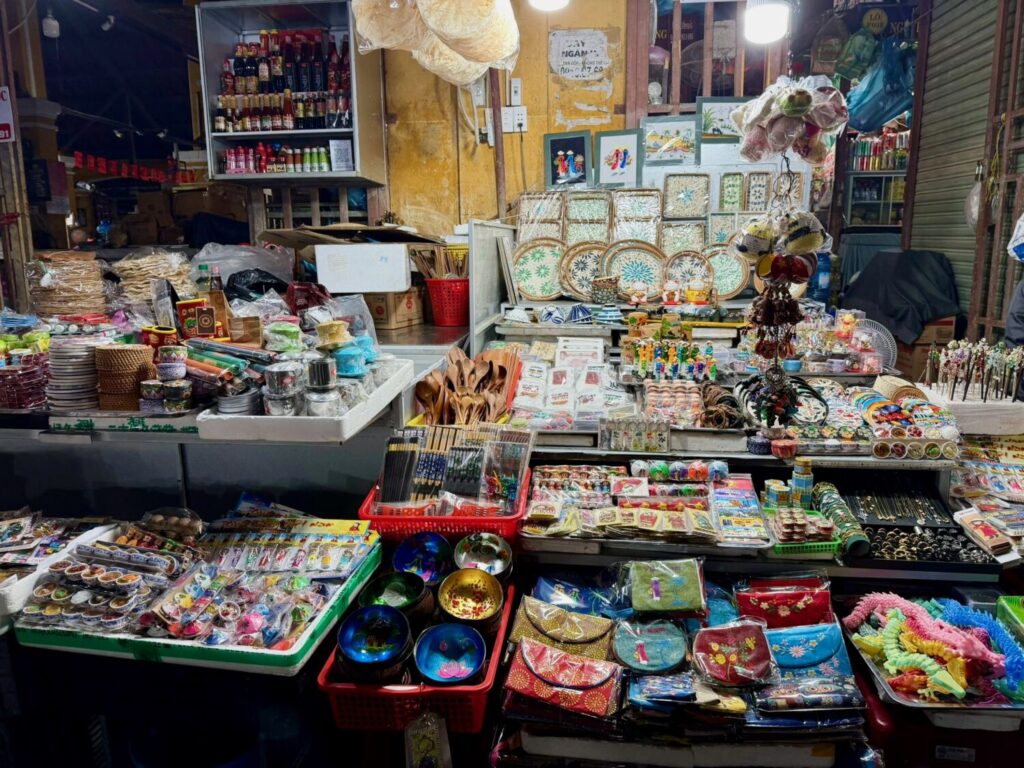
Before shopping and filling your suitcase, it helps to know the average prices of individual items. Understanding local prices allows you to shop more confidently and avoid overpaying. In Vietnam, souvenir costs vary by city, neighbourhood and type of shop. Knowing typical price ranges helps you avoid inflated rates, especially in tourist-heavy areas of central and southern Vietnam.
The prices collected by me and my travel companions during my last trip to Vietnam from Hanoi to Ho Chi Minh City are indicative. They may vary slightly between north and south, or between markets and fixed-price shops. Northern Vietnam is generally more affordable, particularly outside tourist areas. Local specialities, such as coconut sweets or mountain tea, usually cost less when you buy them locally rather than in cities that simply resell them.
I rounded the euro conversions and based them on an exchange rate of €1 ≈ 30,000 VND and €1 ≈ 1.20 USD, as many prices are quoted in US dollars. In some markets, vendors apply a simplified and unfavourable rate of €1 = 1 USD if you choose to pay in euros.
Clothing and Accessories in Vietnam: Typical Prices
| Product | Local Price | Value in Euros |
|---|---|---|
| Acrylic T-shirt | 100,000 VND | €3.50 |
| Cotton T-shirt | 150,000 VND | €5 |
| Concept store T-shirt | from 500,000 VND | from €16.50 |
| Budget dresses | 120,000 – 200,000 VND | €4 – €6.50 |
| Made-to-measure women’s dress | from 50 USD | from €41.50 |
| Two-piece tailored suit | from 110 USD | from €92 |
| Silk or cashmere scarf | from 10 USD | from €8.50 |
| Straw handbag for children | 50,000 – 150,000 VND | €2 – €5 |
| Water hyacinth handbag | 25 USD | €21 |
Vietnamese Handicrafts and Classic Souvenirs
| Product | Local Price | Value in Euros |
|---|---|---|
| Fridge magnets | 25,000 – 50,000 VND | €0.80 – €1.50 |
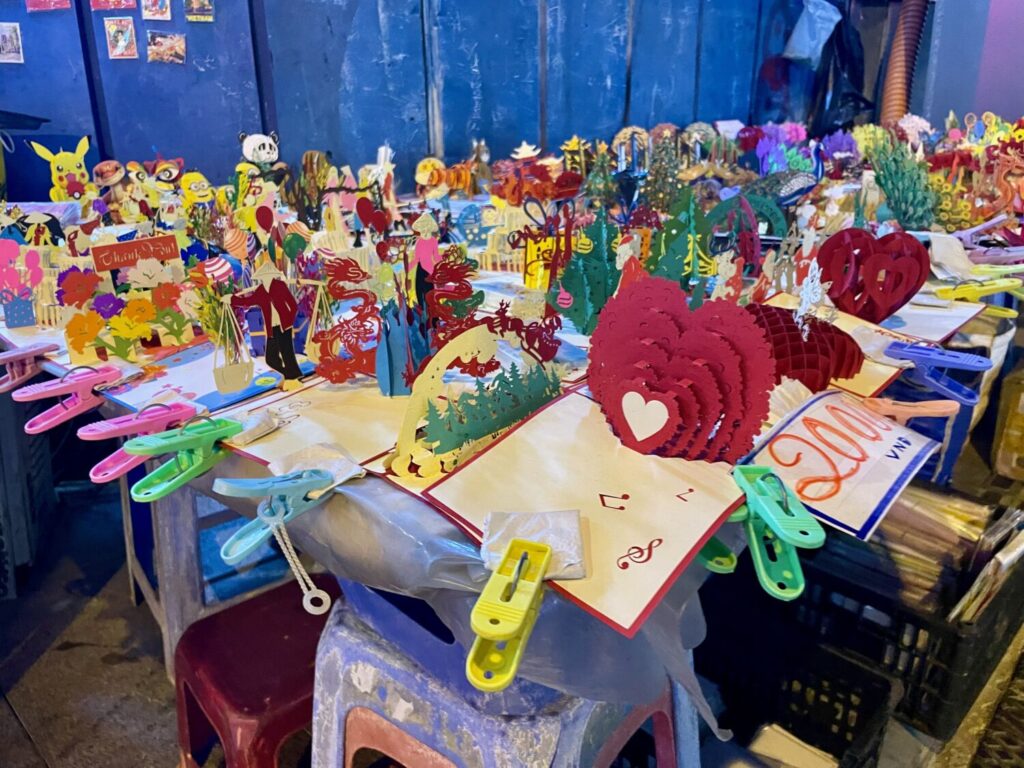
| Pop-up cards | 100,000 VND | €3 |
| Lanterns | 100,000 – 150,000 VND | €3.50 – €5 |
| Conical hat (nón lá) | 50,000 – 200,000 VND | €1.50 – €6.50 |
| Decorated chopsticks | 100,000 – 200,000 VND | €3.50 – €6.50 |
| Incense sticks | 100,000 VND | €3.50 |
| Handmade teapot | 500,000 VND | €16.50 |
Food Souvenirs from Vietnam: Prices and What to Expect
The prices below refer to the most common package sizes found in shops and artisan workshops.
| Product | Local Price | Value in Euros |
|---|---|---|
| Coffee | 50,000 – 180,000 VND | €1.50 – €6 |
| Tea | 50,000 – 140,000 VND | €1.50 – €4.50 |
| Coconut sweets | 50,000 VND | €1.50 |
| Rice paper | 25,000 VND | €0.80 |
| Raw coconut crackers | 250,000 VND | €8.50 |
| Cooked coconut crackers | 500,000 VND | €16.50 |
Counterfeit Goods in Vietnam: Price Examples
| Product | Local Price | Value in Euros |
|---|---|---|
| Ralph Lauren T-shirt | 150,000 VND | €5 |
| North Face jacket | 55 USD | €45 |
| Cotopaxi waist bag | 220,000 VND | €7.50 |
| Gucci backpack | 60 USD | €50 |
| Louis Vuitton scarf (cashmere and silk) | 180,000 VND | €6 |
Remember that exchange rates fluctuate and may change over time. Prices also depend on negotiation and season.
What to Buy in Vietnam Beyond Fridge Magnets: Unique Souvenir Ideas
Fridge magnets are a classic travel souvenir, and in Vietnam you will find them in every possible design. They are not the only keepsake worth bringing home. From north to south, souvenir shops overflow with coffee and conical hats, both instantly recognisable symbols of the country, alongside many other traditional objects linked to local culture. From food products to handcrafted creations, each purchase can become a meaningful reminder of Vietnam, rather than just another object on a shelf.
Best Food Souvenirs to Bring Home from Vietnam
Food is certainly one of my favourite types of souvenir, as it allows me to recreate at home the flavours I enjoyed during the trip. In Vietnam this makes even more sense, because Vietnamese cuisine tells the story of the land better than any guidebook.
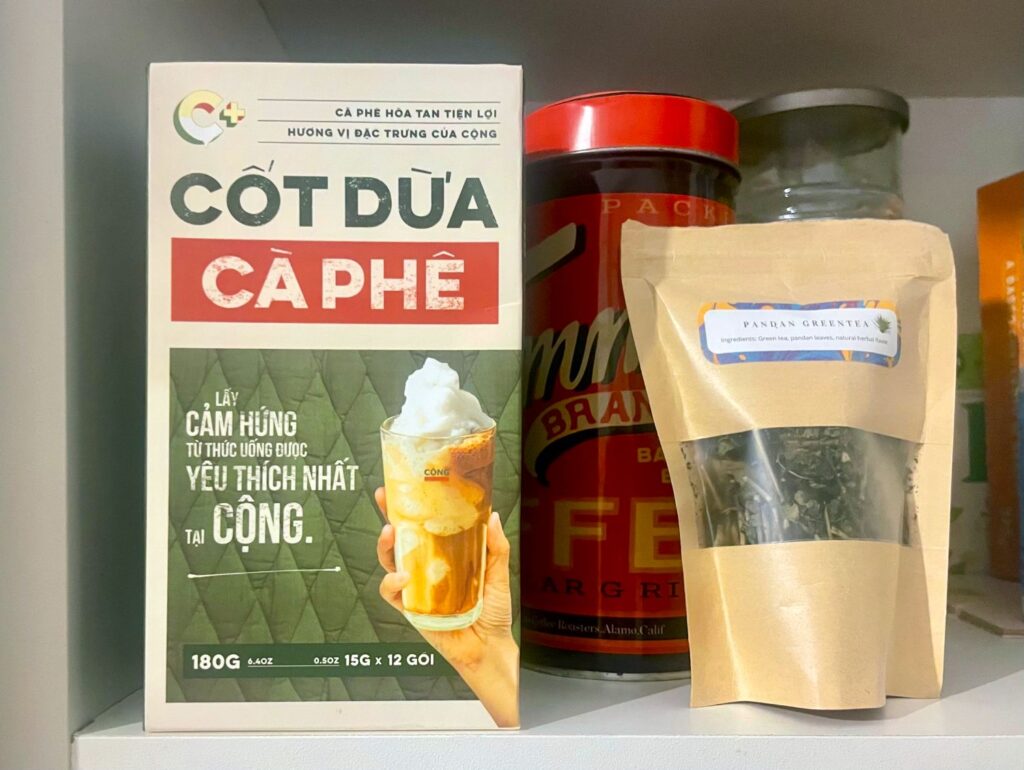
Vietnamese coffee is the most common food souvenir, available in every tourist shop from Hanoi to Ho Chi Minh City. Vietnam is the world’s second-largest coffee producer, and the robusta variety has a strong, almost bitter taste. I personally find it too intense and struggle to drink it, with the only exception being coconut coffee. On my most recent trip, I saw less promotion of Kopi Luwak, the so-called civet coffee, likely due to increased awareness of animal welfare.
Another drink you can bring home as a souvenir is tea from the northern mountain regions, grown by ethnic minority communities. As a souvenir, it is perfect because it is lightweight, long-lasting and does not cause problems at the airport. It also has a positive impact on the local economy when purchased directly from a cooperative.
Traditional Vietnamese Souvenirs: Cultural Objects Explained
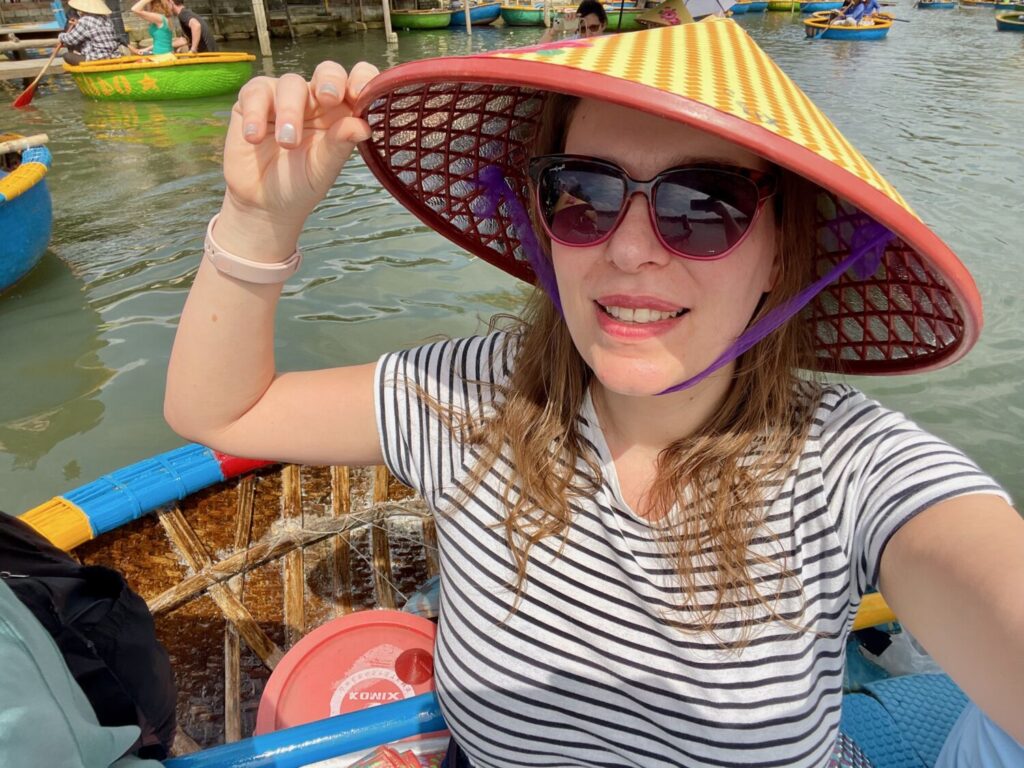
Among the most classic souvenirs is the Vietnamese conical hat, called nón lá, which has been used for centuries in the countryside. Even today you can see it worn by locals, especially in rural areas, as protection from the sun and rain. City vendors often offer tourist-oriented versions of the conical hat, more or less decorated and less connected to daily life.
To bring home the country’s traditions, you can also buy an áo dài, the traditional Vietnamese dress, almost always made to measure. I have one from my first trip to Vietnam, a wonderful gift from the family who hosted me in Hanoi. Unfortunately, it no longer fits me. Otherwise, I would gladly wear it for photos in historic settings, just as Vietnamese girls do.
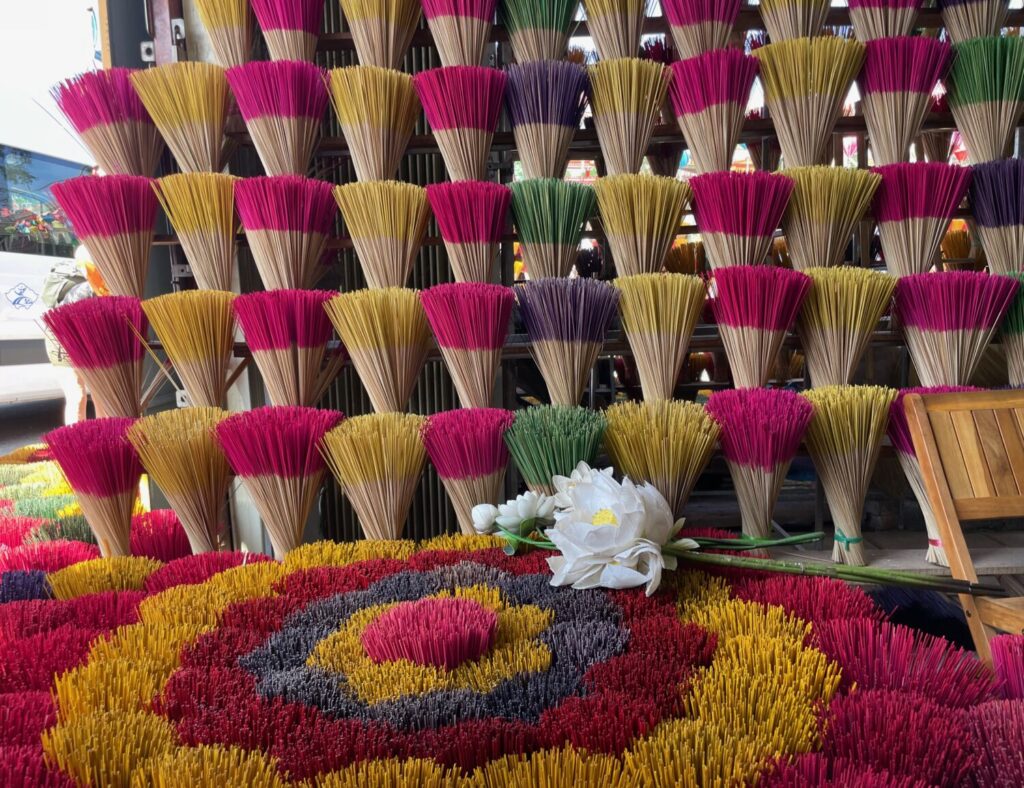
Among the traditional souvenirs to buy in Vietnam there are also handmade incense sticks, produced in artisan villages around Hue. Families burn them in temples and at home to honour their ancestors and maintain a tradition that is still deeply rooted in daily life.
Finally, 3D pop-up cards made from intricately cut paper are an excellent souvenir that adds no weight to your suitcase. I never fully understood why they are so typical of Vietnam, yet you find them everywhere, from north to south, sold by street vendors in tourist areas. They are beautiful and usually depict pagodas, flowers or Vietnamese landscapes.
Best Souvenirs to Buy in Vietnam by City (North to South Guide)
Vietnam is not geographically uniform, and the items you can bring home as souvenirs vary from region to region. While you can buy fridge magnets or coffee almost anywhere, other souvenirs are strongly linked to particular cities or regions.
Knowing in advance which items are typical of each destination helps you avoid missing unique opportunities and better prices during your trip, especially if you are planning an itinerary across the country.
For example, Hoi An is known for its lanterns, Ha Long Bay for its pearls, and the villages around Hue for their incense. Souvenirs purchased outside their place of origin tend to cost more and do not always offer the same quality.
What to Buy in Hanoi: T-Shirts, Teapots and Local Design Stores
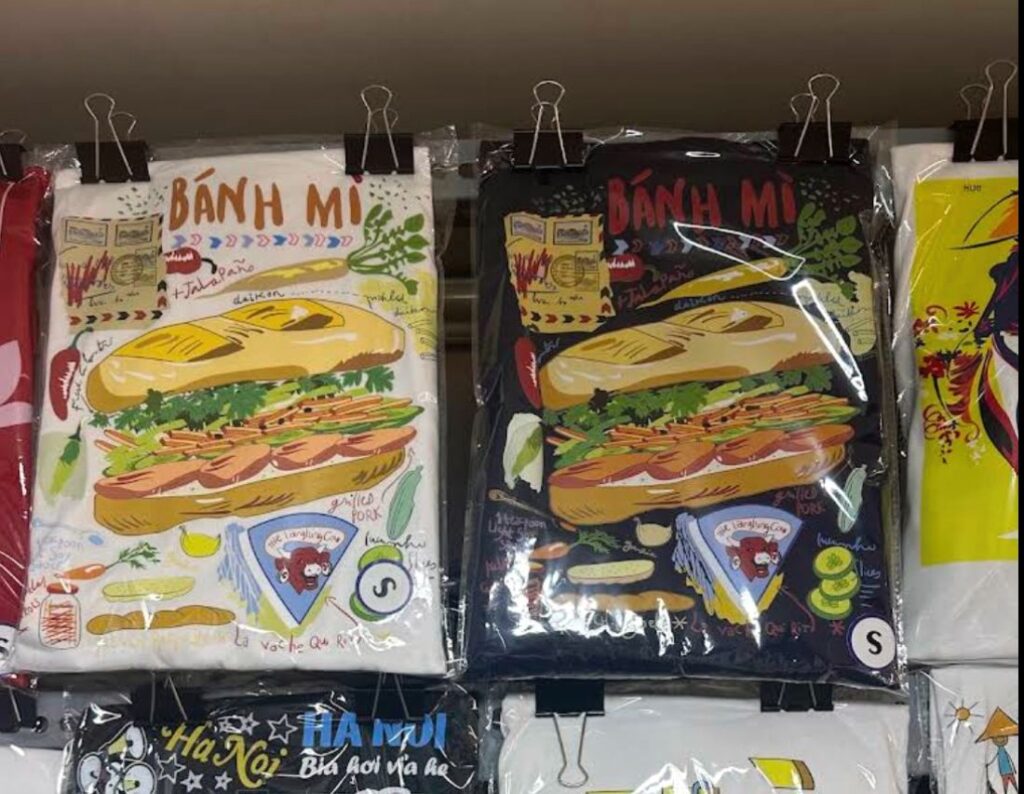
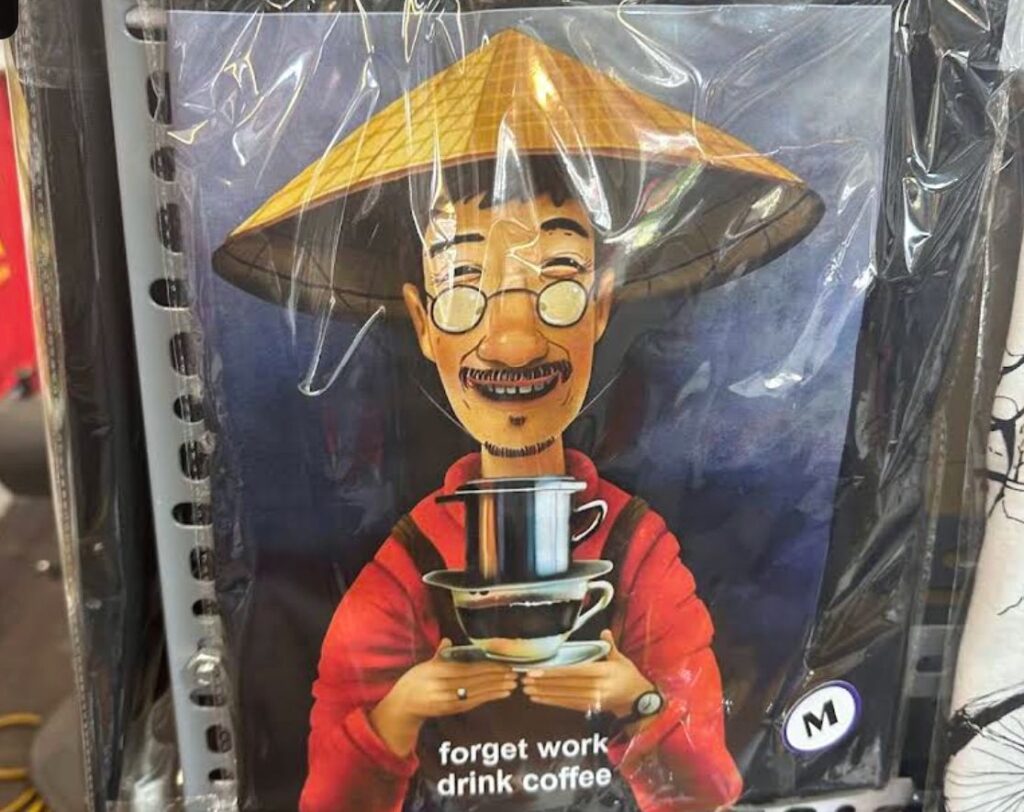
In Hanoi I found the widest selection of souvenir T-shirts in all of Vietnam. Shops almost always use transfer techniques for the prints, with prices ranging from 100,000 VND for acrylic T-shirts to 150,000 VND for 100% cotton ones.
Transfer prints feel stiffer than screen or digital prints because the process applies a plasticised image directly to the fabric. Sellers assured me that it withstands machine washing, and similar T-shirts I bought in Thailand lasted for years before fading.
Compared to Saigon, Hanoi offers more graphic variety and lower prices, likely because manufacturers produce many items locally. Near our hotel, Truong Thanh Duc Print T-shirt printed any design you selected while you waited.
In Hanoi you will also find attractive and affordable clothing, including women’s dresses and wide-leg trousers priced between 120,000 and 200,000 VND. I bought a lightweight cotton-blend summer dress with embroidery on the front. I wore it during the hottest days of the trip, and it still looks perfect after several washes.
If you are looking for higher quality, concept stores offer T-shirts with unique designs and screen printing, at prices closer to European standards. At Ginkgo, which also has a shop in Saigon, I found the same Vietnam electric wire design as a T-shirt I had bought during my first trip.
In the Old Quarter you will also find craft shops selling teapots and homeware, with prices starting from 500,000 VND.
What to Buy in Northern Vietnam: Mountain Tea and Ethnic Handicrafts
In the mountains of northern Vietnam, the most authentic souvenirs come from homestays and family homes, not from tourist shops. Here you can find traditional garments embroidered by hand, made by women from ethnic minority communities.
These traditional clothes are colourful, rich in detail and deeply connected to local culture. There is no fixed price and no standard sizing. The woman with whom we had lunch during our trek in the northern mountains showed us the garments she embroiders, explaining that each piece takes about a year to complete. Our guide told us she sells them for around €30, although in my view they are worth far more considering the craftsmanship involved.
Locally produced tea is well worth buying, especially from cooperatives where you can have memorable tasting experiences as well. Grown in the mountain regions, it has a flavour quite different from packaged tea found in Europe. It is also lightweight and easy to carry.
While trekking through the terraced rice fields, I would have liked to buy authentic Vietnamese rice. However, vendors sell it locally only in large household sacks rather than in the small vacuum-packed portions we are used to. It is therefore not a practical souvenir to bring home.
In rural areas you generally find more authentic products that are less designed for tourists. Still, you should always consider whether they will survive the journey back.

What to Buy in Ha Long Bay: Cultured Pearls and Jewellery
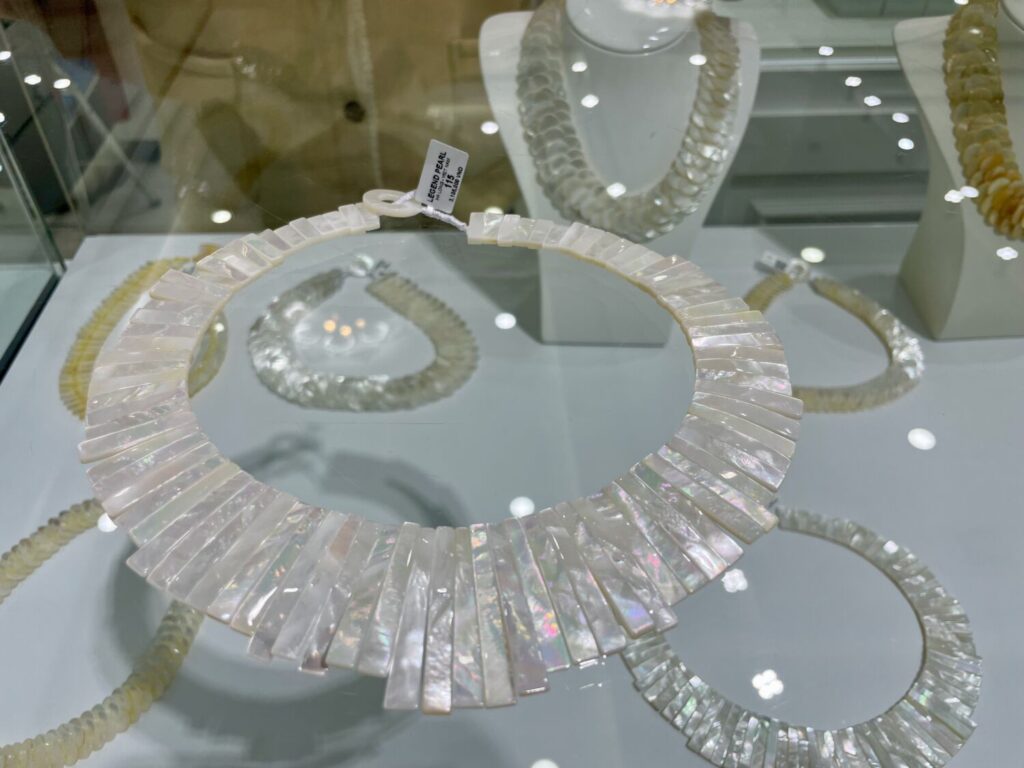
Among the most elegant souvenirs to buy in Vietnam are the cultured pearls from Ha Long Bay, a UNESCO World Heritage Site. Local oyster farms produce pearls in different colours and sizes, sold individually or crafted into necklaces, earrings and bracelets.
The oyster farms included in organised tours are clearly designed for visitors. Prices are not particularly low by Vietnamese standards, yet they guarantee the authenticity of the pearls and the precious metals used.
Compared to Europe, prices remain competitive. A thin silver chain with a single pearl starts from around €150, depending on quality. From €300 you can find fine and elegant necklaces. If you prefer to spend less while still bringing home a unique souvenir, mother-of-pearl necklaces cost approximately €100.
What to Buy in Hoi An: Lanterns, Tailor-Made Clothes and Silk Scarves
One of the most typical souvenirs in Hoi An, a UNESCO World Heritage city, is the paper and silk lanterns hanging outside the shops. They are among the most recognisable symbols of central Vietnam. Handmade on bamboo frames, lanterns start from 100,000 VND, and shopkeepers fold or roll them so you can pack them easily in your suitcase. It is also worth buying chopsticks in Hoi An, as you will find high-quality sets with fine decoration.
Hoi An is especially famous for tailor-made clothing, with prices starting from around €50 for a Western-style women’s dress, depending on the fabric chosen. Larger sizes usually cost more because they require additional fabric. If you want a truly unique piece based on your own sketch, allow more than twenty-four hours for possible adjustments. Choosing a standard design adapted to your measurements allows you to obtain a beautiful custom-made dress at a reasonable price.
In Hoi An you will also find high-quality silk and cashmere scarves. Unfortunately, I had just been injured and could not spend time browsing the shops, so I bought mine in Hue and paid more, although it was still a good deal compared to European prices.
Finally, Hoi An is the place with the widest selection of counterfeit clothing and accessories in Vietnam. You will see bags from various luxury brands that are difficult to distinguish from the originals. However tempting it may seem to buy a Gucci bag for €50, remember that importing counterfeit goods is illegal in the European Union, the United States and many other countries.
What to Buy in Hue: Handmade Incense from Traditional Villages
In Hue, the most authentic souvenir is handmade incense produced in artisan workshops in the villages around the city. A pack costs around 100,000 VND and is deeply connected to Vietnamese culture, as incense is burned in every home and temple to honour ancestors and ask for protection.
In specialised incense shops you will also find classic souvenirs such as fridge magnets and good-quality cashmere scarves, although prices are generally higher than in Hoi An. I bought mine in one of these shops, paying more, yet still getting a very good deal compared to European prices.
What to Buy in Ho Chi Minh City (Saigon): Souvenir Prices and Shopping Tips
In Saigon, the historic name of Ho Chi Minh City, prices are generally higher than in the north. In markets, where prices are not fixed, vendors often quote tourist rates. Bargaining is important here to bring prices back to a reasonable level. At Ben Thanh Market, for example, they tried to sell me the same T-shirts I had bought in Hanoi at double the price, lowering it only after I pointed out that I already knew the usual cost.
On the other hand, in Saigon you can buy Vietnamese stamps at the Central Post Office, one of the city’s most famous colonial buildings. In general, if you are travelling through Vietnam on an itinerary, I recommend buying most of your souvenirs in Hanoi rather than in Ho Chi Minh City, where prices tend to be higher.
What to Buy in the Mekong Delta: Coconut Specialities and Eco-Friendly Crafts
In the Mekong Delta, the most interesting souvenirs are linked to coconuts and local handicrafts. During excursions in Cai Be, you can see the entire production process in workshops run by families living in riverside villages. Coconut sweets cost just a few euros and are among the most typical treats in the area. I personally found them too sweet, but my travel companions loved them.
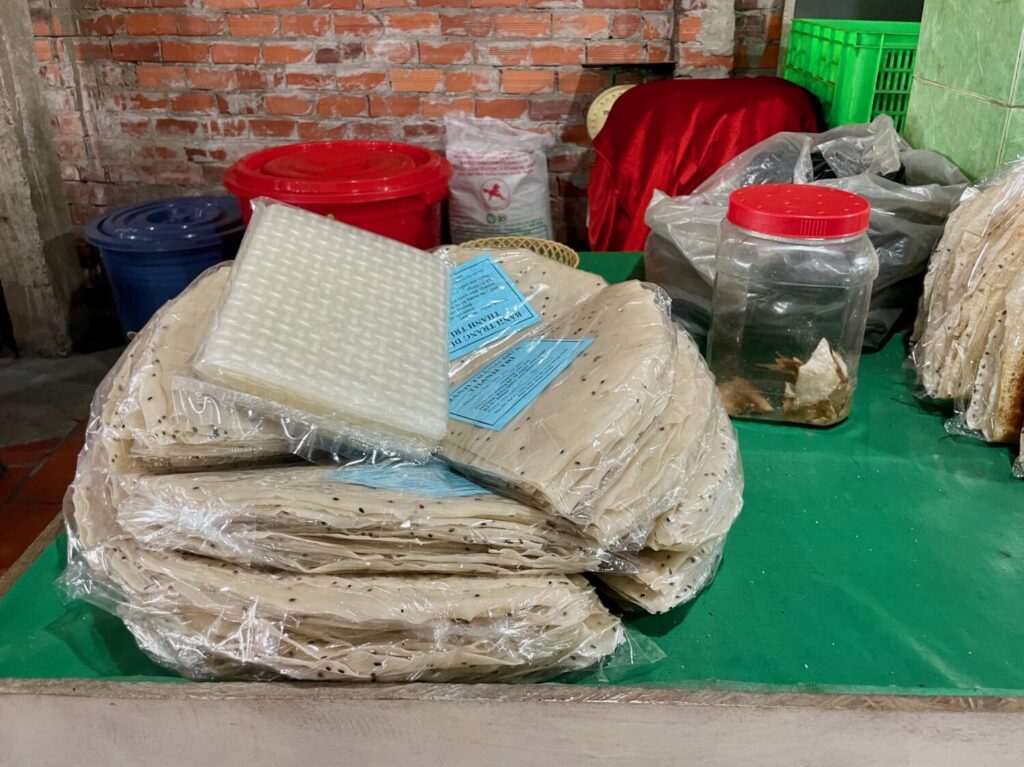
I would have liked to buy coconut crackers, available in sheets either ready to eat or to cook in a pan or microwave. However, due to their texture, they break easily and would not have survived the journey home. Instead, I bought a pack of handmade rice paper to prepare Vietnamese spring rolls at home, as it was flat and easy to pack.
Among the most sustainable souvenirs, local artisans weave products from water hyacinth, a plant that grows invasively in the canals of the Mekong Delta. Women in riverside villages harvest the plant, dry it in the sun and transform it into bags, baskets, placemats and earrings, creating eco-friendly items closely linked to rural Vietnamese life.
Counterfeit Designer Goods in Vietnam: Legal Considerations for Travellers
In Vietnam, as in much of South-East Asia, you can easily find international brands sold at very low prices. A significant share of global textile production takes place in this part of the world, which sometimes makes it difficult to distinguish between original goods resold outside official channels and genuinely counterfeit items.
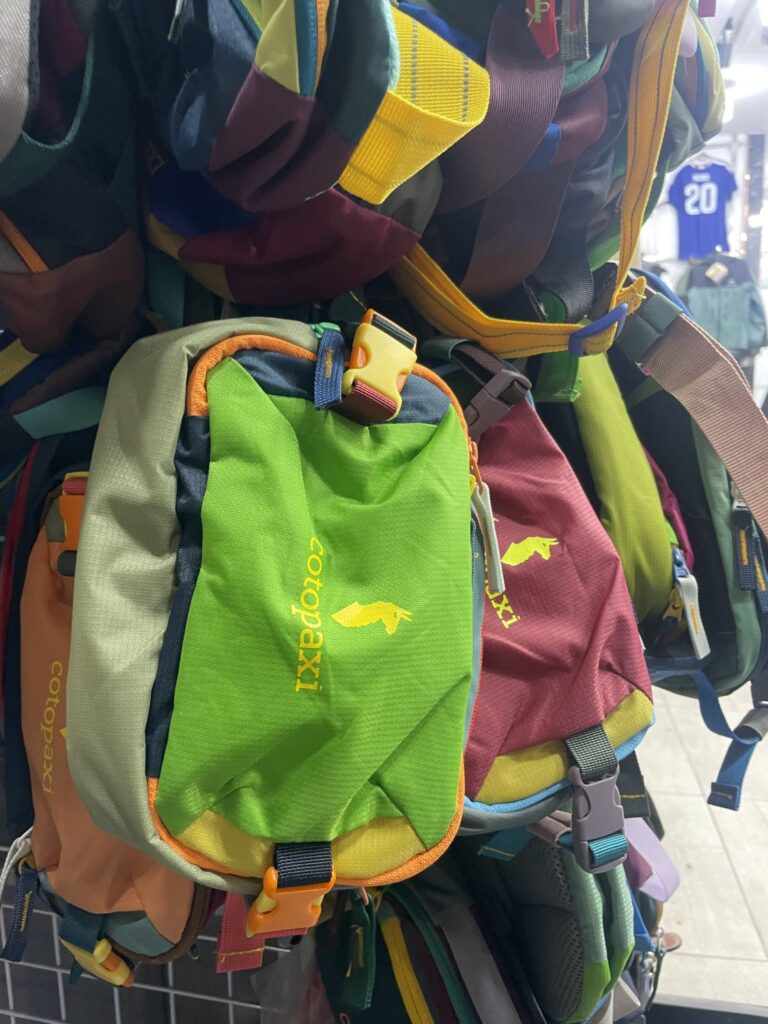
In some cases, the quality is surprisingly high and products can appear almost indistinguishable from the originals, including Gucci scarves, North Face jackets or Cotopaxi waist bags. For this reason, the line between a “replica” and a counterfeit item is not always clear to buyers.
However, importing counterfeit goods is illegal in the European Union, the United States and many other countries. Customs authorities may carry out checks at airports, and counterfeit items can be seized. While rules and enforcement may vary, purchasing heavily discounted branded products abroad can have legal implications when returning home.
As a general rule, before buying a branded item at a very low price overseas, consider its likely origin and the potential consequences in the event of customs inspections.
The Vietnam Souvenirs That Are Truly Worth Buying
After travelling through Vietnam from north to south, I realised that not all souvenirs hold the same value. Some are easy to find everywhere, while others genuinely reflect the place where you buy them. I prefer choosing objects with a clear connection to the location, as they tend to retain deeper meaning over time.
For example, tea from the northern mountains, handmade incense from Hue or water hyacinth products from the Mekong Delta are closely linked to everyday Vietnamese life. A tailor-made dress created in Hoi An can also become a personal keepsake, as it grows out of an encounter with a craftsperson and a choice made specifically for you.
Food remains one of my favourite souvenirs, as it allows me to relive the journey with my family and friends. At the same time, I like to invest in quality items that last. Returning to Vietnam wearing the same T-shirt I had bought more than ten years earlier and finding the same design again at the Ginkgo concept store felt like reconnecting with a part of my first trip.
My advice, if you want to bring home something that truly reflects Vietnam, is to buy authentic goods directly at the source. Feel free to share in the comments whether, for you as well, the best souvenir is not necessarily the most expensive one, but the one that brings back the scents, colours and people you encountered during your journey.
