The Magritte Museum is one of Brussels’ most popular museums, drawing more than 300,000 visitors every year. Dedicated to the iconic Belgian surrealist René Magritte, it houses the largest collection of his works in the world. From men with apple-covered faces to pipes that are famously not pipes, the museum offers a journey into an imagination where reality is constantly questioned. A visit here is about discovering how Magritte constructed his visual language. His paintings still feel unsettling, ironic and surprisingly modern.
Table of Contents
The Magritte Museum in Brussels: What to Expect from the World’s Largest Magritte Collection
The Magritte Museum in Brussels is part of the Royal Museums of Fine Arts of Belgium. The cultural complex overlooks Place Royale, right in the historic heart of the city. Entirely dedicated to René Magritte, it holds the largest collection of his works in the world. You can see over 200 works, including paintings, drawings, sculptures, advertising posters, photographs and archival material.
PLAN YOUR TRIP TO BRUSSELS
Make the most of your trip to Brussels by purchasing the Brussels City Card online. With access to the city’s top museums and free public transport, it’s the smartest way to explore the city and save money.
To stay connected in Brussels, purchase an Airalo eSim online for phone and data coverage during your trip to Belgium.
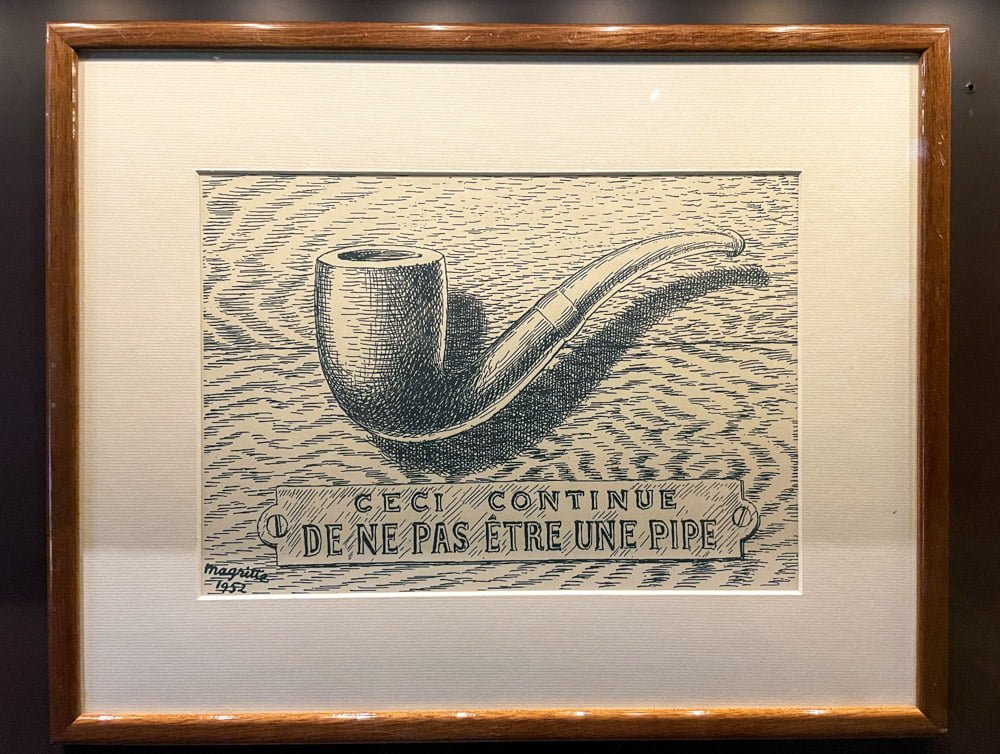
Rather than focusing only on Magritte’s most recognisable images, the museum offers a complete overview of his artistic journey. Visitors encounter the famous pipes declaring “Ceci n’est pas une pipe”, the men with apple-covered faces and the enigmatic lovers with veiled faces. The exhibition also includes many lesser-known works.
The museum traces Magritte’s career from his early work as a commercial illustrator to his mature surrealist production. This approach helps you understand how his ideas developed. It also shows why his art continues to challenge the way we look at reality.
From Modern Art Galleries to a Dedicated Museum: The Story of the Musée Magritte
The Magritte Museum did not start as an independent institution. Originally, the Museum of Modern Art of the Royal Museums of Fine Arts of Belgium displayed René Magritte’s works. Over time, the collection expanded significantly. New acquisitions and important donations came from figures such as Georgette Magritte and Irène Scutenaire-Hamoir.
As the number of works increased, Magritte’s presence began to dominate the modern art galleries.
This made it difficult to present his oeuvre within a broader museum context. Creating a dedicated space became a natural solution.
The Royal Museums selected the former Hôtel Altenloh, located in the centre of Brussels, for this purpose. They later integrated it into the Royal Museums complex, creating the Magritte Museum as a standalone space devoted entirely to the artist.
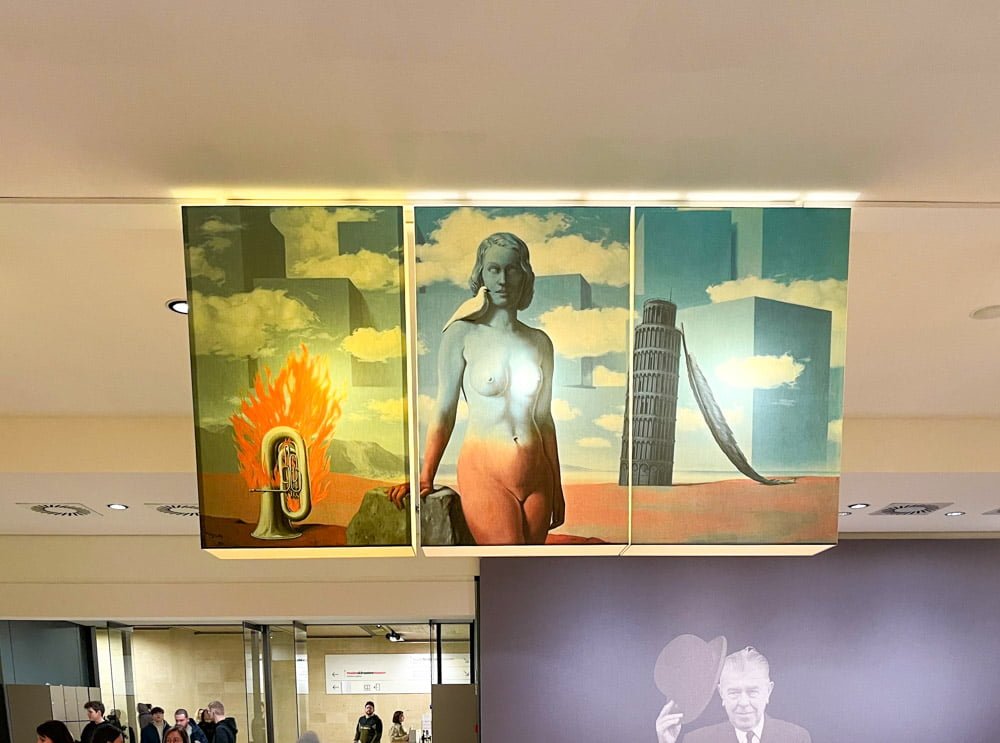
The museum houses a remarkably diverse collection that reflects the full range of Magritte’s artistic output. Alongside oil paintings on canvas, you will find gouaches, advertising posters, drawings, sculptures, painted objects, musical scores, films and period photographs. This variety allows you to appreciate Magritte not only as a painter. It also reveals an artist deeply engaged with images, words and visual communication.
Since its opening, the Magritte Museum has enjoyed immediate success. With more than 300,000 visitors each year, it has become one of the most visited museums in Brussels. It attracts an international audience drawn by the originality and lasting relevance of Magritte’s work.
Inside the Magritte Museum: What You Can See Across the Three Floors
The Magritte Museum is spread over three floors and follows a clear chronological and thematic path from top to bottom. The visit begins on the third floor, where Magritte’s early works are displayed. This section focuses on a period of experimentation and artistic research. It also includes several advertising posters that reveal his background in commercial illustration.
On the second floor, you encounter lesser-known works, including paintings created during the years Magritte spent in Brussels during the war. The journey ends on the first floor, which brings together his most famous paintings. These works appear widely in art books and exhibitions around the world. Seen in this sequence, these iconic works gain new depth, as you can trace the ideas and themes that led to their creation.
René Magritte’s Works: Surrealism, Symbols and Visual Paradoxes
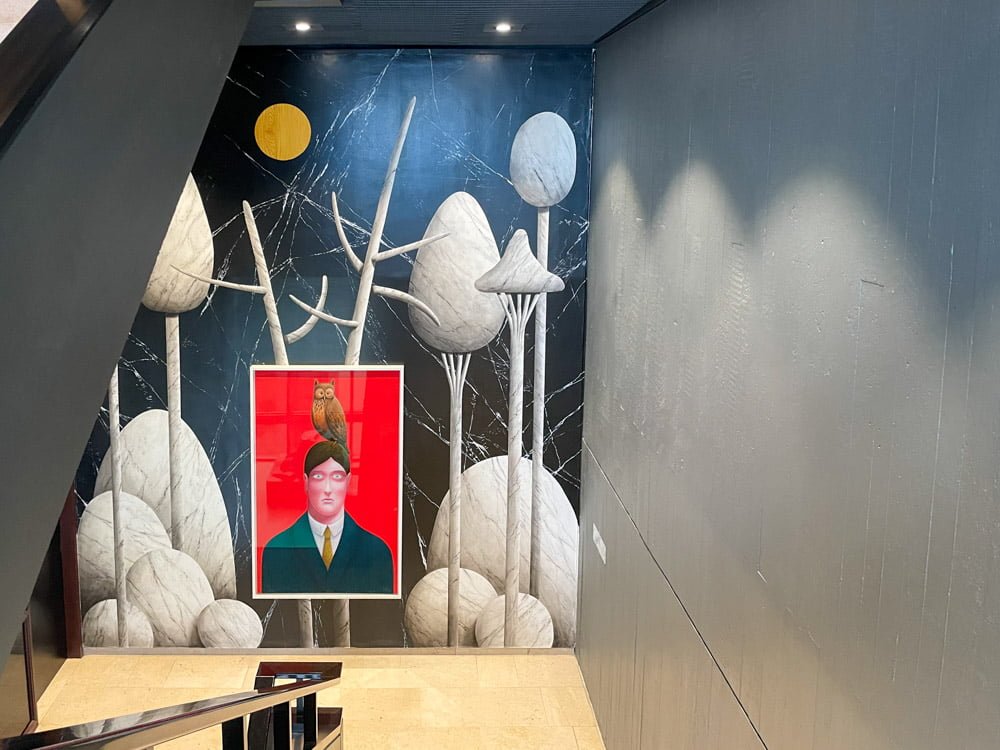
René Magritte is one of the most famous Belgian artists in the world and a central figure of surrealism. His paintings draw on the logic of dreams. Familiar objects appear in unexpected combinations, animals and everyday items merge, and day and night can coexist within the same image. These unusual juxtapositions are not meant to be decorative, but to challenge the way we interpret reality.
Although he is best known as a painter, Magritte was a remarkably versatile artist who experimented with many different techniques throughout his career. At the Magritte Museum in Brussels, you can explore this wider body of work beyond painting. Drawings, sketches, prints, posters and painted objects document the evolution of his ideas and reveal how consistently he explored the relationship between images, words and meaning.
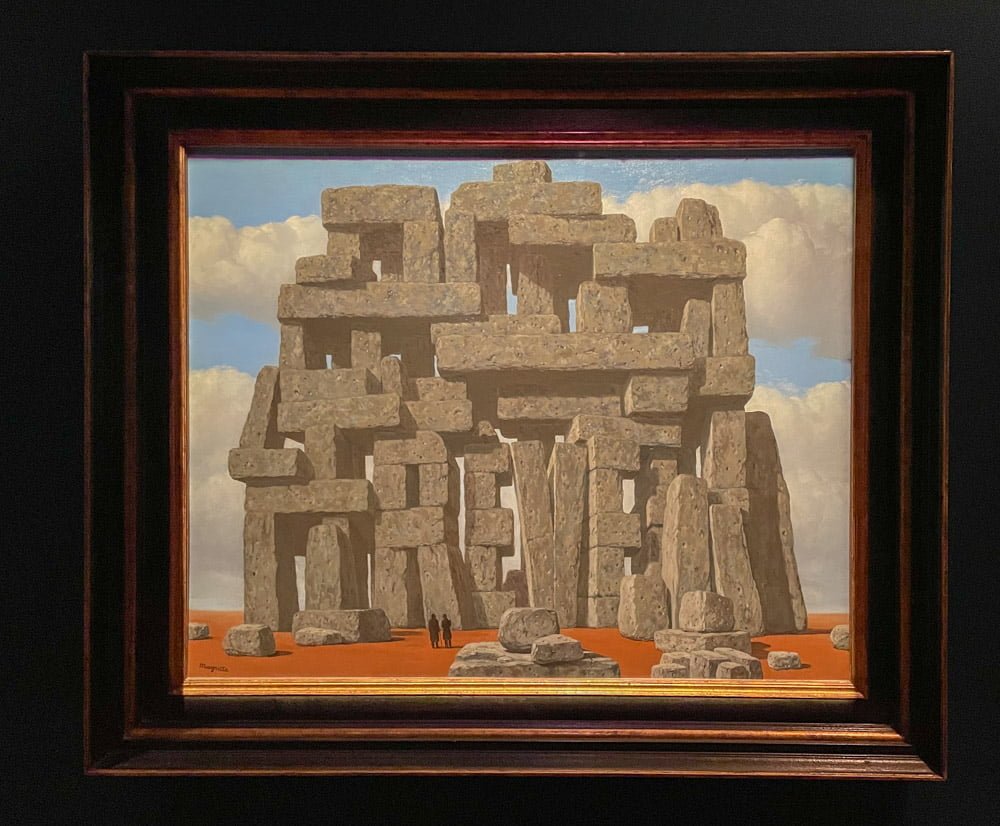
I was particularly drawn to the advertising posters from Magritte’s early career, such as those created for the Luxor Distillery in Brussels and for the 18 September festival of the Belgian textile workers. Their clean lines, strong compositions and solid colours feel strikingly contemporary, despite the fact that they were created almost a century ago.
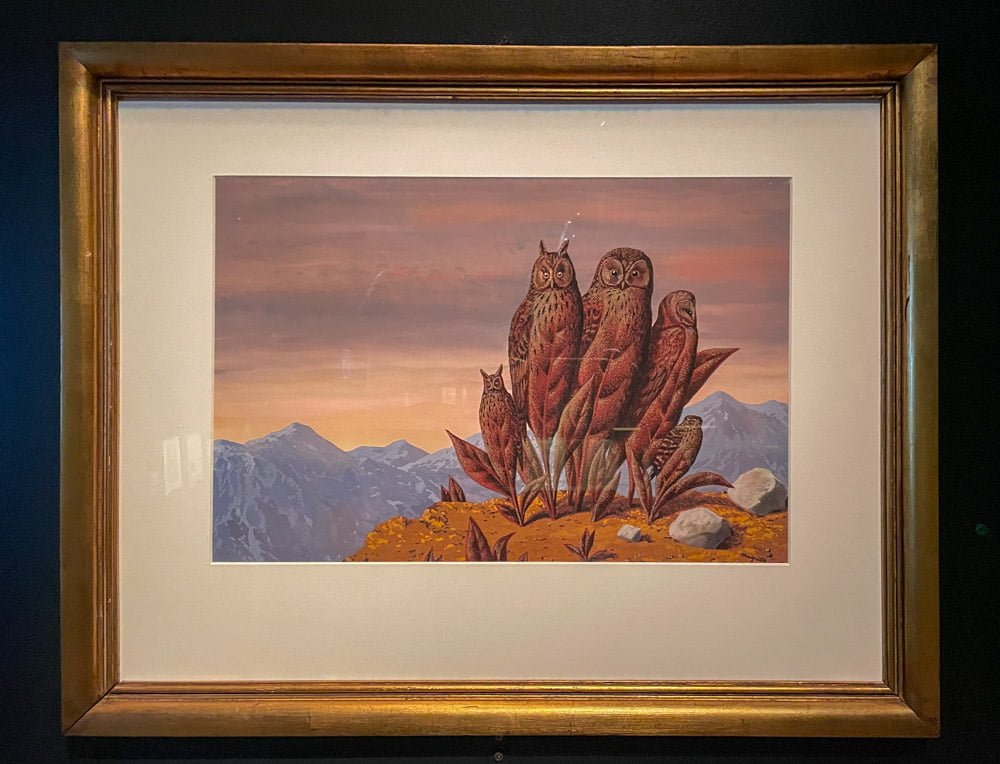
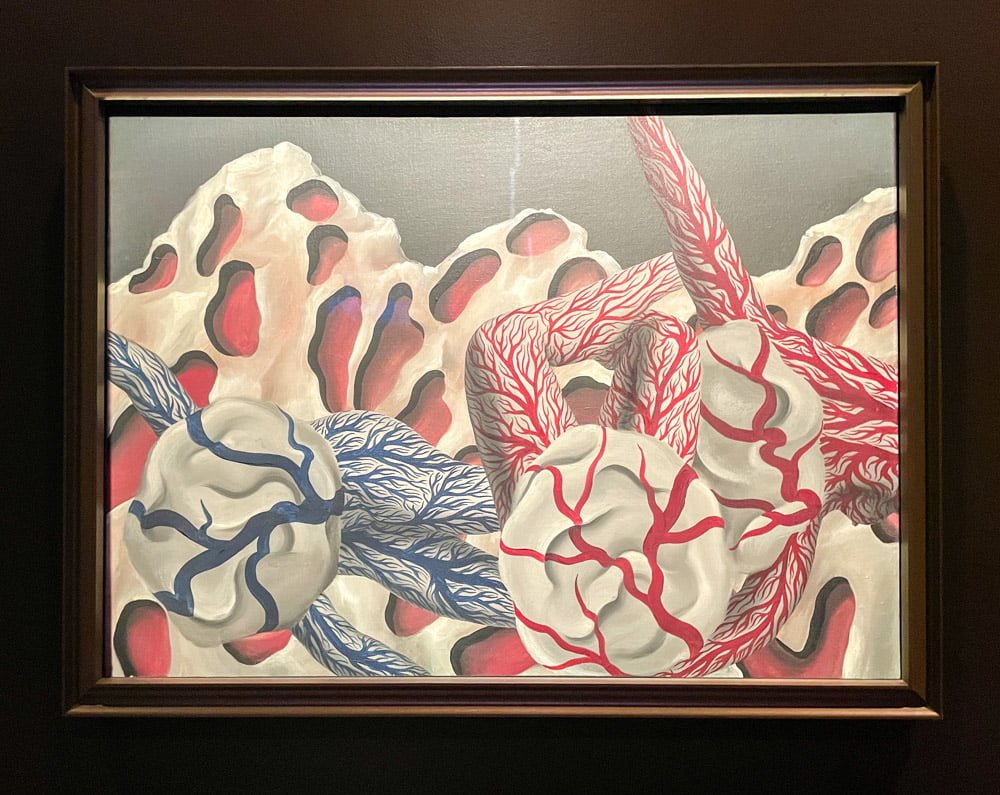
The surrealist paintings are, of course, essential viewing. Alongside the iconic blue skies filled with white clouds, the Magritte Museum displays images of plants transforming into birds and empty spaces interrupted by words. Unexpected figures, such as pink unicorns, also appear throughout the exhibition.
Many of these works belong to series in which Magritte returned to the same images and themes. Each version subtly shifts their meaning.
Visiting the Magritte Museum: Practical Information, Tickets and Planning Tips
The Magritte Museum in Brussels mentioned in this article, also known as the Musée Magritte, is the museum operated by the Royal Museums of Fine Arts of Belgium. In the Belgian capital, there is also another Magritte Museum, located in the house where the artist lived and worked for more than 24 years. The two museums offer different perspectives on Magritte’s life and work and should not be confused.
The Magritte Museum shares its lobby with the Oldmasters Museum and the Fin-de-Siecle Museum, although tickets for each museum are purchased separately. While the exhibition spaces are distinct, the architectural layout allows for smooth transitions between the different museums within the complex.
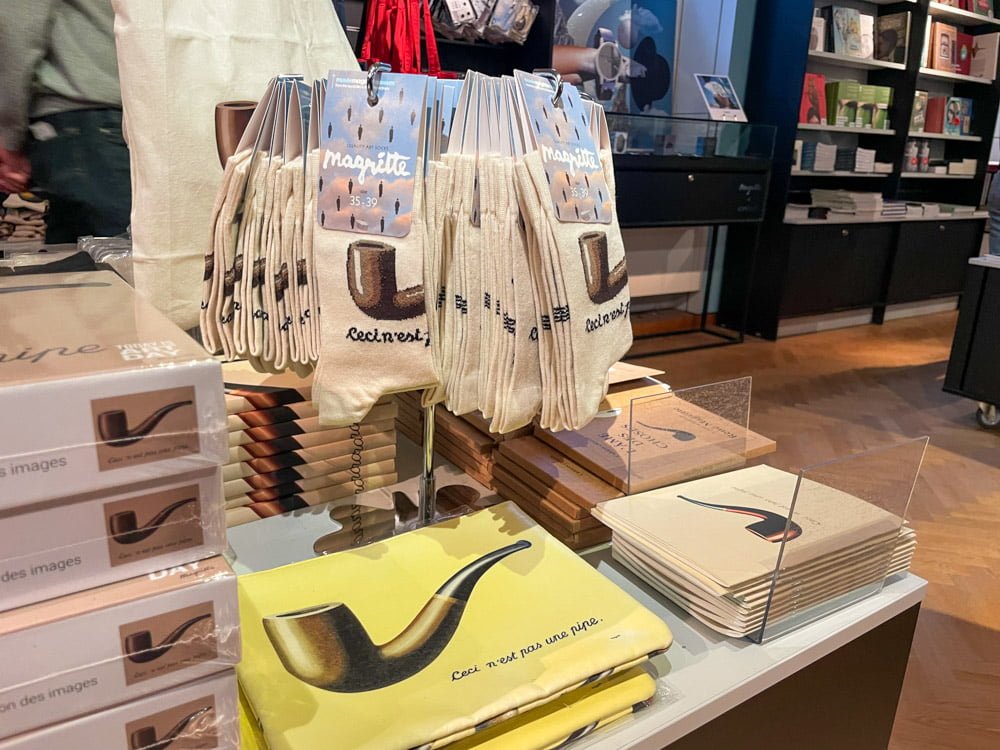
Inside the Magritte Museum, you will also find a bookshop dedicated to the artist. It offers a wide range of books and objects inspired by Magritte’s work, ideal for an original souvenir. Among the more unusual items are puzzles featuring his most famous paintings, socks decorated with pipes and clouds, a pipe-shaped cushion and a booklet collecting quotations associated with his work and the exhibition.
Magritte Museum Tickets: Prices, Discounts and Free Entry
Although the Magritte Museum is part of the Royal Museums of Fine Arts of Belgium, admission is not included in the cumulative ticket for the Oldmasters Museum and the Fin-de-Siècle Museum. A separate ticket is required, and the standard price is €10.
A combined ticket covering all three museums is available on site, but it cannot be purchased online. Given the high number of visitors to the Magritte Museum, booking your entry in advance is strongly recommended, particularly if you are planning your visit during weekends or holiday periods.
Admission is free for children and young people up to the age of 19, as well as for holders of the Brussels City Card with public transport. You can also enter for free to all the Royal Museums of Fine Arts of Belgium, including the Magritte Museum, on the first Wednesday of each month from 1:00 pm. This free admission does not include access to temporary exhibitions.
Magritte Museum Opening Hours: When to Visit
The Magritte Museum is closed on Mondays. From Tuesday to Friday, it is open from 10:00 am to 5:00 pm. At weekends, opening hours are extended, and the museum can be visited from 11:00 am to 6:00 pm.
How to Get to the Magritte Museum in Brussels: Location and Transport
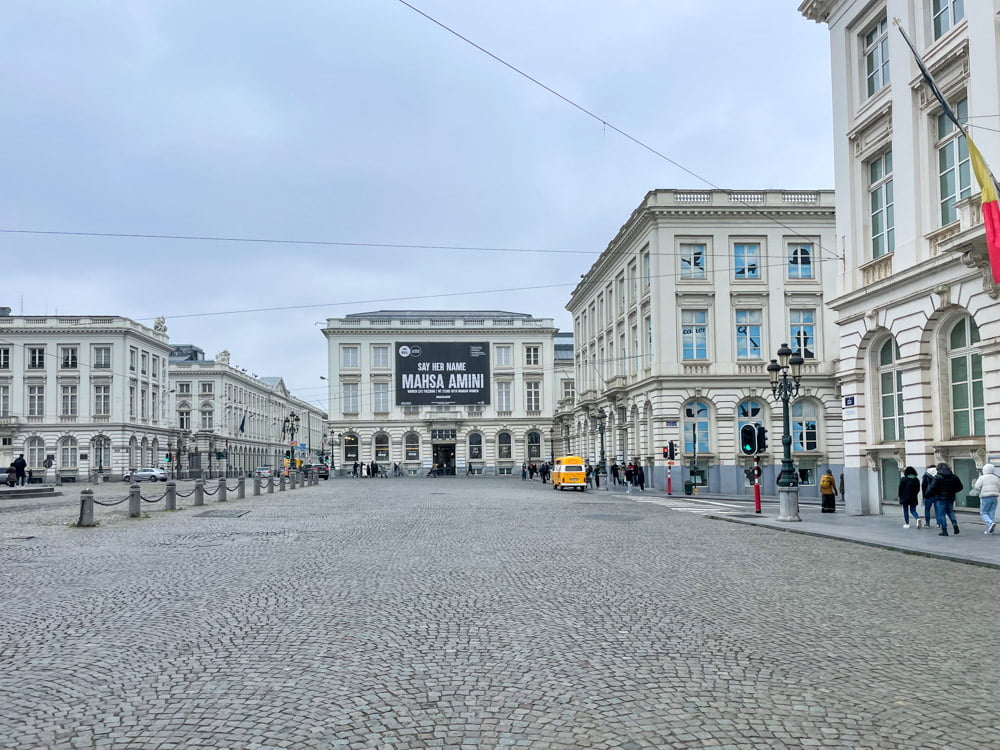
The Magritte Museum is located in the main building of the Royal Museums of Fine Arts of Belgium, overlooking Place Royale, also known as Koningsplein in Dutch. You can easily recognise it by the windows decorated with blue skies and white clouds, a clear reference to Magritte’s most iconic imagery.
Situated in the historic centre of Brussels, the museum is easy to reach on foot if you are already exploring the city centre. It is also well connected by public transport, making it a convenient stop during a day of sightseeing. You can check how to reach it by bus on Google Maps.
If you’re travelling by car, paid parking is available nearby. However using public transport or walking is generally the most practical option when visiting attractions in central Brussels.
Musée Magritte
Place Royale/Koningsplein, 3
1000 Brussels
Where to stay in Brussels
I have visited Brussels many times, and I can confidently say that the city offers a wide range of accommodation options to suit different travel styles. If you are looking for a hotel in the city centre, the Pillows City Hotel Brussels Centre is an excellent choice. It is located just 100 metres from Brussels Central Station and within a five-minute walk of the Grand Place and the Manneken Pis statue, making it ideal for exploring the city on foot.
Right in the heart of Brussels, Made in Catherine is located on Place Sainte-Catherine, only a ten-minute walk from the Grand Place. This small hotel is particularly appreciated for its fantastic buffet breakfast and its lively yet authentic neighbourhood.
In the European Quarter, for an especially romantic stay, Faubourg 21 is a refined five-star hotel offering a spa, wellness centre and a terrace. It is a great option if you want to combine sightseeing with relaxation in an elegant setting.
If you prefer staying in an apartment, Teddy Picker offers well-designed studios with a garden or terrace. The property also features a family-friendly restaurant serving Belgian and international cuisine for lunch and dinner, including vegetarian and vegan options.
The Magritte Museum is an essential stop on a trip to Brussels, offering far more than a collection of famous images. By presenting René Magritte’s work in all its complexity, from commercial illustration to surrealist masterpieces, it allows you to understand how his ideas took shape and why they still feel relevant today. If you have already visited the museum or are planning to include it in your itinerary, feel free to share your impressions and experiences in the comments section below.

2 comments
I visited Brussels so many times and I’ve never been in this museum, what a pity!
You should definitely give it a try, as I’m sure you’ll love it!