
Visiting the Imperial Tombs in Hue felt like stepping into a quieter, more reflective side of Vietnam’s history, where architecture, landscape, and symbolism are closely connected. These are not simple burial sites, but vast imperial complexes designed to express power and legacy. As I explored them during my journey across Vietnam, I realised how each site reveals a different vision of authority and identity. What surprised me most was how personal and contrasting each complex feels, shaped by the character of the emperor who commissioned it. In this guide, I share which sites are worth visiting, how to plan your itinerary, and what to expect on site.
Table of Contents
Hue Imperial Tombs at a Glance
Before planning your visit, it helps to have a clear overview of how the Imperial Tombs are organised and how much time you will realistically need. The tombs are spread across a wide area south of Hue, so distances and travel time play an important role in your itinerary.
- Time needed: half a day to a full day, depending on pace and transport
- Distance from Hue: between 2 and 16 kilometres south of the city
- How many to visit: 2 to 3 tombs in one day is a realistic plan
- Best if short on time: Tu Duc Tomb offers the most complete experience
PLAN YOUR TRIP TO VIETNAM – 5% discount on your eSIM and travel insurance
For getting around Vietnam with ease, choose a Holafly eSIM: you get unlimited internet, perfect for using Google Maps, Grab or other navigation apps, booking transport on the go, and sharing photos and videos in real time on WhatsApp without worrying about local SIM cards or extra charges.
For extra peace of mind, pair connectivity with Heymondo travel insurance, which covers you in case of medical emergencies, delays or cancellations. A practical solution that lets you focus on exploring Vietnam, rather than dealing with unexpected setbacks.
How the Imperial Tombs Are Designed
The Imperial Tombs of the Nguyen dynasty, which ruled Vietnam from 1802 to 1945, are part of the Complex of Hue Monuments, recognised as a UNESCO World Heritage Site in 1993. Despite the name, they are not simply burial sites. Each complex was designed as a symbolic landscape where architecture, nature, and power are closely connected.
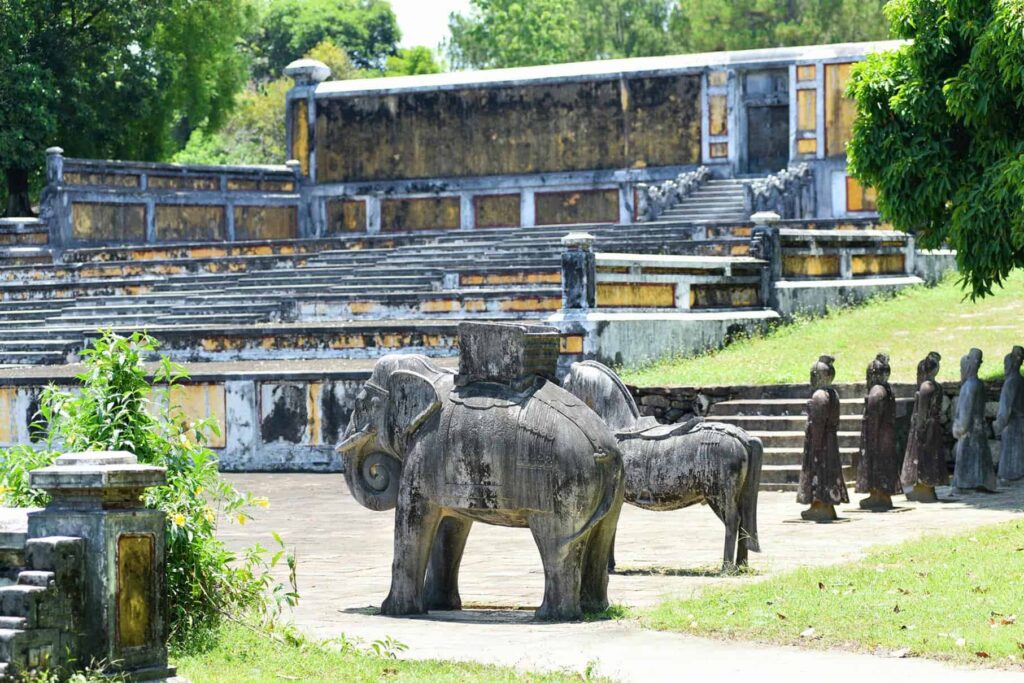
Each emperor created his tomb as an extension of his authority, shaping it according to his own vision. While every site is different, most follow a similar structure. You enter through a ceremonial courtyard lined with stone statues, continue to a temple dedicated to the emperor, and reach the burial area in the innermost section.
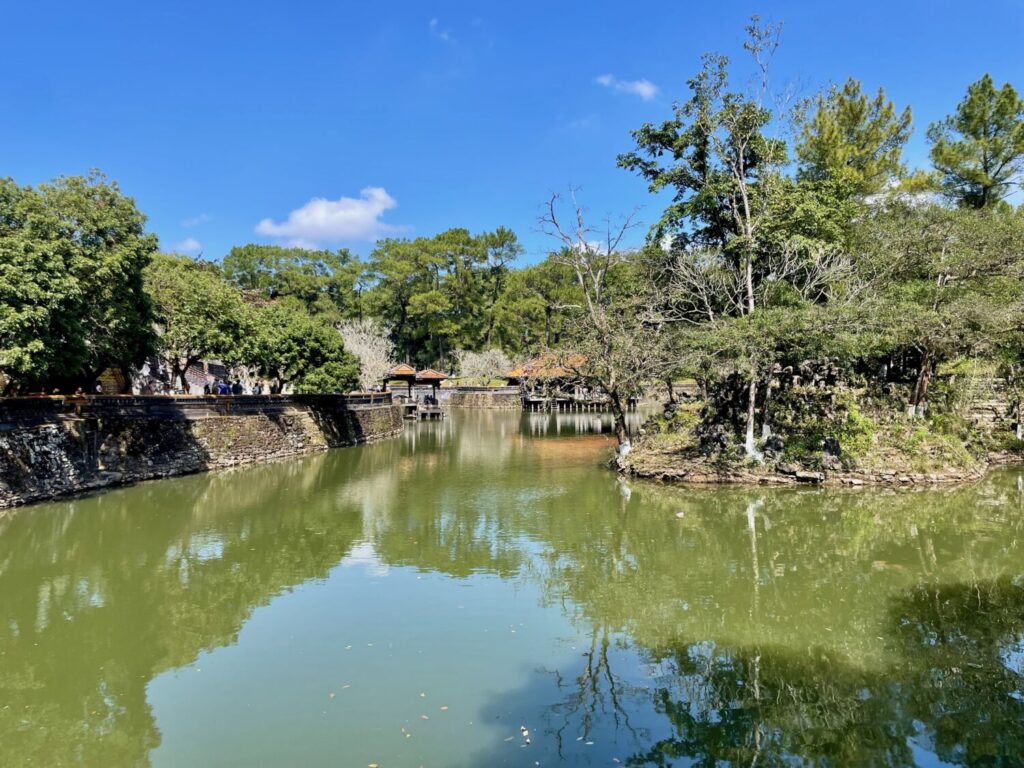
Nature plays a key role throughout. Lakes, trees, and open spaces are fully integrated into the layout. This creates a balanced environment where architecture and landscape work together, reflecting both hierarchy and permanence.
Best Imperial Tombs to Visit in Hue
If you are short on time, focus on one or two key sites. Tu Duc is the best overall choice, Minh Mang is ideal for symmetry and landscape, while Khai Dinh stands out for architecture. Each tomb offers a very different experience, so even visiting two gives a much clearer understanding of imperial Hue.
These mausoleums are spread along the Perfume River, between 2 and 16 kilometres south of the city. Visiting them is not only about seeing monuments, but understanding how each emperor expressed power, legacy, and identity. All sites include many steps, which can make the visit challenging for those with mobility issues.
The most important tombs are Tu Duc, Minh Mang, and Khai Dinh. If your schedule allows, Thieu Tri and Gia Long offer a quieter and more atmospheric alternative. If you can only visit one, Tu Duc is the most complete and best preserved.
Tu Duc Tomb: The Most Scenic Imperial Mausoleum
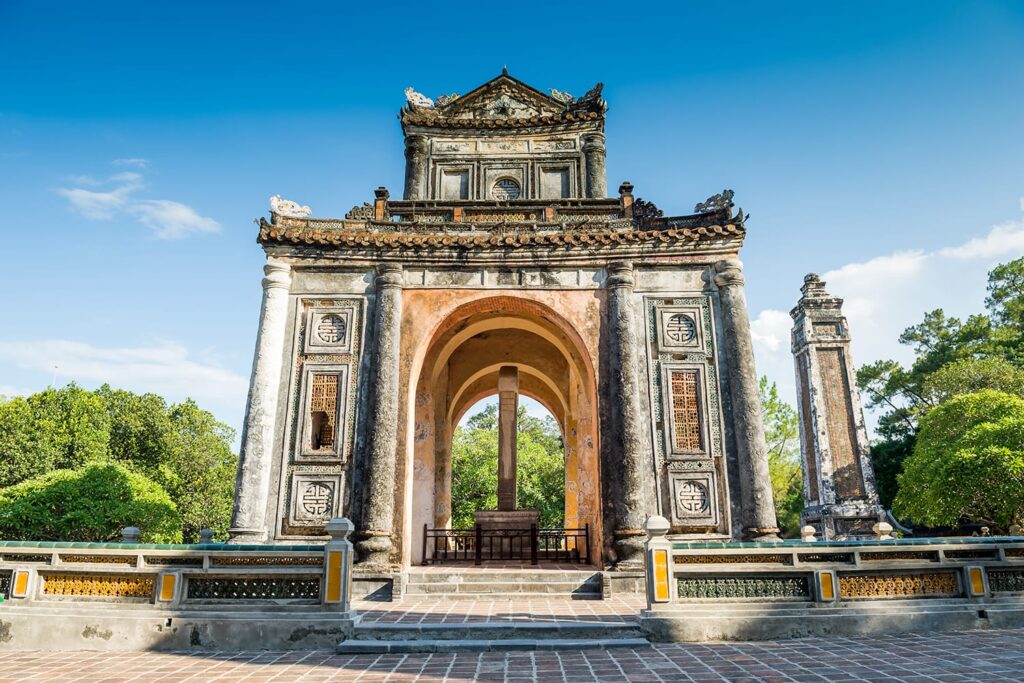
Tu Duc Tomb is the best restored and one of the most significant complexes near Hue. The emperor, a poet and philosopher, ruled from 1848 to 1883, combining cultural refinement with controversial political decisions.
His reign was marked by a conservative approach, closing the country to foreign influence and opposing Christianity. At the same time, he remained deeply connected to literature and intellectual life. This contrast defines both his rule and the atmosphere of his mausoleum.
Despite having more than one hundred wives and concubines, he had no children, likely due to smallpox. He used the complex as a residence during his lifetime, reinforcing his personal connection to the site.
Building the mausoleum required forced labour and increased taxation, leading to an attempted coup in 1866. His actual burial site remains unknown, and legend suggests that 200 workers were executed to keep it secret.
Minh Mang Tomb: Symmetry and Harmony in Nature
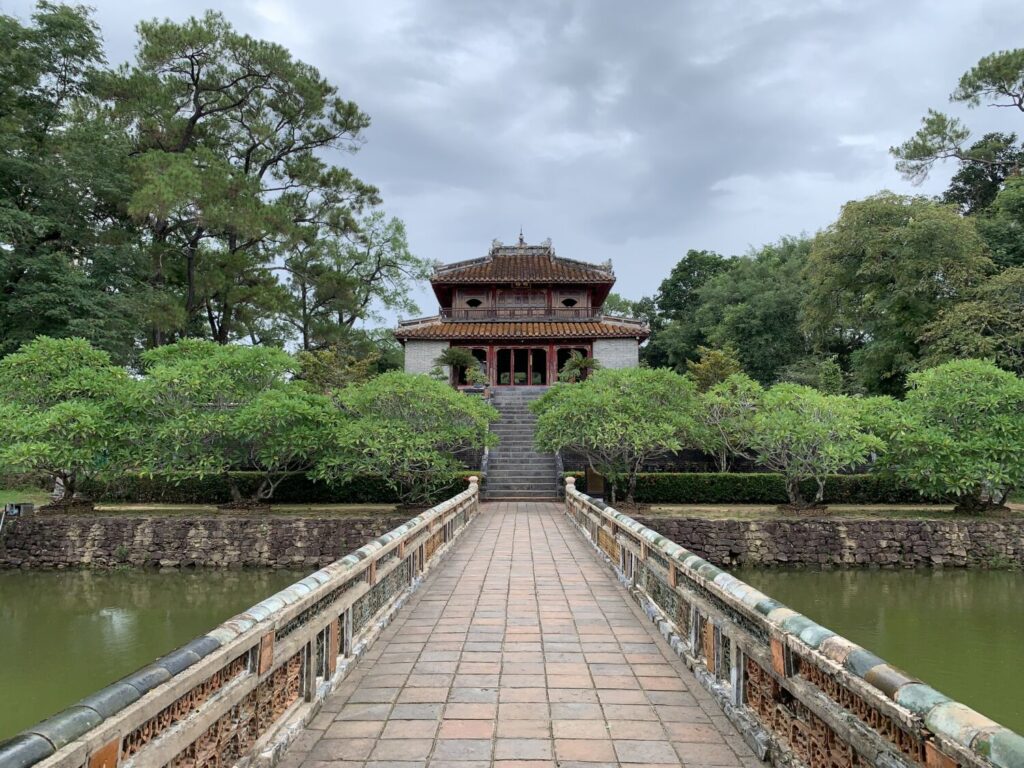
About 12 kilometres from Hue, Minh Mang Tomb is one of the most harmonious imperial complexes. It includes more than forty structures arranged along a perfectly symmetrical axis, designed during Minh Mang’s reign and completed by his successor.
Surrounded by forest, lakes, and bridges, the layout gradually blends into the landscape. Here, symmetry and nature work together rather than standing in contrast, creating a calm and immersive experience. The emperor’s actual tomb is located within the complex but remains closed to visitors, opening only once a year.
Khai Dinh Tomb: A Blend of European and Vietnamese Style
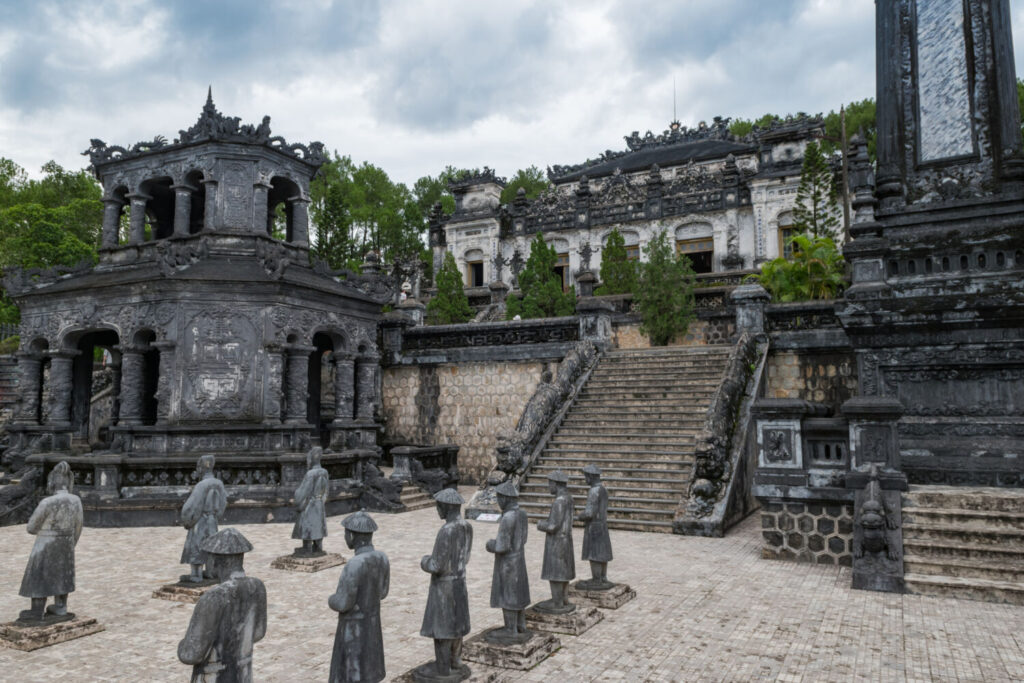
Completely different from the others, Khai Dinh Tomb reflects strong European influence in both materials and design. Built between 1920 and 1931, it is also the last imperial tomb constructed in Hue.
Set on a hillside, access requires climbing 127 steps. Concrete, wrought iron, and darker tones dominate the structure, creating a more monumental and theatrical effect. The connection with nature is largely replaced by architectural impact.
The complex was the first to have electricity and combines traditional elements with Western design. Inside Thien Dinh Palace, detailed mosaics of glass and porcelain cover the walls, alongside a life-sized bronze statue of the emperor approximately 160 cm tall.
Thieu Tri Tomb: A Quiet and Lesser-Known Site
Far less visited than other tombs, Thieu Tri Tomb offers a more peaceful and authentic experience. Emperor Thieu Tri ruled for a short period but was known for his cultural and intellectual interests. At a time of increasing tension with Europe, he chose isolation and refused diplomatic contact. His mausoleum reflects this moment of transition in Vietnamese history.
Located in a rural area surrounded by rice fields and vegetation, the complex feels less curated. Some structures remain under restoration or partially damaged, adding to its atmosphere.
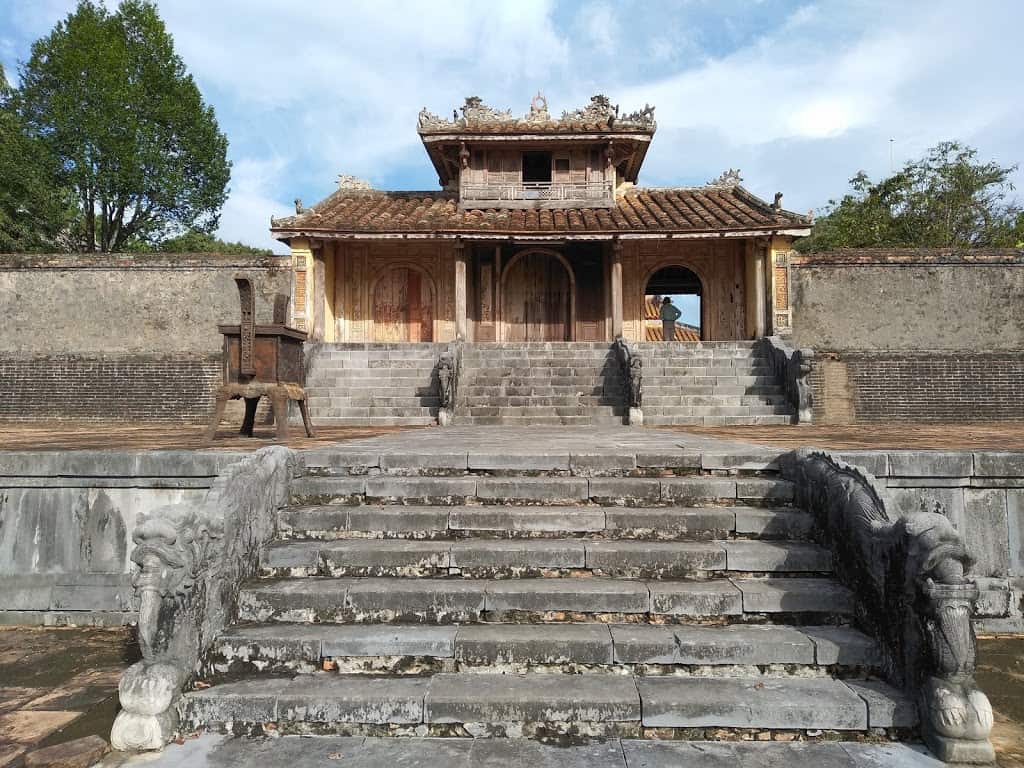
Gia Long Tomb: The Most Remote Imperial Mausoleum
Located in a more isolated area, this is the least visited of the Imperial Tombs. Access is via narrow rural roads, and it is rarely included in organised tours. As the founder of the Nguyen dynasty, Gia Long unified Vietnam in 1802 and introduced the tradition of imperial tomb construction, inspired by Chinese models.
Today, the site is partially overgrown and less maintained. The experience is defined by silence, distance, and a stronger connection with the landscape, making it very different from the other tombs.
Practical Tips for Visiting Hue Imperial Tombs
Based on my experience, I recommend visiting at least some of the tombs with a guide, especially if it is your first time in Vietnam. Without a basic understanding of Vietnamese history and the Nguyen dynasty, many details can easily go unnoticed. A guide adds context, stories, and meaning that completely change how you experience these sites.
Hue Imperial Tombs Ticket Prices and Costs
At the time of writing, the combined ticket for four UNESCO sites in Hue costs 530,000 VND, approximately £17 or $21 for adults, and is valid for two consecutive days. This is generally the best option if you plan to visit multiple sites.
Alternatively, you can purchase individual tickets. The Imperial Citadel costs 200,000 VND, around £6.50, while each tomb costs 150,000 VND, approximately £5. If you are visiting more than one tomb and the Citadel, the combined ticket offers better value overall.
Guided Tours vs Visiting Independently
During my first trip to Vietnam, I visited Hue independently. On my most recent trip, I relied on Travel Sense Asia, a local agency that arranged both a driver and a guide, with pick-up directly from the hotel. This made the experience much smoother and more efficient.
The Imperial Tombs are not close to each other, so having transport is essential. Visiting them on foot is not realistic. Many tombs can also be reached by boat along the Perfume River, which is often included in organised tours.
Boat tours are among the most scenic ways to explore Hue, but not all operators offer the same quality. Checking reviews before booking is important, especially if the tour is not already included in your travel package.
How to Get Around Hue Imperial Tombs
If you prefer to explore on your own, there are several options available. You can rent a bicycle or a motorbike, depending on your confidence and distance between sites.
Alternatively, you can use Grab or hire a private car with a driver for the day. Single rides with Grab are affordable, but if you want more flexibility, it is better to arrange a driver in advance. Agreeing on the price beforehand helps avoid misunderstandings, or you can book a fixed-rate service online.
How Many Days You Need to Visit Hue Imperial Tombs
If your focus is on the main Imperial Tombs, one full day is usually enough. Tu Duc, Minh Mang, and Khai Dinh can be visited together with good planning. Private transport or a guided tour makes this much easier, especially if you start early.
Two days work better if you prefer a slower pace or want to include Thieu Tri or Gia Long. This gives you more time at each site without rushing between locations. If you are also visiting the Imperial Citadel or Thien Mu Pagoda, keep one full day dedicated to the tombs.
Distances can be misleading, so planning your route in advance helps. During my last trip, in one day, with a fully organised guided tour and private car, I was able to visit the Tu Duc Tomb, the Imperial Citadel, the Thien Mu Pagoda.

What to See in Hue Beyond the Imperial Tombs
When planning what to see in Hue, there is far more than the Imperial Tombs to explore. The Imperial Citadel is the city’s main landmark, enclosing the Imperial City and Forbidden Purple City. This is where imperial power was organised and displayed, making it an essential visit.
Thien Mu Pagoda overlooks the Perfume River and is one of Hue’s most recognisable symbols. Its octagonal tower stands out, especially in the softer light of early morning or late afternoon. For a more local perspective, Dong Ba Market offers street food and a glimpse into everyday life. Just outside the city, the incense village provides a more visual and hands-on experience.
Most tourist hotels in Hue are located in a modern pedestrian area with bars and nightlife. Properties like Rosaleen Boutique Hotel, where I stayed on my last trip, are comfortable, but the surrounding area can feel busy and chaotic, especially in the evening. Checking the exact location before booking helps if you prefer a quieter stay.
Feel free to share in the comments your experience of Hue or your future travel plans. I would like to hear what you think about the Imperial Tombs of Hue.
