
Hoi An is one of the most beloved destinations in central Vietnam, famous for its lanterns and for its UNESCO-listed historic Ancient Town. The architecture of the old quarter reflects centuries of trade between Chinese, Japanese and European merchants, while the lantern-lit river at night is one of the most atmospheric sights in the city. Returning after several years, I immediately noticed how well the town had been preserved. Today the historic centre is lively with souvenir shops and tailors offering custom-made clothes, which have become one of the experiences many travellers seek out when visiting Hoi An. In this guide, I share what to see in Hoi An, from historic architecture and temples to lantern-lit streets and villages in the surrounding countryside.
Table of Contents
Why Hoi An Is One of the Most Loved Destinations in Vietnam
Hoi An is one of those places that leave a lasting impression during a trip to Vietnam. At night the town becomes incredibly atmospheric, with lantern lights illuminating balconies, small shops and wooden boats, their reflections shimmering along the river.
PLAN YOUR TRIP TO VIETNAM – 5% discount on your eSIM and travel insurance
For getting around Vietnam with ease, choose a Holafly eSIM: you get unlimited internet, perfect for using Google Maps, Grab or other navigation apps, booking transport on the go, and sharing photos and videos in real time on WhatsApp without worrying about local SIM cards or extra charges.
For extra peace of mind, pair connectivity with Heymondo travel insurance, which covers you in case of medical emergencies, delays or cancellations. A practical solution that lets you focus on exploring Vietnam, rather than dealing with unexpected setbacks.
A place like this stays with you long after you leave. I still remember the emotion I felt during my first journey to Vietnam, when I released paper lanterns onto the river and watched them drift slowly away. That moment is one of the reasons that brought me back to Vietnam years later.
During the day, Hoi An Old Town feels like an open-air museum, preserved in a way that is almost unique in Vietnam. The houses once owned by Chinese, Japanese and European merchants remain intact, with temples, pagodas, bridges and inner courtyards carefully restored. Unlike places such as Ba Na Hills, there are no theme parks or modern buildings disrupting the historic landscape.
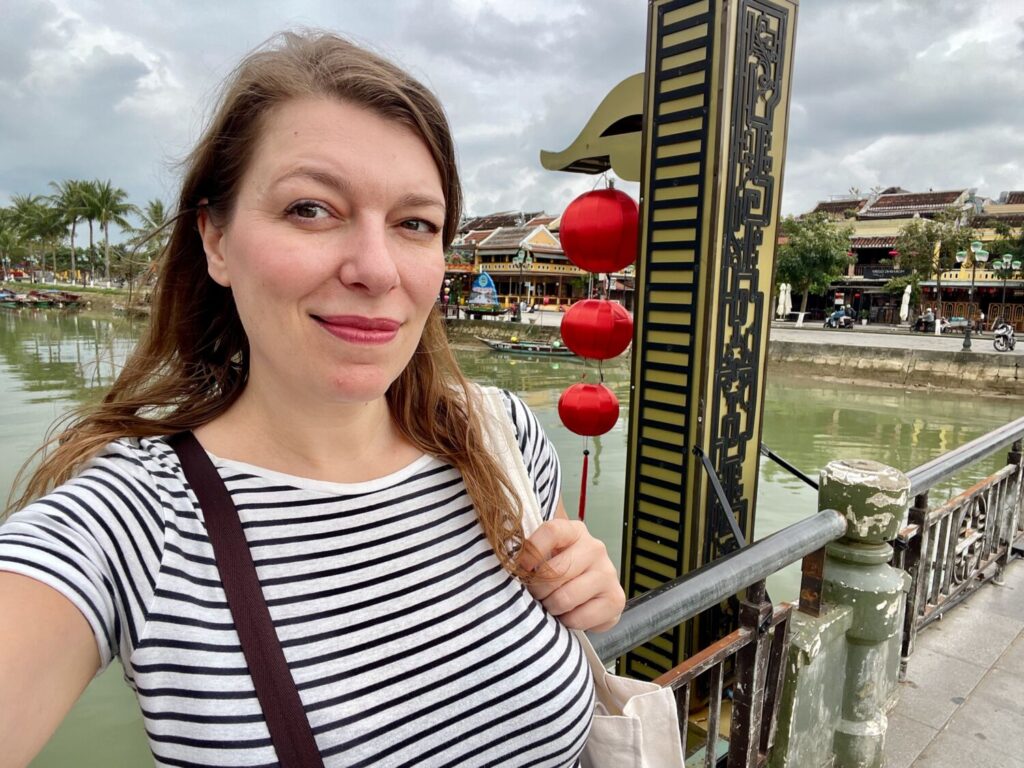
Where Hoi An Is and Why It Was an Important Trading Port
Hoi An lies in central Vietnam along the Thu Bon River, just a few kilometres from the coast and not far from Da Nang. Its strategic location made it one of the most important trading ports in Southeast Asia for centuries. The Thu Bon River was once wider and deeper than it is today, allowing even large ships to sail inland and reach the port.
Between the fifteenth and nineteenth centuries, Chinese, Japanese and European merchants travelled to Hoi An to trade silk, spices and ceramics, turning the town into an international crossroads. Many merchants settled here permanently and built houses, temples and assembly halls that still define the architecture of the Old Town today. Others stayed only for a few months during the dry season before returning to their home countries.
Over time the water level gradually dropped and the river became increasingly silted. As a result, larger ships could no longer reach the port. This gradual change slowly ended Hoi An’s role as a major trading port. Centuries later, travellers rediscovered the town as a cultural destination.
Hoi An Lanterns: Meaning, History and the Full Moon Lantern Festival
Chinese merchants introduced the famous lanterns of Hoi An when they settled in the town during the centuries of intense trade. Over time they became the symbol of the city itself, yet they are far more than simple decoration. Lanterns represent protection, good fortune and hope, and reflect traditions that remain deeply rooted in local culture.
This meaning becomes especially clear during full moon nights, when the Lantern Festival takes place. According to Vietnamese Buddhist tradition, the full moon is the best moment for prayer, meditation and honouring one’s ancestors. Families devote time to spiritual purification and prayers, asking for good luck, health and serenity for themselves and their loved ones.
On these evenings the town turns off most electric lights, and lanterns illuminate the streets. The atmosphere changes completely as both locals and visitors light colourful paper lanterns and release them onto the Thu Bon River, often accompanied by a silent prayer.
I was lucky enough to experience the Lantern Festival during my first trip to Vietnam. For me it was a unique moment, almost magical, the kind of experience that stays with you long after the journey ends.
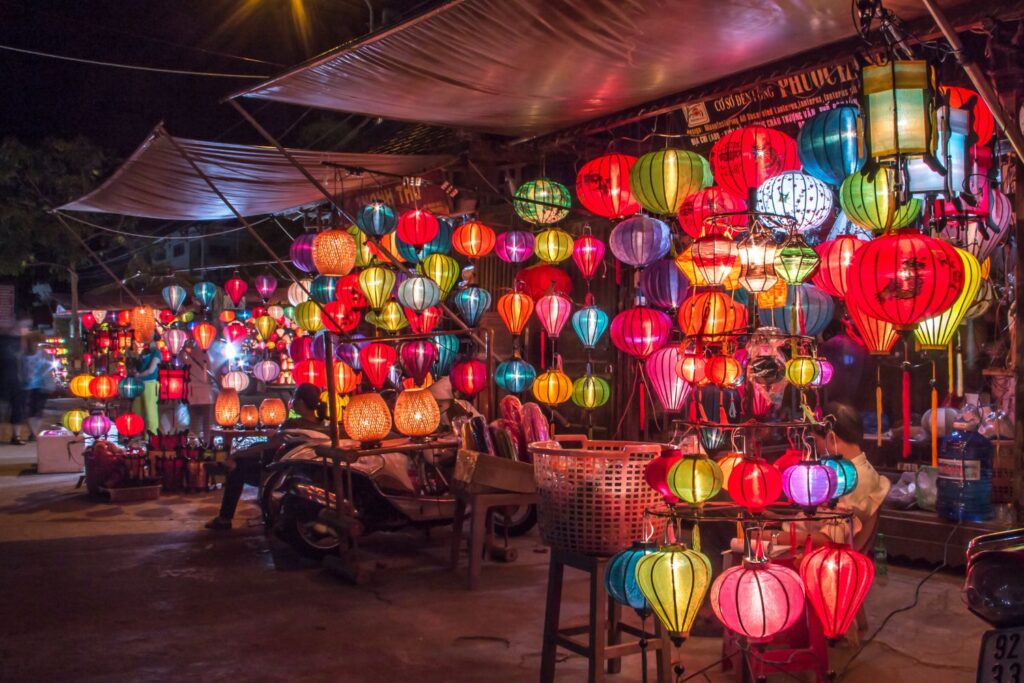
Boats on the Thu Bon River in Hoi An
In the evening, along the river you can see traditional wooden boats lined up along the quay and illuminated by glowing lanterns. Their reflections on the surface of the water create an almost poetic atmosphere. You can experience this scene by boarding a small boat and drifting slowly along the river, knowing it is mainly a tourist activity.
During the day the atmosphere is completely different. The river becomes calm and quiet, and fishermen burn incense on their boats to keep away evil spirits. According to local belief, anyone who dies in the river remains there and their spirit cannot be freed.
Small details reveal how deeply these traditions remain rooted in daily life. For example, painted eyes on the boats allow the vessel to “see” along the river and protect it from spirits. Signs like these show that ancient beliefs are still very much alive among the communities living along the Thu Bon River.
How to Visit Hoi An Ancient Town: Entrance Ticket and Practical Rules
Hoi An Ancient Town is entirely pedestrianised. Cars and buses must remain outside the historic centre, including taxis and Grab vehicles. Only motorbikes can enter the old quarter. To visit the UNESCO-listed Old Town, visitors need to purchase an entrance ticket valid until 5:00 pm. At the time of writing, visitors cannot buy tickets online in advance, and the official Hoi An website does not always provide updated information.
If you are travelling independently, you will find ticket offices at the entrances to the Ancient Town. The main difficulty is knowing which monuments the entrance ticket includes. In fact, some historic houses and assembly halls require it while others do not. To visit all the cultural sites at a relaxed pace you would need at least two days, yet many organised tours include Hoi An only as a half-day stop, which means you have to choose carefully what to see.
If you join a Hoi An Ancient Town Walking Tour, the guide usually takes care of purchasing the ticket and leads you to the most important buildings, such as the Japanese Covered Bridge and the Cantonese Assembly Hall.
During my first trip to Hoi An I explored the Old Town independently. Having a private guide during my Vietnam journey with Travel Sense Asia gave the visit a much deeper dimension, allowing me to understand the history and architectural details far better.
After 5:00 pm you can move freely within Hoi An Ancient Town without a ticket. You can wander through the historic streets and admire the buildings from the outside, although museums, temples and historic houses will still require the entrance ticket.
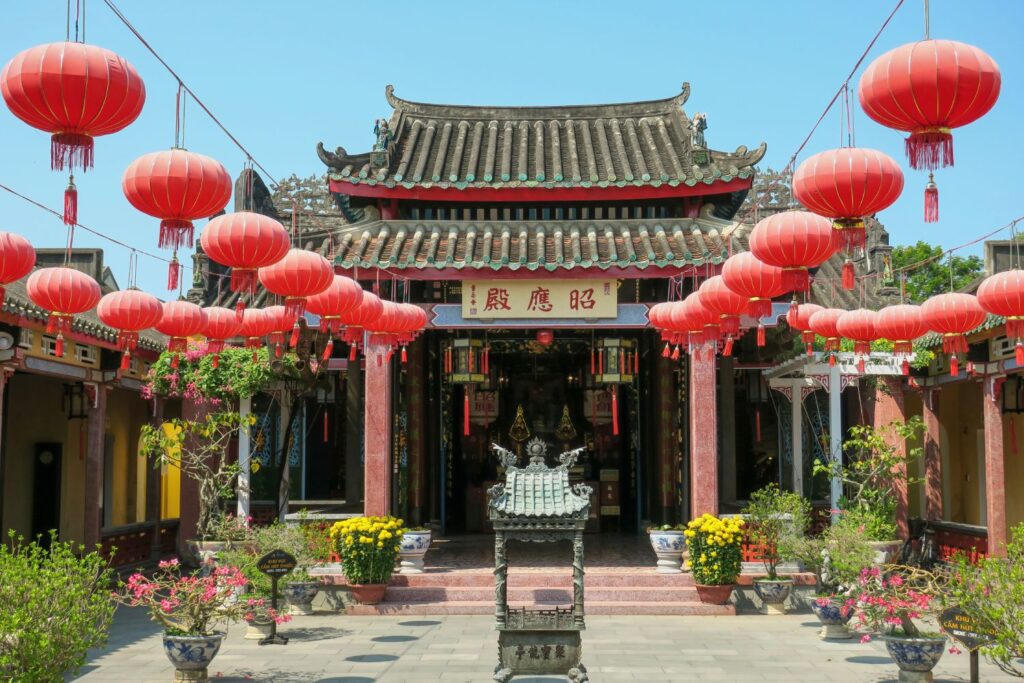
What to See in Hoi An Ancient Town: Historic Houses, Temples and Architecture
Hoi An Ancient Town is a unique architectural heritage site and includes as many as 1,107 buildings protected by UNESCO, ranging from private houses to public halls. Among the things to see in Hoi An, this part of the city is undoubtedly the most important from a historical and architectural perspective.
Strict conservation rules in Hoi An prevent property owners from freely modifying historic buildings. Because of these restrictions, Hoi An Old Town has preserved an appearance very close to what it must have looked like centuries ago.
Today many historic buildings house souvenir shops, yet some homes still preserve their original interiors and remain open to visitors. These houses offer a glimpse into how Hoi An’s merchants lived during the centuries of international trade and help visitors understand everyday life in the town in the past.
The Japanese Covered Bridge in Hoi An: History and Legend
One of the most recognisable landmarks in Hoi An is the Japanese Covered Bridge. According to a local legend, builders constructed the bridge above a giant monster whose head lay in India, its tail in Japan and its body in Vietnam. Every time the creature moved, terrible disasters would strike Vietnam. By constructing the bridge over the monster’s weak point, the inhabitants were finally able to stop it.
The historical explanation is less mythical but equally fascinating. The Japanese community in Hoi An built the bridge around 1590 to connect their neighbourhood with the Chinese quarter across the river. Even today, two pairs of statues guard the entrances: monkeys on one side and dogs on the other.
According to tradition, these animals became objects of reverence because many Japanese emperors were born in the years of the monkey and the dog. Another interpretation suggests builders began construction in the Year of the Monkey and completed it in the Year of the Dog, which may explain the two statues.
From the bridge you can access the small Chua Cau temple. Above the entrance you can still see the inscription with the name given to the structure in 1719, Lai Vien Kieu, meaning “Bridge of Friends from Afar”. However, people never widely adopted this name, and the bridge remains known simply as the Japanese Covered Bridge.
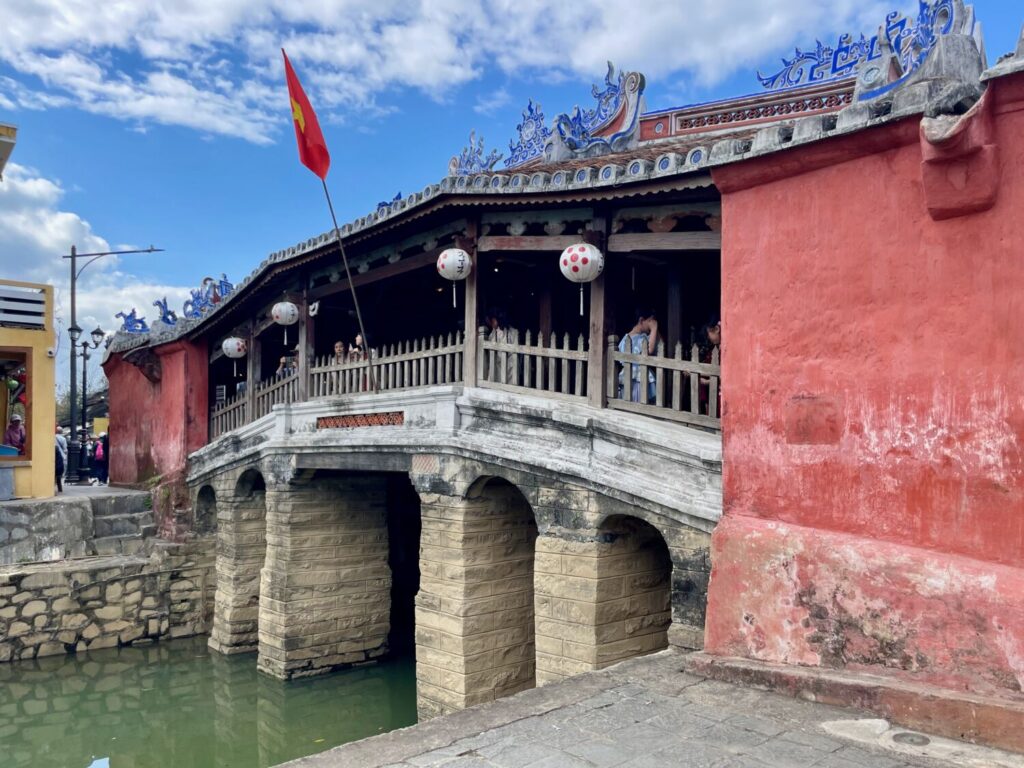
Chinese Assembly Halls in Hoi An Ancient Town
Chinese merchants who settled in Hoi An organised themselves into communities connected to their province of origin. Each group built its own assembly hall, called hội quán in Vietnamese, used for meetings, celebrations and community gatherings.
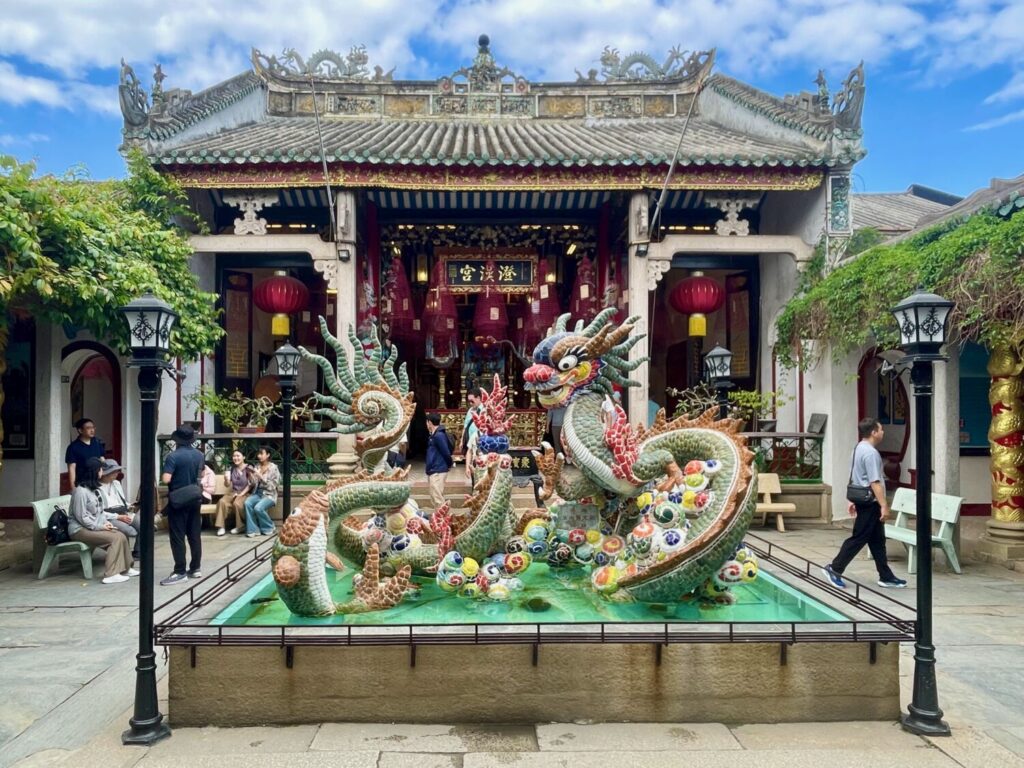
Among the most beautiful to visit is the Cantonese Assembly Hall, famous for the large dragon statue decorated with colourful mosaics in the inner courtyard. Founded in 1786, the building is one of the most visually striking landmarks in Hoi An Old Town and is well worth including during a visit to the city.
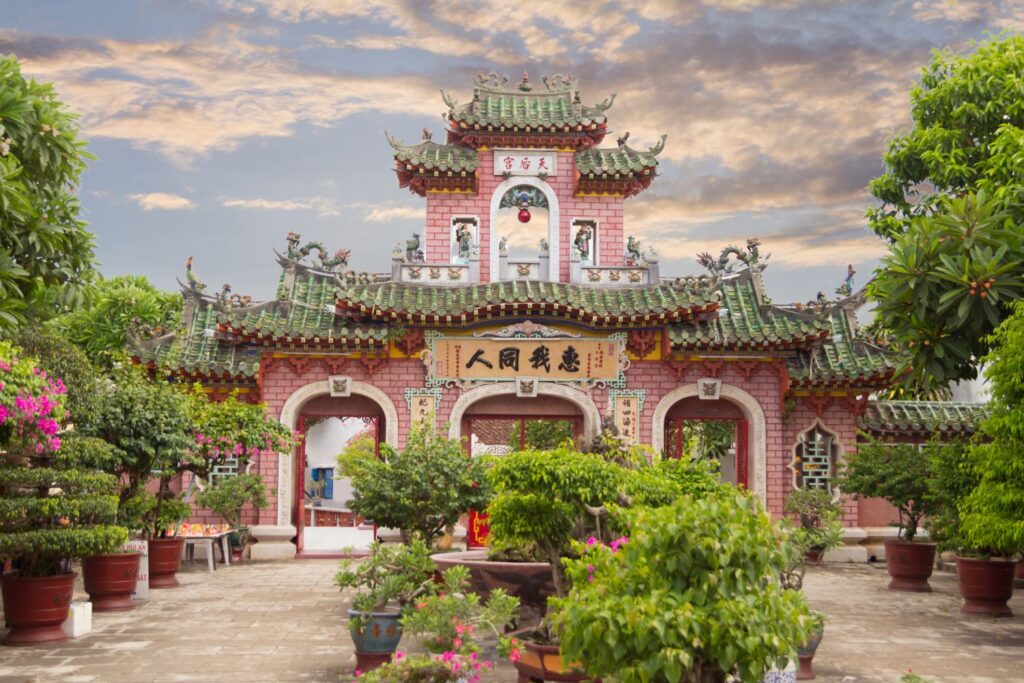
Another important hall is the Fujian Assembly Hall, later transformed into a temple dedicated to the goddess Thien Hau, a deity from that Chinese province. The Chaozhou Assembly Hall features detailed carvings on its altar doors depicting two Chinese women with Japanese-style hairstyles.
The Hainan Assembly Hall, built in 1851, commemorates 108 merchants from that province who were mistakenly killed after being accused of piracy. Finally, the Chinese Assembly Hall, founded in 1773, served as a shared meeting place for the different Chinese congregations living in Hoi An.
Historic Houses in Hoi An: Traditional Architecture and Protective Symbols
The historic buildings of Hoi An not only survived the wars of the twentieth century, but also represent some of the few remaining examples of traditional architecture still found in Vietnam.
Roofs often use brick-coloured concave and convex tiles called âm and dương (yin and yang), arranged to fit perfectly together. Above the doors of traditional houses you will often notice a circular symbol surrounded by a spiral motif. People call this mắt cửa, literally “the eye of the door”, which tradition says protects the inhabitants from bad luck.
Some historic houses are open to visitors and offer a glimpse into how the merchants of Hoi An once lived. Among the best known are Tan Ky House and Quan Thang House, both showing Japanese and Chinese architectural influences.
Tran Duong House stands within a block of French colonial buildings, while Phung Hung House remains another well-preserved example of traditional architecture. At Diep Dong Nguyen House you can still see rows of glass jars once used for traditional Chinese remedies displayed along the walls, as the building originally functioned as a pharmacy.
Temples and Pagodas to Visit in Hoi An Old Town
Quan Cong Temple is one of the most important Chinese temples in Hoi An. Chinese communities honour Quan Cong, a general who symbolises loyalty, sincerity, integrity and justice. His statue, made of papier-mâché on a wooden structure, stands on the central altar behind the sanctuary.
The Chinese Buddhist monk Minh Hai founded Chuc Thanh Pagoda in 1454, making it the oldest pagoda in the city. Inside you can see several ritual objects still in use today, including numerous bells, a two-century-old stone gong and a wooden gong shaped like a carp that tradition considers even older.
Phuoc Lam Pagoda, founded in the mid-seventeenth century, later became closely linked to An Thiem, who led the pagoda at the end of that century. He entered the monastery as a child at just eight years old, later became a general and fought in several battles before eventually returning to monastic life after the end of his military career.
Hoi An Market: One of the Most Authentic Places in the Old Town
Hoi An Market is located in the heart of the Old Town, close to the Thu Bon River. Compared with the streets lined with souvenir shops, the market retains a more authentic and everyday atmosphere. Alongside travellers, you can see local vendors and residents doing their daily shopping.
Inside the market you will find several street food stalls where you can taste some of the typical specialities of Hoi An cuisine. Many restaurants in Hoi An Old Town also come here every morning to buy fresh ingredients.
Hoi An Today: Heritage Preservation, Tourism and Environmental Impact
Hoi An is one of the most interesting examples of urban conservation in Southeast Asia. Strict regulations protect the historic centre, recognised as the UNESCO-listed Hoi An Ancient Town, limiting alterations to historic buildings and even controlling their height.
This type of conservation-focused restoration is relatively rare in Asia and has allowed Hoi An to preserve an appearance remarkably similar to what it must have looked like centuries ago. In recent years the city has also introduced less visible but important improvements. For example, burying the electrical cables that still crossed the historic centre in the early 2000s.
Authorities have also introduced several rules within the Ancient Town to protect the urban environment. Smoking is prohibited in certain areas, and the historic centre remains closed to car traffic, with only motorbikes allowed to enter. The entrance ticket for visitors also helps fund the restoration and maintenance of historic buildings.
Where to Stay in Hoi An: Choosing the Right Location
Tourism growth in Hoi An is particularly visible in the number of hotels built since the early 2000s. In the past many visitors stayed in Da Nang and came to Hoi An only for a day trip, while today the town offers a wide range of accommodation options.
Competition between hotels has led to increasingly refined services in recent years, with many properties offering swimming pools, spas and in-house restaurants. Within the Old Town there are very few hotels, and most are located on the edges of the pedestrian area. Choosing accommodation slightly outside the centre can be more peaceful, while still keeping you close to Hoi An Ancient Town without the constant crowds.
Compared with other destinations, staying outside the centre in Hoi An does not mean being isolated. Electric carts and Grab operate regularly between hotels and the Ancient Town, and a ride usually costs around 50,000 VND, roughly €2.
Little Gem Hoi An Boutique Hotel & Spa: My Honest Review
During my stay in Hoi An, I chose Little Gem Boutique Hotel & Spa, a property I liked so much that I genuinely feel comfortable recommending it. It is located about a 15-minute walk from Hoi An Old Town and can be reached easily along a straight street lined with clothing shops.
Little Gem is a true boutique hotel, carefully designed in every detail and with a very welcoming atmosphere. The rooms are spacious and bright, with comfortable beds and large bathrooms, while the wooden and bamboo furnishings create an elegant and relaxing environment.
The hotel also has an excellent restaurant serving both local and international dishes, as well as a beautiful spa with very reasonable prices considering the quality of the facilities. During high season, rates can increase, as often happens with boutique hotels, but in the low season you can find very attractive offers even if you are travelling on a limited budget.
Little Gem Hoi An Boutique Hotel & Spa
06 Cau Hoi Muong, Cam Chau
Hoi An, Quang Nam 560000
Where to Eat in Hoi An: Riverside Restaurants and Local Favourites
When it comes to food, Hoi An offers countless options, from full restaurants to the street food stalls inside the market.
If you enjoy restaurants with panoramic views, I recommend MET Hoi An Vietnamese Restaurant & Vegetarian Food, a chain found in central and northern Vietnam. The terrace of the Hoi An branch offers one of the most beautiful views in the city, overlooking the river with boats illuminated by lanterns. The menu includes Vietnamese and vegan dishes, accompanied by Vietnamese wines such as the fragrant Da Lat Wine, produced in the highlands around Da Lat.
In the centre of Hoi An I also recommend Citronella Restaurant Cafe, which serves meat and seafood dishes inspired by local Vietnamese cuisine and adapted for an international audience. It is a great place for a pleasant break while exploring the streets of Hoi An Old Town. The most enjoyable tables are in the outdoor courtyard, with views over the river.
What to Buy in Hoi An: Tailor-Made Clothes, Lanterns and Local Crafts
Hoi An has a long trading tradition, and even today the town is one of the best places in Vietnam to shop for souvenirs. Many travellers arrive thinking they will only buy a few small items, such as magnets, and end up leaving with suitcases full of purchases, sometimes buying new luggage in Hoi An just to carry everything home.
Hoi An is particularly famous for its tailors, who can create custom-made clothes in as little as one day. Around 300 to 500 tailors work in the town. If you want to try this experience, I recommend comparing several shops and paying attention to the quality of the fabrics and stitching.
Prices that are significantly lower than average may indicate quicker workmanship or lower-quality materials. The best tailors, especially those working with premium fabrics, usually charge higher prices but offer greater attention to detail.
In Hoi An you can also find counterfeit products from international brands at very low prices. A large share of the world’s textile production takes place in Asia. In Hoi An the quality is so good that it is difficult to tell whether the goods are genuine items sold outside official channels or actual counterfeits. However, it is important to remember that importing counterfeit goods into the European Union as well as into the US is illegal and may lead to checks at the airport.
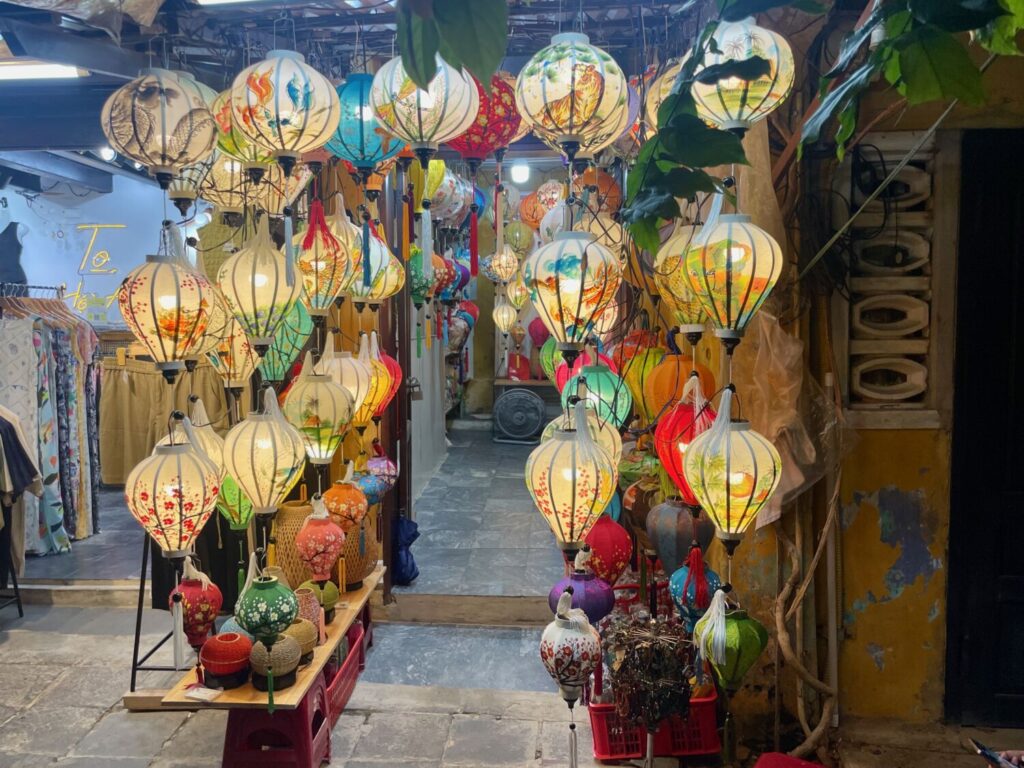
Another typical souvenir from Hoi An is the lantern, often sold in foldable versions that easily fit in a suitcase. In the city you can also join a Vietnamese Foldable Lantern Making Class, which makes for a truly unique souvenir. Finally, another local speciality is the wooden sculptures from the nearby village of Cam Nam.
What to See Around Hoi An: Best Day Trips and Villages
The area around Hoi An offers several interesting excursions, including the Marble Mountains and My Son Sanctuary Day Trip. The Marble Mountains are limestone hills with caves, temples and pagodas carved into the rock, located just a few kilometres from the city. My Son Sanctuary is an ancient religious centre of the Champa Kingdom. Set deep in the jungle, it remains one of the most important archaeological sites in Vietnam.
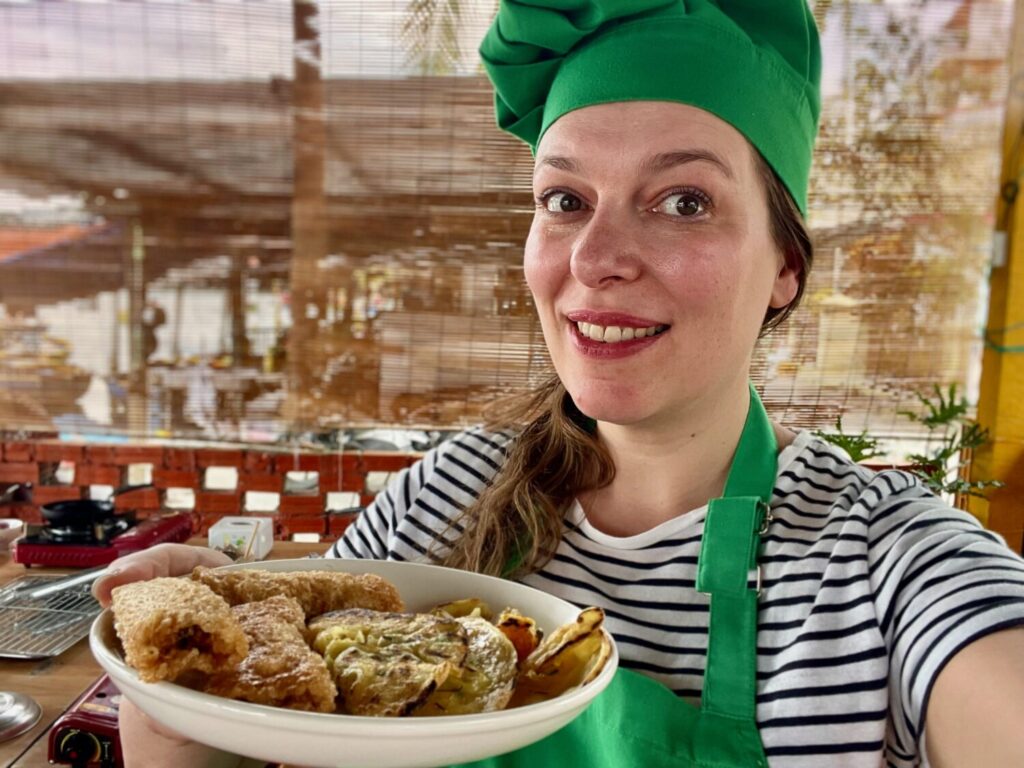
During my trip to Vietnam, I also visited several villages along the Thu Bon River, including Cam Thanh, the famous coconut forest village that visitors explore on traditional round bamboo boats. At the village of Kim Bong you can meet skilled wood artisans, while Tra Nhieu preserves the peaceful atmosphere of the Vietnamese countryside. The tour organised by Travel Sense Asia also included a cooking class and a traditional foot massage.
If you are travelling independently, you can book the tour from Hoi An Cooking Class With Local Market and Basket Boat Ride. Similar tours also depart from Da Nang and Ho Chi Minh City, but staying in Hoi An is often the best choice because of the town’s beauty and its proximity to these attractions.
Visiting Hoi An: Pros and Cons of the Lantern City
From a visitor’s perspective, the time of day really makes a difference. In my opinion, Hoi An is far more enjoyable during the daytime. With fewer tourists around, the streets feel calmer and you can take your time observing the architecture of the houses, the temples and the hidden courtyards scattered across Hoi An Old Town. My travel companions, however, preferred the evening atmosphere, when lanterns light the streets and shops stay open late.
Hoi An’s great popularity among travellers has inevitably transformed some areas of the historic centre. Over the past decade the city buried the tangle of electrical cables that once crossed the streets, yet souvenir shops and tailor stores have gradually begun to look increasingly similar.
Despite these changes, Hoi An remains an extraordinary city from an architectural perspective and continues to be one of the most atmospheric places to visit in Vietnam. Walking through Hoi An Old Town under the glow of lanterns, among houses that have remained unchanged for centuries, is still an unforgettable experience. If you have already visited Hoi An, share in the comments what fascinated you most about the lantern city.
