
Hanoi, the capital of Vietnam, feels different from Ho Chi Minh City from your very first steps. At first glance, the city appears incredibly sober for an Asian metropolis. You immediately perceive a constant and strong political presence in the streets. Symbols, memory, and architecture tell the story of the modern country at every corner. Venturing into the city centre, you discover a reality that constantly alternates order and chaos. Thousand-year-old places of worship hide behind busy street food stalls. The city oscillates fascinatingly between everyday life and the official national narrative. This unique atmosphere captures your curiosity and invites you to explore its deep layers.
Table of Contents
Hanoi First Impressions: Old Quarter vs French Quarter
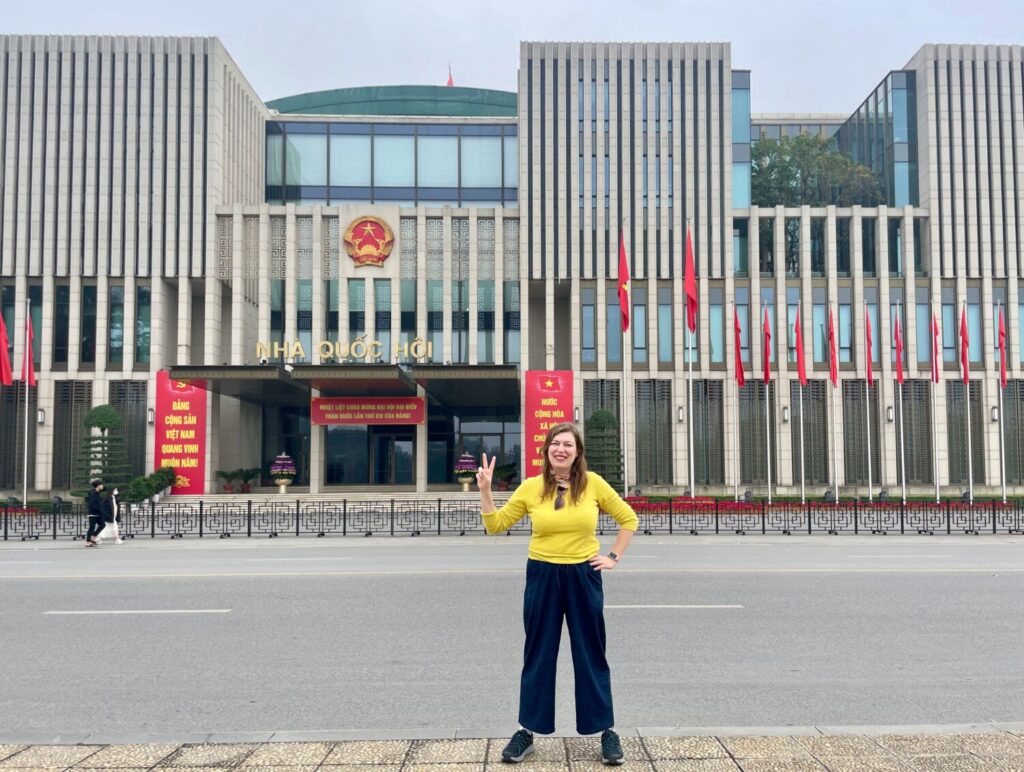
Hanoi represents the historical and political heart of Vietnam. It houses Confucian temples and pagodas but gains fame for its modern role. Government buildings and the Ho Chi Minh mausoleum dominate the initial urban landscape. French colonial architecture stands alongside these structures, creating a unique visual contrast.
PLAN YOUR TRIP TO VIETNAM – 5% discount on your eSIM and travel insurance
For getting around Vietnam with ease, choose a Holafly eSIM: you get unlimited internet, perfect for using Google Maps, Grab or other navigation apps, booking transport on the go, and sharing photos and videos in real time on WhatsApp without worrying about local SIM cards or extra charges.
For extra peace of mind, pair connectivity with Heymondo travel insurance, which covers you in case of medical emergencies, delays or cancellations. A practical solution that lets you focus on exploring Vietnam, rather than dealing with unexpected setbacks.
The historic centre almost hides behind this monumental grandeur. Today, the city successfully unites two very distinct and different areas. The Old Quarter remains compact and vital while the French Quarter offers wide avenues. Colonial villas and quiet lakes characterise this district originally built for government officials.
These monumental buildings changed their function after the end of colonialism. Many now serve as institutional seats or homes for party officials. National flags and hammer and sickle decorations appear almost everywhere in the city. This constant political presence defines the daily landscape and the public space.
The Pace of Hanoi: Atmosphere, Traffic and Everyday Life
Hanoi offers a different sensation compared to the hectic Ho Chi Minh City. Large avenues, green areas, and water contribute to a slower urban rhythm. The capital feels less frantic and more intimate than its southern counterpart. This measured pace of life allows you to explore the streets at a calmer pace.
Inhabitants truly live in the city even within the busiest tourist areas. Vietnamese people frequently visit the Temple of Literature or the Mausoleum, often wearing traditional dress. Foreign visitors simply mix with the crowd, creating a unique sense of shared reality.
Hanoi Old Quarter: What to See in the Historic Heart of the City
The historic heart of Hanoi coincides with the Old Quarter, sometimes called the Ancient Quarter of the 36 Streets in some guides. In this area, the medieval urban structure is still visible, with streets specialised in a single type of merchandise. Every street takes the name of the ancient craft guild that once lived there. If you know the Vietnamese language, you immediately notice that the street names refer to a specific product category.
Today the Old Quarter is almost entirely occupied by souvenir shops and cafes, as often happens in the most touristy areas. Some streets still maintain their original appearance, and it is worth spending at least half a day exploring the neighbourhood on foot. Pho Hang Quat and Hang Gai tell the commercial and artisan history of the district. Between red candlesticks, sacred objects and elegant silks, these streets narrate the past better than others.
Another curiosity of the Old Quarter is the so-called “gallery house”, known as nhà ống or “tube house”. Built to avoid taxes calculated on the width of the façade, these buildings have very narrow façades and long, deep interiors. You can also find similar narrow and tall buildings in Ho Chi Minh City. These houses are very common and often feature a shop on the ground floor with the living quarters on the upper floors.
Ho Chi Minh Complex: What to See, What to Skip and How to Plan Your Visit
The Ho Chi Minh Complex represents one of the most significant sites in Hanoi. It celebrates the founding figure of the State as a permanent reference for national identity. The complex includes several monuments and the humble house on stilts where the leader lived. You will find it situated in a vast pedestrian area with green spaces and colonial buildings.
For many Vietnamese people, this is a deeply felt and sacred space. You must often face at least an hour of queueing to enter the site. I was personally fascinated to see school groups and families in traditional dress waiting patiently. Very few Western tourists currently visit the interior due to these extremely long waits.
In true communist style, no skip-the-line tickets exist for regular visitors. Only VIP guests officially invited by the government can bypass the long queue. We limited ourselves to observing the complex from the outside during our group tour. This choice allowed us to save time for other scheduled visits in the city.
You can already perceive from the outside how the official narrative contrasts with the solemn monument. Although Ho Chi Minh wished for cremation, the government chose to display his embalmed body. The Vietnamese government was inspired by the grand mausoleums of the socialist era for this project. This decision highlights his importance as a permanent and powerful national symbol.
The most interesting aspect of the visit is observing the Vietnamese people paying their respects. They maintain an orderly atmosphere that stands in stark contrast to the surrounding city chaos. I found it moving to see people of all ages honouring the father of their nation. It is a moment of deep reflection that offers a unique glimpse into local culture.

Uncle Ho: The Father of Modern Vietnam and His Legacy
Ho Chi Minh, affectionately called Uncle Ho, is the father of modern Vietnam. He founded the Democratic Republic of Vietnam in 1945 and led it until his death in 1969. To truly understand the veneration for the father of the country, visit the complex with a guide. A local perspective will illuminate the most interesting aspects of his long and complex life.
Firstly, Ho Chi Minh is merely the most famous pseudonym of Nguyễn Sinh Cung. During his life, he used over two hundred different aliases to escape the French authorities. His revolutionary activities made him a constant target for the colonial government for many years. This led him to live a life of secrecy and constant movement across different continents.
Born in 1890, he studied French in Saigon before boarding a ship for France in 1911. He intended to study at university, but his revolutionary ideas prevented his acceptance. He remained in Europe working in humble factories and cafes to support himself. These beginnings are a central part of the story the nation tells about its leader today.
He became fluent in several languages during these years, including French, Chinese, and Japanese. He lived in many countries and spent time in mountainous regions inhabited by ethnic minorities. In 1945, he finally declared Vietnam’s independence from France back in the city of Hanoi. However, the country remained split between the independent North and the occupied South.
Ho Chi Minh died in 1969 and did not see the end of the war. Despite this, his figure continued to inspire the population to resist the invasion until the very end. He remains a central moral and political reference for the identity of the entire country. His legacy is visible across the capital and in everyday life.
Ho Chi Minh Mausoleum: Visiting Rules, Meaning and What to Expect
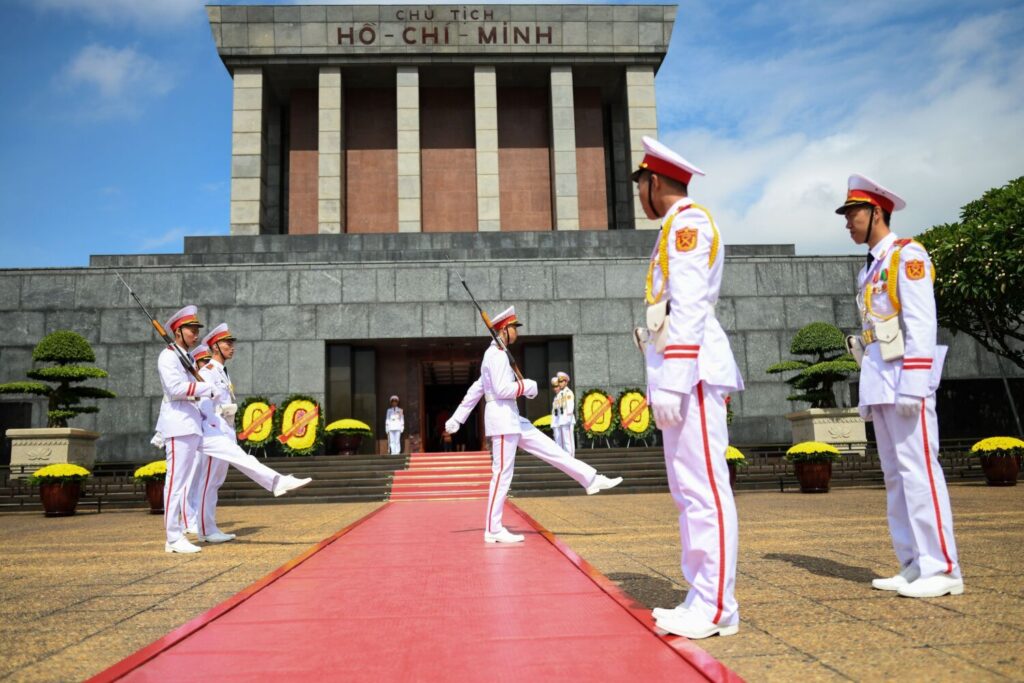
The Ho Chi Minh Mausoleum ranks among the most solemn places in Hanoi. This marble building houses the embalmed body of the leader within a secular temple. Even from the outside, you perceive a rigid and almost military atmosphere. The structure follows the monumental tradition that leaders like Lenin and Stalin established in the past.
You must scrupulously respect numerous rules during your visit to this site. Visitors wear modest clothing and observe a strict ban on photos or speaking. Inside the Mausoleum, absolute silence reigns as the visit follows very precise rituals. Guards mark out a strictly controlled space while standing at regular intervals along the path.
Vietnamese people make up most of the visitors and their reverent attitude defines the experience. You quickly realise that the population almost venerates Ho Chi Minh as a saint. With a bit of luck, you might witness the scenic change of guard. I saw this ritual myself during my very first visit to the city.
I usually avoid “mortuary” attractions, but I felt a genuine curiosity about this place. For a Westerner, the mausoleum represents a fascinating blend of the sacred and the secular. This experience takes place in a surreal context of red flags and symbols. It highlights the deep political roots that still ground the nation today.
However, I have never personally paid my respects to Uncle Ho inside the building. During my first visit, the Mausoleum remained closed, and recently the queues were simply too long. Honestly, I do not think I will try to enter the building again. I lack the motivation to face hours of waiting just to see his body.
Ho Chi Minh Museum: What to Expect from Your Visit
Next to the Mausoleum stands the Ho Chi Minh Museum, an imposing concrete building in Soviet style. It features a grand hammer and sickle bas-relief positioned prominently above the main entrance. The museum was requested by the Vietnamese people as a sign of deep gratitude. It serves as a clear declaration of adherence to the values the leader embodied.
The first stone was laid in 1985 and the inauguration took place on his birth centenary. The exhibition is organised into three main sections dedicated to his life and revolutionary work. The museum also covers Vietnamese history and the international context of the revolution. It offers a comprehensive look at the historical period that shaped the modern nation.
I visited the Ho Chi Minh Museum during my first trip, but it did not particularly impress me. The setting is intentionally celebratory, much like the Stalin Museum in Gori, Georgia. It remains interesting to observe the Vietnamese perspective on their own national history. This is more valuable for understanding their national myth than for the museum’s design itself.

Hanoi Presidential Palace: Colonial Architecture and Political Power
The Presidential Palace in Hanoi has an elegant appearance that stands in stark contrast to the austerity of the nearby mausoleum. Built in 1906 as the residence for the Governor General of Indochina, it is a French colonial building surrounded by manicured gardens. The exterior clearly reflects the architectural legacy of the colonial period. You cannot visit the interior because it is currently used only for official government receptions.
On some occasions, you might not even be able to get close enough to take photographs. When government functions are in progress, the entire area is surrounded by a police cordon for security. The palace remains a powerful symbol of political authority in the capital. It represents a specific era of history that has been reappropriated by the modern Vietnamese state.
Ho Chi Minh’s Stilt House: Simplicity, Image and National Narrative
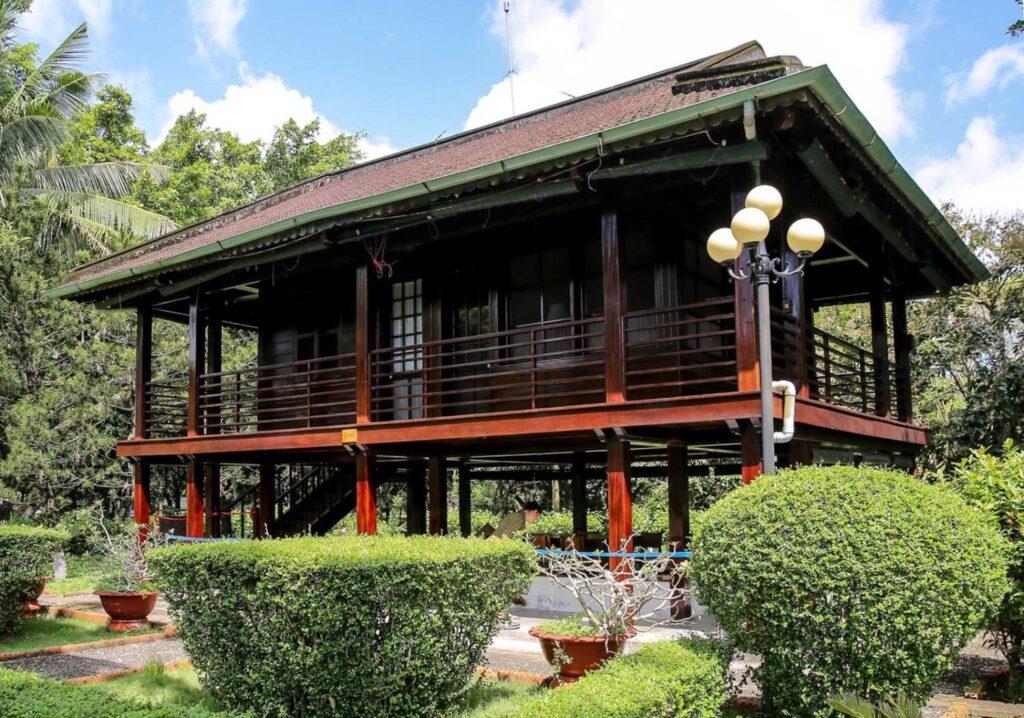
The Stilt House, used by Ho Chi Minh between 1958 and 1969, is located behind the mausoleum and is a wooden dwelling inspired by traditional countryside houses. The visit aims to convey the image of a leader close to the people and deliberately far from symbols of power. This modest structure reflects how Ho Chi Minh appeared to be in reality. It stands as a silent testimony to his personal choices and public persona.
A curious aspect is that the house is presented as having remained intact during the war, despite the heavy bombing of Hanoi. In reality, during the most intense periods of the conflict, Ho Chi Minh often moved to the countryside for safety. He did not reside permanently in this building throughout the entire duration of the war. The official narrative tends to emphasise the continuity and symbolic value of the site.
This presentation leaves room for different levels of interpretation between history, memory and political representation. Visitors can observe the few personal objects and the simple rooms, which are kept exactly as they were. The garden and the pond create an atmosphere of peace and extreme order. It is a place designed to inspire reflection on the moral qualities attributed to the father of the nation.
One Pillar Pagoda: History and Symbolism of Hanoi’s Iconic Landmark
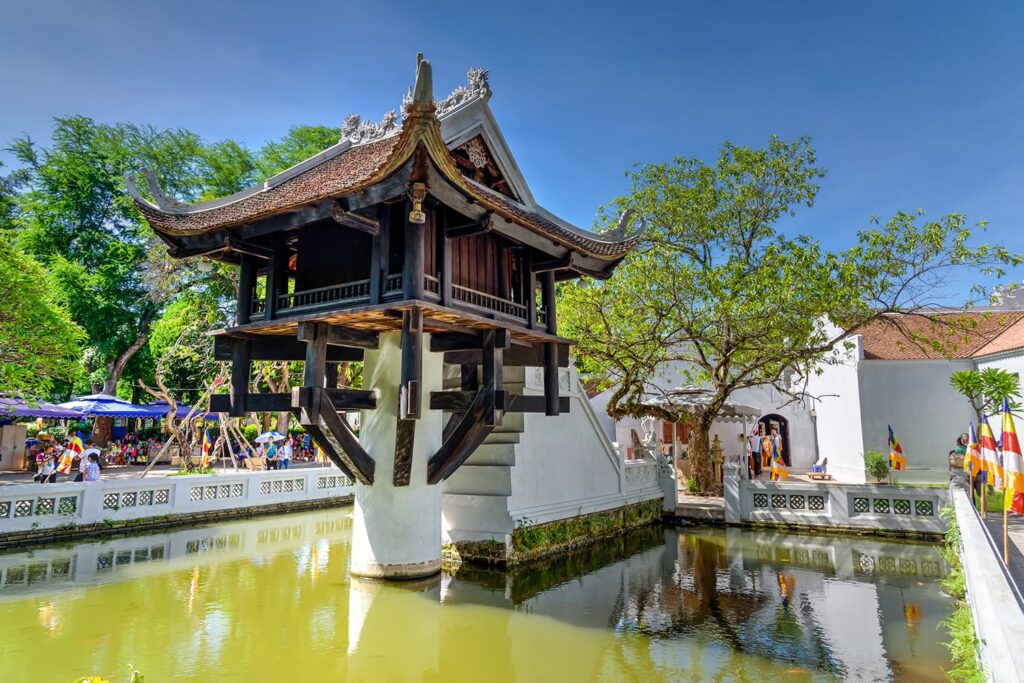
Within the Ho Chi Minh complex, you can also see the One Pillar Pagoda, situated between the mausoleum and the Ho Chi Minh Museum. One of the most recognisable symbols of Hanoi, it strikes the visitor for its simplicity charged with meaning. The structure emerges from a pond and is supported by a single pillar. It is designed to represent a lotus flower, which is a powerful Buddhist symbol of purity and rebirth.
It is not an unmissable sight, partly because the current pillar is made of very ordinary concrete. However, the history behind this site remains interesting for any curious traveller. The emperor Ly Thai Tong built it in 1049 after a prophetic dream. He dreamt of a Bodhisattva handing him a male heir while seated on a lotus flower, leading to the creation of this unique shrine.
Known as Chùa Một Cột, the pagoda was unfortunately destroyed by the French in 1954 before their withdrawal. It was subsequently rebuilt, maintaining the symbolic form that makes it one of the most photographed places in the complex today. The current version is a faithful replica of the original wooden structure. It remains a significant pilgrimage site for those wishing to pay tribute to Hanoi’s ancient imperial history.
Temples and Pagodas in Hanoi: Worship, Traditions and Daily Spiritual Life
The spiritual dimension of Hanoi is complex and layered, as it does not coincide with a single religion or practice. Confucian temples, Buddhist pagodas and sites linked to folk legends coexist in the same urban space. This variety reflects how different traditions overlap in Vietnam. You will find that different traditions overlap and blend seamlessly in the daily life of the capital.
The pagodas are linked to Buddhism and function as active places of worship for the local population. They are frequented daily for prayers, offerings and specific rituals that keep the spiritual tradition alive. In contrast, temples often have a more cultural and symbolic function. They are usually dedicated to Confucius, historical figures or national heroes who shaped the country’s history.
In many cases, these are not places of worship in the strict sense, but spaces that tell stories of values and identity. I discovered with no small amount of surprise that some are used almost exclusively as photography sets. It is common to see people posing for elaborate photo shoots in traditional dress. This modern use of historical spaces adds another layer to the fascinating atmosphere of the city.
Temple of Literature: Vietnam’s First University and Confucian Heritage
The Temple of Literature represents a key cultural site in Hanoi. It appears on the 100,000 VND banknote as a tribute to education. Emperor Ly Thanh Tong founded this temple in 1070 for Confucius. In 1076, the site became the first national university of the country.
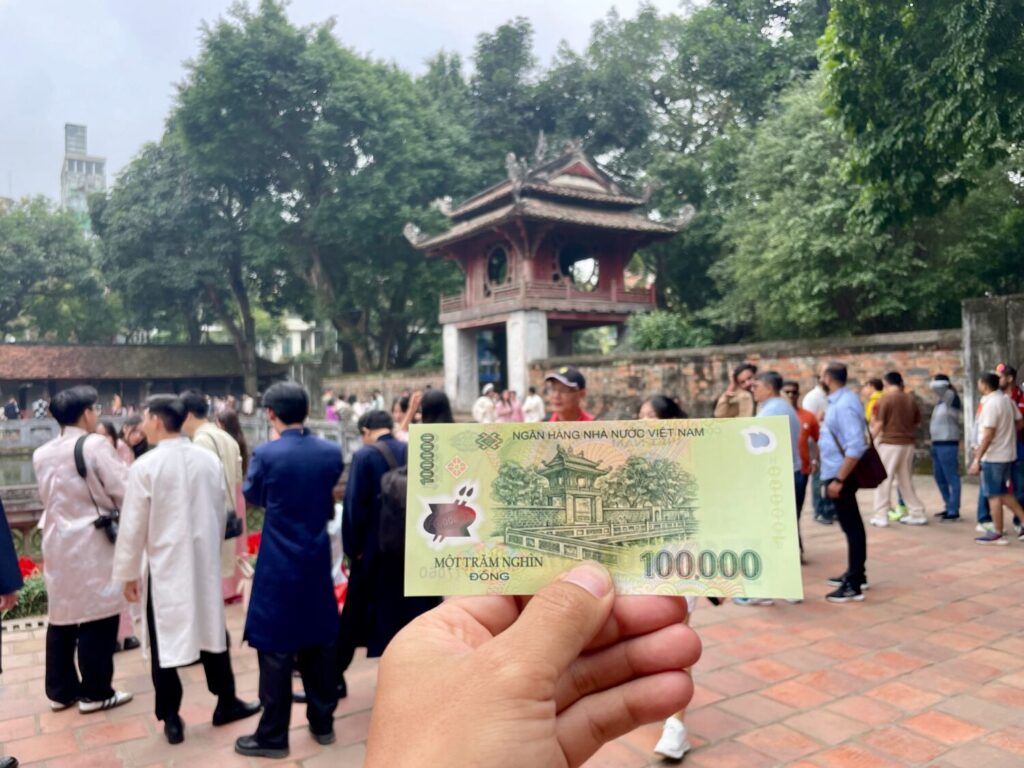
Initially, only sons of the royal family and mandarins accessed the university. Later, other selected students entered after passing complex imperial examinations. Candidates studied here for seven years to become high-ranking state officials. They then served as administrators throughout the various regions of the country.
The university’s activity ceased in 1802 when the capital moved to central Vietnam. Stone stelae engraved with the names of scholars still stand in the courtyards. Knowledge was always a fundamental tool for accessing power and serving the state. These monuments remain a testament to the intellectual rigour of the past.
Hanoi became the capital again after 1945, maintaining the temple as a symbol. Many students still come here to pray before an important exam. I joined this ritual and prayed for my flight licence exam. It certainly cannot do any harm to seek help from tradition.
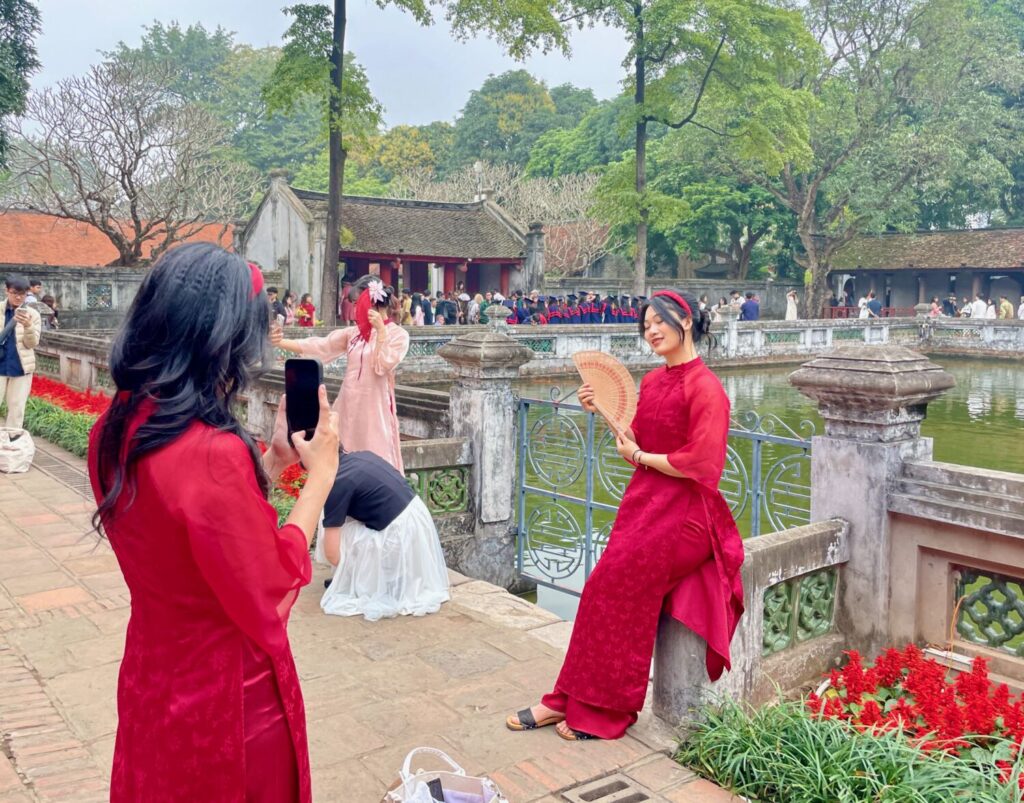
The temple is now mostly crowded and lively rather than calm. I saw many girls in traditional dress performing elaborate photoshoots in the gardens. School groups and sports teams also took photos in their uniforms. The experience felt less spiritual than I imagined but very authentic.
Tran Quoc Pagoda: Hanoi’s Oldest Pagoda on West Lake
Overlooking West Lake, the Tran Quoc Pagoda is considered the oldest pagoda in the city. It represents a fundamental reference point for understanding the spiritual dimension of Hanoi, thanks to its position on a small peninsula. The location on the water creates a unique atmosphere that blends nature and devotion. It is a place where the city’s ancient roots are still visible today.
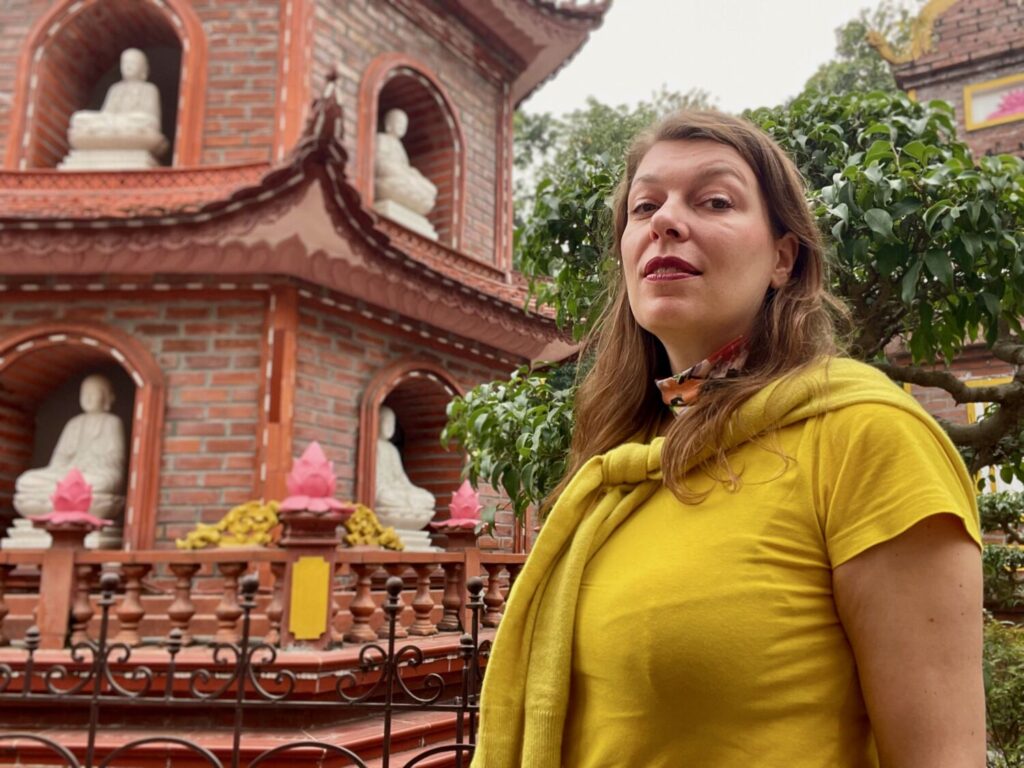
From an architectural perspective, Tran Quoc stands out for its multi-tiered red stupa tower, which was built in the 19th century. This tower has become an iconic element of the complex and is surrounded by several smaller stupas. These smaller structures serve as funerary monuments for the deceased monks of the community. Each level of the main tower houses a white gemstone statue of the Buddha.
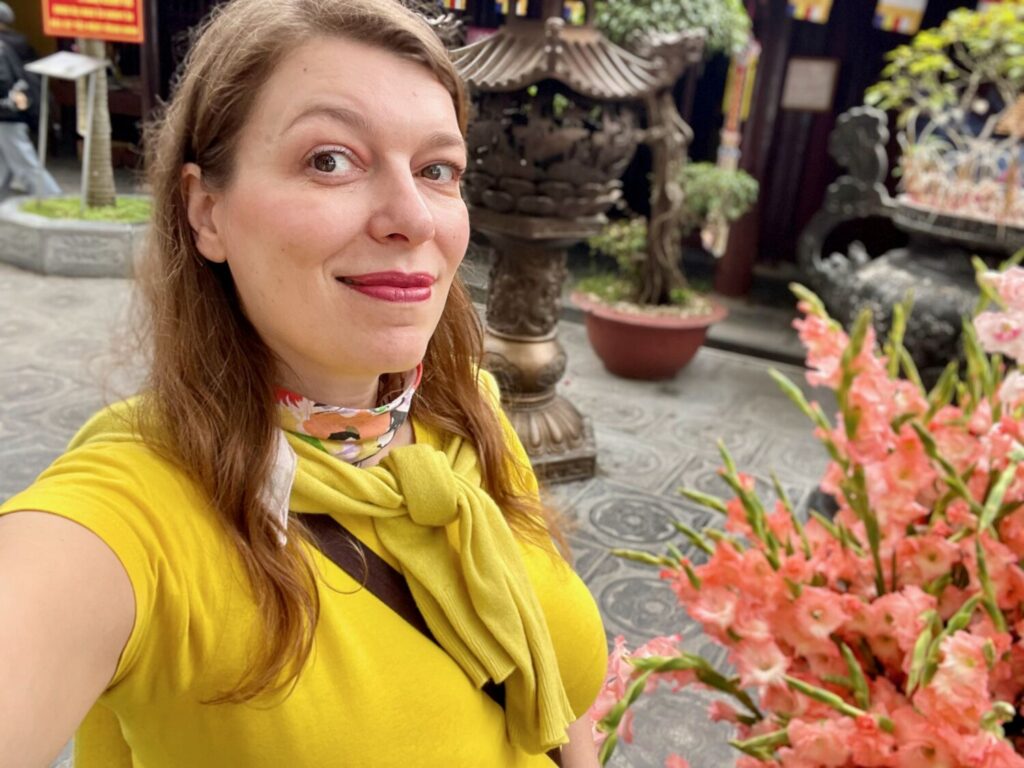
Walking through the courtyards, you perceive a daily spirituality made of simple gestures, offerings, and silence. I found myself lighting incense and circling the sacred Bodhi tree, following the same rituals as the local residents. I also took selfies among the stupas just like the girls in áo dài. This is exactly how the Vietnamese experience their places of worship, mixing tradition with modern habits.
Hoan Kiem Lake and Ngoc Son Temple: Legend, Ritual and Everyday Hanoi
Hoan Kiem Lake, known as the Lake of the Returned Sword, is linked to one of the most important legends in Vietnam. According to tradition, in the mid-15th century, the gods gave Emperor Le Thai To a magical sword to drive out the Chinese invaders. Once the war was over, a giant golden turtle emerged from the waters to take back the sword. It disappeared into the lake, returning it to the divine world.
The Ngoc Son Temple, which commemorates this legend, stands on a small island in Hoan Kiem Lake. It is accessed by crossing a red wooden bridge that divides the urban space from the ritual one. Inside, the temple is dedicated to multiple figures and deities. Among these are General Tran Hung Dao, a national hero for the resistance against Mongol invasions, Taoist deities and Confucian symbols.
This coexistence of different figures effectively tells the story of Vietnamese religiosity, which is never exclusive but inclusive. It is capable of holding together ancestor worship, philosophy and popular devotion. I found myself lighting incense and being carried away by the flow of visiting Vietnamese. I was among girls intent on having their photos taken in traditional dress and families on a trip.
The guide explained that the temple you can visit is not the original one. It is located on another small island at the northern end of the lake and is not accessible to the public. The original temple remains hidden from the public on its own island. This fact marks the difference between the accessible ritual space and the historical original.
Best Museums in Hanoi: What Is Really Worth Visiting
If you are a museum enthusiast like me, I advise against starting off immediately with enthusiasm in search of the unmissable museums in Hanoi. First of all, museums in Vietnam are generally a bit old-fashioned. They have very few interactive installations or, worse, unclear captions in English or French.
Some museums that are less well-known or less frequented by tourists do not even have a website, either in Vietnamese or in English. Furthermore, the information found in travel guides is not always up to date or correct. Several museums in my Lonely Planet guide had changed names or no longer existed. This makes planning a visit more difficult than in other cities.
Moreover, as you can notice after visiting the Ho Chi Minh mausoleum, many museums have an extremely celebratory and biased tone. This choice can seem almost surreal to us Western travellers. We are used to a different museum approach, but here the narrative follows a very specific national perspective.
Beyond these difficulties, however, as far as I am concerned, visiting less touristy museums and going off the beaten track always brings satisfaction. It allows for a deeper understanding of the country you are visiting. It is a way to see beyond the surface and discover more authentic aspects of local history.
Vietnam National Fine Arts Museum: Art, Identity and Cultural Memory
The Fine Arts Museum of Hanoi is housed in the two buildings of the former French Ministry of Information, a three-storey colonial building. The exhibition spaces collect Vietnamese works of art from different historical periods. These are displayed alongside some multimedia exhibitions that complete the collection.
Inside you can see textiles, ceramics, and traditional furniture, as well as lacquered wood sculptures. The route allows you to read the artistic evolution of the country. It goes from the most traditional forms to subsequent influences, offering a broad overview of local creativity.
The museum also dedicates space to contemporary art and is a good starting point if you are looking for works and books related to Vietnamese culture. It is a useful visit to contextualise Vietnamese art beyond the large historical museums. It offers a perspective that is different from the more institutional and political sites of the city.
Vietnam National Fine Arts Museum
Bảo tàng Mỹ thuật Việt Nam
66 P. Nguyễn Thái Học, Điện Biên, Ba Đình, Hà Nội, Vietnam
Vietnam Air Force and Air Defence Museum: Aircraft, Missiles and War Memory
The Air Force and Air Defence Museum is a museum dedicated to the military aeronautics of Vietnam. The collection includes over 3,000 exhibits, including photographs, documents and original objects. These items trace the role of the Air Force and Air Defence during the two Indochina Wars. It offers a technical look at the conflict from a specific military perspective.
Outside, 73 large exhibits are on display, including anti-aircraft guns, radars, missiles and aircraft. Among the objects most appreciated by Vietnamese visitors is the seat of an Mi-4 helicopter used by Ho Chi Minh during his official trips. This particular exhibit links the military history to the figure of the national leader. The outdoor area allows you to see the scale of the equipment used.
While it can give you an idea of the technological and military point of view of the wars, be careful not to confuse it with the Vietnam Military History Museum. That museum is located in another area of the city and has a different focus. The similar topic can be misleading, especially when searching for destinations on Google Maps. Always check the exact location before setting off to avoid confusion.
Air Force and Air Defence Museum
Bảo tàng Phòng không – Không quân
173C Đ. Trường Chinh, Khương Mai, Thanh Xuân, Hà Nội, Vietnam
Vietnam Military History Museum: Conflict, Propaganda and National Narrative
The Vietnam Military History Museum is a totally different museum from the Air Force and Air Defence Museum. Here the focus is broader and concerns the military history of Vietnam as a whole, not just the air forces. The museum offers a comprehensive look at the various conflicts that shaped the nation. It is one of the most visited historical sites in the capital.
You can easily recognise it by the numerous weapons displayed outside. Inside you find Soviet and Chinese armaments, but also French and American weapons confiscated during the conflicts. To better understand the context, I recommend booking the Hanoi tour with the Military History Museum on GetYourGuide. This way you do not have the problem of how to get there because the transfer is included.
Among the most prominent exhibits are a Soviet MiG-21 and an American F-111. The route also includes models that reconstruct key battles, such as Dien Bien Phu and the capture of Saigon, which led to the liberation of Vietnam. These reconstructions help to understand the strategies used during the decisive moments of the war. The museum remains a place of great national importance for the Vietnamese people.
Vietnam Military History Museum
Bảo tàng Lịch sử Quân sự Việt Nam
Km6+500, CT03, Xuân Phương, Hà Nội, Vietnam
Hoa Lo Prison (Hanoi Hilton): Controversial History and War Memory
This museum is what remains of the former Hoa Lo Prison, ironically nicknamed the “Hanoi Hilton” by American prisoners of war during the Vietnam War. The site tells a complex and controversial page of recent history. It is presented through a narrative oriented from the Vietnamese point of view.
Among those who were imprisoned there was Pete Peterson, who after the war became the first United States ambassador to Vietnam in 1997. Another well-known name is that of John McCain. He spent over five years here as a prisoner of war before embarking on a long political career in the United States.
A monument is also dedicated to McCain on the shores of Lake Truc Bach, in Hanoi, at the point where he crashed after his plane was shot down. This detail connects different places in the city to the same historical memory. The prison remains one of the most significant sites for understanding the human cost of the conflict.
Hỏa Lò Prison
Di tích Nhà tù Hỏa Lò
1 P. Hoả Lò, Trần Hưng Đạo, Hoàn Kiếm, Hà Nội, Vietnam
Vietnam Women’s Museum: The Country Told Through Women’s Stories
The Vietnam Women’s Museum tells the story of Vietnam from a female perspective. It explores how the often silent sacrifices and contributions of Vietnamese women have shaped society. This narrative covers both the past and the way they continue to do so in the present.
The tribute to women soldiers is accompanied by a section dedicated to the international women’s movement against the Vietnam War. Traditional clothes of ethnic minorities are also on display, along with textiles and baskets. These objects tell of identity, work and daily life, offering a broader and more concrete look at the role of women.
Vietnamese Women’s Museum
Bảo tàng Phụ nữ Việt Nam
36 P. Lý Thường Kiệt, Trần Hưng Đạo, Hoàn Kiếm, Hà Nội, Vietnam
Hanoi Travel Tips: Practical Advice and How to Avoid Tourist Traps
Like all Asian cities, Hanoi requires a spirit of adaptation, especially on your first trip to Vietnam. Chaotic traffic and unwritten rules might surprise you or cause some difficulties. I offer practical advice and observations from my direct experience to avoid classic tourist traps. These tips help you move with more awareness and experience the city authentically without unnecessary stress.
Hanoi With or Without a Guide: Pros and Cons
Hanoi requires time and observation to be understood properly. The choice between a guided tour or independence depends on your budget. I personally experienced both ways of visiting the city during my trips. Your decision depends on the specific type of experience you seek.
I first visited the city independently with some local Vietnamese friends. During my second trip, I discovered it with a professional local guide. I explored the capital with a guide from Travel Sense Asia. These experiences allow me to compare the two different ways of exploring.
Visiting Hanoi independently is feasible if you stay in the historic centre. You can reach many attractions on foot or by using Grab. Moving alone allows you to follow your own rhythm and stop anywhere. You can visit only the museums that truly interest you.
However, heavy traffic makes every journey feel much longer than expected. You must carefully cross roads while motorbikes appear from every direction. The city can feel chaotic and difficult for a first-time visitor. Walking requires constant attention to the surrounding vehicles and a lot of patience.
A guided tour allows you to optimise your time significantly. You can see many places in one day using a private minivan. Traffic and navigation difficulties make a private vehicle a very efficient choice. This option removes the stress of moving through the busy streets.
A guide remains the best choice to understand Vietnam’s political history. Local experts provide essential context to the huge monumental complexes. I only noticed the John McCain monument thanks to my guide. This professional support adds great value to your cultural experience.
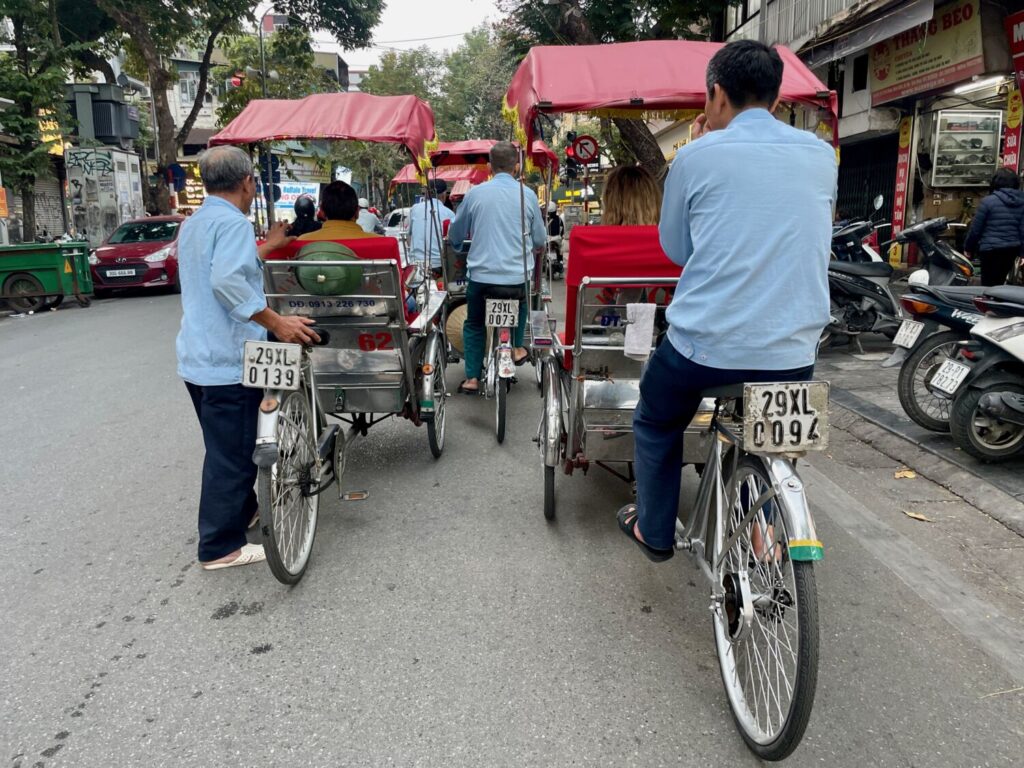
Cyclo Ride in Hanoi’s Old Quarter: An Authentic Experience or One to Avoid?
Apparently, a great attraction in the Old Quarter is a ride on a local transport called a cyclo. In many languages, like Italian which is my first language, the term “rickshaw” covers both motorised and pedal-powered vehicles. In English, the term “cyclo” specifically refers to the Vietnamese pedal-powered version. This version involves a lot of physical effort compared to other types of transport.
As this experience was included in our tour package for an Italian group, we had no idea that our risciò ride was actually a cyclo ride. We were expecting the motorised auto-rickshaws you can find in Thailand or Malaysia. Instead, we discovered the Vietnamese version that relies entirely on human strength. This misunderstanding about the name made the impact of the experience much stronger for us.
Personally, and my travel companions too, I felt very uncomfortable during the ride. An ethical problem related to work and exploitation opened up for me. Being carried on a pedal cyclo by a person my father’s age embarrassed me. This physical dynamic made me feel uneasy throughout the entire journey in the city.
Breathing in smog in streets crowded with motorbikes was not a pleasant experience either. The heavy traffic made the air quality quite poor during the trip. As far as I am concerned, it is not an activity I would do again. I prefer other ways to explore the Old Quarter without this discomfort.
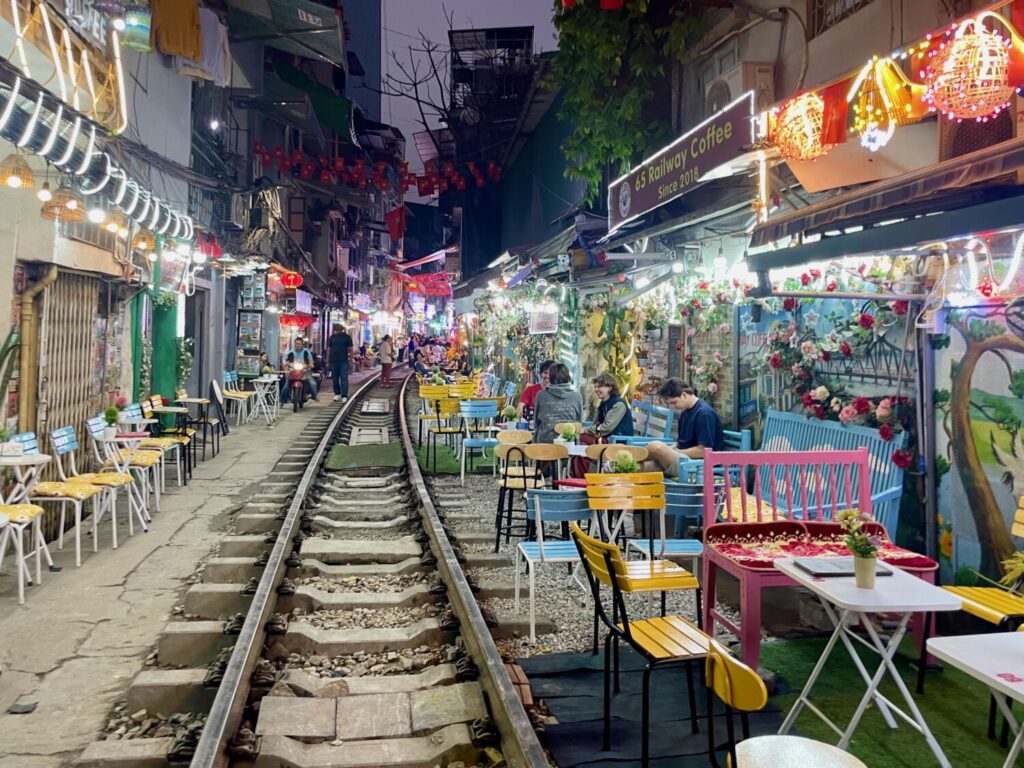
Hanoi Train Street: Restrictions, Reality and the Social Media Myth
Hanoi possesses its own famous Train Street, similar to Bangkok. Two different Train Streets exist in the city, which travellers often confuse. These two streets are located in different areas and possess very specific characteristics. Distinguishing between them helps you understand the current local situation and safety rules.
The most famous Train Street runs near the central station along Le Duan Street. The train passes just a few centimetres from houses and front doors. This extreme proximity made the street a global icon on social media. This narrow corridor crosses a very dense residential neighbourhood in the city centre.
Local authorities officially banned access to Train Street for safety reasons. You cannot visit it with an authorised guide, despite what online tours claim. Tourist restaurants continue to operate illegally directly on the tracks today. They serve mediocre food at much higher prices than the surrounding streets.
I personally find this attraction overrated and purely commercial. The bars serve basic drinks while relying on the thrill of the passing train. The experience feels like a tourist trap rather than an authentic encounter. These businesses exist only for the spectacle of the railway.
The Phung Hung Train Street offers a more spacious and open alternative nearby. Houses grew around the tracks as the city experienced massive urban expansion. Over time, the railway became a normal part of daily life for residents. This area reflects the French colonial-era railway planning of many decades ago.
I suggest having dinner in the Phung Hung Street area first. You can then reach the railway with a short five-minute walk. Trains pass several times a day but schedules change seasonally. Check the updated boards at the trackside bars for the latest times.
Water Puppet Show in Hanoi: Tickets, Tradition and Practical Advice
The water puppet show is one of the most interesting cultural experiences in Hanoi. Although often proposed as tourist entertainment, the folk tradition remains very much alive. I recommend booking tickets for the Hanoi Water Puppet show in advance. The theatre is always full and tickets sell out very quickly.
This art form originated in the rice fields of North Vietnam over a thousand years ago. It uses water as a natural stage for the performance. Puppeteers hide behind a bamboo screen and stand immersed in the water. They manoeuvre wooden figures that can reach fifty centimetres and weigh fifteen kilos.
Live music is an integral part of the narrative throughout the show. Flutes, gongs, drums and the dan bau monochord accompany scenes of rural life. The show remains light, fun and poetic for both adults and children. You will see fire-breathing dragons and young people riding buffaloes on the water.
How to Get Around Hanoi: Walking, Grab and Traffic Tips
To move around Hanoi independently, you must first accept the chaotic traffic. This constant movement is simply part of the local urban landscape. Once you can cross the road alone, you can explore the historic centre. You will find pagodas and monuments hidden among the busy streets.
Locals mainly move by motorbike, but I advise against this option for visitors. The intense and unpredictable traffic makes riding quite difficult and risky. During the guided tour, we used a private van for our movements. We also explored parts of the city on foot and by cyclo.
You can easily explore the Old Quarter and the Hoan Kiem Lake area on foot. For longer distances, you should use apps like Grab, which are cheap and reliable. Grab represents the most practical solution for moving around the city without stress. It is the local equivalent of Uber and works perfectly.
Where to Eat in Hanoi: Street Food, Local Spots and Michelin-Listed Restaurants
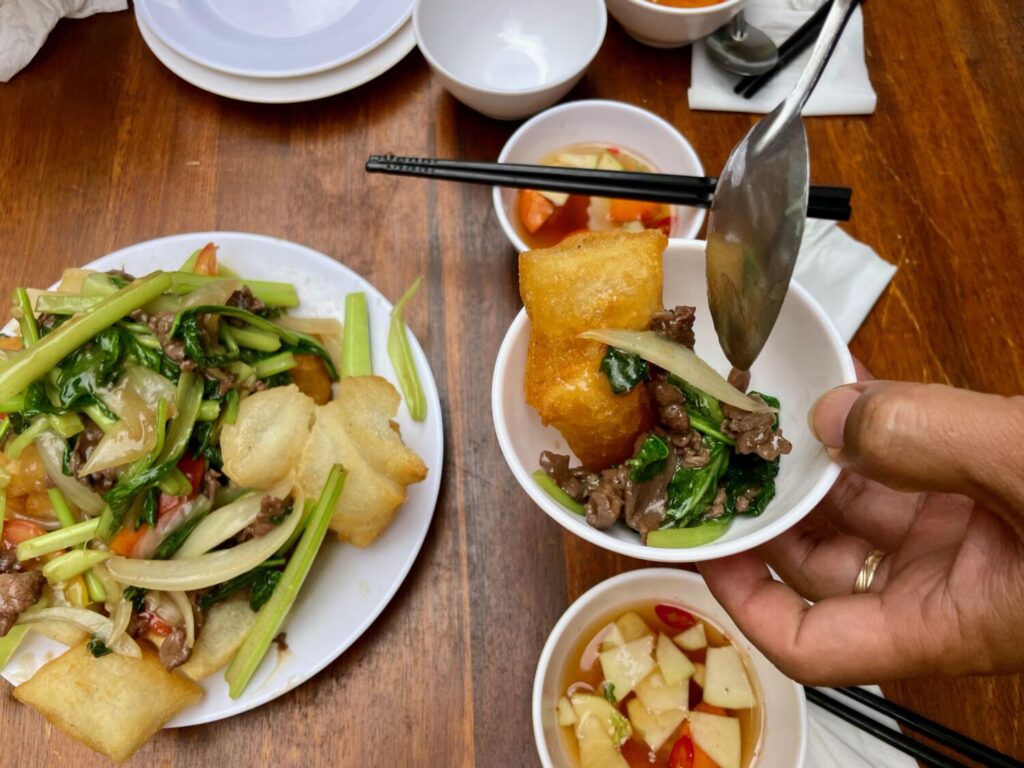
Hanoi is one of the best places in the country to taste traditional Vietnamese cuisine. Street food and small local restaurants offer iconic dishes like phở soup and bún chả. Portions usually cost no more than two or three euros each. You can also find delicious bánh mì baguettes for very low prices.
Eating where the locals eat is often the best choice for quality and authenticity. During my first trip, I always followed the advice of my Vietnamese travel companion. I never regretted trusting local knowledge for my daily meals. Even the simplest places can offer incredible and surprising flavours.
With my blogger colleagues, I participated in a fantastic street food tour. We tasted fresh spring rolls with meat and vegetables dipped in fish sauce. We also tried steamed bánh cuốn prepared in small family-run stalls. The variety of textures and fresh ingredients was truly impressive.
Among the restaurants in the central area, I recommend Viet Rice Essence. It is very elegant yet incredibly cheap by Western standards. Hanoi also hosts many Michelin-starred restaurants with very affordable prices. You can often eat in these prestigious places for only 10 or 20 euros.
We had dinner at Tầm Vị, which is famous on social media. It is known as one of the cheapest Michelin-starred restaurants in the world. The food was good, but do not expect Western service standards. It remains a great experience to enjoy high-quality cooking at a low cost.
Where to Stay in Hanoi: My Hotel Recommendation
Staying in the Old Quarter or around Hoan Kiem Lake allows you to move easily. During my first trip, I stayed with the relatives of my Vietnamese friend. This beautiful experience showed me how differently Vietnamese houses are furnished compared to Italy. If you want a similar experience, you can choose a local homestay.
On the trip with the Italian Travel Bloggers, we stayed at the Bespoke Boutique Hotel. The rooms are small but the hotel is very refined and well-maintained. The hotel offers a spa area with free manicures for all guests. We did not use it because our nails were already done, but it remains a great service. If you cannot visit the hotel spa, I recommend Midu Spa nearby. This massage centre has very talented and friendly beauticians for your relaxation.
The real surprise of the hotel was the breakfast service. It was honestly one of the best breakfasts I have ever experienced during my travels. The buffet was incredibly rich and included soups, rice, and fresh Vietnamese rolls. You could also order omelettes and scrambled eggs prepared on the spot.
Another detail that made the stay special was the fantastic staff. A waiter there studied English and Chinese to become a professional guide. His genuine attention and hard work made our local experience even more pleasant and welcoming.
Hanoi is a complex and layered city that requires time and curiosity. If you have visited Hanoi, feel free to share your thoughts in the comments. I would love to know how you experienced the city and which places stayed with you most.
