
Hue, in central Vietnam, is often included in travel itineraries for its UNESCO-listed imperial heritage. Focusing only on the Citadel, however, gives a limited view of the city. As I explored Hue, I noticed a place shaped by contrasts, where royal history meets modern tourism. Beyond its monuments, you will find spiritual sites, local markets, and a more complex identity that deserves time to be understood.
Table of Contents
Best Things to Do in Hue, Vietnam: Main Attractions and UNESCO Sites
Hue offers a mix of historic landmarks and spiritual sites that reflect its imperial past. At the centre of the city lies a UNESCO World Heritage complex recognised in 1993, which includes the Imperial Citadel, the Imperial City and the Forbidden Purple City, together with the Nguyen emperors’ tombs. Visiting Hue means exploring a planned imperial city shaped by harmony and hierarchy, closely connected to its landscape.
PLAN YOUR TRIP TO VIETNAM – 5% discount on your eSIM and travel insurance
For getting around Vietnam with ease, choose a Holafly eSIM: you get unlimited internet, perfect for using Google Maps, Grab or other navigation apps, booking transport on the go, and sharing photos and videos in real time on WhatsApp without worrying about local SIM cards or extra charges.
For extra peace of mind, pair connectivity with Heymondo travel insurance, which covers you in case of medical emergencies, delays or cancellations. A practical solution that lets you focus on exploring Vietnam, rather than dealing with unexpected setbacks.
Some of the main places to see in Hue include:
- Imperial Citadel, including the Imperial City and the Forbidden Purple City
- Nguyen emperors’ tombs along the Perfume River
- Thien Mu Pagoda
- An Dinh Palace
- Dong Ba Market for local street food
Thien Mu Pagoda stands as one of the city’s most important spiritual landmarks, while the Imperial Tombs along the Perfume River form part of the surrounding landscape itself. Moving beyond the main tourist routes, you can visit An Dinh Palace, once the residence of Emperor Bao Dai, which reflects the final phase of the Vietnamese monarchy and its transition to modernity.
Hue is not only about history. Dong Ba Market gives a glimpse of everyday life and a chance to try authentic Vietnamese street food. Nearby, the abandoned Ho Thuy Tien water park offers a more unusual experience, while Thuy Xuan Incense Village preserves a traditional craft that is still alive today. Alongside its historical heritage, Hue also reveals a more modern and lively side shaped by tourism and nightlife.
Hue Imperial Citadel: What to See and How to Visit
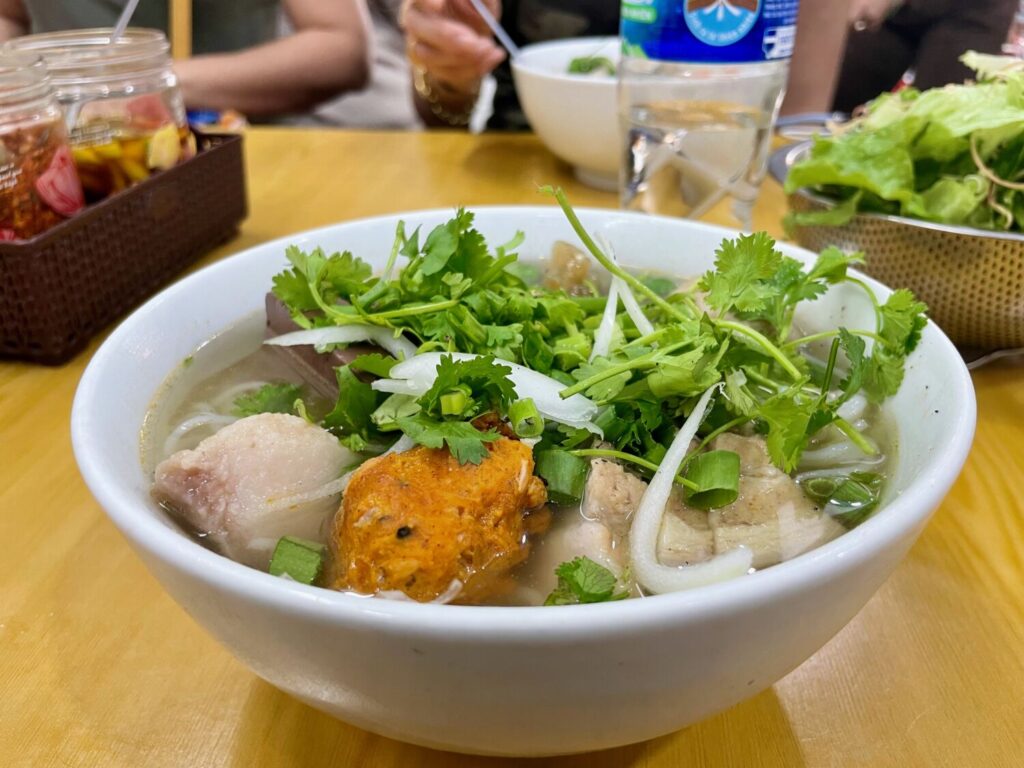
The Imperial Citadel of Hue is the historical heart of the city and one of the most important monumental complexes in Vietnam, despite the damage caused by wartime bombings. Today, restoration efforts have rebuilt much of the Imperial City, while the Forbidden Purple City still shows several damaged structures. Walking within the walls is enough to appreciate the scale and symbolic power of the former imperial capital.
Built in the early nineteenth century during the Nguyen dynasty, the Imperial Citadel served as the political, administrative and symbolic centre of the empire. Inside the complex, the Imperial City and the Forbidden Purple City were reserved for the royal court and organised according to strict hierarchical principles. This layout shows how the court controlled power and access.
As you walk through the Citadel, the separation between the emperor’s life and that of the general population becomes clear. The route passes through monumental gates, ceremonial courtyards and ornate palaces that once hosted court life. The layout of the buildings and restricted access to certain areas reveal a closed world designed to reinforce hierarchy and control.
Imperial Tombs of Hue: Which Ones to Visit and Why
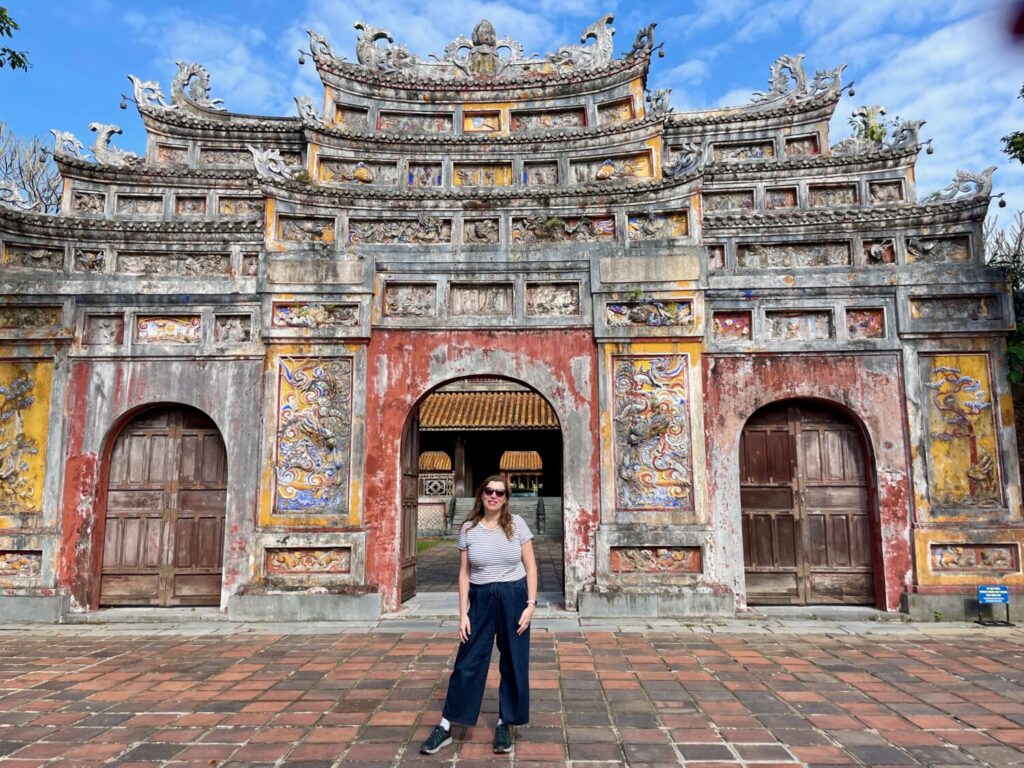
The Imperial Tombs of Hue are part of the city’s UNESCO World Heritage Site, together with the Imperial Citadel. Despite the name, they are not simple burial sites but large monumental complexes set in nature, designed to reflect the power and vision of each emperor.
Each ruler of the Nguyen dynasty built a mausoleum with a distinct style, where architecture, landscape and symbolism combine to create a unique idea of eternity. The most accessible and best preserved are the tombs of Tu Duc, Minh Mang and Khai Dinh, each very different from the others. Tu Duc’s mausoleum feels like a peaceful retreat surrounded by greenery, Minh Mang stands out for its symmetry, while Khai Dinh is more elaborate and shows strong European influences.
The natural landscape surrounds the Imperial Tombs, and you reach the central areas by walking through courtyards, temples and pavilions linked by scenic paths across lakes and gardens. Visiting them creates a strong sense of balance and calm, thanks to their architectural design and setting.
One practical aspect to consider is the number of steps, which can make the visit challenging if you have mobility issues. During my visit, I had a minor knee injury and found it difficult to explore Tu Duc’s mausoleum, as climbing stairs without bending my leg was particularly uncomfortable.
Thien Mu Pagoda: What to Know Before Visiting Hue’s Main Religious Site
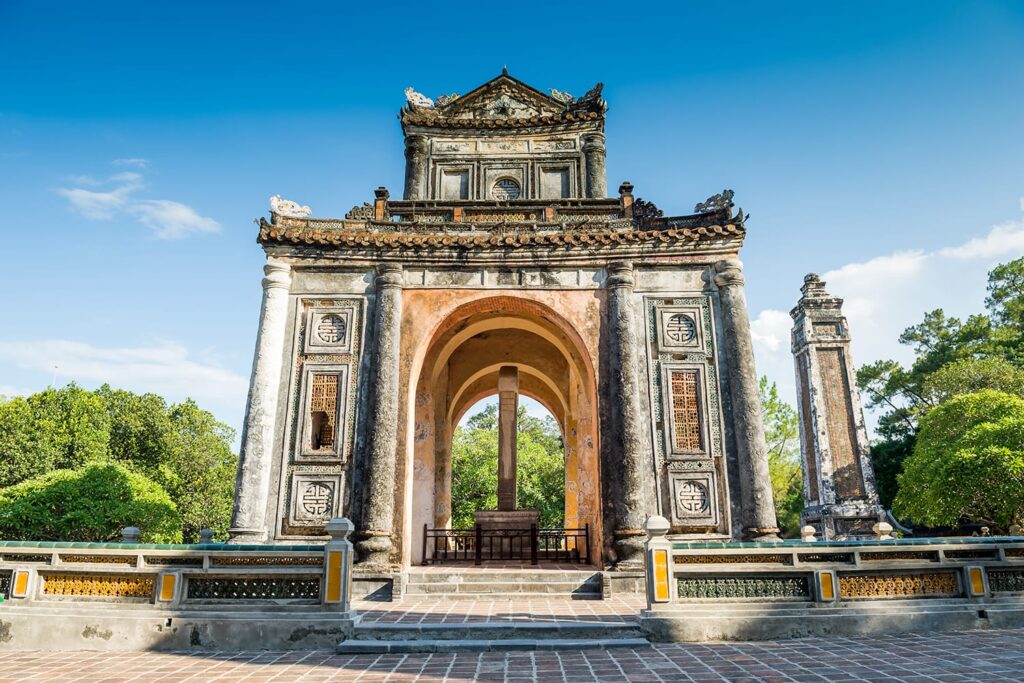
Thien Mu Pagoda is one of the most recognisable landmarks in Hue. The seven-storey octagonal tower stands on a hill overlooking the Perfume River. Despite its popularity, it still feels authentic. During my visit, I noticed more locals than tourists, and the site still felt genuinely spiritual.
The name Thien Mu means “Heavenly Lady”. The local legend tells that an old woman appeared on the hill and predicted the construction of a pagoda that would bring prosperity to the region. In 1601, Governor Nguyen Hoang ordered the construction of the pagoda on that very spot, seeing the story as a positive sign.
Today, Thien Mu Pagoda remains one of the most important religious sites in central Vietnam. Each level of the tower represents a different manifestation of the Buddha. The wider complex includes courtyards, gardens and temples, where monks live and practise their daily rituals, creating a space that is both active and symbolic.
In the 1960s, the pagoda became a centre of anti-government protests. Near the tower, you can see the car of the monk Thich Quang Duc, who self-immolated in 1963. Other notable features include a stone stele on the back of a marble turtle and the large Dai Hong Chung bell, which weighs over two tonnes.
Hue Beyond UNESCO Sites: What to Do Between the River and Markets
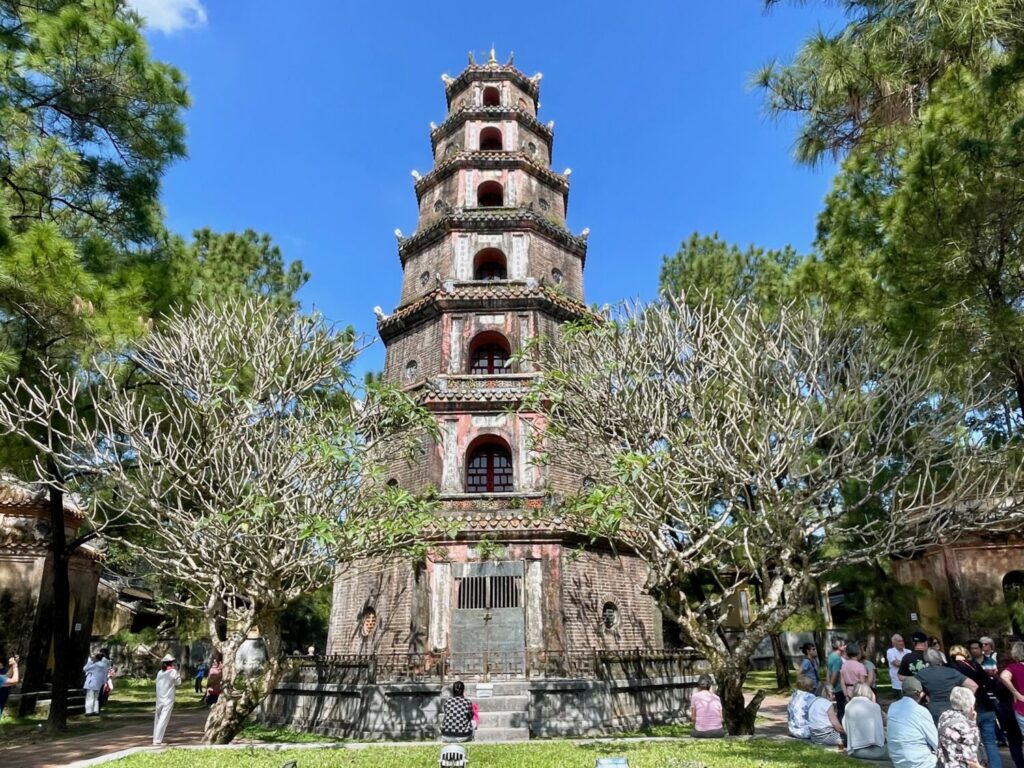
To experience Hue from a different perspective, you can take a boat along the Perfume River, which runs through the city and connects several key sites, including the Imperial Tombs. In the evening, especially at sunset, the scenery becomes more atmospheric as lights reflect on the water. This area, however, is also the most tourist-focused part of Hue, with a busier and more commercial feel.
For local street food and a more authentic setting, Dong Ba Market is still widely used by residents. Here you can observe everyday life and try traditional Vietnamese dishes in a less curated environment. It offers a more direct and informal experience of the city compared to the main attractions.
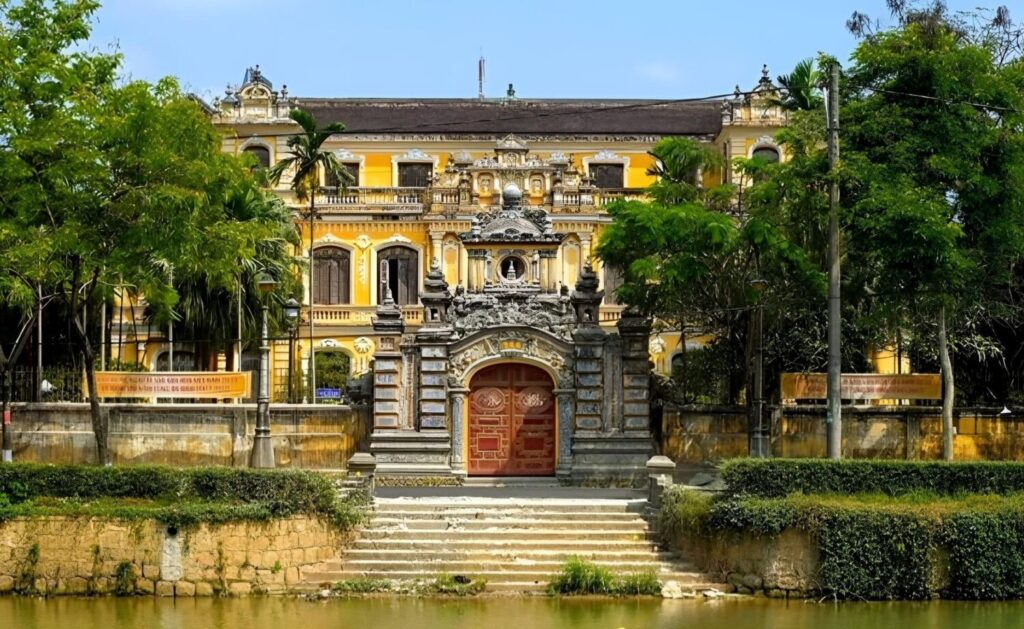
An Dinh Palace, once the residence of Emperor Bao Dai, provides insight into the final years of the Vietnamese monarchy. The building blends European and Vietnamese styles, with colourful frescoes that reflect a period of transition in Vietnam’s history.
What to See Around Hue: Nature, Crafts and Unusual Places
If you have more time, the areas around Hue offer a mix of nature, local traditions and more unusual attractions. Some of the most popular places include:
- Thuy Xuan Incense Village
- Ho Thuy Tien abandoned water park
- Bach Ma National Park
- Lang Co Beach
For a day in nature, Bach Ma National Park is a good option, with hiking trails and viewpoints. Lang Co Beach is ideal if you prefer a more relaxed day by the sea. Among the most unusual places near Hue, the abandoned Ho Thuy Tien water park stands out, with its surreal atmosphere that feels almost post-apocalyptic.
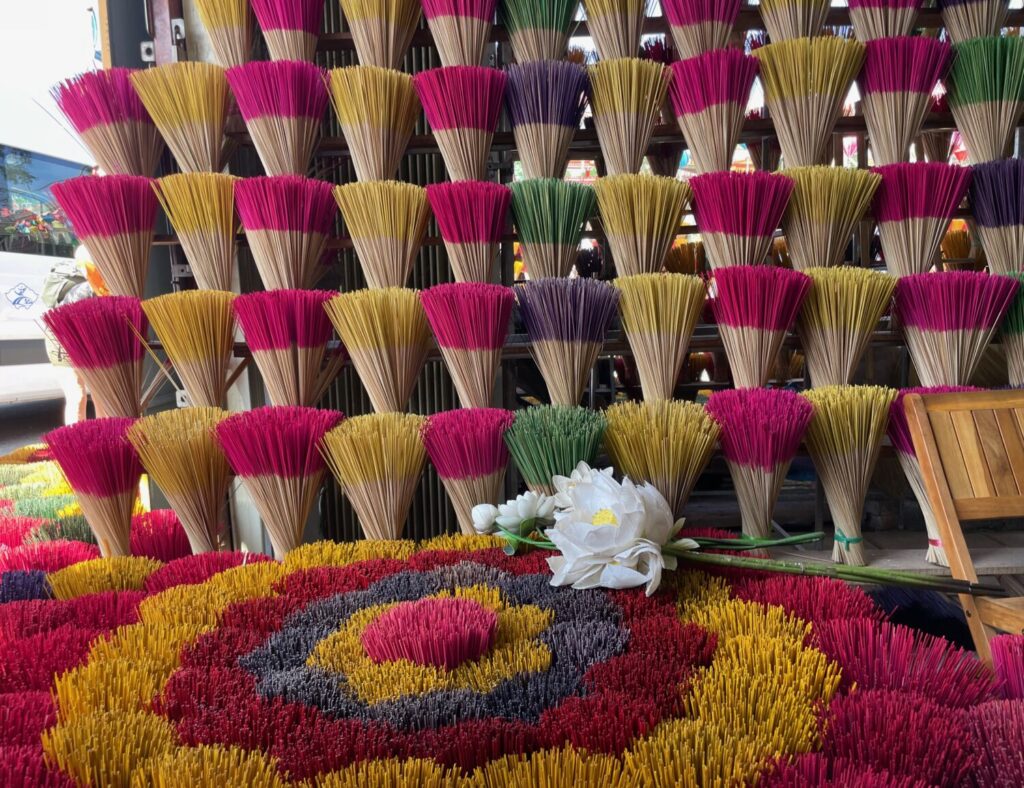
In contrast, Thuy Xuan Incense Village is one of the most photographed spots near Hue, known for its colourful incense sticks left to dry in the sun. The actual village is located in Thuy Xuan, but near Thien Mu Pagoda you can also find several shops producing and selling incense in a similar way. I stopped here with my group and picked up a few Vietnamese souvenirs, including beautifully crafted cashmere scarves.
Practical Information for Visiting Hue
Hue may look compact on the map, but in reality it requires some planning. The main attractions are not all in one place, and some, like the Imperial Tombs, are located outside the centre, while Thien Mu Pagoda sits on a hill. How you choose to get around will shape your experience, whether you focus on the main sites or explore less visited areas.
How Many Days to Spend in Hue
To explore Hue at a comfortable pace, two to three days are usually enough. This allows you to visit the main attractions without rushing. Seeing everything in one day is possible, but it requires careful planning and a clear selection of priorities.
During my trip to Vietnam with Travel Sense Asia, I managed to visit the Imperial Citadel, Thien Mu Pagoda and Tu Duc’s mausoleum in one day. Thanks to private transport and a guide, we also added a stop at incense shops along the way.
Without a private car, you will need to plan your time more carefully. Distances between attractions are greater than they appear on the map, and places like the Imperial Citadel and the Imperial Tombs take time to explore on foot.

Where to Stay in Hue: Pros and Cons of the Pedestrian Area
Most hotels in Hue are located in the city centre, within a pedestrian area packed with restaurants, bars and live music venues. This is where many organised tours stay, as everything is within walking distance and the atmosphere is lively. At the same time, it can feel quite tourist-focused, with bright signs, noise and venues designed mainly for visitors.
I stayed at Rosaleen Boutique Hotel, right in this area, so I experienced it first-hand. The rooms are spacious and modern, and the hotel has a small pool, which is a plus after a day of sightseeing. However, a nightclub sits in the front, and you can still hear noise even with the windows closed. Earplugs are provided, and music usually stops by 23:00, but it is not the best choice if you are sensitive to noise.
The hotel serves breakfast in a nearby building on the second floor, with no lift. I found this slightly inconvenient, especially because I had a knee injury at the time, so it is something to keep in mind if mobility is a concern.
If you prefer a quieter stay, it is worth looking just outside the pedestrian area. Hotels such as Indochine Palace offer more space and facilities, including a pool and spa, while still being a short ride from the centre. Another good option is EMM Hotel Hue, which has a garden, a pool and on-site restaurants, in a setting that feels more relaxed compared to the main tourist zone.
How to Get to Hue: Flights, Trains and Transfers
Hue is well connected to the main cities in Vietnam. Organised tours often include private transfers between nearby destinations such as Hoi An, which helps optimise travel time. During my trip from north to south Vietnam, I arrived in Hue by bus from Hoi An and then continued to Ho Chi Minh City by plane.
Phu Bai Airport is located about 15 kilometres from the city centre and offers daily domestic flights from Hanoi and Ho Chi Minh City. It is a small regional airport, so procedures are usually quick and efficient. From the airport, you can reach the centre easily by taxi or private transfer arranged by your hotel.
If you are travelling independently, the train is a good option. The route between Da Nang and Hue is particularly scenic, with views of the coastline and mountains. During a previous low-cost trip, I travelled overnight between Hue, Hanoi and Ho Chi Minh City. You can check schedules and book train routes on 12Go before your trip. Choosing a higher class ticket makes a noticeable difference in comfort for a relatively small price increase.
How to Get Around Hue: Transport Options and Tips
Getting around Hue is relatively simple, but distances between attractions should not be underestimated. In the city centre and along the river, walking or cycling can be pleasant, especially during cooler hours. In summer, however, the heat can make this more tiring.
Renting a scooter is another option, but it is best suited to those who already have experience driving in Asia. For visiting the Imperial Tombs and other sites outside the centre, taxis or organised tours are more practical.
In my experience, the most convenient and cost-effective way to move around Hue is Grab, the most widely used ride-hailing app in Vietnam. It allows you to book transport easily, with clear pricing and no need to negotiate fares.
If you are planning a trip to Hue or have already visited, feel free to share your experience in the comment section.
